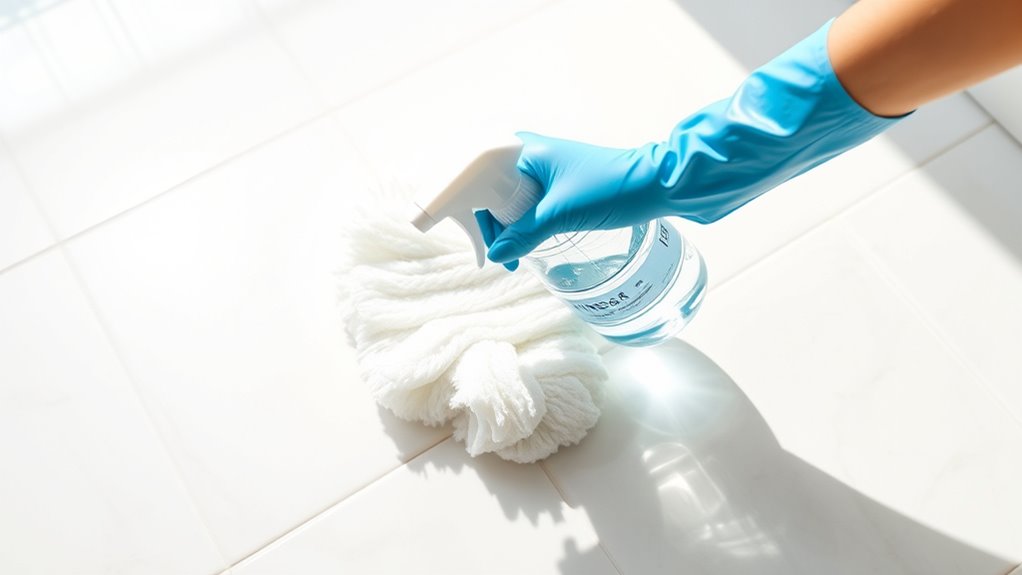

To clean your tile floors with vinegar and water, start by sweeping or vacuuming to remove loose dirt. Mix equal parts white vinegar and water in a spray bottle or bucket. Spray the solution onto your tiles, paying special attention to grout lines, and let it sit for 5-10 minutes. Scrub with a soft brush, wipe away dirt with a damp cloth, then rinse with plain water and dry thoroughly. For more helpful tips, keep exploring this guide.
Key Takeaways
- Sweep or vacuum the floor to remove loose dirt before applying the cleaning solution.
- Mix equal parts white vinegar and water in a spray bottle or bucket for the cleaning solution.
- Spray or pour the vinegar-water mixture onto tiles, focusing on grout lines, and let sit for 5-10 minutes.
- Scrub grout lines with a soft brush, then wipe and rinse the surface with plain water to remove residue.
- Dry the floor with a towel or microfiber cloth to prevent water spots and maintain a clean, shiny finish.
Keeping your tile floors spotless doesn’t have to be a formidable task. With a simple vinegar and water solution, you can effectively clean your tiles and keep them looking fresh. Start by sweeping or vacuuming the area to remove loose dirt and debris. This pre-cleaning step prevents scratching the tiles during washing and ensures that your cleaning solution works efficiently. Once the surface is clear, prepare your cleaning mixture by mixing equal parts white vinegar and water in a spray bottle or bucket. Vinegar is a natural disinfectant and works well to cut through grime, but it also helps with grout cleaning and stain removal, which are often the toughest parts of maintaining tile floors.
To begin, spray or pour the vinegar-water solution directly onto the tiles, paying extra attention to grout lines. Grout often traps dirt and stains, so it’s important to ensure the solution penetrates deep into those crevices. Let it sit for about 5 to 10 minutes—this allows the vinegar to loosen dirt and stains, making your job easier. Using a soft-bristled brush or a grout cleaning brush, scrub the grout lines thoroughly. This step is essential for removing embedded dirt and preventing mold or mildew buildup. For stubborn stains on the tiles or grout, you might need to repeat this process or let the solution sit a little longer before scrubbing.
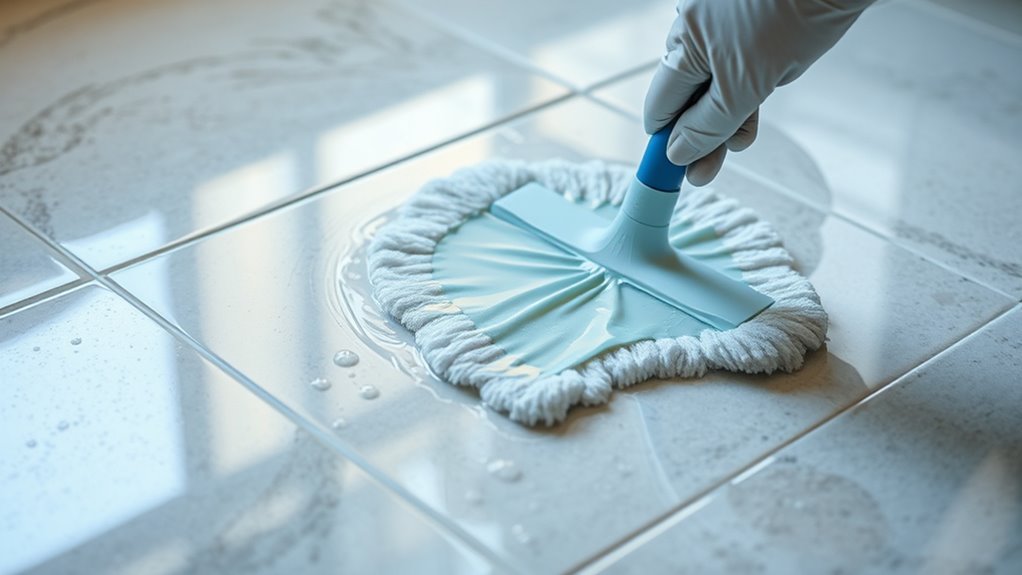
After scrubbing, use a clean mop or cloth to wipe away the dirty solution. Rinse the mop frequently to avoid redistributing grime. For an extra boost, rinse your mop or cloth with plain water and go over the tiles again. This helps remove any residual vinegar and dirt, leaving your floors sparkling clean. Dry the surface with a clean towel or microfiber cloth to prevent water spots and streaks. Regular maintenance is key to keeping your tile floors looking their best. Incorporate this vinegar and water cleaning routine weekly to prevent buildup and maintain the shine. To keep grout lines looking fresh and stain-free, consider sealing them periodically, which adds a barrier against dirt and stains. Remember, vinegar is a natural, cost-effective solution that’s safe for most tiles and grout, but always test it on a small area first to confirm it won’t cause any discoloration. For those seeking to understand Gold IRA, it’s helpful to recognize how proper maintenance and knowledge of potential scams can protect your investments. With consistent cleaning and a bit of effort, you’ll enjoy spotless, gleaming tile floors that enhance your space’s beauty and hygiene.
Frequently Asked Questions
Can Vinegar Damage Glazed or Ceramic Tile Surfaces?
Vinegar safety is generally high, and it usually won’t damage glazed or ceramic tile surfaces if used properly. You should avoid using undiluted vinegar on delicate tiles, as it might erode grout or cause surface dullness over time. To guarantee tile surface protection, always dilute vinegar with water and test on a small area first. This way, you keep your tiles clean without risking damage.
How Often Should I Clean My Tile Floors With Vinegar?
Cleaning your tile floors with vinegar is like giving them a invigorating drink—so how often? You should mop with vinegar every 1-2 weeks, depending on foot traffic and dirt. Keep a consistent cleaning schedule to prevent grime buildup. If your floors look dull or sticky, increase mopping frequency. This routine keeps your tiles shining and maintains their durability, making your space look fresh and inviting.
Is Vinegar Safe for Cleaning Grout Lines?
Vinegar is generally safe for cleaning grout lines, but it can weaken grout over time if used excessively. To protect your grout, consider sealing it after cleaning, which helps prevent staining and damage. If you’re concerned about vinegar’s acidity, use vinegar alternatives like baking soda or commercial grout cleaners. These options effectively clean your grout without risking deterioration, keeping your tile floors looking fresh and well-maintained.
Can Vinegar Remove Stubborn Tile Stains Effectively?
Vinegar can help remove some stubborn tile stains, but it’s not always the best choice, especially if you’re dealing with aluminum cookware or hardwood floors. For tough stains, you might need a specialized cleaner instead. Be cautious, as vinegar’s acidity could damage aluminum or hardwood finishes. Always test a small area first, and consider alternative solutions to protect your surfaces while effectively tackling stubborn stains.
What Precautions Should I Take When Using Vinegar on Tile Floors?
Did you know that vinegar’s pH level is around 2.5, making it acidic enough to damage some surfaces? When using vinegar on tile floors, you should consider pH level considerations to avoid etching or dulling the finish. Always dilute it properly, and store vinegar safely away from children and pets. Test a small area first, and avoid leaving vinegar on the floor too long to prevent damage.
Conclusion
Now that you know the secret weapon—vinegar and water—you can turn your tile floors into the sparkling, mirror-like surface of your dreams! Say goodbye to stubborn stains and grime that once seemed invincible. With just a simple swipe, your floors will shine brighter than a diamond in a fireworks display. Get ready to impress everyone who walks through your door, because your floors will be so clean, they might just start glowing like they’re lit from within!