For most first-time flyers, I’d start with the DJI Mini 4K Camera Drone Combo with Two Batteries: its stabilized 4K camera and spare battery make learning and capturing footage easier. The DJI Mini 3 is a stronger fit if you want a 3-axis mechanical gimbal, while the HASAKEE Q9s favors simple, playful practice over polished aerial video. The main tradeoff is between beginner-friendly controls and camera quality, flight features, portability, and cost. Less expensive toy-style models can be approachable, but usually ask you to accept simpler imaging and fewer advanced flight aids. Read on for the full comparison and guidance on choosing a drone that matches how you plan to fly.

Get cleaning gear delivered free with Prime
- Fast, free delivery on millions of items
- Prime Video, Amazon Music and more included
- Member-only deals all year
Complete the kit


Key Takeaways
- The DJI Mini 4K Combo is the best all-around starting point in this lineup because it pairs a stabilized 4K camera with two batteries, helping new pilots spend more time practicing.
- The DJI Mini 3 stands out for camera movement: its 3-axis mechanical gimbal is a meaningful step up for smoother footage, not just a bigger resolution number.
- The DJI Mini 5 Pro Fly More Combo Plus is the premium choice, but its advanced capabilities make most sense for beginners who expect to grow into more demanding filming.
- Screen remotes are a convenience, not a guarantee of simpler flying; the PK01 and other screen-controller models may suit pilots who want a dedicated display, but buyers should compare the rest of the flight and camera details too.
- The HASAKEE Q9s serves a different purpose from camera-focused drones: its altitude hold, headless mode, and lights favor accessible practice and play rather than serious aerial photography.
| DJI Mini 4K Camera Drone Combo with Two Batteries |  | Best Overall for Beginner Aerial Video | Weight: Under 249 g | Camera: 4K UHD | Stabilization: 3-axis gimbal | VIEW ON AMAZON | See Our Full Breakdown |
| Foldable Beginner Drone with 1080p Camera and Two Batteries |  | Best Simple Starter for Short Practice Flights | Camera resolution: 1080p | Video resolution: 1920 × 1080 | Flight time: Approximately 12 minutes per battery | VIEW ON AMAZON | See Our Full Breakdown |
| N11 Pro 4K GPS Drone with Camera |  | Best for Beginners Who Want GPS Flight Modes | Photo resolution: 4096 × 3072 | Video resolution: 2048 × 1080 | Camera: 100° wide-angle with 90° adjustable tilt | VIEW ON AMAZON | See Our Full Breakdown |
| PLEGBLE 4K Camera Drone for Beginners |  | Best Beginner Foldable with a Wide-Angle Camera | Camera: 4K, 120° wide-angle, 90° adjustable lens | Motor: Brushless | Flight time: About 30 minutes with two batteries | VIEW ON AMAZON | See Our Full Breakdown |
| Loiley X69 Foldable FPV Drone with 2K Camera |  | Best Compact FPV Starter | Camera resolution: 2K | Still image resolution: 12 MP | Camera angle adjustment: 90° remotely adjustable | VIEW ON AMAZON | See Our Full Breakdown |
| HASAKEE Q9s Kids Drone with Altitude Hold, Headless Mode, LED Lights, and Two Batteries |  | Best for First Indoor Flights | Brand and model: HASAKEE Q9s | Dimensions: 6.9 × 6.9 × 2 inches | Battery: Two 500mAh batteries | VIEW ON AMAZON | See Our Full Breakdown |
| Loiley 2K HD Camera Drone for Beginners | 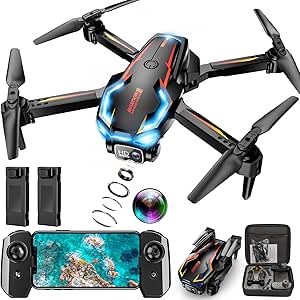 | Best Value Camera Starter | Video resolution: 2K | Still resolution: 2.2 MP | Camera angle: Remotely adjustable to 90 degrees | VIEW ON AMAZON | See Our Full Breakdown |
| DJI Mini 3 Camera Drone with 3-Axis Mechanical Gimbal |  | Best Overall for Beginner Creators | Weight: Under 249 g with standard battery | Video resolution: 4K HDR | Still photo resolution: 48 MP | VIEW ON AMAZON | See Our Full Breakdown |
| DJI Mini 4K Drone with 4K UHD Camera |  | Best DJI Entry Point | Weight: Under 249 g | Camera: 4K UHD | Gimbal: 3-axis | VIEW ON AMAZON | See Our Full Breakdown |
| DJI Mini 5 Pro Fly More Combo Plus with DJI RC 2 | 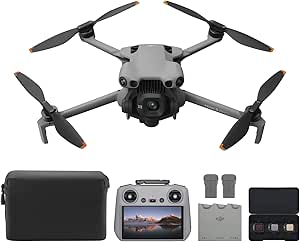 | Best Premium Upgrade | Camera sensor: 1-inch CMOS | Video resolution: 4K/60fps HDR | Gimbal rotation: 225 degrees | VIEW ON AMAZON | See Our Full Breakdown |
| PK01 Foldable FPV Drone with 1080P Camera and Screen Remote |  | Best for Phone-Free Live Viewing | Camera: 1080p HD, adjustable 80° lens | Remote controller: Built-in screen | Flight time: Up to 25 minutes | VIEW ON AMAZON | See Our Full Breakdown |
| Foldable FPV Drone with 1080p Camera |  | Best Value for Basic Practice | Camera: 1080p; 2 MP effective still resolution | Lens adjustment: 80° | Flight time: Up to 25 minutes | VIEW ON AMAZON | See Our Full Breakdown |
| Foldable GPS Drone with 4K Camera and Screen Controller |  | Best Premium Beginner Package | Camera: 4K UHD, 90° adjustable lens | Controller: 4.5-inch built-in screen | Flight time: Approximately 60 minutes combined with two batteries | VIEW ON AMAZON | See Our Full Breakdown |
| Foldable 1080p Camera Drone with Screen Remote Controller |  | Best Beginner Accessory Bundle | Camera: 1080p; 2 MP effective still resolution | Lens: 90° electrically adjustable | Controller: Screen remote controller | VIEW ON AMAZON | See Our Full Breakdown |
| 1080p Foldable FPV Drone with Camera |  | Best for Phone-Based Flight Features | Camera: 1080p; 2 MP still photos | Camera tilt: Up to 90° | Connectivity: Wi-Fi | VIEW ON AMAZON | See Our Full Breakdown |
| drones for beginner | Weight | Flight time | Camera |
|---|---|---|---|
| DJI Mini 4K Camera Drone Combo | Under 249 g | — | 4K UHD |
| Foldable Beginner Drone with 1 | 146 g | Approximately 12 minutes per battery | — |
| N11 Pro 4K GPS Drone with Came | 181 g | Up to 90 minutes with 3 batteries | 100° wide-angle with 90° adjustable tilt |
| PLEGBLE 4K Camera Drone for Be | Under 249 g | About 30 minutes with two batteries | 4K, 120° wide-angle, 90° adjustable lens |
| Loiley X69 Foldable FPV Drone | — | 20 minutes total | — |
| HASAKEE Q9s Kids Drone with Al | — | — | — |
| Loiley 2K HD Camera Drone for | Under 250 g | — | — |
| DJI Mini 3 Camera Drone with 3 | Under 249 g with standard battery | — | — |
| DJI Mini 4K Drone with 4K UHD | Under 249 g | — | 4K UHD |
| DJI Mini 5 Pro Fly More Combo | Approximately 249.9 g ± 4 g | Up to 52 minutes per battery | — |
| PK01 Foldable FPV Drone with 1 | — | Up to 25 minutes | 1080p HD, adjustable 80° lens |
| Foldable FPV Drone with 1080p | — | Up to 25 minutes | 1080p; 2 MP effective still resolution |
| Foldable GPS Drone with 4K Cam | 220 g | Approximately 60 minutes combined with two batteries | 4K UHD, 90° adjustable lens |
| Foldable 1080p Camera Drone wi | — | Up to 25 minutes | 1080p; 2 MP effective still resolution |
| 1080p Foldable FPV Drone with | 230 g | Up to 30 minutes combined with two batteries; about 15 minutes per battery | 1080p; 2 MP still photos |
More Details on Our Top Picks
DJI Mini 4K Camera Drone Combo with Two Batteries
For a first drone that can grow with a new pilot’s camera skills, I’d put the DJI Mini 4K ahead of the smaller-camera options here. Its 4K camera and 3-axis gimbal produce stabilized footage, while GPS Return to Home and steady hovering give beginners a clearer safety net than the basic foldable 1080p model. The two included batteries offer up to 62 minutes of combined flight time under specified test conditions, so there’s more opportunity to practice between charging sessions.
The tradeoff is a more involved setup than a toy-style drone: the DJI Fly app must be downloaded from DJI’s website, and the stated transmission range and flight time depend on conditions. Choose this over the N11 Pro if smooth 4K video matters more than extra batteries and automated flight modes.
Pros:- 4K camera paired with a 3-axis gimbal for stabilized footage
- GPS Return to Home and stable hovering support confidence while learning
- Two batteries provide up to 62 minutes of combined flight time under specified test conditions
- QuickShots offer automated camera moves without requiring advanced piloting
Cons:- DJI Fly must be downloaded from DJI’s website rather than Google Play
- Actual flight time and video transmission range vary with conditions
Best for: New pilots who want stabilized 4K footage, GPS return features, and enough battery capacity for extended practice.
Not ideal for: Buyers who want a simple indoor toy or a drone whose companion app is readily available through Google Play.
- Weight:Under 249 g
- Camera:4K UHD
- Stabilization:3-axis gimbal
- Max video transmission:10 km (32,800 ft)
- Wind resistance:38 kph (Level 5)
- Max flight time:62 minutes with two batteries
- Flight features:GPS Return to Home, stable hovering, one-tap takeoff and landing, QuickShots
- Included:Drone, two batteries, DJI RC-N1C remote controller, shoulder bag, propeller holder, spare propellers
Our verdict“Choose the DJI Mini 4K if you want a beginner-friendly route to stabilized 4K aerial footage and value GPS support over extra automated flight modes.”
Foldable Beginner Drone with 1080p Camera and Two Batteries
This foldable 1080p model is the straightforward practice pick: altitude hold, one-key takeoff and landing, and speed adjustment keep the controls approachable for a first flight. Two batteries provide about 24 minutes combined in stated conditions, split into roughly 12 minutes per battery. That makes it easier to learn basic steering than relying on a single short session, though fast flying and flips reduce airtime.
Compared with the DJI Mini 4K, this drone gives up gimbal-stabilized 4K video and GPS Return to Home, but its simpler feature set may suit families who want to learn basic controls before moving to a camera-focused model. The camera feed also depends on a Wi-Fi connection and app; voice control and some app functions require disconnecting the remote. I’d skip it for serious outdoor filming or anyone who wants uninterrupted controls and camera use.
Pros:- Altitude hold and one-key takeoff and landing simplify early practice
- Two batteries offer about 24 minutes of combined flight time
- Folds into a compact body for storage and transport
- Can be controlled by remote or smartphone app
Cons:- 1080p camera lacks the gimbal stabilization offered by the DJI Mini 4K
- Maximum listed range is only 0.05 km
- Camera capture requires Wi-Fi and the app, while some app functions conflict with remote use
Best for: First-time flyers and families seeking an affordable-feeling, compact practice drone with basic camera capture and two batteries.
Not ideal for: Beginners who need GPS return, stabilized footage, longer-range outdoor flying, or convenient app-and-remote use at the same time.
- Camera resolution:1080p
- Video resolution:1920 × 1080
- Flight time:Approximately 12 minutes per battery
- Batteries:2 rechargeable lithium-ion batteries
- Control:Remote control and smartphone app
- Connectivity:Wi-Fi
- Maximum range:0.05 km
- Weight:146 g
Our verdict“Pick this model for basic, short-range flight practice, but choose the DJI Mini 4K or N11 Pro if GPS support and more capable aerial imaging matter.”
N11 Pro 4K GPS Drone with Camera
The N11 Pro is the most feature-driven learning platform in this group. Its GPS Return to Home, Follow Me, Tap Fly, and Point of Interest modes give a beginner ways to explore assisted flight beyond basic steering. Three batteries provide up to 90 minutes of combined flight time, a substantial practice allowance compared with the DJI Mini 4K’s two-battery package. Optical-flow positioning is also listed for indoor hovering.
There is a camera-spec distinction to notice: it captures 4K photos, but video is 2048 × 1080, not 4K. The DJI Mini 4K is the stronger choice for stabilized 4K video, while this model favors flight modes and battery count. Its 3,328-foot maximum control range is a capability, not a reason for a novice to fly far away; beginners should keep the aircraft visible and follow local rules.
Pros:- GPS auto return and multiple assisted modes support learning beyond basic flight
- Three batteries provide up to 90 minutes of combined flight time
- Brushless motors and optical-flow positioning add useful flight capabilities
- Adjustable 100° wide-angle camera supports 4K photos
Cons:- Video resolution is 2048 × 1080 rather than 4K
- The 90-minute figure is combined across three batteries, not one continuous flight
- Its many flight modes may add setup and learning complexity for a first-time pilot
Best for: New pilots who want GPS-assisted flight modes, several batteries for practice, and a camera for photos as well as video.
Not ideal for: Beginners whose priority is smooth 4K video, or those who prefer a simpler drone with fewer modes to learn.
- Photo resolution:4096 × 3072
- Video resolution:2048 × 1080
- Camera:100° wide-angle with 90° adjustable tilt
- Flight time:Up to 90 minutes with 3 batteries
- Maximum control range:3,328 feet
- Positioning:GPS and optical flow
- FPV transmission:5 GHz
- Weight:181 g
Our verdict“Choose the N11 Pro if GPS modes and lengthy practice sessions matter more than the DJI Mini 4K’s stabilized 4K video.”
PLEGBLE 4K Camera Drone for Beginners
PLEGBLE combines a foldable, under-249-gram body with a 4K camera and 120° wide-angle view, making it a middle ground between basic practice drones and the more camera-focused DJI Mini 4K. Its adjustable lens gives new pilots room to frame different scenes, while one-key takeoff and landing, stable hovering, and an emergency stop keep the controls approachable. Two batteries are listed for about 30 minutes of total flight, and remote or app control gives buyers a choice of setup.
Compared with the N11 Pro, PLEGBLE is less about GPS flight modes and more about straightforward camera features and foldable portability. Its headline limitation is endurance: 30 minutes is shared across two batteries, not a single long flight. The description also does not specify GPS Return to Home or a gimbal, so I’d choose the DJI Mini 4K for stabilized footage and a clearer GPS safety feature set.
Pros:- 4K camera with 120° wide-angle view and adjustable lens
- One-key takeoff and landing, stable hovering, and emergency stop help simplify early flights
- Under 249 g and foldable for easier transport
- Remote and app control options, with USB-C/PD charging support
Cons:- About 30 minutes of flight time is shared across two batteries
- No GPS Return to Home or gimbal stabilization is specified
- The broad list of app and gesture features may require extra setup for a first-time user
Best for: New pilots who want a compact, foldable drone with a wide-angle 4K camera and straightforward takeoff and landing controls.
Not ideal for: Buyers who need GPS Return to Home, a specified gimbal, or longer flight sessions between battery swaps.
- Camera:4K, 120° wide-angle, 90° adjustable lens
- Motor:Brushless
- Flight time:About 30 minutes with two batteries
- Weight:Under 249 g
- Control:Remote control and app
- Charging:USB-C/PD and USB 3.0
- Flight features:One-key takeoff and landing, stable hovering, emergency stop, 3 speed modes, 360° flips
- Color:Obsidian
Our verdict“Choose PLEGBLE for a portable beginner drone with a wide-angle 4K camera, but opt for the DJI Mini 4K if GPS return and gimbal stabilization are priorities.”
Loiley X69 Foldable FPV Drone with 2K Camera
The Loiley X69 is the compact choice for beginners who want to see a live phone feed without carrying a larger camera drone. Its foldable body, travel bag, and under-250-gram weight make it easy to pack, while altitude hold, optical-flow positioning, and one-key takeoff and landing provide basic help during early flights. The 2K camera tilts remotely, and Wi-Fi FPV lets a pilot view the feed on a smartphone.
Against the Foldable Beginner Drone with 1080p Camera, the X69 offers higher listed camera resolution and a longer stated control range, but flight time is still limited to 20 minutes total. It also lacks the DJI Mini 4K’s gimbal and GPS Return to Home, so it’s better suited to casual practice than dependable outdoor filming. The plastic construction reinforces its lightweight, starter-oriented role rather than a more rugged one.
Pros:- Foldable design, travel bag, and under-250-gram weight support easy transport
- 2K camera angle adjusts remotely through a 90° range
- Altitude hold, optical-flow positioning, and one-key takeoff and landing aid new pilots
- Includes two batteries, propeller guards, and spare parts
Cons:- 20 minutes is the total flight time across both batteries
- Plastic construction is less suited to rough handling than a more robust build
- Wi-Fi FPV and the listed 984-foot range do not provide the gimbal stabilization or GPS return listed for the DJI Mini 4K
Best for: Beginners who want a small, packable drone for short practice flights and smartphone FPV viewing.
Not ideal for: Pilots seeking stabilized footage, GPS return assistance, or longer sessions without changing batteries.
- Camera resolution:2K
- Still image resolution:12 MP
- Camera angle adjustment:90° remotely adjustable
- Connectivity:Wi-Fi
- Maximum range:984 feet
- Flight time:20 minutes total
- Batteries:2 rechargeable batteries
- Folded dimensions:5 × 3 × 2 inches
Our verdict“Pick the X69 for compact phone-based FPV practice, but choose the DJI Mini 4K if your beginner priority is stabilized footage and GPS return.”
HASAKEE Q9s Kids Drone with Altitude Hold, Headless Mode, LED Lights, and Two Batteries
The HASAKEE Q9s is the most play-focused pick here: one-button takeoff and landing, altitude hold, and headless mode reduce the number of controls a new pilot must manage at once. Four propeller guards add a practical layer of protection while learning, and the two batteries let a beginner take another turn without waiting for a recharge. Compared with the camera-focused Loiley 2K HD Camera Drone, this model puts more emphasis on lights and stunts than on capturing footage. That makes it a better fit for casual practice than for aerial photography. Its 0.03-mile maximum range is a clear limit, and the supplied specs list 720p video, so buyers seeking reliable long-distance flying or sharper camera results should choose a different option.
Pros:- One-button takeoff and landing, altitude hold, and headless mode ease early practice.
- Four propeller guards help protect the drone during bumps and crashes.
- Two 500mAh batteries provide a second flying session.
- LED modes and 360-degree flips add playful features for casual use.
Cons:- The maximum range is limited to 0.03 miles.
- Its 720p video specification is modest beside the 2K Loiley and 4K DJI options.
- Stunt and lighting features are less useful for beginners who mainly want stable camera footage.
Best for: Children and first-time pilots who want a guarded drone for close-range practice, simple controls, and light-up flight.
Not ideal for: Beginners focused on filming, outdoor flights over a wider area, or camera quality beyond the listed 720p resolution.
- Brand and model:HASAKEE Q9s
- Dimensions:6.9 × 6.9 × 2 inches
- Battery:Two 500mAh batteries
- Flight features:Altitude hold, headless mode, three speeds, 360-degree flips, auto-rotation
- Maximum range:0.03 miles
- Video resolution:720p
- Connectivity:Wi-Fi
- Material:ABS
Our verdict“Choose the HASAKEE Q9s for guarded, close-range learning and playful flights, not for serious aerial photography.”
Loiley 2K HD Camera Drone for Beginners
The Loiley 2K HD Camera Drone balances beginner aids with a camera that can frame shots from the air: its 90-degree adjustable angle lets pilots change the view remotely, while optical flow positioning and altitude hold help steady basic hovering. Two batteries provide about 26 minutes of stated flight time, and the included bag, guards, and spare propellers make this a more complete starter package than the stunt-oriented HASAKEE Q9s. It is also foldable and weighs under 250 g, making it easier to carry than a full-size learning drone. The tradeoff is that 26 minutes is shared across both batteries, not a long single flight, and still photos are listed at only 2.2 MP. Beginners prioritizing footage quality should look at the DJI Mini 4K instead.
Pros:- Remote 90-degree camera adjustment makes it easier to change framing without landing.
- Optical flow positioning, altitude hold, and one-key takeoff and landing help with early control.
- Two rechargeable batteries provide approximately 26 minutes of combined flight time.
- Includes a carrying bag, propeller guards, and spare propellers.
Cons:- The approximately 26-minute flight time is for both batteries combined.
- Still photos are listed at 2.2 MP, limiting detail compared with the DJI Mini 3.
- The product data does not list a mechanical gimbal for stabilizing footage.
Best for: New pilots who want a portable, ready-to-carry starter kit with a camera angle they can adjust from the controller.
Not ideal for: Beginners seeking high-resolution still photography, extended single-battery flights, or the stabilized 4K footage offered by the DJI Mini 4K.
- Video resolution:2K
- Still resolution:2.2 MP
- Camera angle:Remotely adjustable to 90 degrees
- Flight features:Optical flow positioning, altitude hold, headless mode, one-key takeoff and landing, 360-degree flips
- Approximate flight time:26 minutes with two batteries
- Folded dimensions:5 × 3 × 2 inches
- Weight:Under 250 g
- Connectivity:Wi-Fi and 2.4 GHz RF
Our verdict“Pick the Loiley for a portable beginner kit with adjustable camera framing, but choose a DJI model if image quality is the priority.”
DJI Mini 3 Camera Drone with 3-Axis Mechanical Gimbal
The DJI Mini 3 is the strongest fit for beginners who want room to grow from basic piloting into polished filming. Its 3-axis mechanical gimbal steadies video during movement, while 4K HDR recording and 48 MP stills give it a substantial imaging advantage over the Loiley 2K HD Camera Drone. GPS Return to Home and precise hovering also offer more support for outdoor flights than the simpler practice-focused HASAKEE Q9s. At up to 38 minutes on the standard battery, it provides more time per flight than the Mini 4K’s listed 31 minutes. The tradeoff is that its stronger camera and GPS capabilities make it more equipment than a child needs for indoor play. The longer-flight Battery Plus is sold separately and takes the drone above 249 g.
Pros:- 4K HDR video and 48 MP photos offer more imaging headroom than the Loiley 2K.
- A 3-axis mechanical gimbal helps produce smoother footage.
- GPS Return to Home and precise hovering support more confident outdoor learning.
- Standard battery flight time is up to 38 minutes, with true vertical shooting for portrait framing.
Cons:- The Intelligent Flight Battery Plus is sold separately.
- Using the Battery Plus raises the weight above 249 g.
- Maximum flight time and transmission range depend on specified conditions.
Best for: New outdoor pilots who want dependable GPS assistance and high-quality footage without starting with a larger aircraft.
Not ideal for: Families looking for an inexpensive-feeling indoor practice toy, or buyers who need the lightest configuration even when using the optional Battery Plus.
- Weight:Under 249 g with standard battery
- Video resolution:4K HDR
- Still photo resolution:48 MP
- Gimbal:3-axis mechanical
- Standard battery flight time:Up to 38 minutes
- Maximum flight time:Up to 51 minutes with Intelligent Flight Battery Plus
- Maximum video transmission range:10 km under FCC conditions
- Included remote:DJI RC-N1
Our verdict“Choose the Mini 3 if you are a beginner who wants GPS-supported flying and a camera capable of serious 4K work.”
DJI Mini 4K Drone with 4K UHD Camera
The DJI Mini 4K offers a simpler route into stabilized 4K drone footage than the Mini 3, with a 3-axis gimbal, GPS Return to Home, and automated QuickShots to help beginners capture planned camera moves. It keeps the aircraft under 249 g and lists up to 31 minutes of flight per battery, making it a capable step up from the Loiley 2K HD Camera Drone for outdoor filming. Compared with the Mini 3, it gives up the listed 48 MP stills and longer standard-battery flight time, but its feature set remains focused on accessible 4K video. The included set has just one battery, so practice sessions are shorter unless you add another. The DJI Fly app also needs to be downloaded from DJI’s website, a setup detail beginners should know before their first flight.
Pros:- 4K UHD video with a 3-axis gimbal supports smooth footage.
- Under-249 g design is compact for carrying and setup.
- GPS Return to Home gives new pilots a useful recovery feature.
- QuickShots automate several camera moves, including Helix, Dronie, Rocket, Circle, and Boomerang.
Cons:- Only one battery is included, limiting flying time before recharging.
- The DJI Fly app must be downloaded from DJI’s website.
- Its listed 31-minute maximum flight time is shorter than the Mini 3’s standard-battery figure.
Best for: First-time drone owners who want stabilized 4K video, GPS safety features, and automated shots in a compact aircraft.
Not ideal for: Beginners who want multiple batteries in the box, higher-resolution still photos, or a setup that does not require a separate app download.
- Weight:Under 249 g
- Camera:4K UHD
- Gimbal:3-axis
- Maximum flight time:31 minutes per battery
- Maximum transmission range:10 km (32,800 ft)
- Wind resistance:Level 5, up to 38 kph
- Included battery count:1
- Controller:RC-N1C
Our verdict“Choose the Mini 4K for a compact, GPS-equipped first drone focused on stabilized video, and budget for extra batteries if you want longer practice sessions.”
DJI Mini 5 Pro Fly More Combo Plus with DJI RC 2
The DJI Mini 5 Pro Fly More Combo Plus is the most advanced choice in this group, suited to a beginner who already knows they want serious filming tools rather than a basic learning drone. Its 1-inch CMOS sensor, 4K/60fps HDR video, and 225-degree gimbal rotation give it more creative range than the Mini 3 or Mini 4K. Omnidirectional obstacle sensing and ActiveTrack 360° add support when learning to frame moving subjects, while the combo’s three batteries and charging hub reduce downtime. Those advantages come with extra complexity and equipment that may be excessive for a first-time flyer. Its listed weight is approximately 249.9 g ± 4 g, so it should not be treated as consistently under 249 g. The DJI Fly app must be obtained from DJI’s website, and local rules can affect night flights.
Pros:- 1-inch CMOS sensor records 4K/60fps HDR video.
- Omnidirectional obstacle sensing adds assistance while learning to fly around obstacles.
- ActiveTrack 360° helps follow moving subjects.
- Three batteries and a charging hub support longer practice and filming sessions.
Cons:- Its advanced feature set can be more complex than a first-time pilot needs.
- Listed weight is approximately 249.9 g ± 4 g, so it is not consistently under 249 g.
- The DJI Fly app must be downloaded from DJI’s website, and night flights may require permits under local rules.
Best for: New pilots who are committed to advanced video, subject tracking, obstacle sensing, and longer practice sessions from a bundled kit.
Not ideal for: Casual beginners or families seeking a simple, low-commitment practice drone; the Mini 4K is a more focused starting point.
- Camera sensor:1-inch CMOS
- Video resolution:4K/60fps HDR
- Gimbal rotation:225 degrees
- Flight time:Up to 52 minutes per battery
- Internal storage:42GB
- Weight:Approximately 249.9 g ± 4 g
- Included controller:DJI RC 2
- Included batteries:3
Our verdict“Choose this combo if you are a beginner committed to advanced filming and tracking; for simpler learning, the Mini 4K is the more approachable fit.”
PK01 Foldable FPV Drone with 1080P Camera and Screen Remote
The PK01 suits beginners who want to see a live camera view without attaching or connecting a phone: its controller has a built-in screen, a practical distinction from the phone-based view on the 1080p Foldable FPV Drone with Camera. Foldable construction, brushless motors, and two included batteries make it a more capable starter package than a basic toy-style flyer, while one-key takeoff and landing help reduce the learning curve. Its flight modes and safety features add flexibility, though waypoint flight and some other functions rely on the app, so the screen does not remove the phone from every part of setup. The camera is 1080p, not a strong reason to choose it over higher-resolution options. Plan to buy an SD card separately if you want to save photos and videos.
Pros:- Built-in controller screen shows live footage without a phone display.
- Two batteries provide up to 25 minutes of stated flight time.
- Foldable design and brushless motors suit a portable beginner setup.
- One-key takeoff and landing, propeller guards, and emergency stop support simpler practice.
Cons:- An SD card is required to save photos and videos but is not included.
- Some flight features require app control.
- 1080p camera resolution offers less detail than the 4K camera on the Foldable GPS Drone with 4K Camera and Screen Controller.
Best for: First-time flyers who want a built-in screen for live viewing and prefer not to use a phone as the display.
Not ideal for: Buyers who want to record footage straight out of the box, or who want every flight feature available from the controller without app use.
- Camera:1080p HD, adjustable 80° lens
- Remote controller:Built-in screen
- Flight time:Up to 25 minutes
- Batteries:2 included
- Motors:Brushless
- Control:Remote control and app control
- Flight and safety features:One-key takeoff and landing, 360° flips, waypoint flight, emergency stop, propeller guards, child lock, and low-power alarm
- Storage:SD card required for saving photos and videos; not included
Our verdict“Choose the PK01 if a controller-mounted live-view screen matters more than having included storage or a higher-resolution camera.”
Foldable FPV Drone with 1080p Camera
This foldable FPV model keeps its beginner appeal focused on the basics: altitude hold, optical flow, and one-key starting help new pilots practice hovering and simple direction changes, while two batteries offer up to 25 minutes of stated flight time. Unlike the PK01, it does not list a controller screen, so live viewing depends on its app and Wi-Fi connection. Its 30-meter stated maximum range sets a modest practice area, which may suit close-range learning but limits flights that call for more room. The 1080p camera and 2 MP still resolution are suited to casual captures rather than detailed aerial photography. I’d favor it over feature-heavy choices when straightforward indoor or calm-weather practice matters most, but the listing itself recommends a windless space.
Pros:- Altitude hold and optical flow support beginner hovering practice.
- Two lithium-ion batteries provide up to 25 minutes of stated flight time.
- Foldable, lightweight design with propeller guards and spare blades.
- App supports live viewing and photo or video capture.
Cons:- Stated maximum range is 30 meters.
- Wi-Fi app viewing depends on a phone and does not provide a built-in controller screen like the PK01.
- The listing recommends practicing in a windless space.
Best for: New pilots who want a foldable starter drone with hover aids and two batteries for short, calm-weather practice sessions.
Not ideal for: Buyers who need longer-range flights, a built-in viewing screen, or dependable outdoor flying in breezy conditions.
- Camera:1080p; 2 MP effective still resolution
- Lens adjustment:80°
- Flight time:Up to 25 minutes
- Batteries:Two lithium-ion batteries
- Maximum range:30 meters
- Connectivity and control:Wi-Fi; remote control and app
- Flight features:Altitude hold, optical flow, headless mode, gesture control, emergency stop, and 360° flips
- Weight and dimensions:4.06 ounces; 11.02 × 10.24 × 2.56 inches
- Media formats:MP4 video and JPEG images
Our verdict“Pick this model for close-range, calm-condition practice if basic stability aids matter more than a screen remote or extended range.”
Foldable GPS Drone with 4K Camera and Screen Controller
For a beginner willing to learn with more navigation support, this model combines a 4K camera, built-in 4.5-inch screen, and GPS return-to-home. Those features make it a more substantial step up from the 1080p PK01: the PK01 also avoids phone-as-display viewing, but this drone adds GPS positioning with three return-to-home modes and includes a 4 GB SD card. Optical-flow hovering is listed for indoor positioning, while two batteries provide approximately 60 minutes combined—not per battery—so pilots can spend longer practicing before recharging. The tradeoff is added setup complexity compared with the simpler Foldable FPV Drone with 1080p Camera, and the product data cautions that live view and footage quality depend on FPV transmission and camera performance. At 220 g, check current local rules before flying.
Pros:- Built-in 4.5-inch screen provides live viewing without a smartphone display.
- GPS positioning offers three return-to-home modes.
- Two batteries provide approximately 60 minutes of combined flight time.
- Includes a 4 GB SD card and optical-flow indoor positioning.
Cons:- The stated 60 minutes is combined flight time across two batteries, not a single flight.
- Live-view and footage quality depend on FPV transmission and camera performance.
- GPS and multiple return-to-home modes may add setup and learning steps compared with simpler 1080p options.
Best for: Beginners who want a screen-equipped controller, GPS return-to-home support, and longer combined flight time in one package.
Not ideal for: Buyers seeking the simplest low-feature practice drone, or anyone expecting 60 minutes from a single battery or guaranteed 4K transmission quality.
- Camera:4K UHD, 90° adjustable lens
- Controller:4.5-inch built-in screen
- Flight time:Approximately 60 minutes combined with two batteries
- Batteries:Two 7.4 V, 1600 mAh lithium-ion batteries
- Navigation:GPS positioning with three return-to-home modes
- Indoor positioning:Optical flow
- Motor:Brushless
- Weight:220 g
- Storage:4 GB SD card included
Our verdict“Choose this model if you want GPS assistance and a built-in screen, and are comfortable with a more feature-rich starter drone.”
Foldable 1080p Camera Drone with Screen Remote Controller
This model is aimed at beginners who want a screen remote and a ready-to-carry bundle: it includes a case, propeller guards, spare propellers, and remote-control batteries. Optical-flow positioning, altitude hold, headless mode, and one-button takeoff and landing provide a friendly starting point, while two batteries are listed for up to 25 minutes of flight. Compared with the PK01, its camera lens adjusts to 90° rather than 80°, and the carrying case is included; both offer a controller screen and rely on an app for some functions. The camera remains 1080p with 2 MP stills, and saving footage requires an SD card that is not supplied. I would also treat the listed two-foot maximum range as a major limitation: it leaves little room for meaningful outdoor flying and merits checking with the seller before choosing it.
Pros:- Built-in screen supports live viewing without using a phone as the display.
- Includes a carrying case, propeller guards, spare propellers, and remote-control batteries.
- Two batteries are listed for up to 25 minutes of flight time.
- Optical-flow positioning and altitude hold offer beginner-oriented stability features.
Cons:- Listed maximum range is only two feet, a serious constraint for ordinary flying.
- SD card needed to save photos and videos is not included.
- Some flight features require the mobile app.
Best for: First-time flyers who value an included carrying case, spare parts, and a screen remote for close-range practice.
Not ideal for: Anyone planning to fly beyond a very short distance; the listed maximum range is only two feet, and photo or video storage needs a separate SD card.
- Camera:1080p; 2 MP effective still resolution
- Lens:90° electrically adjustable
- Controller:Screen remote controller
- Flight time:Up to 25 minutes
- Batteries:2 included
- Maximum range:Listed as 2 feet
- Flight features:Optical-flow positioning, altitude hold, waypoint flight, gesture selfie, 360° flips, gravity control, three speed settings, and headless mode
- Included accessories:Carrying case, propeller guards, spare propellers, and remote-control batteries
- Weight and dimensions:4.2 ounces; 6.7 × 2.3 × 9 inches
Our verdict“Consider this bundle only for very close-range practice if its unusually short listed range is acceptable and you want the included case and spare parts.”
1080p Foldable FPV Drone with Camera
The HK009 puts its emphasis on phone-based FPV and flight modes rather than a controller display. Its 1080p camera tilts up to 90°, and the feature list includes altitude hold, trajectory flight, gesture control, and Follow Me—more app-oriented options than the straightforward hovering aids on the Foldable FPV Drone with 1080p Camera. Two batteries provide up to 30 minutes combined, or about 15 minutes each, giving it a modest flight-time advantage over the 25-minute options here. That extra time does not change its basic camera class: still photos are listed at 2 MP, and Wi-Fi viewing uses a phone. At 230 g, it also weighs more than the 220 g GPS screen-controller model, which adds GPS return-to-home and a larger display. Choose this one for feature variety, not premium imaging or navigation support.
Pros:- Adjustable 90° camera and Wi-Fi FPV stream to a phone.
- Two batteries provide up to 30 minutes of combined flight time.
- Beginner controls include one-key takeoff and landing, altitude hold, and headless mode.
- Follow Me, trajectory flight, gesture control, and gravity control expand the flight modes.
Cons:- Still photos are listed at 2 MP.
- Each battery provides about 15 minutes of flight time, so longer sessions require a battery change.
- Phone-based Wi-Fi viewing lacks the built-in screen offered by the PK01 and the Foldable GPS Drone with 4K Camera and Screen Controller.
Best for: Beginners who want phone-based live viewing, adjustable camera framing, and extra flight modes such as Follow Me and trajectory flight.
Not ideal for: Buyers who want a built-in controller screen, GPS return-to-home, higher-resolution still photos, or long uninterrupted flights on one battery.
- Camera:1080p; 2 MP still photos
- Camera tilt:Up to 90°
- Connectivity:Wi-Fi
- Control:Remote control
- Flight time:Up to 30 minutes combined with two batteries; about 15 minutes per battery
- Batteries:2 lithium-ion batteries included
- Flight features:Gesture control, one-key takeoff and landing, headless mode, altitude hold, 360° flips, trajectory flight, Follow Me, and gravity control
- Weight:230 g
- Dimensions:8.85 × 6.95 × 2.25 inches
Our verdict“Pick the HK009 if phone-based FPV and a broad set of flight modes matter more than a built-in screen, GPS return-to-home, or high-resolution stills.”

How We Picked
I ranked these drones for beginners by how well their listed features support a first-time pilot, rather than by camera resolution alone. I weighed flight aids and control simplicity alongside camera stabilization, battery setup, portability, controller design, and the likely learning curve. A drone that is easy to start with but gives a learner room to improve earns a stronger place than one whose headline camera spec is not matched by useful flight support.
The order also reflects different beginner goals. Camera-focused DJI models lead because their gimbal stabilization and more developed feature sets suit people who want usable footage as they learn; the Mini 4K Combo ranks ahead of more advanced options as a balanced first purchase. Entry-level foldable and FPV models can be a better fit for casual practice or a dedicated screen, while the HASAKEE is aimed at simple indoor-style play. Where product names provide limited detail, I avoid assuming unlisted flight times, obstacle sensing, range, or app features.
Factors to Consider When Choosing Drones For Beginners
Choosing a first drone is less about chasing the biggest camera number and more about matching the aircraft to your first few months of flying. I’d start by deciding where you will fly, what you want to capture, and how much complexity you’re comfortable learning.
Choose a practice drone or a camera drone
These are different jobs, and confusing them can lead to disappointment. A toy-style model such as the HASAKEE Q9s emphasizes accessible controls and playful features; a camera drone is meant to capture footage you may want to keep. If your goal is learning basic orientation and control, camera quality may matter less than simple handling and a forgiving practice setting. If you plan to film trips or family events, stabilization matters alongside resolution. Avoid paying for a high-resolution label if the product does not clearly explain how it stabilizes video. Decide which outcome matters most before comparing models.
Read camera specifications beyond resolution
A camera’s resolution tells you how much detail it can record, but it does not tell you whether footage will look steady. The DJI Mini 3’s 3-axis mechanical gimbal is a clear differentiator because physical stabilization can help smooth movement while the drone is in flight. Compare that with listings that highlight 2K or 4K but provide little detail about stabilization. Also think about your intended viewing: casual clips shared on a phone may not need the same camera setup as footage you plan to edit. A larger number on the box is not, by itself, a reason to choose one beginner drone over another.
Treat batteries as part of the learning experience
First flights often involve short practice attempts, pauses, and repeated takeoffs rather than one long session. A bundle with two batteries, such as the DJI Mini 4K Combo, can make that routine less frustrating by giving you another flight cycle before you stop to recharge. Still, battery count does not tell you actual flight duration or charging speed. Check what is included in the exact package and whether spare batteries are available for that model. A single-battery drone may be fine for occasional use, but frequent learners should think about how often they want to interrupt a session. Avoid comparing bundles by battery quantity alone.
Pick a controller setup you will actually use
A controller with a built-in screen can reduce dependence on a phone, while a phone-based setup may be familiar and easier to carry if you already use a compatible device. The PK01 screen remote represents the dedicated-display route, but a screen does not automatically mean better control or a clearer camera feed. Check whether the controller’s display and required connections suit your eyesight, phone, and usual flying conditions. Also consider how much setup you want to do before each flight. A beginner who dislikes pairing devices may value an integrated display; another may prefer using a phone they already know. Judge the whole control experience, not the screen alone.
Match portability to where you plan to fly
Foldable designs make a drone easier to pack, but compact storage is only useful if the aircraft also fits the places where you can legally and safely fly. A lightweight, portable model can be convenient for travel, while a larger or more advanced kit may make more sense if you mainly fly from one open area. Before buying, check local rules for registration, operating limits, and permitted flight locations; requirements depend on where you live and how the drone is used. Beginners should also plan for open practice space away from people and obstacles. Do not assume that a small drone can be flown anywhere without checking the rules.
Pay for features you can grow into, not features you will ignore
The DJI Mini 5 Pro Fly More Combo Plus is positioned as the advanced option here, while simpler foldable FPV models focus on a more basic entry point. Paying for an advanced aircraft can make sense if you already expect to film regularly, learn more involved controls, or keep the same drone as your skills improve. For a casual first flight, added capability may mean added cost and complexity without much benefit. Look for clearly described flight aids and camera tools that fit your plans, rather than assuming a longer feature list is always better. I’d choose a simpler model for low-commitment practice and reserve premium capabilities for a specific filming need.
Frequently Asked Questions
Is a 4K drone automatically the best first drone?
No. Resolution is only one part of the camera experience; stabilization, control simplicity, and the quality of the live view also matter. In this lineup, the DJI Mini 3’s mechanical gimbal is a useful example of a feature that affects smoothness beyond the resolution label. A beginner who mainly wants to learn to fly may be happier with a simpler model than one with a more ambitious camera. Choose 4K when you have a reason to capture or edit detailed footage, not just because the number sounds better.
Should I buy a drone with a built-in screen remote?
A screen remote can be handy if you prefer not to rely on a phone for the live view, but it is not a shortcut to easier flying. Check the display size, readability, and how the controller works before treating it as a deciding feature. Models such as the PK01 make the dedicated-screen option visible in this roundup, while the product name alone does not establish camera-feed quality or control range. If your phone setup is familiar and compatible, a separate screen may add little value. Pick the controller style that makes preflight setup straightforward for you.
Is a toy-style drone a sensible choice before buying a camera drone?
It can be, especially if your first priority is practicing basic movement rather than recording polished footage. The HASAKEE Q9s includes beginner-oriented features such as altitude hold and headless mode, making it a different kind of pick from the camera-focused DJI models. A practice drone may help you learn whether you enjoy flying before taking on a more capable aircraft. The tradeoff is that its feature set is aimed at play, not at matching the stabilized filming experience of a gimbal-equipped camera drone. Buy one as a practice tool only if that is the experience you want.
Is a two-battery bundle worth choosing for a beginner?
Often, yes, because new pilots may want several short practice sessions without ending the day after one battery cycle. The DJI Mini 4K Combo’s two-battery setup is a practical advantage over packages that include fewer batteries, especially if you have a suitable place to practice. It does not tell you how long each battery lasts or how quickly it recharges, so check the package details rather than treating battery count as a flight-time promise. Spare batteries also add items to keep charged and store. Prioritize them if you expect to fly regularly; occasional users may not need the extra bundle components.
Should I start with a premium drone or a simpler model?
Choose a premium model if you have a clear use for its advanced capabilities and expect to keep learning with the same drone. The DJI Mini 5 Pro Fly More Combo Plus is the premium pick here, while the Mini 4K models provide a more approachable route to stabilized camera flying. A simpler drone is a better first step if you are unsure how often you will fly or mainly want casual practice. Remember to account for the learning curve, accessories, and local flying rules, not just the aircraft itself. Paying more makes sense when the features solve a real need you already have.
Conclusion
For most new pilots who want both approachable flying and useful footage, my best overall recommendation is the DJI Mini 4K Camera Drone Combo with Two Batteries. The best value-style choice is the standard DJI Mini 4K if you want a stabilized 4K camera without the added bundle batteries. Choose the DJI Mini 5 Pro Fly More Combo Plus as the best premium option when you have specific plans to grow into its more advanced capabilities, and the HASAKEE Q9s as the best fit for simple, playful practice. If smooth footage matters most, the DJI Mini 3 earns the nod for its 3-axis mechanical gimbal. Match the drone to your goal—learning, filming, travel, or play—and you will have a clearer path to the right first flight.