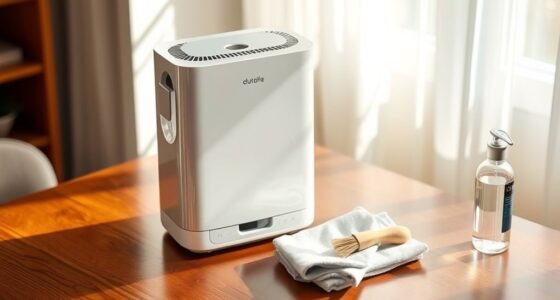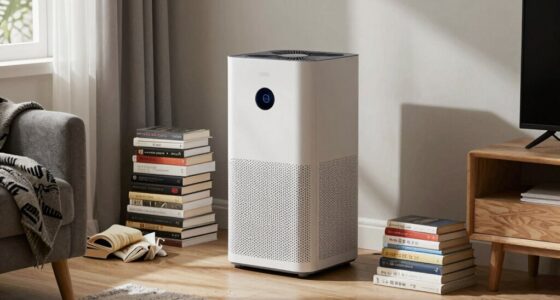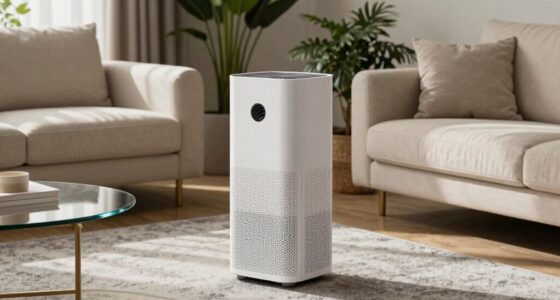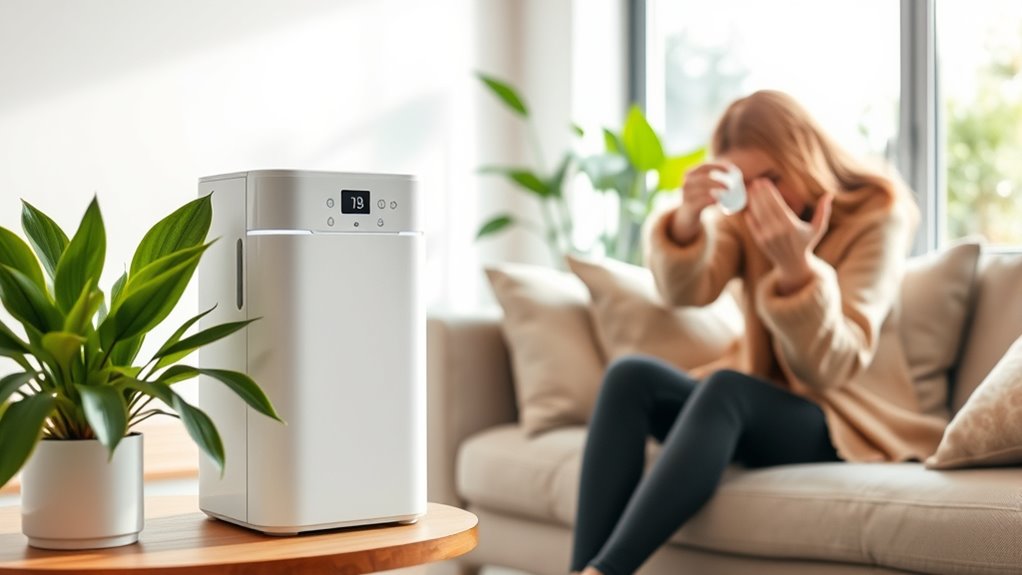

When choosing an air purifier for allergy relief, look for models with high CADR ratings and effective HEPA filters that capture small particles like dust mites, pet dander, pollen, and mold spores. Combine these with activated carbon filters for VOC removal to improve overall air quality. Make sure the unit fits your room size and is easy to maintain, with quiet operation and user-friendly features. Keep exploring to find tips on selecting the best device for your needs.
Key Takeaways
- Select a HEPA filter purifier that captures particles as small as 0.3 microns for effective allergen removal.
- Ensure the device matches your room size and has a high CADR rating for faster allergen elimination.
- Combine HEPA and activated carbon filters to address both allergens and VOCs or chemical pollutants.
- Opt for quiet models with user-friendly features like filter change indicators for ease of maintenance.
- Regularly replace filters to maintain optimal performance and continuous allergy symptom relief.
If allergies make it hard for you to breathe comfortably at home, choosing the right air purifier can make a noteworthy difference. The key is to find one that effectively targets common indoor allergens, such as dust mites, pet dander, pollen, and mold spores. HEPA filters are vital because they capture tiny particles as small as 0.3 microns, including most airborne allergens. When selecting an air purifier, ensure it has a high-efficiency HEPA filter; this will greatly reduce the allergens circulating in your indoor air and ease allergy symptoms.
In addition to allergens, many air purifiers also focus on VOC removal, which is indispensable for improving indoor air quality. Volatile Organic Compounds (VOCs) come from everyday products like cleaning supplies, paints, and air fresheners. Even if you’re diligent about cleaning, VOCs can linger and trigger allergy-like reactions or respiratory issues. An air purifier equipped with activated carbon filters can adsorb these chemicals, reducing their concentration in your home’s air. Combining HEPA filters with activated carbon for VOC removal offers thorough protection, targeting both allergens and chemical pollutants.
When choosing an air purifier, consider its size and coverage area. A unit that’s too small won’t effectively clean larger spaces, while one that’s too powerful may be unnecessary and wasteful. Measure your room and check the manufacturer’s recommended square footage to ensure the purifier matches your space. You’ll also want to look for models with adjustable fan speeds and easy maintenance, such as straightforward filter replacements, to keep the device running efficiently.
Another important factor is air exchange rate, often expressed as Clean Air Delivery Rate (CADR). Higher CADR ratings mean the purifier can clean the air more quickly and efficiently. For allergy relief, prioritize models with high CADR ratings for pollen, dust, and smoke. This ensures that allergens are captured rapidly, providing faster relief and maintaining cleaner indoor air throughout the day.
Finally, pay attention to the noise level, especially if you plan to run the purifier while sleeping or working. Many modern air purifiers operate quietly, so look for one with a low decibel rating on its lower settings. Also, check for user-friendly features like filter change indicators, which help you know when it’s time to replace filters, ensuring continued performance. Additionally, selecting a model with multiple filtration methods can enhance its ability to remove a broader range of airborne pollutants, further improving your indoor air quality.

LEVOIT Smart Air Purifier for Home Pets Room up to 1875 ft Vital 200S-P
- Certified by AHAM: Ensures reliable air quality and safety
- High CADR Ratings: Smoke: 250 CFM, Dust: 254 CFM, Pollen: 289 CFM
- Designed for Allergies: Filters pollen, pet hair, dander, dust
As an affiliate, we earn on qualifying purchases.
As an affiliate, we earn on qualifying purchases.
Frequently Asked Questions
How Often Should I Replace the Filters in My Air Purifier?
You should replace your air purifier filters every 6 to 12 months, depending on usage and the manufacturer’s maintenance schedule. Regular filter replacement is essential for maximum allergy relief, preventing allergens from circulating. Check your user manual for specific guidance, and keep an eye on indicators if your purifier has them. By sticking to the maintenance schedule, you ensure your air stays clean and allergen-free, improving your indoor air quality.
Are HEPA Filters Effective Against Mold Spores?
Coincidentally, your HEPA filter is highly effective against mold spores. With its high HEPA efficiency, it captures 99.97% of particles as small as 0.3 microns, including mold spores. This makes it a great choice for mold removal. By regularly maintaining your purifier and ensuring the filter is in good condition, you can markedly reduce mold in your environment and improve your allergy symptoms.
Can Air Purifiers Eliminate Odors Caused by Pets?
Yes, air purifiers can help eliminate pet odors. Look for models with activated carbon filters, as they excel at absorbing and neutralizing pet smells. Regularly replacing the filters guarantees optimal odor elimination. Keep in mind, while air purifiers considerably reduce pet odors, complete elimination may require additional cleaning and ventilation. Using an air purifier alongside good pet hygiene practices provides the best results for a fresher, odor-free home.
Do Air Purifiers Produce Ozone That Could Affect Allergies?
Like a knight’s shield, some air purifiers produce ozone, which can impact allergy sensitivity. Ozone production occurs mainly with ionizers or ozone generators, and it may irritate your lungs or worsen allergy symptoms. If you’re sensitive, avoid models that emit ozone, as it can do more harm than good. Always check the specifications to verify your air purifier doesn’t produce ozone, keeping your air safe and allergy-friendly.
What Size Air Purifier Is Suitable for a Large Room?
For a large room, you should select an air purifier with a high purifier capacity that matches your room size. Check the room coverage on the product label to guarantee it can handle your space, typically measured in square feet or meters. A purifier with sufficient capacity will effectively clean the air, reducing allergens and improving air quality. Choose one that covers your entire room for ideal allergy relief.
Conclusion
When choosing an air purifier, prioritize one that filters out dust, pollen, and pet dander. Look for models with HEPA filters, consider your room size, and check for easy maintenance. Trust in a device that clears the air, reduces allergens, and improves your breathing. Select an air purifier that fits your needs, fits your lifestyle, and fits your space. Breathe easier, sleep better, and enjoy allergy relief every day.