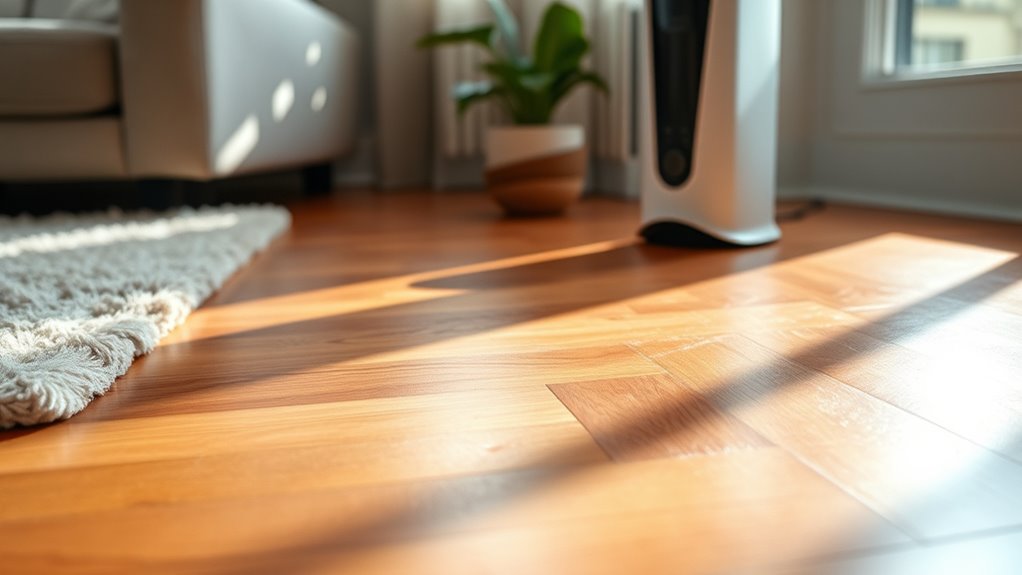

To preserve your wood floors, keep indoor humidity between 30% and 50%. Use a hygrometer to monitor levels regularly and adjust humidifiers or dehumidifiers as needed. Place humidifiers away from heat sources and near the center of rooms for even moisture distribution. Proper placement prevents damage from fluctuations. Maintaining consistent humidity helps prevent cracking, warping, or gaps, and understanding these strategies will help your floors stay beautiful and durable for years to come.

Get cleaning gear delivered free — and shop member deals
- Fast, free delivery on millions of items
- Access to Prime Big Deal Days deals on October 6–7
- Prime Video, Amazon Music and more included
Key Takeaways
- Keep indoor humidity between 30%-50% to prevent wood floor expansion or contraction.
- Use a hygrometer to monitor humidity levels regularly for accurate adjustments.
- Place humidifiers away from heat sources and near the center of rooms for even moisture distribution.
- Adjust humidity seasonally: humidify during dry winters and dehumidify in humid summers.
- Avoid placing humidifiers near windows or exterior walls to prevent condensation and uneven moisture absorption.

Maintaining proper indoor humidity is essential for your comfort and health, especially during seasonal changes when indoor air can become either too dry or too damp. During these fluctuations, your wood floors are especially vulnerable. If the air is too dry, the wood can shrink, crack, or develop gaps. Conversely, excessive moisture can cause it to swell, warp, or even buckle. To protect your floors, you need to manage humidity levels carefully. A key step is considering humidifier placement. Proper placement ensures that your humidifier distributes moisture evenly throughout the room, avoiding hotspots where humidity might be too high or too low. You should position your humidifier away from direct heat sources or vents, which can cause uneven moisture distribution. Placing it near the center of the room helps maintain consistent humidity, preventing rapid fluctuations that could harm your wood flooring.
As seasonal fluctuations occur, your goal is to keep indoor humidity levels between 30% and 50%. During winter, when heating systems dry out the air, turning on a humidifier can restore moisture. During humid summers, using a dehumidifier might be necessary to prevent excess dampness. The key is monitoring indoor humidity regularly with a hygrometer. This device provides real-time readings, guiding you to adjust your humidifier or dehumidifier accordingly. When you notice the humidity drifting outside the ideal range, it’s time to act. Proper humidifier placement and consistent monitoring help you avoid sudden shifts that could damage your floors over time. Additionally, understanding the impact of wood-burning can motivate you to maintain healthier indoor environments that protect your flooring.
During colder months, you might find that placing the humidifier near the coldest parts of your home, such as near windows or exterior walls, helps prevent condensation buildup. This strategic placement ensures moisture penetrates evenly without causing localized dampness. Remember, the goal isn’t just to add moisture but to maintain a stable environment. Fluctuations caused by poor humidifier placement can lead to rapid expansion and contraction of wood, weakening its structure over time. During seasonal fluctuations, your attentive placement of the humidifier and vigilant humidity monitoring are critical. They allow you to respond swiftly to changing conditions, keeping your wood floors safe and looking beautiful for years to come.
digital hygrometer for indoor humidity
As an affiliate, we earn on qualifying purchases.
As an affiliate, we earn on qualifying purchases.
Frequently Asked Questions
How Do Seasonal Changes Affect Indoor Humidity Levels?
Seasonal variation causes humidity fluctuations indoors, affecting your wood floors. In winter, colder air holds less moisture, making your home drier, which can cause wood to shrink or crack. Conversely, summer brings higher humidity levels, risking swelling or warping. To protect your floors, you should adjust your humidifier or dehumidifier accordingly, ensuring consistent indoor humidity levels year-round despite these seasonal changes.
Can Dehumidifiers Damage My Wood Floors?
A dehumidifier, when properly maintained, won’t harm your wood floors. Think of it as a gentle guardian that protects your home’s beauty. Regular dehumidifier maintenance ensures it works efficiently, preventing excessive dryness that could cause wood to crack or shrink. By balancing indoor humidity, you effectively safeguard your wood floor protection, creating a cozy, stable environment. Just keep up with maintenance, and your floors will thank you with enduring elegance.
What Are Signs of Improper Humidity on Wood Flooring?
You’ll notice signs of improper humidity on your wood flooring through visible wood expansion, such as buckling or warping, and uneven gaps between planks. Moisture absorption causes the wood to swell, making it look distorted, while excessive dryness can lead to cracks. Keep an eye out for these issues, as they indicate your indoor humidity levels aren’t balanced, which can harm your floors over time.
How Often Should I Check Indoor Humidity Levels?
Think of your home as a living garden; you need to nurture it regularly. You should check your humidity levels at least weekly using humidity sensors, especially during changing weather patterns. Weather shifts can quickly alter indoor moisture, so frequent checks help you stay ahead. Keeping an eye on these sensors guarantees your wood floors stay stable, preventing damage caused by too much or too little humidity.
Are There Specific Humidity Levels for Different Wood Types?
Yes, different wood types have specific humidity guidelines to prevent damage. For instance, oak floors thrive at 35-55% humidity, while softer woods like pine prefer slightly higher levels around 40-60%. You should adjust your home’s humidity based on your wood type, maintaining within these ranges to avoid warping or cracking. Regularly check your indoor humidity, especially during seasonal changes, to keep your wood floors in ideal condition.
Conclusion
Keeping your indoor humidity balanced is like tending a delicate garden—it requires attention and care. When you maintain the right moisture levels, your wood floors stay happy and healthy, resisting cracks and warping. Think of humidity as the gentle breeze that keeps everything in harmony. By staying vigilant, you create an environment where your floors can flourish, adding beauty and warmth to your home for years to come. Your efforts will guarantee your wood floors remain a steadfast foundation of comfort.
Fall Picks
fall essentials
As an affiliate, we earn on qualifying purchases.