
When handling and storing pool chemicals, always wear protective gear like gloves, goggles, and long sleeves to shield yourself from splashes. Keep chemicals in their original, labeled containers and store them in a cool, dry, well-ventilated area away from sunlight and incompatible substances. Use sturdy shelving and keep chemicals out of children’s reach. Familiarize yourself with safety data sheets and spill response procedures to prevent accidents. Continuing will help deepen your understanding of proper safety practices.
Key Takeaways
- Always wear appropriate protective gear, such as gloves and goggles, when handling pool chemicals.
- Store chemicals in original, labeled containers in a cool, dry, well-ventilated area away from sunlight and heat sources.
- Keep incompatible chemicals separated to prevent dangerous reactions, following proper storage guidelines.
- Familiarize yourself with Safety Data Sheets (SDS) and handle chemicals in well-ventilated spaces.
- Immediately contain and clean up spills using proper protective equipment, following disposal protocols.
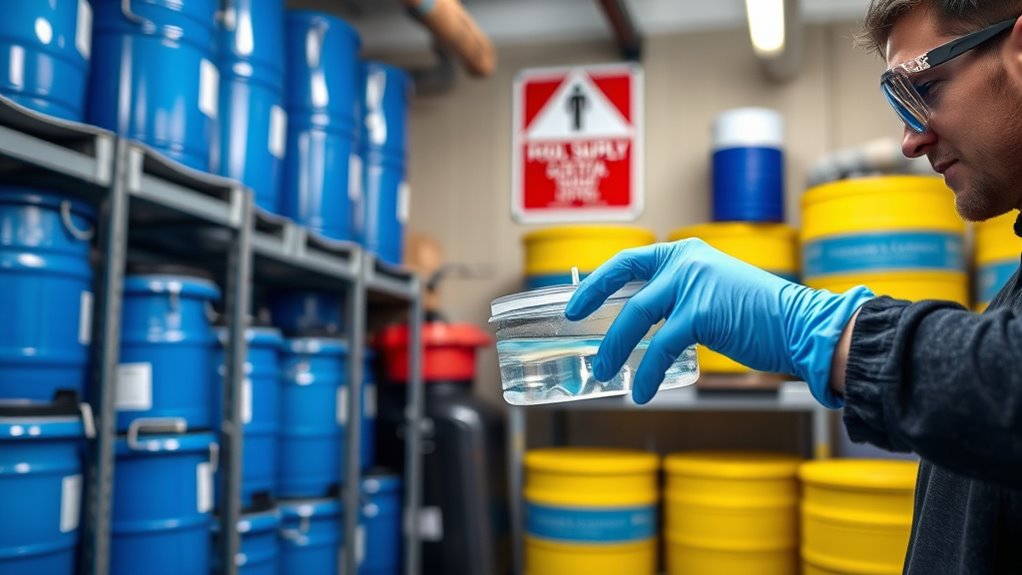
Have you ever considered how safely handling pool chemicals can protect you and your loved ones? It’s essential to take precautions every time you work with substances like chlorine, pH adjusters, or algaecides. Wearing proper protective gear is your first line of defense. This means gloves made of chemical-resistant material, safety goggles or a face shield, and a long-sleeved shirt or apron to shield your skin from splashes. These items aren’t just for show—they actively prevent chemical burns, eye injuries, and skin irritations. When handling chemicals, avoid wearing open-toed shoes or loose clothing that could expose your skin or get caught during mixing. Always wash your hands thoroughly after working with pool chemicals, even if you wore gloves.
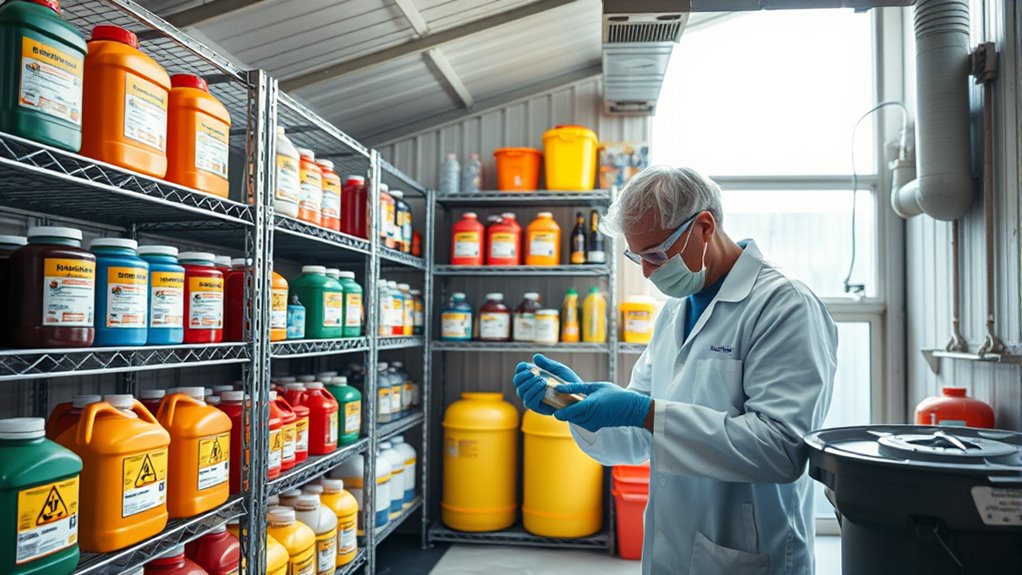
Proper chemical storage is just as critical as protective gear. You should follow strict chemical storage guidelines to prevent accidents and contamination. Store chemicals in a cool, dry, well-ventilated area away from direct sunlight, heat sources, and moisture. Keep them in their original containers with labels intact, and never transfer chemicals into unmarked or makeshift containers. Ensure that all containers are tightly closed when not in use to prevent leaks and spills. Store incompatible chemicals separately—acid-based products should never be stored near bleach or other oxidizers, as this can lead to dangerous reactions. Use sturdy shelving to keep containers upright and secure, and place them out of reach of children and pets.
In addition to physical precautions, it’s vital to be familiar with the chemical safety data sheets (SDS) for each product you handle. These sheets provide detailed information about hazards, first aid measures, and proper handling procedures. Keep a copy nearby your storage area for quick reference. Always handle chemicals in a well-ventilated space to avoid inhaling fumes, and never mix chemicals unless specifically instructed by manufacturer guidelines. Spills happen; in such cases, contain the spill immediately, wear your protective gear, and clean it up with appropriate materials—never use water on chemical spills unless directed.
chemical resistant gloves for pool chemicals
As an affiliate, we earn on qualifying purchases.
As an affiliate, we earn on qualifying purchases.
Frequently Asked Questions
Can Pool Chemicals Be Mixed With Other Household Cleaners Safely?
You should never mix pool chemicals with household cleaners because pool chemical interactions can produce dangerous gases or reactions. Household cleaner compatibility varies, and combining them with pool chemicals can create toxic fumes or chemical burns. Always store and handle pool chemicals separately from household cleaners, and read labels carefully. If you’re unsure, contact a professional for guidance. Safety first—avoid risky mixtures to protect yourself and others.
What Are the Signs of Chemical Overexposure During Handling?
Ever wonder how to spot chemical overexposure? You’ll notice symptoms like skin or eye irritation, coughing, difficulty breathing, or dizziness. Recognizing these signs quickly helps prevent serious health issues. Always wear proper protective gear and handle chemicals carefully to minimize exposure. Do you stay alert for these symptoms while working? Staying vigilant and practicing exposure prevention keeps you safe during chemical handling.
How Often Should Pool Chemicals Be Tested for Safety?
You should perform chemical testing regularly to guarantee safety, ideally at least 2-3 times a week during peak swimming seasons. This safety frequency helps you monitor pH levels, chlorine, and other chemicals, preventing hazards. Consistent chemical testing allows you to make quick adjustments, reducing risks of overexposure or chemical imbalance. Always follow your pool manufacturer’s recommendations and local regulations for ideal safety and water quality.
Are There Eco-Friendly Alternatives to Traditional Pool Chemicals?
Yes, there are eco-friendly alternatives to traditional pool chemicals. You can explore natural pool treatments like mineral sanitizers, salt chlorine generators, or enzymes that reduce the need for harsh chemicals. These eco-friendly alternatives help maintain clean, healthy water while minimizing environmental impact. By switching to natural pool treatments, you support sustainability and create a safer swimming environment for your family and the planet.
What Should I Do if a Chemical Spill Occurs in Storage?
If a chemical spill occurs in storage, you should immediately activate your emergency response plan and prioritize spill containment. Wear appropriate protective gear, and contain the spill using absorbent materials or barriers to prevent it from spreading. Ventilate the area, and avoid contact with the chemicals. Once contained, clean up the spill safely, dispose of waste properly, and report the incident to the relevant authorities to guarantee safety.
Conclusion
By following proper handling and storage guidelines, you greatly reduce the risk of accidents and chemical reactions. Some believe that storing chemicals together can create a dangerous reaction, but research shows that with correct separation and ventilation, hazards are minimized. So, always read labels, keep chemicals in their original containers, and store them in a cool, dry place. Staying informed and cautious ensures your pool remains a safe, enjoyable space for everyone.