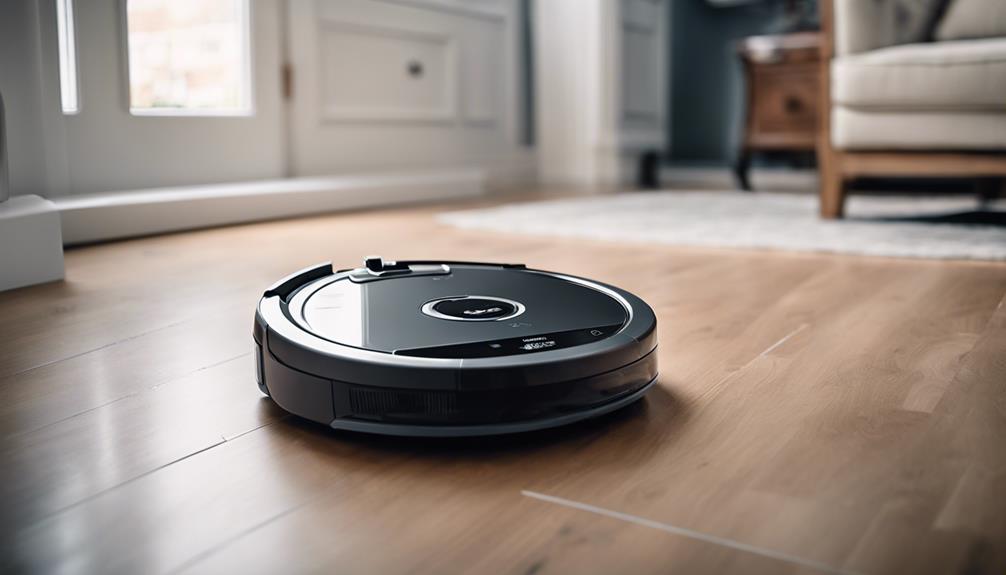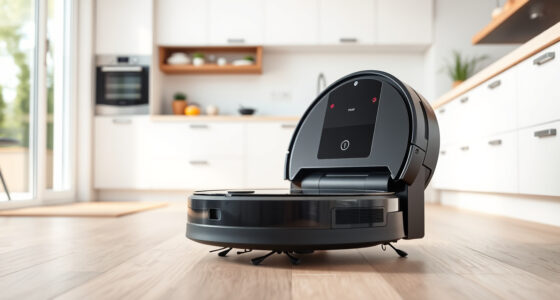

If you want thorough, efficient, and safer cleaning, a systematic pattern is better than a random one. It guarantees no spots are missed, reduces contamination risks, and helps you use your resources wisely. Random cleaning might seem more flexible but often leads to missed areas and rework. By sticking to a planned approach, you’ll improve hygiene standards consistently. Keep exploring to discover how adopting a structured pattern can make your cleaning more effective and reliable.

Get cleaning gear delivered free — and shop member deals
- Fast, free delivery on millions of items
- Access to Prime Big Deal Days deals on October 6–7
- Prime Video, Amazon Music and more included
Key Takeaways
- Systematic cleaning offers higher efficiency by ensuring complete coverage without repetition or missed spots.
- Random cleaning increases contamination risk due to inconsistent coverage and potential oversight of critical areas.
- Systematic approaches improve resource management, saving time, effort, and cleaning agents compared to random methods.
- Random cleaning may be suitable for casual environments but lacks reliability in health-critical settings like hospitals.
- Overall, systematic cleaning provides more thorough, consistent, and safer hygiene standards, making it the better choice.

Have you ever wondered if there’s a better way to clean your space? When it comes to maintaining a hygienic environment, choosing between random and systematic cleaning patterns can considerably impact your results. To make the right decision, you need to evaluate which approach offers higher efficiency and reduces contamination risk. An efficiency assessment helps you determine how well your cleaning method uses resources—time, effort, and cleaning agents. Systematic cleaning, which follows a predetermined, methodical pattern, generally scores higher in efficiency assessments because it ensures every area gets attention without unnecessary repetition or missed spots. This approach minimizes the chances of overlooking contaminated zones, which can be especially critical in environments like hospitals or kitchens. By methodically covering every section, you reduce the contamination risk, ensuring a safer and cleaner space.
Systematic cleaning maximizes efficiency and reduces contamination risk through thorough, methodical coverage.
In contrast, random cleaning patterns involve moving through an area without a fixed order, often based on convenience or habit. While this might seem flexible and less time-consuming at first glance, it tends to be less efficient overall. You might spend extra time retracing your steps or missing spots altogether, which can lead to uneven cleaning. The lack of structure makes it harder to perform a thorough contamination risk assessment, increasing the chance that some areas remain dirty or contaminated. Over time, this inconsistency can compromise the hygiene of your environment, especially in settings where cleanliness directly impacts health, like healthcare facilities or food preparation zones.
When you opt for a systematic approach, you can better track your progress and identify potential problem areas. This not only streamlines your cleaning routine but also enhances the accuracy of your contamination risk management. With a clear plan, you’re less likely to forget critical spots, and you can allocate your resources more effectively. Over time, this leads to a more detailed cleaning process, reducing the likelihood of cross-contamination and the spread of germs. Conversely, random cleaning might seem faster initially, but the risk of missing contaminated areas can outweigh those short-term savings, especially if you’re working in a high-stakes environment.
Ultimately, the choice between random and systematic cleaning hinges on your goals for efficiency and contamination control. Conducting an efficiency assessment beforehand can help you see that systematic cleaning provides a strategic advantage. It’s more consistent, thorough, and safer, making it the smarter choice if you aim for high standards of hygiene and minimal contamination risk. While random cleaning may work in some casual scenarios, systematic patterns are the gold standard for ensuring a truly clean and healthy environment. Additionally, adopting a Gold IRA approach in planning your cleaning strategy can help you diversify your methods and enhance overall effectiveness.
systematic cleaning pattern tools
As an affiliate, we earn on qualifying purchases.
As an affiliate, we earn on qualifying purchases.
Frequently Asked Questions
How Do Cleaning Patterns Impact Overall Hygiene Levels?
Your cleaning pattern directly impacts hygiene levels by affecting dirt removal and contamination spread. A systematic approach guarantees you thoroughly cover all areas, reducing dirt buildup and preventing cross-contamination. Conversely, random cleaning may leave spots untouched, allowing bacteria to thrive. By following an organized pattern, you improve overall cleanliness, minimize the risk of infection, and maintain a healthier environment. This method keeps surfaces cleaner and safer for everyone.
Which Pattern Conserves More Cleaning Supplies?
Imagine your cleaning routine as a delicate dance that preserves your resources. A systematic pattern often conserves more cleaning supplies because it’s designed for pattern efficiency, reducing unnecessary repetition. By following a planned approach, you use only what’s needed, minimizing waste. This mindful strategy guarantees your cleaning supplies last longer, helping you maintain hygiene without extra costs. Embracing pattern efficiency is a smart way to protect both your environment and your budget.
Can Combining Cleaning Patterns Improve Efficiency?
Yes, combining cleaning patterns can improve efficiency by enhancing cleaning consistency and pattern adaptability. You can switch between systematic and random approaches based on the area’s needs, ensuring thorough coverage without wasting supplies. This flexibility allows you to adapt to different surfaces and dirt levels, reducing missed spots and overuse of cleaning products. By blending patterns, you optimize your cleaning process, making it more effective and resource-efficient.
How Do Cleaning Patterns Affect Time Management?
Think of your cleaning schedule as a dance, where your chosen pattern guides your moves. Your cleaning pattern, whether random or systematic, influences how efficiently you manage your time. Prioritizing tasks helps you stay on beat, avoiding unnecessary steps. A well-structured pattern minimizes wasted effort, giving you more time for other priorities. So, a thoughtful approach to your cleaning routine keeps your schedule smooth and your day running seamlessly.
Are There Specific Environments Better Suited for Each Pattern?
You’ll find that environment suitability and surface types greatly influence which cleaning pattern works best. For instance, systematic cleaning suits large, uniform areas like warehouses or offices, ensuring thorough coverage. Conversely, random patterns are better for irregular spaces or delicate surfaces, where cautious, flexible movement prevents damage. Recognizing these factors helps you choose the most effective approach, saving time while maintaining cleanliness tailored to each environment’s unique needs.
Conclusion
In the end, choosing between random and systematic cleaning depends on your needs. For example, a hospital might prioritize systematic cleaning to guarantee no area is missed, reducing infection risks. On the other hand, a busy home might benefit from a more flexible, random approach, saving time while maintaining cleanliness. Both methods have their merits, so consider your space and priorities—sometimes, blending both strategies can give you the best results.
Fall Picks
fall essentials
As an affiliate, we earn on qualifying purchases.