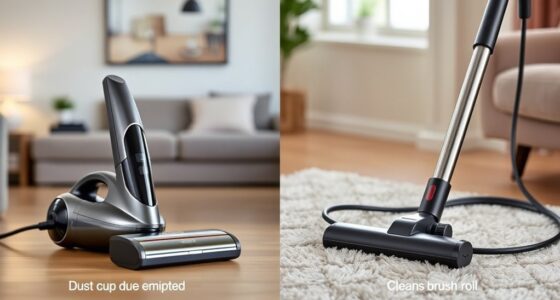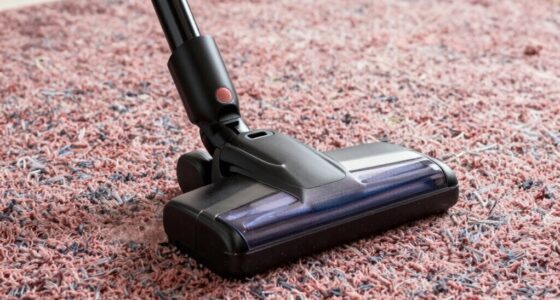
If your vacuum leaves debris behind despite multiple passes, the problem might be clogged filters, a full bag or bin, or a worn brush roll that can’t pick up dirt effectively. Airflow restrictions from blocked hoses or filters reduce suction, causing debris to be missed. Also, incorrect settings or floor-specific techniques can lower cleaning power. If these issues persist, you’ll discover more tips to get your vacuum working like new.

Get cleaning gear delivered free — and shop member deals
- Fast, free delivery on millions of items
- Access to Prime Big Deal Days deals on October 6–7
- Prime Video, Amazon Music and more included
Key Takeaways
- Blocked pathways or tangled debris in the brush roll or suction hose reduce debris pickup efficiency.
- Full or dirty filters and bags restrict airflow, decreasing suction power even after multiple passes.
- Mechanical issues like worn brushes, loose belts, or clogged components hinder debris removal.
- Restricted airflow from buildup or obstructions strains the motor, lowering suction and cleaning effectiveness.
- Improper vacuum settings or inadequate surface-specific techniques can cause missed debris despite repeated vacuuming.
As an affiliate, we earn on qualifying purchases.
Why Is My Vacuum Missing Debris Despite Cleaning Multiple Times?
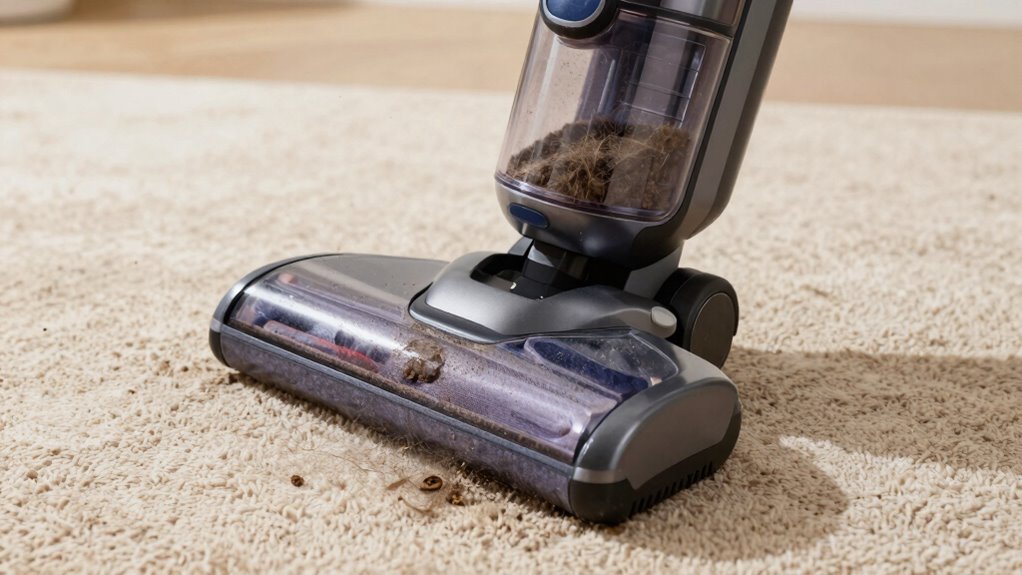
Even after multiple cleaning sessions, your vacuum might still miss debris because its brush roll or suction pathway could be clogged or blocked. Regular vacuum maintenance is essential to keep it functioning properly. When debris visibility is limited due to buildup or obstructions, your vacuum struggles to pick up everything in its path. Check for tangled hair, fibers, or debris wrapped around the brush roll, which can hinder its rotation. Also, inspect the suction pathway for blockages or debris that restrict airflow. Clearing these obstructions improves debris visibility and ensures your vacuum works efficiently. Proper maintenance not only helps you spot debris more easily but also prevents debris from slipping past your vacuum’s reach, leaving behind unwanted dirt and particles. Additionally, understanding vintage home technology can help you recognize patterns in your cleaning habits and optimize your maintenance routine. Regularly replacing or cleaning filters and brushes is a key part of effective vacuum upkeep, which contributes to better cleaning performance. Incorporating electric-powered cleaning tools into your routine can also enhance overall effectiveness and reduce missed debris.
How Do Full or Dirty Vacuum Bags and Bins Affect Suction Power?
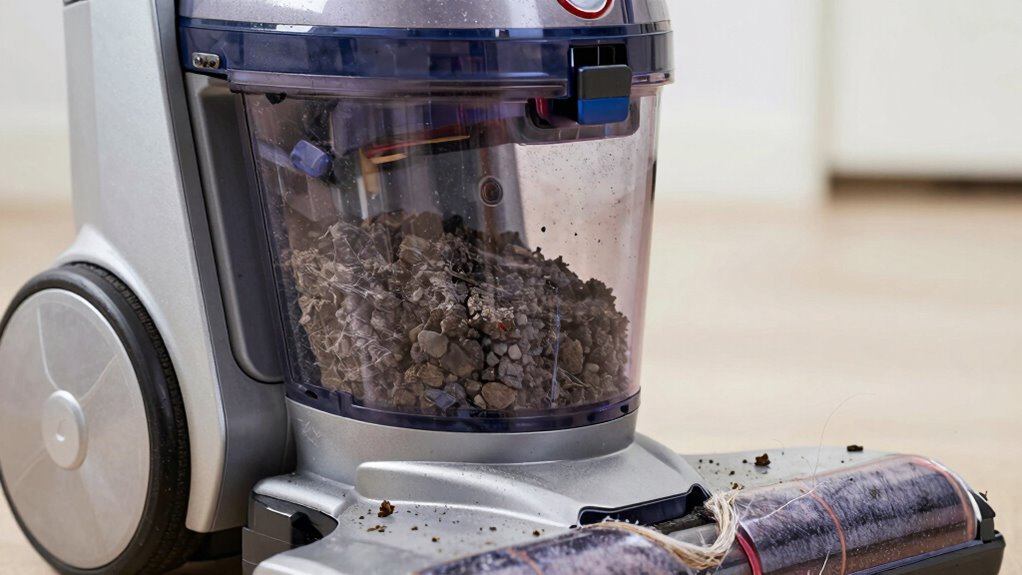
When your vacuum bag or bin gets full or dirty, airflow slows down, making it harder for the vacuum to pick up debris. This puts extra strain on the motor, which can lead to reduced suction power and potential damage. As a result, your vacuum struggles to clean effectively, leaving debris behind. Proper maintenance of filter and bag condition is essential for optimal vacuum performance. Additionally, neglecting regular checks can cause airflow restriction, further diminishing cleaning efficiency. Regularly inspecting and replacing these components ensures that the vacuum maintains its suction strength and functions efficiently. Incorporating preventive maintenance routines can help prolong the lifespan of your vacuum and maintain consistent performance. Recognizing the importance of cleaning techniques can further improve your vacuum’s ability to perform effectively over time.
Reduced Airflow Efficiency
A full or dirty vacuum bag or bin can substantially reduce airflow, which in turn diminishes suction power. When airflow blockage occurs, your vacuum struggles to pull debris effectively. Additionally, neglecting filter maintenance can worsen airflow issues, trapping dust and restricting air movement. Reduced airflow means less debris is lifted, leaving behind dirt even after multiple passes. To prevent this, regularly check and replace bags or empty bins before they become full. Keep filters clean and replace them as needed. Proper maintenance also involves inspecting for debris buildup, which can create internal airflow restrictions and further hinder cleaning performance. Regularly inspecting and maintaining your vacuum components ensures optimal airflow efficiency, keeping your device working at its best. Understanding how airflow dynamics impact suction can help you troubleshoot and maintain your vacuum more effectively. Recognizing signs of airflow problems early can help preserve your vacuum’s suction power and prolong its lifespan.
Increased Motor Strain
A clogged or full vacuum bag or bin forces the motor to work harder to maintain suction, increasing motor strain. As debris buildup blocks airflow, the motor compensates by exerting more effort, which can lead to overheating or damage over time. This added stress reduces the vacuum’s efficiency and shortens its lifespan. To prevent this, keep an eye on your vacuum’s bag or bin and empty it regularly. Regular maintenance can also prevent motor failure and preserve suction power. Additionally, using the correct body jewelry materials for repairs or replacements ensures safety and optimal performance. Properly maintaining filters and seals is also essential to airflow management and overall device health. Being attentive to airflow pathways can help identify blockages early and reduce strain on the motor.
Poor Debris Collection
As vacuum bags or bins fill up with debris, suction power noticeably decreases because airflow becomes restricted. When your vacuum bag is full or the debris buildup is significant, it hampers the machine’s ability to draw in dirt effectively. A clogged or overly full vacuum bag reduces suction because it creates resistance, preventing air from flowing freely through the vacuum system. Similarly, a dirty bin hampers debris collection, leading to poor cleaning performance. When debris accumulates, the vacuum struggles to lift dirt from carpets and floors, leaving debris behind even after multiple passes. Regularly emptying or replacing the vacuum bag and cleaning the bin ensures unobstructed airflow, maintaining ideal suction and improving your vacuum’s overall efficiency.
Are Your Vacuum Filters Clogged or Worn Out? Here’s How to Check
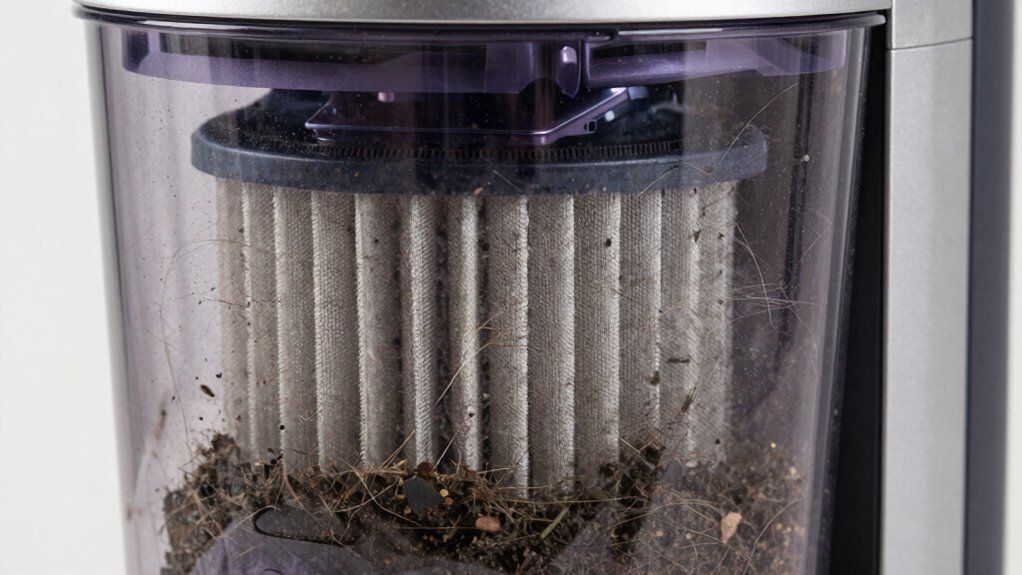
Check your vacuum filter regularly to see if it’s clogged with dust or debris. If the filter looks dirty or discolored, it’s time to replace it. Keeping your filter in good shape guarantees ideal suction and cleaning performance. Additionally, using a HEPA filter vacuum ensures better capture of allergens and tiny particles, which can improve overall indoor air quality. Moreover, inspecting your vacuum components periodically can help prevent loss of efficiency caused by wear or damage. Regular maintenance also minimizes the risk of clogged filters leading to reduced suction power. To maintain optimal vacuum performance, consider consulting your manufacturer’s guidelines for specific maintenance intervals. Remember, proper filter upkeep is essential for keeping your vacuum working at its best.
Inspect Filter for Clogs
Wondering if your vacuum filter is causing a drop in performance? Start with a thorough filter inspection to see if it’s clogged or dirty. Remove the filter and check for visible blockages or debris buildup. If it looks dirty, perform clog removal by gently cleaning or replacing it. Look for signs like reduced suction power or unusual odors, which often indicate a clogged filter. Regular filter inspection helps maintain suction and prevents debris from being left behind. Remember, a clean filter is key to effective vacuuming. European cloud innovation and sustainable solutions are helping improve the efficiency of modern appliances, including vacuum systems. Additionally, following air purifier maintenance dos and don’ts can provide insights into proper cleaning practices that extend to vacuum filters as well.
Replace Worn Filters
If your vacuum isn’t performing as well as it used to, it might be time to replace worn filters. Regular vacuum maintenance includes checking filters for signs of wear or damage. A worn or clogged filter reduces airflow, making your vacuum less effective at picking up debris. To check your filters, remove them and inspect for dirt buildup, discoloration, or tears. If cleaning doesn’t restore airflow or if the filter appears damaged, it’s time for filter replacement. Using the right filters and replacing them as needed ensures your vacuum operates at peak efficiency. Don’t ignore filter issues, as neglecting vacuum maintenance can leave debris behind and strain your appliance. Keep your vacuum in top shape with timely filter replacement.
Is Your Vacuum’s Brush Roll or Beater Bar Causing Missed Dirt?
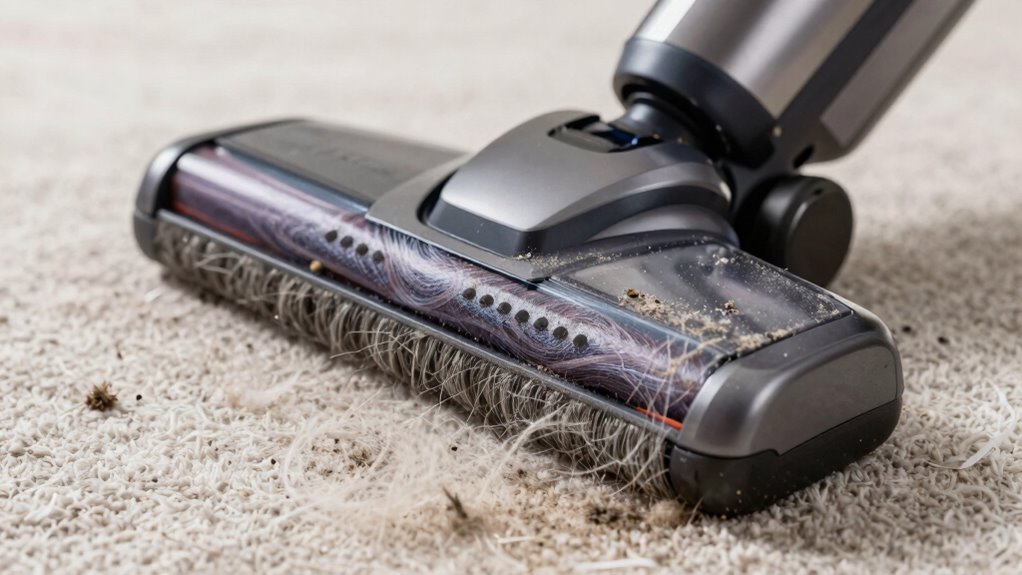
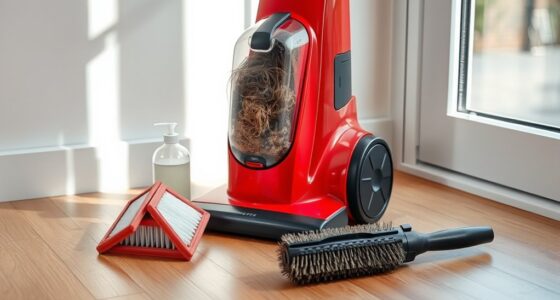
A clogged or damaged brush roll or beater bar can substantially reduce your vacuum’s cleaning efficiency. If debris is missed, it might be due to an unkempt or misaligned brush roll. Regular brush roll maintenance is essential to keep it spinning freely and effectively. Check for tangled hair, threads, or debris wrapped around the roller. Ensure the beater bar is properly aligned, so it makes full contact with the carpet. Look for these common issues:
Regularly check and maintain your brush roll to ensure optimal vacuum performance and cleaning efficiency.
- Hair or string tangled around the brush roll
- Worn or broken bristles
- Loose or damaged belt
- Misaligned beater bar
- Obstructed or dirty brush housing
- Proper maintenance techniques are key to keeping your vacuum functioning optimally. Regular inspection and alignment of the beater bar prevent debris from being missed and ensure maximum cleaning performance.
Addressing these problems ensures peak dirt pickup. Proper maintenance and alignment help your vacuum perform at its best and prevent missed debris.
Are Your Vacuum Settings and Suction Levels Correct? How to Adjust Them
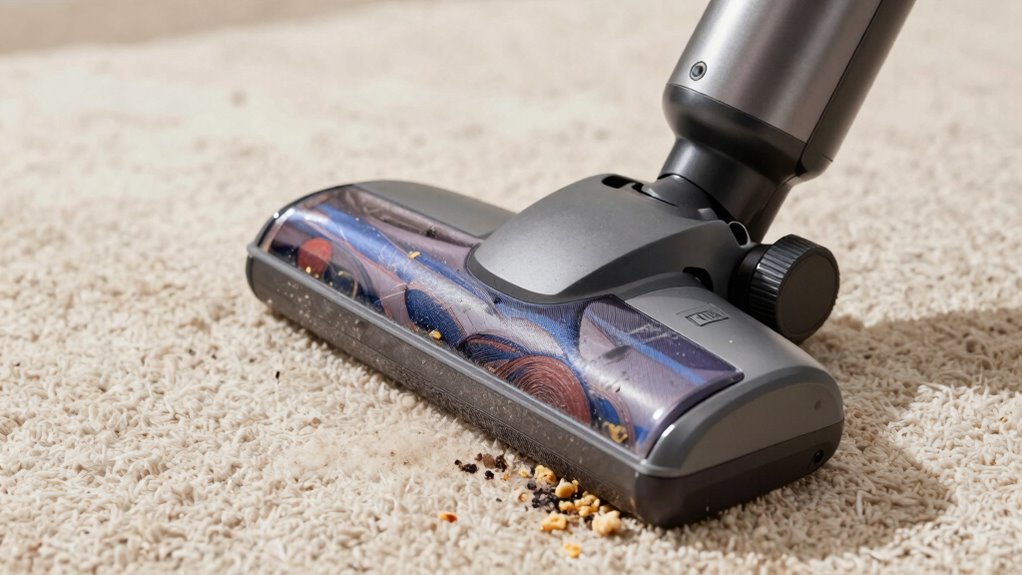
Ensuring your vacuum’s settings and suction levels are properly adjusted is essential for peak cleaning performance. Proper vacuum maintenance includes checking and adjusting suction, so dirt and debris don’t get left behind. Start by inspecting the suction adjustment controls—many vacuums have settings for different surfaces. If your vacuum has adjustable suction, turn the dial or switch to a higher setting for carpets or heavily soiled areas. For hard floors, a lower suction level may be more effective and prevent scattering debris. Regularly cleaning filters and ensuring no blockages also helps maintain ideal suction. Remember, a well-maintained vacuum with correctly set suction levels will improve cleaning efficiency and reduce missed debris, making your cleaning routine more effective.
Do Different Floors Need Different Vacuum Techniques? Tips for Hard Floors and Carpets
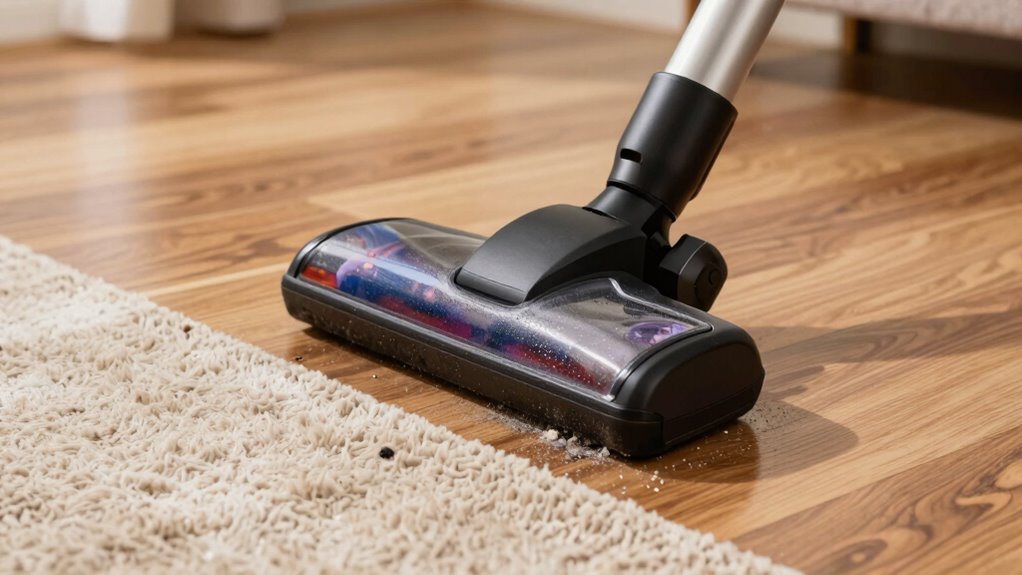
Different types of flooring require distinct vacuuming techniques to achieve the best results. Using surface adapted methods ensures you effectively remove debris without damaging your floors. For hard floors, use a gentle, slow pass to avoid scratching, and consider a soft brush or hard floor setting. For carpets, employ multiple passes with increased suction to lift dirt embedded deep within fibers.
- Adjust your vacuum’s height for ideal contact
- Use a back-and-forth motion for carpets
- Sweep hard floors with slow, overlapping strokes
- Opt for a soft brush attachment on delicate surfaces
- Regularly clean filters to maintain suction power
Applying floor specific techniques helps prevent debris from being left behind and keeps each surface in top condition. Tailoring your approach maximizes cleaning efficiency and preserves your floors’ integrity.
Could Attachments or Hose Blockages Be the Culprit? How to Troubleshoot
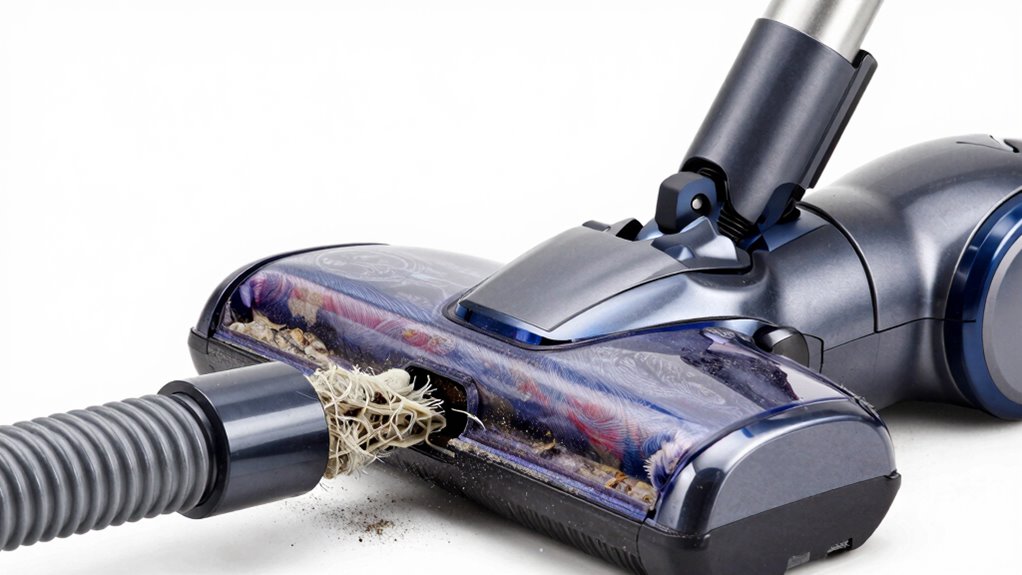
Sometimes, blockages in your vacuum’s hose or attachments can cause a sudden drop in suction and reduce cleaning effectiveness. A hose blockage prevents air and debris from flowing freely, making your vacuum less powerful. Check the hose thoroughly for any kinks, twists, or visible debris. Detach the hose and inspect it for obstructions; you can try to clear blockages with a broomstick or similar tool. Attachment issues can also hinder cleaning; ensure your tools are properly connected and not clogged. Remove any debris or hair wrapped around the attachment openings. Regularly inspecting and clearing these parts keeps airflow unobstructed. Addressing hose blockages and attachment issues promptly guarantees your vacuum performs at its best and leaves no debris behind.
When Should You Repair or Replace Your Vacuum? Signs It’s Time
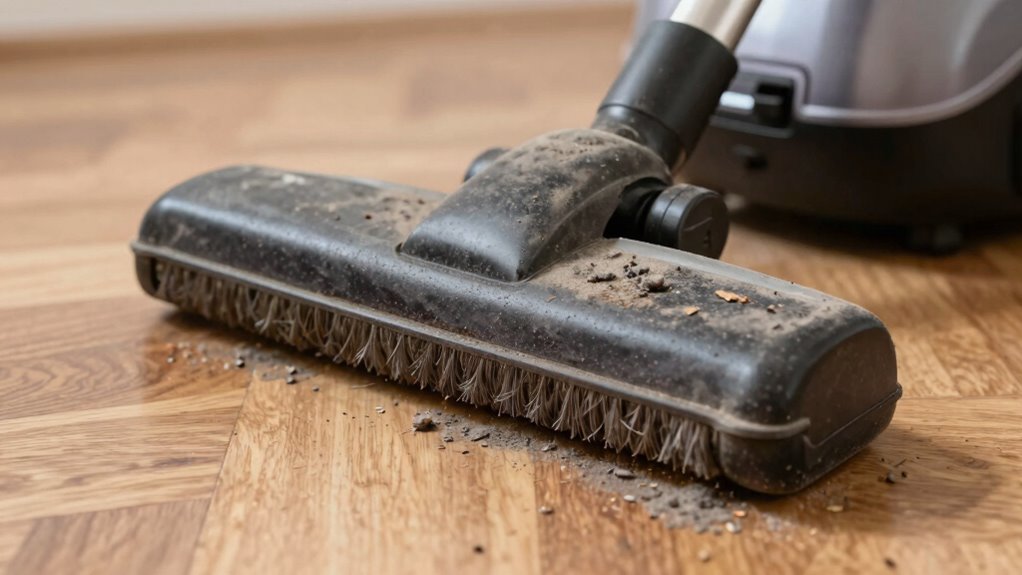
Knowing when to repair or replace your vacuum can save you time and money, especially when it stops performing like it used to. If your vacuum struggles despite regular vacuum maintenance and sticking to cleaning schedules, it might be time to contemplate a replacement. Watch for these signs:
- Persistent loss of suction
- Excessive dust or debris after cleaning
- Unusual noises or burning smells
- Frequent breakdowns or repairs
- Age exceeding 8-10 years
If these issues persist even after troubleshooting, repairing might no longer be cost-effective. A well-maintained vacuum should reliably pick up debris without constant repairs. Recognizing these signs helps you decide whether a quick repair or a full replacement is the best option to keep your home clean.
Quick Tips for Ensuring Your Vacuum Cleans Thoroughly Every Time
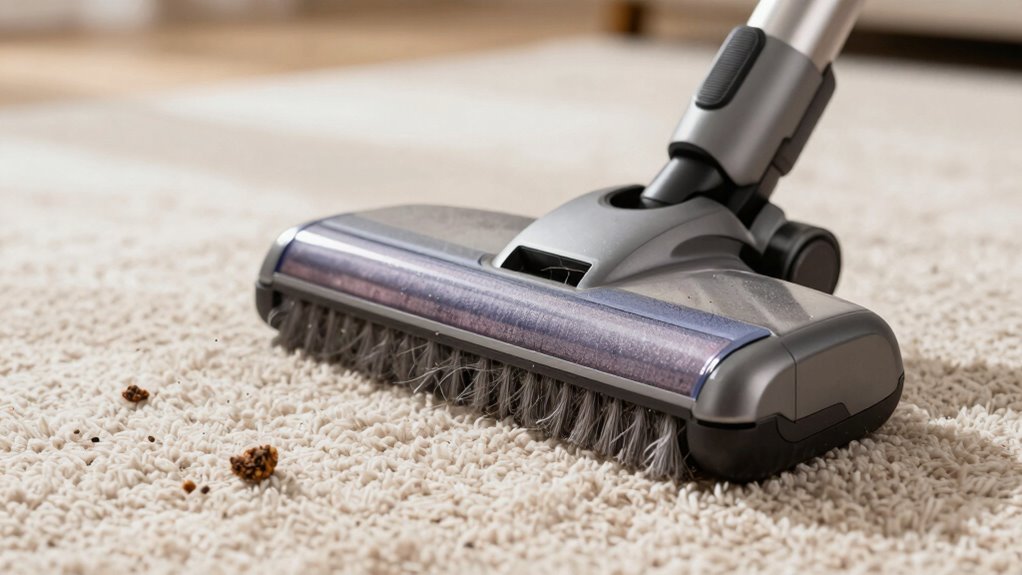
To keep your vacuum performing at its best and guarantee it cleans thoroughly every time, it’s important to follow a few simple, effective tips. Regular vacuum maintenance is key—check and clean the brush roll, filters, and bags or canisters often. Adjust your cleaning frequency based on foot traffic and household needs; more frequent cleaning prevents debris buildup that can hinder performance. Clear obstructions from hoses and attachments regularly to avoid suction loss. Replace filters as recommended to maintain airflow and filtration. Additionally, inspect belts for wear and replace them if needed. By sticking to these quick tips, you ensure your vacuum operates efficiently, prolongs its lifespan, and consistently delivers a deep, thorough clean every time.
Frequently Asked Questions
Can Vacuum Height Adjustment Affect Debris Pickup Efficiency?
Yes, vacuum height adjustment can affect debris pickup efficiency. If the vacuum is set too high, it won’t make proper contact with the floor, allowing debris to stay behind. Conversely, setting it too low can cause the brush to jam or damage surfaces. Adjusting the vacuum height properly ensures maximum debris pickup, especially on different floor types, making your cleaning more effective and preventing debris from being missed.
How Often Should I Replace Vacuum Belts for Optimal Cleaning?
Replacing your vacuum belt is like changing the tires on your car—it’s essential for smooth operation. You should check and replace the vacuum belt regularly, roughly every 6 to 12 months, to guarantee maximum belt lifespan and cleaning performance. If you notice slipping or loss of suction, it’s time for a replacement. Staying on top of vacuum belt replacement keeps your cleaner working efficiently and helps prevent costly repairs down the line.
Do Vacuum Seals Impact Debris Collection Performance?
Yes, vacuum seals greatly influence debris collection performance. When the vacuum bag or seal isn’t tight, airflow efficiency drops, making it harder for your vacuum to pick up debris effectively. Make certain the vacuum bag is properly sealed and in good condition. A secure seal maintains ideal airflow, boosting cleaning power and preventing debris from being left behind. Regularly check and replace seals to keep your vacuum performing at its best.
Is Static Electricity Causing Debris to Cling to Surfaces?
Yes, static electricity can cause debris to cling to surfaces through static cling, increasing dust adhesion. When surfaces or vacuum components build up static charges, tiny particles stick more firmly, making it harder for your vacuum to remove all debris. To reduce this, try using anti-static sprays or regularly cleaning your vacuum components, which can help minimize static charge buildup and improve debris removal efficiency.
Can Pet Hair Clog My Vacuum’s Internal Components?
Think of your vacuum like a filter; pet hair can clog its internal parts, much like hair tangled in a drain. When this happens, it causes airflow restriction, making your vacuum work harder and less effectively. Pet hair often clings to the vacuum bag or filters, blocking airflow and reducing suction power. Regularly emptying the vacuum bag and cleaning filters helps maintain ideal airflow and prevents clogs from pet hair buildup.
Conclusion
If your vacuum still leaves debris behind, don’t settle for less. Have you checked all the common issues like filters, bags, or brush rolls? Sometimes, a simple tweak can make all the difference. Remember, a thorough clean depends on proper maintenance and technique. So, are you ready to give your vacuum the care it needs to truly get your floors spotless? Your home deserves a cleaning tool that works as hard as you do.
Halloween Picks
halloween
As an affiliate, we earn on qualifying purchases.