Instead of relying on air fresheners, focus on cleaning the real odor sources in your home, like trash cans, garbage disposals, and pet areas. Regularly scrub and disinfect these spots, using natural solutions like vinegar and baking soda. Maintain good ventilation and keep trash bins sealed. By targeting the root causes, your space will stay fresher longer without masking scents. Interested in discovering simple, effective ways to keep your home odor-free? Keep going to learn more.
Key Takeaways
- Identify and thoroughly clean hidden odor sources like pet stains, mold, and damp areas rather than masking smells.
- Regularly wash or replace trash cans, filters, and ventilation systems to eliminate persistent odor traps.
- Use natural deodorizers such as baking soda, vinegar, and essential oils on surfaces and in air circulation areas.
- Maintain proper ventilation by opening windows and using exhaust fans to prevent odor buildup at the source.
- Conduct routine air quality checks and address underlying issues promptly, avoiding reliance on artificial air fresheners.
natural odor eliminator for trash cans
As an affiliate, we earn on qualifying purchases.
As an affiliate, we earn on qualifying purchases.
Why Air Fresheners Don’t Truly Eliminate Home Odors
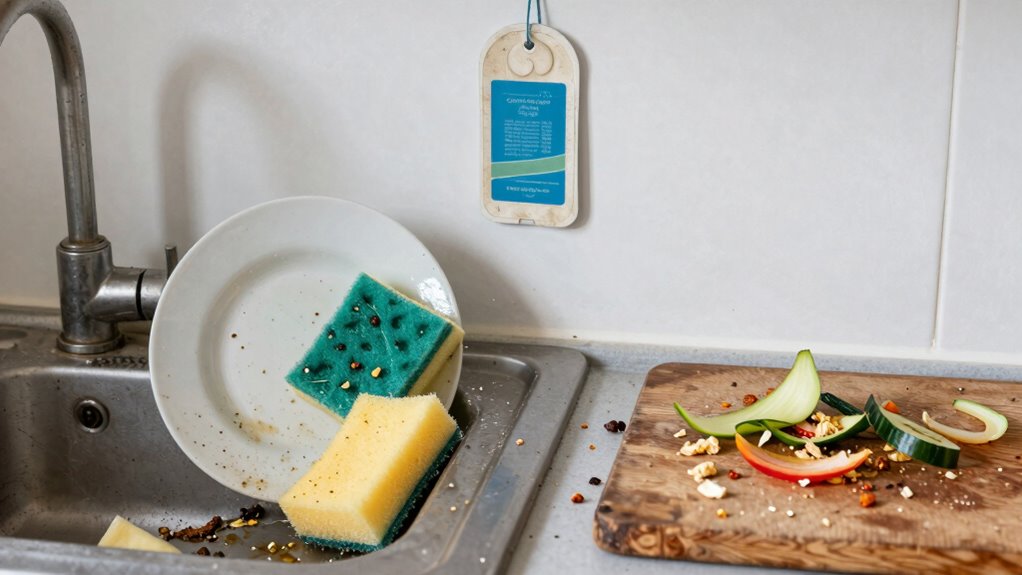
Air fresheners might make your home smell nicer temporarily, but they don’t actually eliminate the underlying odors. Instead, they rely on chemical masking, which covers up smells with artificial scents. This process doesn’t remove the source of the odor; it just hides it. Over time, scent saturation occurs, where the air becomes overwhelmed with artificial fragrances, making it harder to detect the original smell. Relying on air fresheners can create a false sense of cleanliness, but the real problem remains untouched. These products don’t address the root cause of odors, only temporarily disguising them with scent saturation. To truly improve your home’s air quality, you need to target and eliminate the odor sources rather than just masking them with scent saturation. Effective odor control involves identifying and removing the source of the smell at its origin, which requires understanding home odor sources and how they develop.
How to Find Hidden Odor Sources Like Trash and Pet Areas
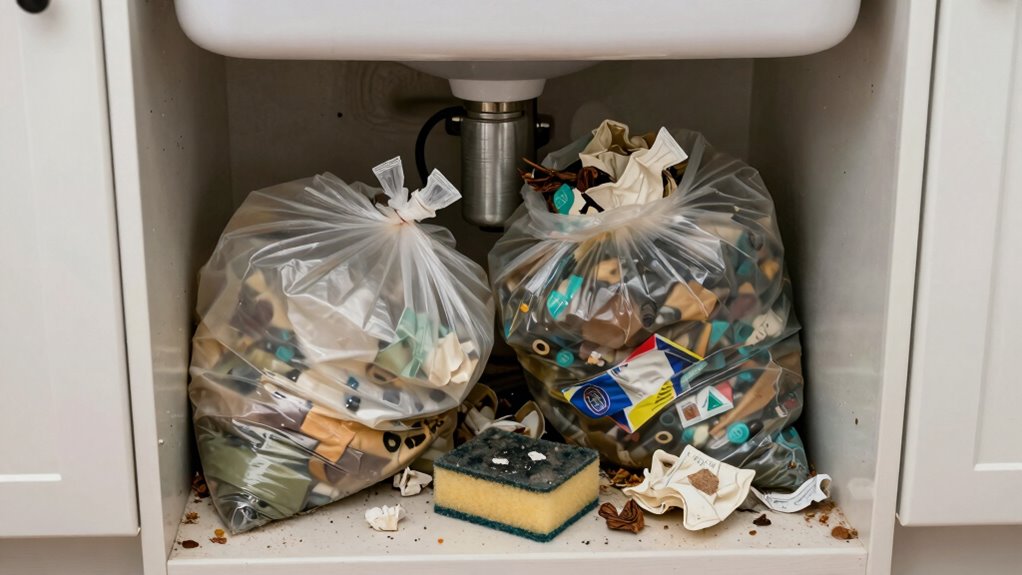
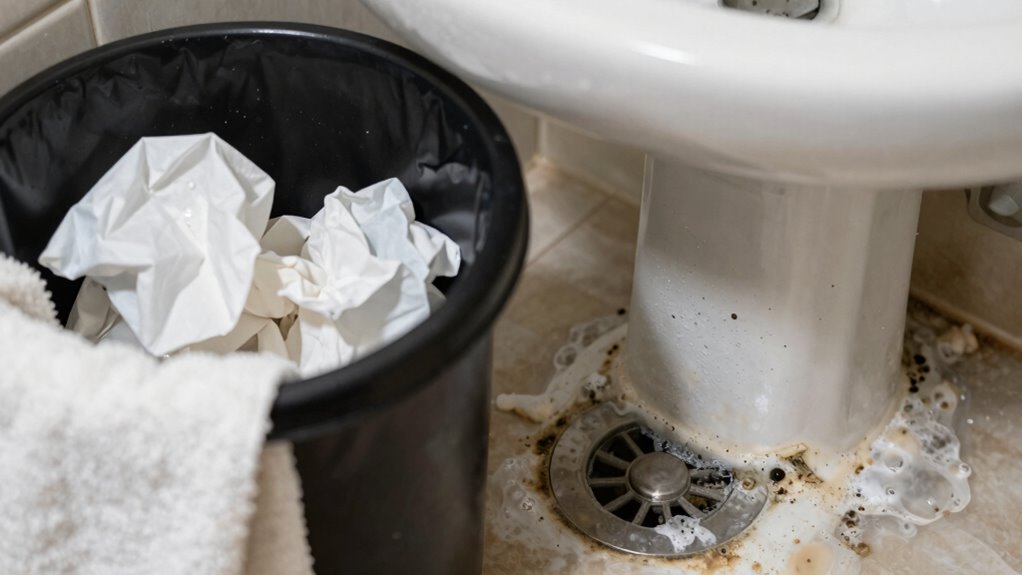
Have you ever noticed persistent odors lingering despite cleaning? Hidden pet stains can seep into carpets or upholstery, releasing smells even after surface cleaning. Check for any discoloration or damp spots, especially in areas your pet frequents. Mold growth is another sneaky source; it thrives in damp, dark spots like behind appliances or under sinks. Look for fuzzy patches or musty smells, which indicate mold. Inspect trash areas thoroughly—sometimes, spills or accumulated debris cause odors that aren’t obvious. Don’t forget to examine hidden corners, under furniture, and in less obvious spots. Identifying these odor sources requires a close, thorough inspection. Proper odor detection methods can help locate these hidden issues effectively. Using air purifiers with specialized filters can also help eliminate lingering odors once the sources are addressed. Once found, you can target these hidden pet stains and mold growth, effectively eliminating stubborn odors at their source. Regularly checking hidden odor traps can prevent odors from becoming persistent problems, saving you time and effort in the long run. Additionally, understanding the role of mold and pet stains in odor development can help you implement more effective cleaning strategies. Employing advanced detection tools can further enhance your ability to find elusive odor sources.
How to Clean Garbage Disposals and Drains to Remove Odors
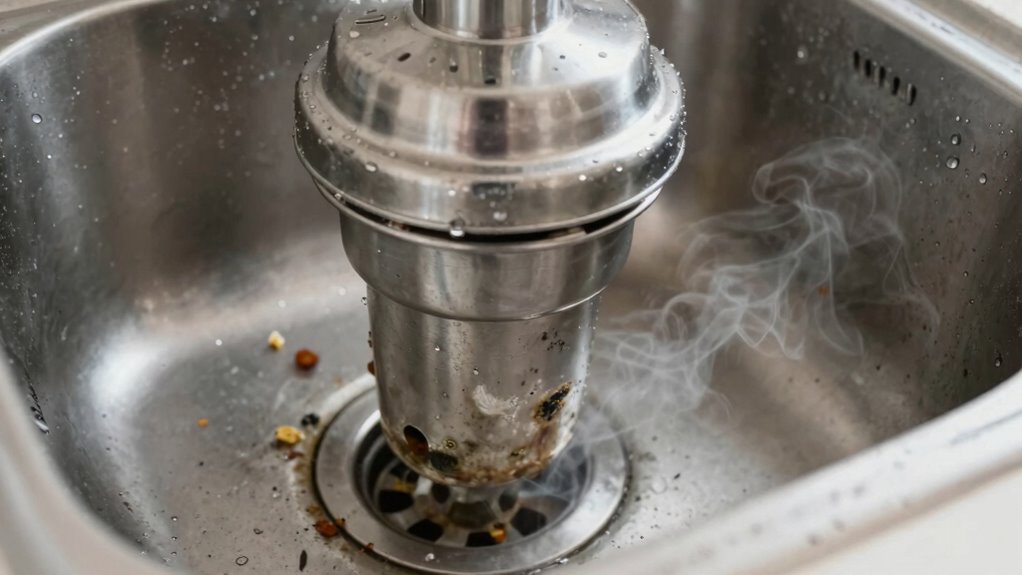
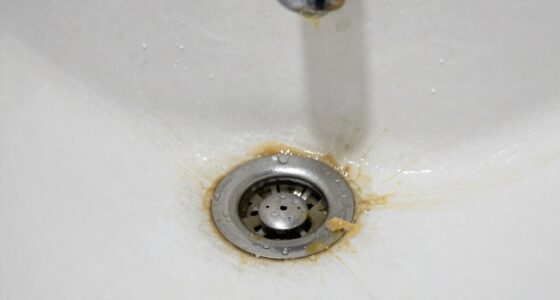
To keep your garbage disposal and drains smelling fresh, you need to clear any blockages regularly. Using natural deodorizers like baking soda and vinegar can help neutralize odors without harsh chemicals. Consistent maintenance guarantees your plumbing stays clean and odor-free. Incorporating regular ventilation considerations can also prevent lingering smells and improve overall air quality in your space. Additionally, ensuring proper drainage flow minimizes the chances of odor-causing buildup developing over time. Proper appliance care can further reduce the risk of odors originating from neglected components, ensuring your kitchen remains fresh. Regularly inspecting and cleaning the disposal unit helps prevent odor traps from forming and keeps your kitchen smelling clean.
Clear Blockages Regularly
Regularly clearing blockages in your garbage disposal and drains is essential for eliminating odors and keeping your kitchen fresh. Start by inspecting for debris or buildup that may cause clogs, and remove them promptly. Clean your air vent regularly to ensure proper airflow, which helps prevent stale odors from lingering. Don’t forget to perform air vent cleaning to improve ventilation and reduce moisture buildup that can lead to mold growth. Clearing blockages also promotes better drainage and prevents mold from forming in hidden corners. Use a drain snake or natural cleaning solutions to dislodge stubborn debris. Regular maintenance keeps your disposal functioning smoothly and minimizes odor-causing bacteria, making your kitchen a cleaner, fresher space. Incorporating auditory processing techniques can also help you stay aware of potential issues with your plumbing system before odors become noticeable.
Use Natural Deodorizers
Natural deodorizers like baking soda, vinegar, and citrus not only freshen your kitchen but also effectively eliminate odors from garbage disposals and drains. To use them, start by pouring half a cup of baking soda into your drain, then follow with a cup of vinegar. Let the mixture fizz for a few minutes to break down odor-causing buildup. Afterward, rinse with hot water. You can also add a few drops of essential oils—like lemon or eucalyptus—for a fresh scent. For a deeper clean, grind citrus peels in your disposal or soak a cloth in essential oils and wipe down surfaces. Regularly using baking soda and essential oils helps neutralize odors and keeps your drains smelling fresh without relying on chemical air fresheners.
Natural Ways to Keep Trash Bins and Pet Spaces Fresh
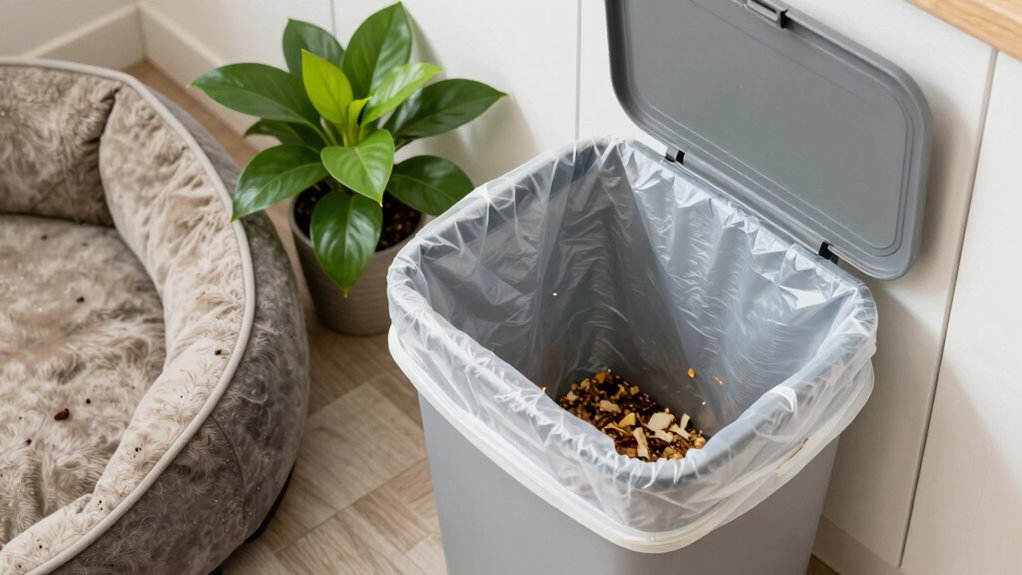
Keeping trash bins and pet spaces smelling fresh can be simple when you choose natural methods. DIY solutions like sprinkling baking soda or activated charcoal help with odor absorption, preventing unpleasant smells before they start. Place a small container of baking soda at the bottom of your trash bin or inside pet beds to neutralize odors naturally. Using natural odor absorbers, such as cotton balls soaked in essential oils like lavender or tea tree, can also keep spaces smelling clean without chemicals. Regularly cleaning these areas with a vinegar solution helps eliminate lingering smells. Additionally, placing fresh herbs like rosemary or mint near trash cans or pet zones can mask odors and add a pleasant scent. Proper air purifier maintenance and cleaning techniques can further improve indoor air quality and odor control. Incorporating natural deodorizing methods into your routine is a safe, eco-friendly way to keep your home smelling fresh without relying on commercial air fresheners. For added effectiveness, consider enhancing your home’s ventilation system, which can significantly reduce lingering odors. Using houseplants that are known for air purification can also contribute to a fresher environment. Introducing electric air freshener alternatives, such as essential oil diffusers, can provide continuous, natural fragrance without the chemicals found in commercial products. These natural techniques are effective, cost-efficient, and safe for your home.
Easy Tips to Maintain a Home Free of Odors Without Chemicals
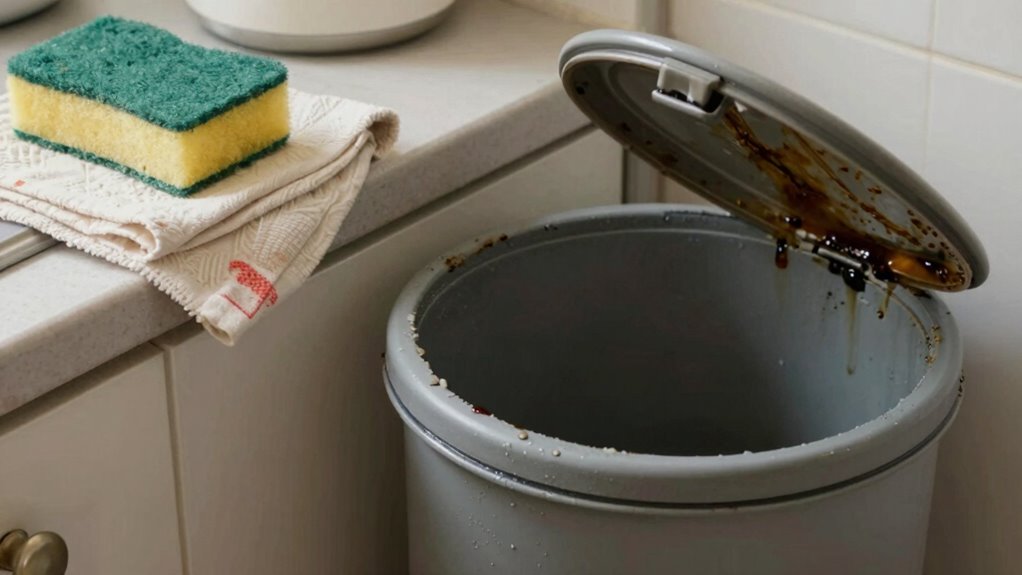
You can keep your home smelling fresh by using natural deodorizing agents like baking soda or essential oils. Ensuring proper ventilation helps remove odors and brings in clean air. Combining these simple tips creates a healthier, chemical-free environment for you and your family. Incorporating evidence-informed guidance can further optimize your odor control methods. Additionally, integrating smart home fitness technology such as sensors and air quality monitors can help you maintain optimal indoor air conditions automatically. Regularly checking indoor air quality levels allows for more targeted and effective odor management strategies. Monitoring air quality provides real-time feedback that can help you adjust your odor control techniques promptly, especially as indoor air pollution can fluctuate with daily activities.
Natural Deodorizing Agents
When it comes to freshening up your home without relying on chemicals, natural deodorizing agents are a simple and effective solution. Essential oils like lavender, lemon, or eucalyptus not only smell great but also have antimicrobial properties that help eliminate odors. You can add a few drops to a cotton ball or diffuser for a continuous fresh scent. Baking soda is another powerful deodorizer; sprinkle it on carpets, upholstery, or trash cans to absorb unwanted smells. Let it sit for a few hours before vacuuming or wiping away. Combining essential oils with baking soda creates a natural, chemical-free deodorizer that keeps your home smelling fresh and clean. Additionally, the use of natural deodorizing agents like these is safe for your family and the environment. Incorporating aromatherapy into your cleaning routine can further enhance the freshness and overall well-being of your space.
Proper Ventilation Techniques
Proper ventilation is essential for preventing odors from lingering in your home. Good air circulation helps disperse trapped odors and brings in fresh air, which naturally dilutes indoor smells. To improve ventilation, open windows regularly, especially during high-odor activities like cooking or cleaning. Use exhaust fans in bathrooms and kitchens to remove moisture and odors at the source. Consider installing air vents or air purifiers to promote continuous airflow. Keep interior doors open to allow air to circulate freely throughout your home. Remember, fresh air is your best defense against stubborn odors. By prioritizing proper ventilation techniques, you can maintain a clean, odor-free environment without relying on chemicals or artificial air fresheners.
When to Call a Professional for Persistent Odors
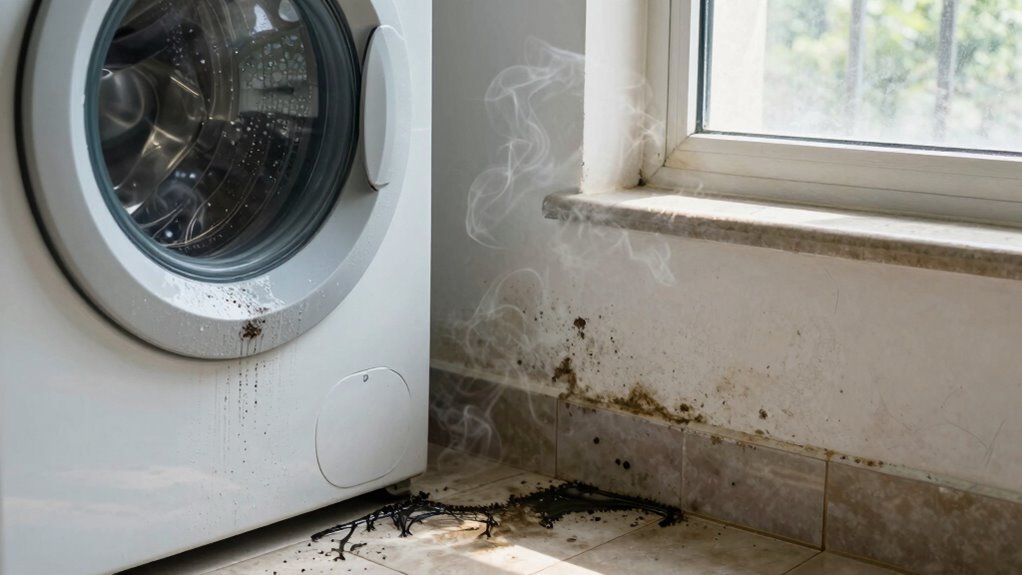
Persistent odors that refuse to dissipate despite regular cleaning and deodorizing efforts often signal a deeper problem that requires professional intervention. If you find yourself repeatedly battling stubborn smells, it’s time to consider a professional assessment. An expert can perform thorough odor troubleshooting to identify hidden sources like mold, duct issues, or plumbing leaks. Look out for these signs:
- Odors persist despite cleaning efforts
- Strange smells linked to specific appliances or areas
- Musty or damp odors that worsen over time
- Visible mold or water damage
- Unexplained increase in indoor odors
Addressing persistent odors early prevents long-term damage and restores a fresh, healthy environment. Recognizing hidden causes of odors is key to effective remediation, especially since some issues, like ventilation problems, can be overlooked without proper inspection.
Frequently Asked Questions
Can Air Fresheners Cause Health Issues Over Time?
Yes, air freshener chemicals can cause health risks over time. When you use air fresheners, you’re exposed to chemicals that may irritate your respiratory system, trigger allergies, or disrupt hormones. Prolonged exposure increases these risks, especially if you have asthma or sensitivities. Instead of relying on fresheners, you should clean odor traps and improve ventilation to reduce airborne chemicals naturally, keeping your indoor air safer.
Are There Eco-Friendly Alternatives to Chemical Air Fresheners?
Imagine you’re back in the Victorian era, where air was fresh and natural remedies reigned. You can find eco-friendly alternatives to chemical fresheners by using DIY solutions like simmering herbs, citrus peels, or spices on your stove. Natural remedies such as essential oils, baking soda, or vinegar effectively neutralize odors without harsh chemicals. These options are safer for your health and better for the environment, making your home smell fresh and inviting naturally.
How Often Should I Deep Clean Hidden Odor Traps?
You should deep clean hidden odor traps every three to six months, depending on usage and odor levels. Regular vent cleaning and filter maintenance help prevent odors from accumulating. When you notice persistent smells, it’s time to inspect and clean these traps thoroughly. By maintaining vents and filters, you keep your space fresh and reduce reliance on artificial air fresheners. Consistent care ensures cleaner, healthier air in your home.
Do Specific Household Materials Absorb or Trap Bad Smells?
Porous materials like sponges, carpets, and fabric upholstery absorb and trap bad smells through odor absorption. When you notice lingering odors, check these materials first, as they tend to hold onto odors longer than hard surfaces. Regular cleaning or replacing porous items helps eliminate trapped odors, preventing them from spreading. Avoid just masking smells with air fresheners; instead, focus on cleaning these materials to truly freshen your home.
What’s the Best Way to Prevent Odors From Returning After Cleaning?
Think of odors as stubborn weeds in your garden—you need to pull them out at the root. To prevent odors from returning, improve ventilation by opening windows or using exhaust fans, letting fresh air sweep through. Use odor neutralizers like baking soda or activated charcoal to absorb lingering smells. Regular cleaning combined with these tactics keeps your space smelling fresh, making those unwanted odors disappear faster than you can say “clean sweep.”
Conclusion
Stop wasting your money on air fresheners that only mask odors. If you don’t clean the hidden sources like trash and pet areas, your home will smell worse than a swamp filled with rotten eggs. By regularly tackling these odor traps, you’ll transform your space into a fresh oasis so powerful, even nose-haters will be impressed. Take control now—your nose (and everyone else’s) will thank you for it!