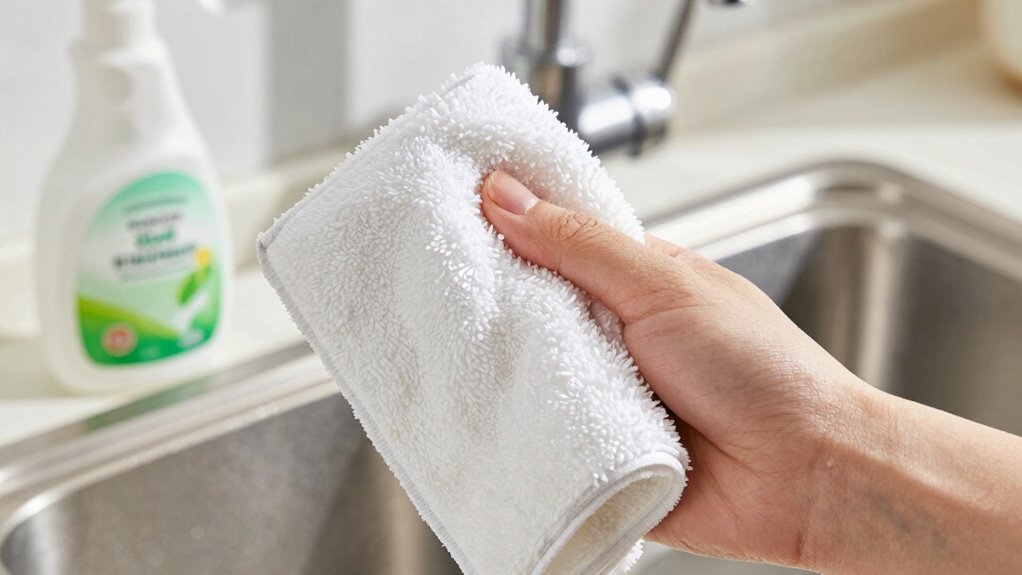

To use microfiber correctly for a greener cleaning routine, start by rinsing or shaking out the cloth to remove loose dirt. Use light pressure and avoid harsh chemicals, relying on microfiber’s ability to trap dirt naturally. Wash separately with mild detergent and avoid fabric softeners or bleach, then air dry or tumble dry on low. Reuse your microfiber cloths when they’re clean, and replace them when worn. Keep these tips in mind to maximize eco-friendly cleaning—more insights await you.
Key Takeaways
- Shake or rinse microfiber before use to remove dirt and prevent spreading grime during cleaning.
- Use light pressure and avoid harsh chemicals to maximize microfiber’s natural cleaning ability.
- Wash microfiber separately with mild detergent, avoiding fabric softeners and bleach to extend lifespan.
- Reuse microfiber cloths when clean and odor-free, replacing them only when worn or stained.
- Proper maintenance and eco-friendly practices reduce waste, chemical use, and support a greener cleaning routine.
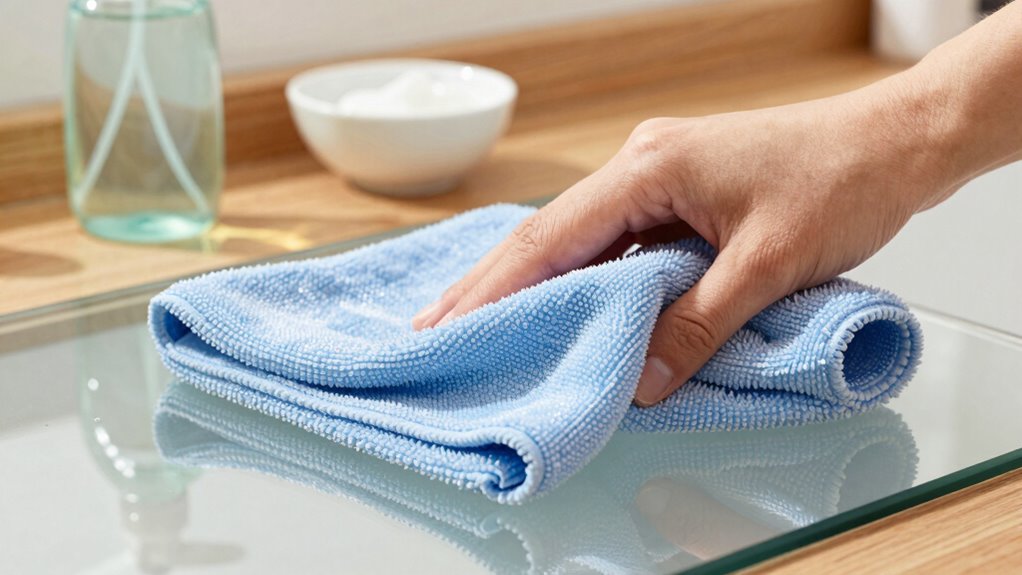
Microfiber is a versatile cleaning material that can make your chores easier, but only if you use it correctly. To maximize its effectiveness, it’s important to follow proper cleaning tips. First, always shake out or rinse your microfiber cloth before using it to remove loose dirt and debris. This prevents spreading grime around and ensures you’re cleaning with a fresh, dirt-free fabric. When cleaning surfaces, use light pressure and avoid harsh chemicals unless necessary. Microfiber is designed to trap dust, dirt, and bacteria naturally, so you often don’t need to rely on chemical cleaners, which is better for the environment. Proper maintenance also includes understanding the microfiber’s material properties, which helps you care for it correctly and prolong its lifespan. When it’s time to wash your microfiber cloths, do so separately from other laundry using mild detergent. Avoid fabric softeners or bleach, as they can coat the fibers and reduce their ability to attract dirt. Instead, opt for air drying or tumble drying on a low heat setting. Regular washing and proper maintenance extend the life of your microfiber, making it a more sustainable choice over disposable cleaning products. This approach aligns with environmental benefits because it reduces waste and minimizes the use of harmful chemicals. Additionally, understanding air quality can help you choose the most suitable cleaning routines to improve your indoor environment. Using microfiber correctly also means understanding when to reuse or replace your cloths. If a microfiber cloth starts to smell or shows signs of wear, it’s time to replace it. Reusing clean microfiber reduces waste and keeps your home cleaner without constantly buying replacements. Additionally, you can use microfiber for multiple surfaces, including glass, wood, and stainless steel, thanks to its gentle yet effective cleaning power. Just make sure to use different cloths for different tasks to avoid cross-contamination. Furthermore, being aware of microfiber’s environmental impact can help you make even better choices for sustainable cleaning. The environmental benefits of microfiber are significant when used properly. Since microfiber captures dirt more efficiently, you typically need fewer cleaning products, which means fewer chemicals entering the environment. Its durability also means you’ll replace it less often than disposable wipes or paper towels, cutting down on landfill waste. When you follow these cleaning tips, you not only get better results but also contribute to a greener lifestyle by reducing your ecological footprint. Proper usage is key to unlocking the full potential of microfiber, making your cleaning routines more effective and eco-friendly.
microfiber cleaning cloths eco-friendly
As an affiliate, we earn on qualifying purchases.
As an affiliate, we earn on qualifying purchases.
Frequently Asked Questions
Can Microfiber Be Reused Indefinitely Without Losing Effectiveness?
Microfiber can’t be reused indefinitely without losing effectiveness. Over time, fibers wear down, reducing cleaning power. To minimize environmental impact, you should follow proper recycling techniques and wash microfiber correctly. Regular washing extends its lifespan, but eventually, it needs replacing. Proper disposal or recycling helps reduce waste, supporting a greener routine. Keep an eye on wear and tear, and don’t hesitate to recycle or replace when necessary for maximum cleaning results.
What Is the Proper Way to Wash Microfiber Cloths?
Washing microfiber cloths is like giving them a gentle spa day. You should wash them in warm water without fabric softeners or bleach, as these can damage the fibers and reduce effectiveness. Use a mild detergent and avoid fabric softeners, which leave residues. Skip fabric softeners entirely, and never use bleach, as it can weaken the microfiber, making it less effective over time. Air dry or tumble dry on low.
Are There Specific Cleaning Solutions Compatible With Microfiber?
You should choose eco-friendly detergents and opt for chemical-free cleaning solutions compatible with microfiber. Look for natural or plant-based detergents that are free from harsh chemicals, fragrances, and dyes. These solutions effectively clean your microfiber cloths without damaging the fibers or harming the environment. Always check labels to confirm compatibility, and avoid fabric softeners or bleach, which can reduce microfiber’s cleaning efficiency and longevity.
How Often Should Microfiber Cloths Be Replaced?
Think of your microfiber cloths like fine wine—they get better with age, but even they eventually need substituting. Typically, you should change them after about 100-500 washes, depending on use, to maintain cleaning efficiency. When they’re past their microfiber lifespan, consider eco-friendly disposal options to reduce waste. Regularly inspecting and replacing your cloths ensures you’re cleaning effectively and staying kind to the environment.
Is Microfiber Safe for All Types of Surfaces?
Microfiber is generally safe for most surfaces due to its eco-friendly fibers and gentle cleaning power. However, you should check surface compatibility before use, especially on delicate finishes like uncoated wood or certain plastics. Test a small area first to prevent damage. When used correctly, microfiber offers a sustainable, effective cleaning option that minimizes chemical use and is safe on many surfaces, making it ideal for eco-conscious cleaning routines.
Conclusion
Now that you know how to use microfiber properly, you’re equipped to turn cleaning into an act of eco-friendly empowerment. Remember, microfiber isn’t just a tool—it’s your ally in reducing waste and chemicals. With each swipe, you’re not only sparkling surfaces but also shining a light on greener living. So, embrace this mighty microfiber and let it be the silent hero in your sustainable cleaning journey—because, in the end, small changes make the biggest difference.