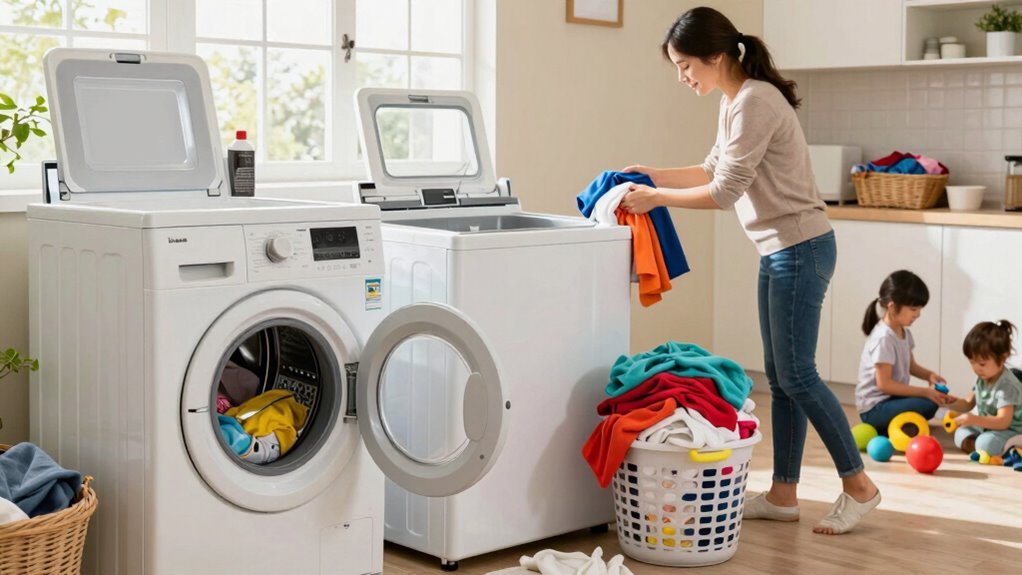

If you’re busy, a front-load washer can save you water and energy by handling larger loads, which means fewer trips to do laundry. They have longer cycles, so you might need to plan ahead, but they’re more efficient for big families. Top-load machines offer quick cycles, making them ideal for small loads or when you’re short on time. To discover tips on optimizing these routines, keep exploring how each washer type fits your family’s schedule.

Get cleaning gear delivered free with Prime
- Fast, free delivery on millions of items
- Prime Video, Amazon Music and more included
- Member-only deals all year
Key Takeaways
- Front-load washers save time overall by reducing laundry cycles with larger capacities, ideal for busy families.
- Top-load washers offer quicker cycle times, making them suitable for immediate laundry needs.
- Front-load machines require scheduled maintenance to prevent odors, ensuring smooth routine operation.
- Using baskets or hampers streamlines sorting and loading, optimizing efficiency for both washer types.
- Choosing a washer depends on family laundry volume, schedule flexibility, and preference for quick cycles or efficiency.
Managing laundry can feel overwhelming when your days are packed with work, school, and activities, but establishing a routine makes it manageable. One key decision you’ll need to make is choosing between a front-load or top-load washing machine. Your choice impacts everything from load size and water usage to how you handle your laundry routines. As you navigate this decision, consider how each type affects your day-to-day tasks, especially when it comes to detergent choices and laundry folding techniques.
Choosing between front-load and top-load washers impacts your laundry routine and daily efficiency.
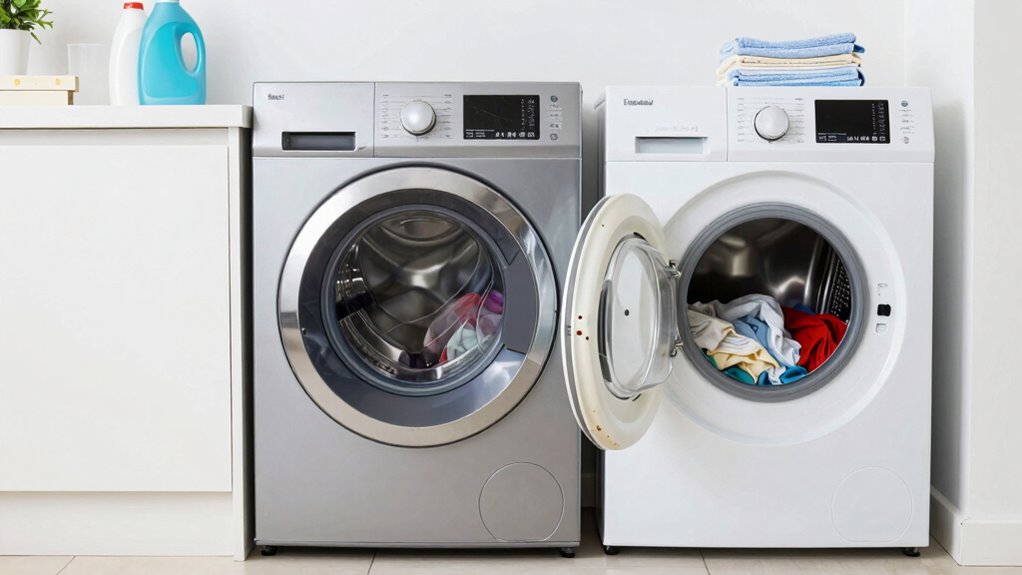
A front-load washer is often praised for efficiency. It uses less water, which can save money over time, and it typically offers larger capacity, letting you wash more clothes in fewer loads. This can be a real time-saver for busy families. However, front-load machines tend to have longer cycle times, so you might need to plan your laundry around their schedules. When it comes to detergent choices, front-load washers require high-efficiency (HE) detergents to prevent soap residue and mold buildup, which means you’ll want to stock up on those specifically designed for these machines. This not only keeps your washer clean but also guarantees your clothes come out fresh. As for laundry folding techniques, the larger capacity of front-load machines means you might have bigger loads to fold at once. To stay efficient, you can fold clothes immediately after drying or have designated folding times during the week. Using baskets or sorting hampers can streamline this process, making it less tedious. Additionally, proper maintenance can extend the lifespan of your front-load washer and keep it running smoothly. Routine maintenance is essential for preventing issues like mold or foul odors, which are common concerns with these machines.
On the other hand, top-load washers are often more straightforward, with shorter cycles and easier access. They can be a good fit if you want quick, simple loads without waiting for longer cycles to finish. When selecting detergent, you can typically use regular detergent here, but it’s still best to follow the manufacturer’s recommendations to keep your machine running smoothly. For laundry folding, top-load washers tend to produce smaller loads, which can be easier to handle if you’re short on time. You might find it helpful to fold clothes right out of the dryer or as soon as they come out of the wash to prevent wrinkles and reduce the time spent sorting through a pile later. Having a dedicated folding station or a designated spot for clean laundry can make a big difference. Additionally, choosing the right washer type based on your laundry habits can significantly improve your routine.
high efficiency front load washer
As an affiliate, we earn on qualifying purchases.
As an affiliate, we earn on qualifying purchases.
Frequently Asked Questions
Which Laundry Method Saves More Water?
Front-load washers save more water because they use less per cycle and require less detergent, which also benefits your laundry routine. They tend to be quieter than top-load machines, reducing noise levels in your home. If you’re looking to conserve water and minimize disturbance, a front-load washer is your best choice. Plus, their efficient water use can help lower your utility bills over time.
Are Front-Load Washers More Energy-Efficient Than Top-Load?
Yes, front-load washers are generally more energy-efficient than top-load models. They use less energy because they operate with lower water temperatures and shorter cycles, reducing overall energy consumption. Additionally, front-load washers tend to have quieter operation, thanks to their design, which minimizes noise levels. If you’re looking to save on energy bills and prefer a quieter laundry routine, a front-load washer is usually the better choice for busy families.
How Do Laundry Routines Differ for Large Families?
You adapt your laundry routines by using effective sorting techniques to separate clothes by color, fabric, and soil level, which helps prevent damage and saves time. Load scheduling becomes essential; you plan laundry sessions around your family’s busy schedule, batching loads to maximize efficiency. Whether using a front-load or top-load washer, staying organized with sorting and scheduling guarantees you keep up with laundry demands without feeling overwhelmed.
Can Both Types Handle Delicate Clothing Effectively?
Yes, both front-load and top-load washers can handle delicate clothing effectively if you choose the right settings. Front-load washers generally excel in fabric care, offering gentle, thorough washing performance that preserves delicate fabrics. Top-load washers can also be gentle if they have specific cycle options. Always select delicate or gentle cycles, use the appropriate water level, and avoid overloading to guarantee your delicate clothes stay safe and clean.
What Is the Typical Lifespan of Each Washer Type?
You might wonder about washer durability and maintenance costs, and here’s the surprise: front-load washers often last about 10-15 years, while top-loads can go up to 12-20 years. But beware—maintenance costs can sway this payoff. Front-loads may need more upkeep but offer energy efficiency, whereas top-loads tend to be more rugged. Your choice hinges on balancing lifespan with ongoing maintenance. The decision impacts your laundry routine for years to come.
Conclusion
Whether you choose a front-load or top-load washer, your laundry routine shapes your busy family’s daily rhythm. Imagine the gentle hum of your machine quietly spinning, like a steady heartbeat in your bustling home. With a reliable routine, laundry becomes less of a chore and more of a seamless part of your day. Embrace the rhythm, keep your family’s clothes fresh, and let your laundry routine become a calming, effortless flow amid life’s busy currents.
Halloween Picks
halloween
As an affiliate, we earn on qualifying purchases.