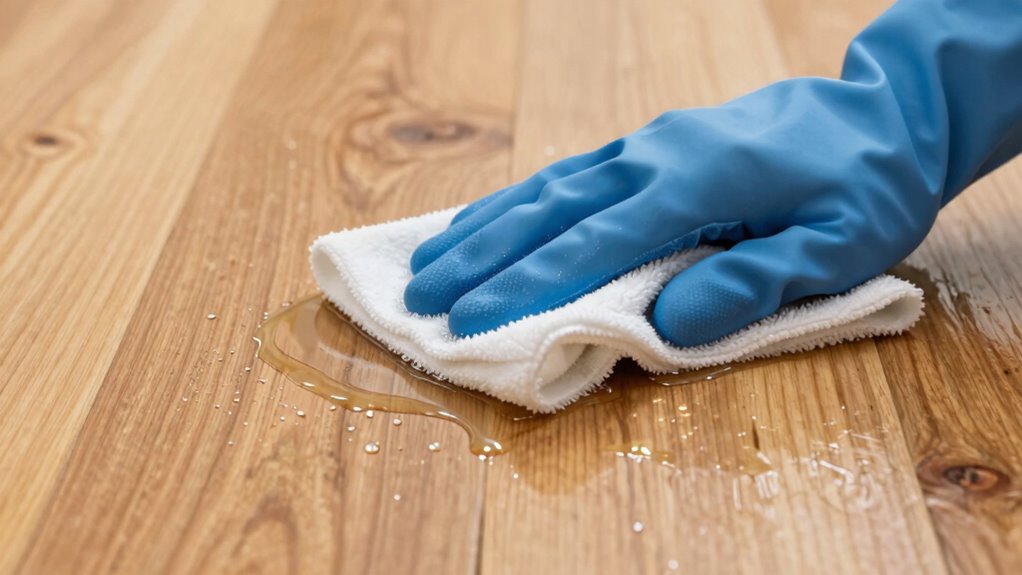
To remove sticky residue from hard floors, first identify if it’s glue, candy, or sticker adhesive. Use warm water with a few drops of dish soap or mix equal parts vinegar and water for softer residues. For tougher spots, apply a small amount of rubbing alcohol or adhesive remover, letting it sit briefly before gently scrubbing and rinsing. Avoid abrasive tools and be patient—more tips on safely tackling stubborn residue are just ahead.

Get cleaning gear delivered free with Prime
- Fast, free delivery on millions of items
- Prime Video, Amazon Music and more included
- Member-only deals all year
Key Takeaways
- Identify the sticky substance to choose the safest removal method for your floor type.
- Start with gentle cleaning using warm, soapy water and soft cloths to loosen residues.
- Test small amounts of rubbing alcohol or adhesive remover on hidden areas before full application.
- Use a mixture of vinegar and water for softer residues, allowing it to sit before gentle scrubbing.
- Avoid abrasive tools and ensure thorough drying to prevent damage and water spots.
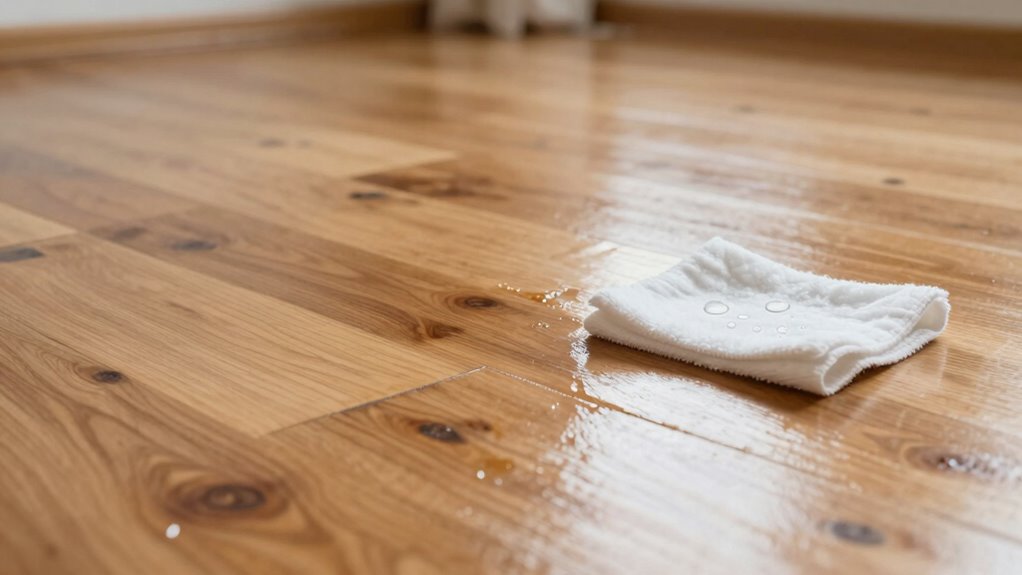
Have you ever struggled to remove sticky residue from your hard floors? It’s a common issue that can be frustrating, especially when the residue just won’t come off with a quick sweep or mop. Luckily, with the right approach to floor cleaning and stain removal, you can restore your floors to their original shine without much hassle. The key is using effective techniques and the proper cleaning solutions that break down stubborn residues without damaging the surface.
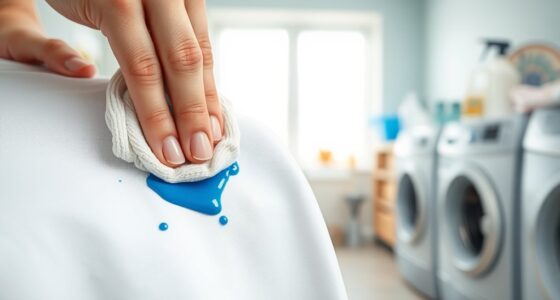
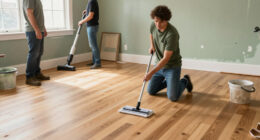
Start by identifying the type of sticky substance on your floor. Is it glue, candy, or sticky adhesive from stickers? Knowing what you’re dealing with helps you select the most effective stain removal method. For most sticky residues, warm water mixed with a few drops of dish soap works wonders. Before applying any solution, sweep or vacuum the area thoroughly to remove loose dirt and debris, making the cleaning process more effective. When you’re ready to clean, dampen a soft cloth or mop with the soapy water and gently scrub the affected area in circular motions. This helps loosen the sticky material without scratching your floor’s finish.
Identify the sticky substance to choose the best removal method and start with warm soapy water and gentle circular scrubbing.
If the residue persists, you can try a more targeted approach. Apply a small amount of rubbing alcohol or a commercial adhesive remover onto a cloth and gently wipe the sticky spot. Be cautious with the amount and test it on a small, hidden area first to make sure it won’t damage your flooring. For stubborn stains, let the alcohol sit for a minute or two to break down the adhesive. Then, wipe away with a clean, damp cloth. Rinse the area with plain water afterward to remove any leftover chemicals, and dry thoroughly with a clean towel. Using appropriate cleaning techniques ensures you don’t inadvertently harm your flooring. Additionally, understanding proper cleaning solutions can help you choose products that are safe and effective for your specific floor type. Being aware of floor material characteristics helps prevent damage during cleaning, especially with delicate surfaces.
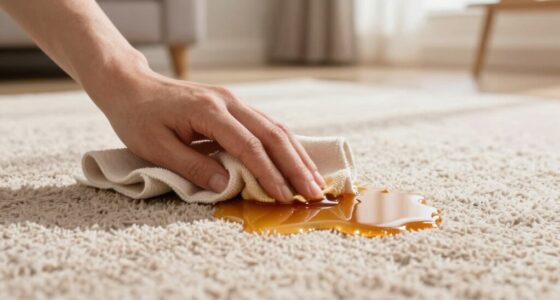
For particularly tough residues, a mixture of vinegar and water can serve as an effective alternative. Mix equal parts of white vinegar and warm water, and apply it to the sticky area with a cloth. Let it sit for a few minutes to soften the residue before scrubbing gently. Vinegar’s acidity helps dissolve many types of adhesives and sticky substances, making stain removal easier. Furthermore, knowing the importance of pH balance can help you select the safest cleaning solutions that won’t damage your floors over time. Always follow up with plain water to rinse away the vinegar and residue, then dry the surface completely to prevent water spots or damage.
Throughout the process, avoid harsh abrasive tools or overly aggressive scrubbing, which can scratch or dull your flooring. Patience and gentle cleaning are your best allies when removing sticky residues. With these techniques, you’ll find it much easier to keep your floors spotless and free of stubborn stains, restoring their smooth, clean appearance without risking damage.
hard floor sticky residue remover
As an affiliate, we earn on qualifying purchases.
As an affiliate, we earn on qualifying purchases.
Frequently Asked Questions
Can I Use Vinegar to Remove Sticky Residue?
Yes, you can use vinegar to remove sticky residue from your hard floors. It’s a popular DIY cleaning solution and a natural remedy that effectively breaks down sticky substances without harsh chemicals. Mix equal parts of vinegar and water, then apply it to the residue. Let it sit for a few minutes, scrub gently, and wipe clean. Vinegar’s acidity helps dissolve stubborn stickiness, making your floor look clean and fresh.
Is Baking Soda Effective for Stubborn Residue?
Yes, baking soda is effective for stubborn residue removal from hard floors. You can create a paste by mixing baking soda with a small amount of water, then apply it directly to the sticky area. Let it sit for a few minutes, scrub gently with a soft brush or cloth, and then rinse with clean water. Baking soda’s abrasive nature helps break down and lift stubborn residue efficiently.
How Long Should I Let Cleaning Solutions Sit?
You should let cleaning solutions sit for about 5 to 10 minutes, giving them time to work on different residue types. This guarantees you don’t rush in and make a mountain out of a molehill. Remember, cleaning frequency matters—regular maintenance prevents stubborn buildup. For tough residues, patience pays off, so give the solution a little extra time if needed. This way, you’ll keep your floors spotless without turning cleaning into a chore.
Are There Any Floor Types That Shouldn’t Use Certain Cleaners?
You should avoid using harsh chemicals on wooden floors, as they can damage the finish, and steer clear of excessive water, which can cause warping. For carpet cleaning, use suitable, gentle cleaners to prevent fiber damage. Always check manufacturer guidelines for your specific floor type. Using the wrong cleaner can ruin wooden floor maintenance or compromise carpet fibers, so choose products carefully and test in small areas first.
What’s the Best Way to Prevent Sticky Residue Buildup?
Think of your floor as a canvas; keeping it clean is like choosing the right brush strokes. To prevent sticky residue buildup, stick to current cleaning trends that emphasize gentle, pH-neutral cleaners. Avoid residue myths that suggest harsh chemicals. Regular sweeping and quick spills cleanup act as your protective varnish, safeguarding your floor’s beauty. Consistency is key—think of it as nurturing a masterpiece, and your floors will stay spotless longer.
Conclusion
Now that you know the secret to banishing sticky residue, your floors will shine brighter than the sun itself. With a simple mix of gentle cleaning solutions and a bit of elbow grease, you’ll restore your hard floors to their pristine glory in no time. Say goodbye to gnarly stickiness and hello to a spotless surface so flawless, it’ll make the stars jealous. Your floors will sparkle like they’ve just been gifted a brand-new makeover!
Halloween Picks
halloween
As an affiliate, we earn on qualifying purchases.