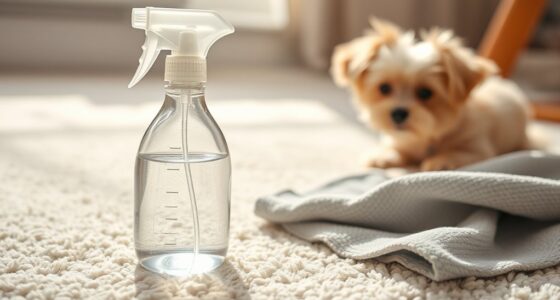

To clean sticky handprints off walls, start by gently wiping the area with a soft cloth or sponge dipped in warm, soapy water. If the marks are stubborn, try a mixture of baking soda and water to create a mild abrasive paste; apply it softly and rinse thoroughly. Avoid harsh chemicals and scrubbing too hard to prevent damage. Using proper techniques will help maintain your wall’s appearance, and if you keep exploring, you’ll find even more tips to keep your walls spotless.
Key Takeaways
- Identify the wall paint type to choose gentle cleaning methods and prevent damage.
- Use warm water, mild soap, and a soft cloth or sponge for initial cleaning.
- For stubborn handprints, apply a baking soda paste and let it sit before gentle rubbing.
- Test stain removers on small areas first to avoid discoloration or paint stripping.
- Dry the wall thoroughly after cleaning to prevent streaks and water spots.
Sticky handprints on walls can be frustrating, but cleaning them doesn’t have to be a challenging task. When faced with these stubborn marks, your first step is to identify the type of wall paint you’re dealing with. Different finishes require different cleaning methods to prevent damage or discoloration. For example, matte or flat paint is more delicate, so you want to be gentle to avoid stripping the finish. Satin or semi-gloss paints are more durable and can typically withstand a bit more scrubbing. Understanding your wall’s paint type helps you choose the right approach for stain removal without compromising your wall’s appearance.
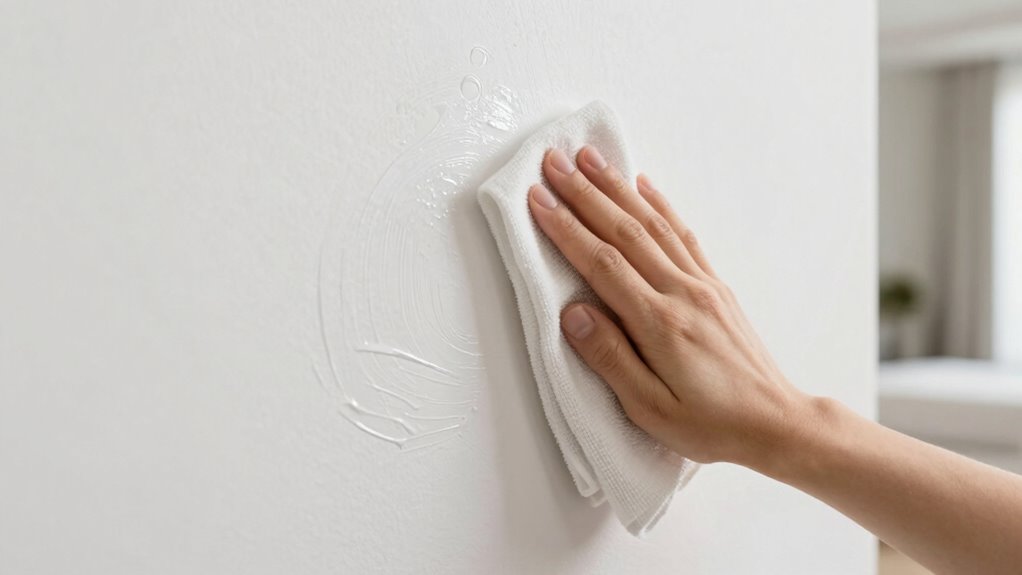
Start by gathering your supplies: a soft cloth or sponge, warm water, mild dish soap, and perhaps a gentle stain remover if necessary. Avoid harsh chemicals or abrasive scrubbers, as they can damage the wall paint or cause discoloration. Dip your cloth into warm, soapy water, then wring it out well. Gently wipe the sticky handprint, working from the outside edges inward to contain the stain and prevent spreading. Often, a simple cleaning solution is enough to lift the handprint without any additional effort. If the stain persists, you might consider using a mild stain remover designed for painted surfaces. Test it on a small, inconspicuous area first to ensure it won’t strip or discolor your paint.
Gather soft cloth, warm water, mild soap, and stain remover; gently clean from outside inward to prevent spreading.
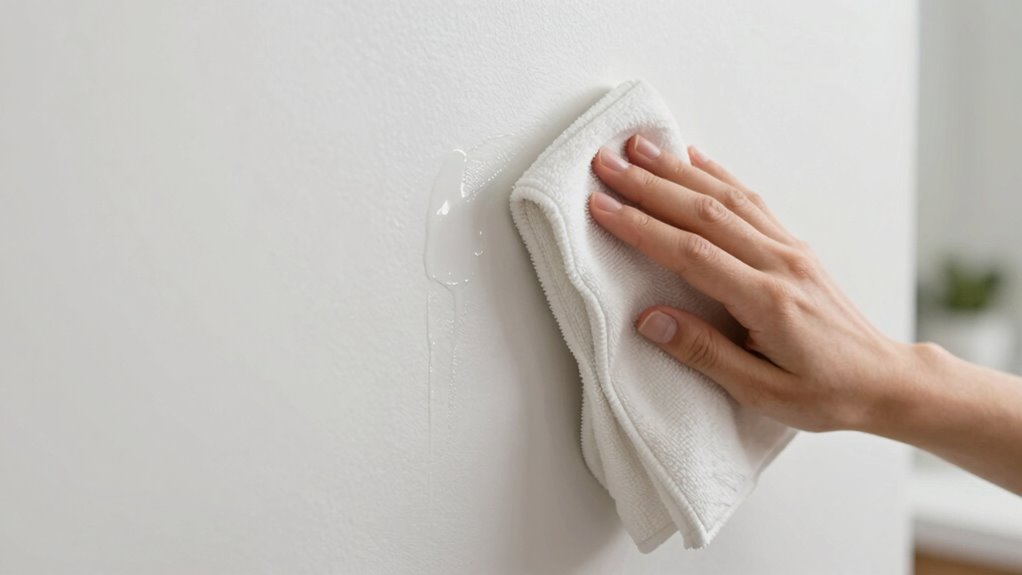
For especially stubborn marks, avoid scrubbing aggressively. Instead, let the cleaning solution sit for a few minutes, giving it time to loosen the grip of the stain. For wall paint that’s more resistant, you can try a mixture of baking soda and water to create a gentle abrasive paste. Apply it softly with a cloth, then rinse thoroughly with clean water. Remember, patience is key—pushing too hard can damage the paint or cause uneven patches. Additionally, understanding the importance of indoor air quality can help you maintain a healthier environment, especially when using cleaning products. Choosing low VOC cleaning solutions can also contribute to better air quality indoors. Incorporating safe cleaning practices by using non-toxic products can further ensure your home stays both clean and healthy. Being aware of proper cleaning techniques can make stain removal more effective while protecting your surfaces. Once the stain is gone, dry the wall with a clean towel to prevent water spots or drips from streaking your freshly cleaned surface.
Regular maintenance can help prevent future sticky handprints from becoming a headache. Keep a soft cloth nearby for quick cleanups, and encourage family members to wipe their hands before touching the walls. With these simple steps, you’ll keep your walls looking fresh and clean, and your wall paint intact. Cleaning stain removal doesn’t have to be a formidable chore — just a matter of gentle, deliberate action.
As an affiliate, we earn on qualifying purchases.
Frequently Asked Questions
What Tools Are Best for Delicate Wall Surfaces?
For delicate wall surfaces, you should use soft tools like a microfiber cloth or a gentle sponge. These minimize damage to wall texture. When cleaning, opt for mild cleaning solutions such as diluted dish soap or a gentle wall cleaner. Avoid harsh chemicals or abrasive scrubbers, as they can damage the paint or texture. Always test your cleaning solution on a small area first to make sure it won’t harm your wall’s finish.
How Can I Prevent Handprints From Recurring?
To prevent recurring handprints, you should adopt effective cleaning techniques and focus on stain prevention. Encourage family members to wash their hands regularly and use hand sanitizer near entrances. Apply a washable, smudge-resistant paint or sealant on your walls for added protection. Regularly dust and wipe walls with a gentle cleaner to remove oils before they set. Consistent upkeep and proactive measures keep walls cleaner longer, reducing the need for frequent touch-ups.
Are There Eco-Friendly Cleaning Options?
Did you know over 70% of households seek eco-friendly options? You can easily tackle sticky handprints with natural cleaning agents like vinegar, baking soda, or lemon juice. Eco-friendly solutions not only clean effectively but also protect your walls and environment. By choosing these options, you reduce chemical exposure and support sustainability. So, next time, opt for natural cleaning agents for a safe, eco-conscious way to keep your walls spotless.
Will Cleaning Damage Painted or Wallpapered Walls?
Cleaning sticky handprints can sometimes risk damaging wall paint or wallpaper if you’re not careful. You should use gentle cleaning methods and avoid harsh chemicals to maintain wall paint and wallpaper safety. Test any cleaner on a small, hidden area first. Use a soft cloth or sponge with mild soap and water, and avoid excessive moisture. This approach helps preserve your walls’ appearance while effectively removing handprints.
How Often Should I Clean Wall Handprints?
You should clean wall handprints as soon as they become noticeable, ideally once a week or biweekly. Regular wall cleaning tips help prevent buildup and make handprint removal easier. Use a gentle cleaning solution and soft cloth to avoid damaging paint or wallpaper. Prompt cleaning keeps your walls looking fresh and minimizes the risk of stains setting in, ensuring your space stays clean and inviting.
Conclusion
Now that you know how to effectively clean sticky handprints, you’ll keep your walls looking fresh and spotless. Did you know that on average, parents spend about 3 hours a week cleaning handprints? That’s 156 hours a year! By using gentle cleaning methods, you save time and prevent damage. Keep a routine, and your walls will stay pristine, impressing everyone who visits. So, grab your cleaning supplies and enjoy a cleaner, happier space with less effort!