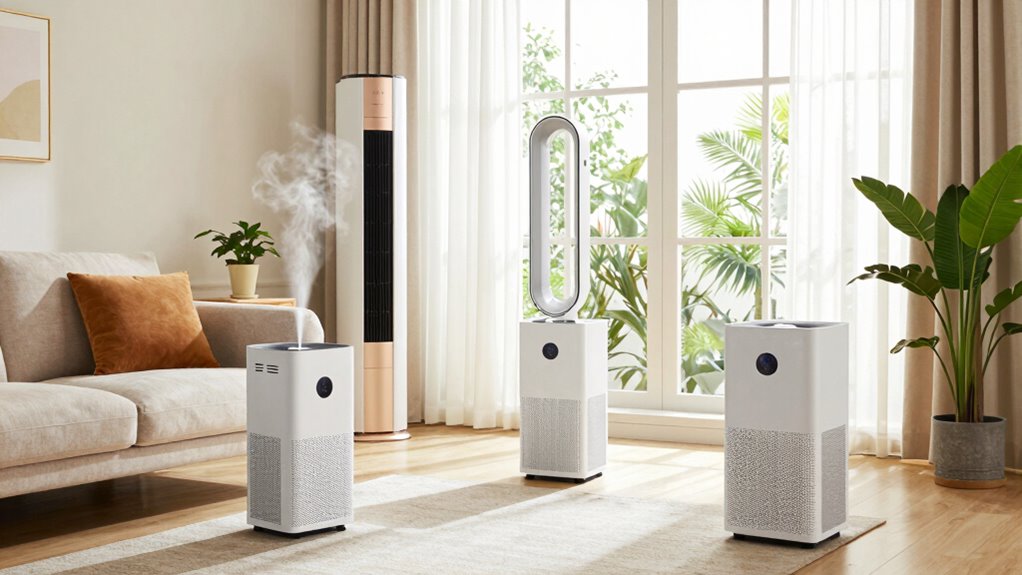
To get the most out of multiple air purifiers, place them in rooms where you spend the most time, like bedrooms and living areas, and keep them away from walls or furniture to guarantee good airflow. Spread them across different zones, especially near pet areas and sleeping spaces, and match each purifier’s capacity to the room size. Regularly monitor air quality and adjust settings as needed. If you want to discover more tips, keep exploring these strategies for ideal clean air.
Key Takeaways
- Distribute purifiers across different rooms and zones based on usage and size for optimal coverage.
- Place purifiers away from walls, furniture, and obstructions at chest height to ensure effective airflow.
- Use multiple units simultaneously to establish balanced airflow and improve overall indoor air quality.
- Regularly monitor air quality and adjust purifier settings or placement accordingly.
- Maintain unobstructed airflow pathways and open windows periodically to enhance filtration efficiency.
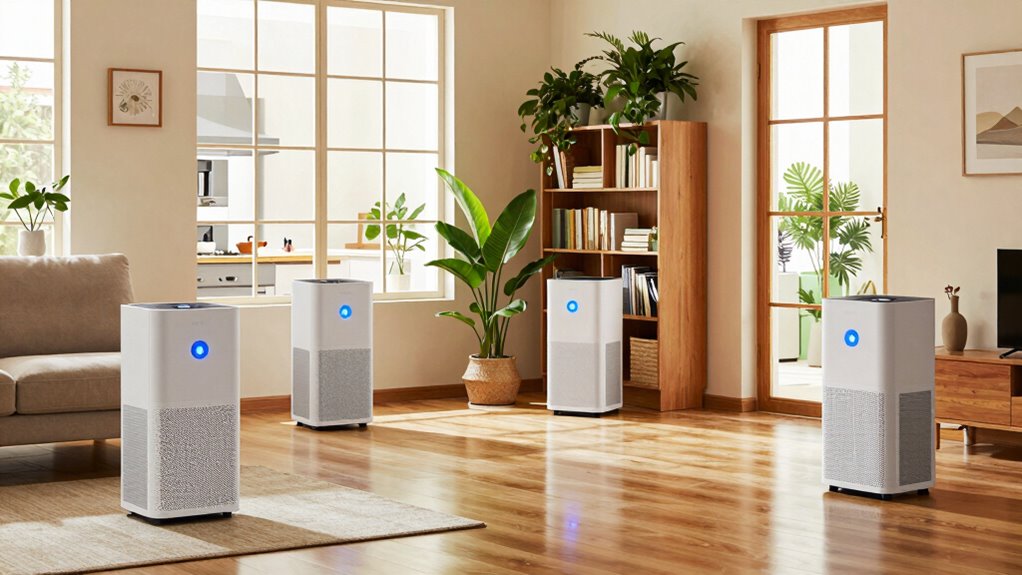
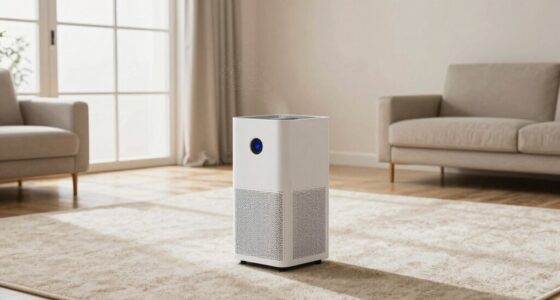
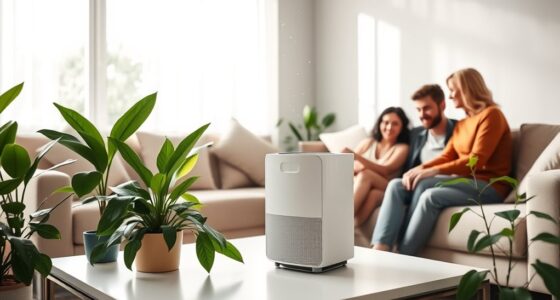
Using multiple air purifiers in your home can substantially improve indoor air quality, especially if you have allergies, pets, or live in a polluted area. To maximize their effectiveness, you need to carefully consider air purifier placement. Proper placement guarantees that each unit covers its designated area efficiently without overlapping too much with others. Start by positioning purifiers in rooms where you spend the most time, such as the bedroom or living room. Keep them away from walls, furniture, or curtains that could block airflow. Ideally, place purifiers on a flat surface at chest height, where they can draw in air more effectively. Avoid corners or tight spaces, as these can restrict airflow and reduce filtration efficiency.
Achieving ideal room coverage requires strategic distribution of your purifiers. Instead of clustering them all in one spot, spread them out across different rooms or zones. This way, each purifier can target specific air quality issues in its immediate environment. For example, if your home has a dedicated pet area, place a purifier nearby to combat pet dander and odors directly at the source. In bedrooms, position purifiers near sleeping areas for cleaner air during rest. When selecting the number of units, consider the size of each room and the purifier’s coverage capacity. Most manufacturers specify an adequate room size, so match each purifier to its intended space. This prevents under-performance caused by trying to cover a room that’s too large or overlapping coverage in small spaces.
You also want to think about airflow pathways. Air should flow freely through the room, so avoid blocking intake or exhaust vents. Opening windows periodically can help freshen the environment and allow purifiers to work more efficiently. Turning on multiple units simultaneously helps establish a balanced airflow, ensuring consistent indoor air quality throughout your home. Ensuring proper air circulation enhances the overall efficiency of your air cleaning system. Additionally, understanding the air quality levels in different areas can aid in better placement and operation of your purifiers. Regularly monitoring air quality can help you optimize air purifier settings and placement over time. It’s also helpful to consider airflow pathways to maximize efficiency and avoid dead zones. Adjust settings based on your needs—use higher fan speeds during allergy seasons or when dust levels spike, and lower speeds for everyday quiet operation. Remember, the goal is to create a balanced system where each purifier contributes to a thorough indoor air cleaning strategy. By paying close attention to air purifier placement and guaranteeing ideal room coverage, you’ll greatly reduce airborne pollutants, making your home healthier and more comfortable for everyone.
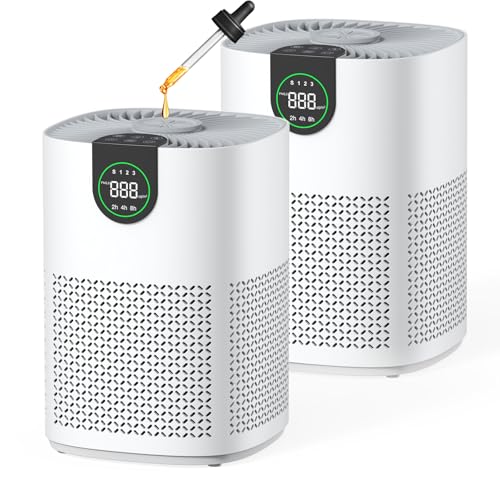
VEWIOR 2 Pack Air Purifiers with Washable Filter for Home Up to 1200 sq.ft
- 360° Air Intake Technology: Provides rapid air circulation in large rooms
- Effective 3-Stage Filtration: Captures 99.97% of airborne contaminants
- Washable HEPA Filter: Easy to clean and maintain, extends filter life
As an affiliate, we earn on qualifying purchases.
As an affiliate, we earn on qualifying purchases.
Frequently Asked Questions
Can Multiple Air Purifiers Improve Overall Air Quality More Effectively?
Yes, using multiple air purifiers can improve your overall air quality more effectively, especially in large or multi-room spaces. They work together to filter out pollutants, allergens, and odors more efficiently. However, keep in mind that this can increase energy consumption, so choose energy-efficient models and strategically place them to maximize benefits without raising your energy bills unnecessarily. Proper placement and maintenance are key to ideal results.
How Should I Position Multiple Purifiers in Different Rooms?
You should position your air purifiers in key rooms, considering room placement and airflow optimization. Place them near sources of pollution, like kitchens or pet areas, but avoid blocking vents or doors. Keep them at a central location in each room for even coverage, and elevate units if possible. This strategic placement guarantees maximum airflow efficiency, helping to purify the air more effectively throughout your home.
Is It Cost-Effective to Run Several Air Purifiers Simultaneously?
Running several air purifiers together isn’t usually the most budget-friendly choice, as energy consumption and maintenance costs can add up quickly. While it may seem like a thorough approach, consider balancing their use to optimize air quality without overextending your resources. You might find that strategically placing a few well-chosen units provides a comforting, clean environment without draining your budget, making your home both healthier and more cost-effective.
Do Different Types of Air Purifiers Work Better Together?
Yes, different types of air purifiers can work better together, especially when you understand air purifier myths that suggest one device is enough. Using a combination, like a HEPA filter with an activated carbon purifier, targets a broader range of pollutants. To optimize their effectiveness, place air quality sensors around your home to monitor real-time air quality, ensuring each purifier operates efficiently and you breathe cleaner air.
How Often Should Filters Be Replaced When Using Multiple Units?
You should replace filters every 3 to 6 months, depending on usage and air quality. Regular filter maintenance is vital, even with multiple units, to guarantee peak performance. Keep a replacement schedule and check filters monthly; if they look dirty or clogged sooner, replace them earlier. This proactive approach prevents reduced efficiency and maintains cleaner air, especially when multiple purifiers work together to improve your home’s environment.
Conclusion
Think of your home as a garden, each air purifier a refreshing plant guarding your sanctuary. When you nurture them together, they create a thriving ecosystem of clean air, each one amplifying the other’s strength. By strategically placing and maintaining multiple purifiers, you cultivate a space where purity blossoms and health flourishes. Remember, just as a garden needs care, your home’s air quality thrives with thoughtful, unified effort. Your sanctuary becomes a revitalizing breath of fresh air.