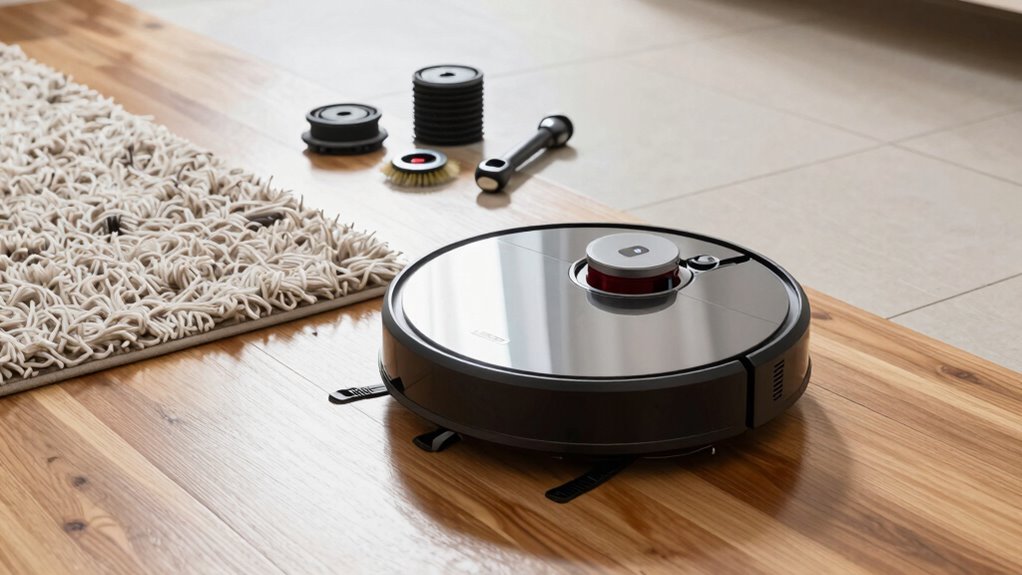

To match your robot vacuum’s maintenance to floor types, regularly clean and calibrate sensors for hard and carpeted surfaces. Adjust cleaning modes to suit each floor, using more aggressive brushes for carpets and smoother ones for hard floors. Check and replace brushes and filters based on your floor type’s needs, and keep batteries in good shape for longer runs. Proper upkeep guarantees peak performance across surfaces, and you’ll find more tips to keep your vacuum running smoothly on every floor.
Key Takeaways
- Adjust cleaning modes and suction power based on whether the floor is carpet or hard surface.
- Regularly clean and replace brushes and filters suited to different floor types for optimal performance.
- Calibrate sensors to ensure accurate navigation and obstacle avoidance on various surfaces.
- Monitor and maintain battery health to support consistent cleaning across diverse floor conditions.
- Tailor maintenance routines, including recalibration and cleaning, to match specific floor types for efficient operation.
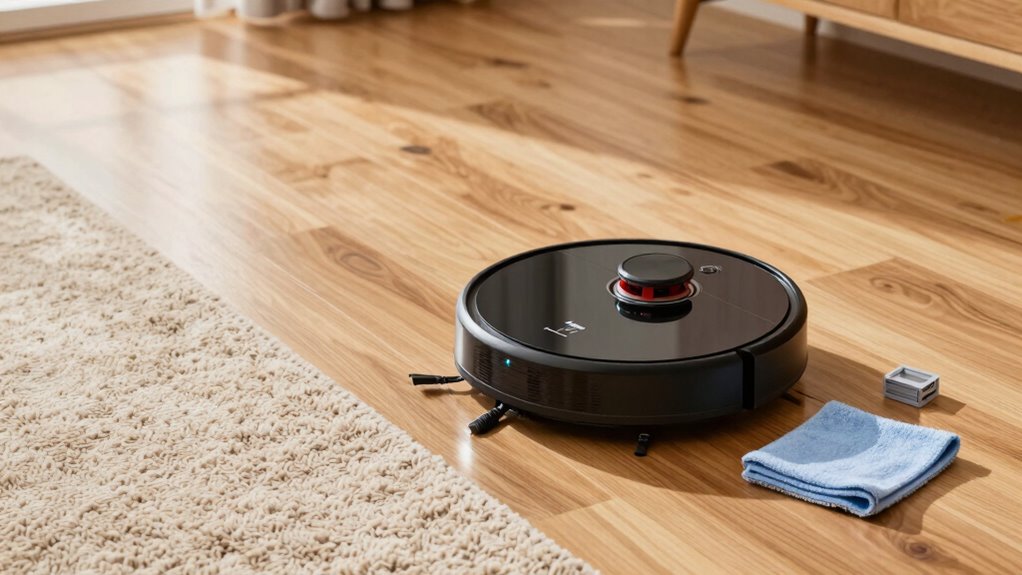
Have you ever wondered if your robot vacuum is optimized for your specific floor type? If you’re not getting the cleaning results you expect, it might be time to contemplate how your device is set up and maintained. Proper maintenance tailored to your floors can make a big difference, especially when it comes to battery optimization and sensor calibration. These two elements are critical for ensuring your robot operates efficiently and effectively on different surfaces.
Optimizing your robot vacuum with proper setup and maintenance boosts performance on all floor types.
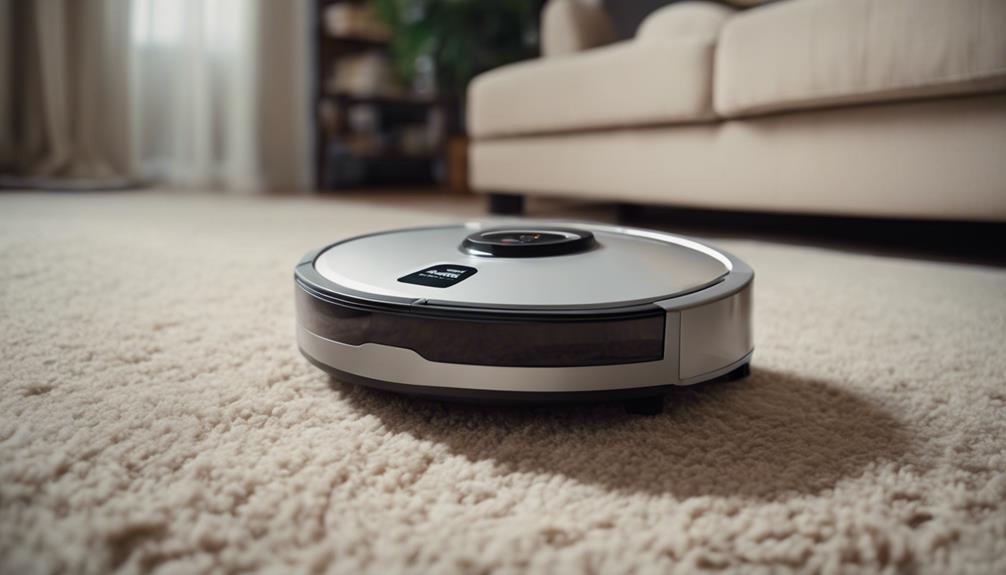
Battery optimization is crucial because different floor types demand varying levels of power. For example, thick carpets require more suction and sustained battery use, so ensuring your vacuum’s battery is in top shape helps it perform better. Regularly checking the battery’s health and charging cycles can extend its lifespan and improve cleaning time. If your vacuum has a low-battery warning or struggles to complete a full run, consider recalibrating the battery or replacing it if needed. Properly calibrated batteries deliver consistent power, preventing unexpected shutdowns mid-clean and ensuring your device can handle the demands of your floor type. Additionally, battery health monitoring can help you identify when it’s time for a replacement before performance drops significantly. Maintaining optimal battery performance also reduces unnecessary energy waste and enhances overall efficiency. Keeping track of your robot’s battery cycle count can also provide insights into when it might need a replacement, prolonging its overall lifespan.
Sensor calibration plays an equally indispensable role in matching maintenance to your floors. Your robot vacuum relies on sensors to navigate and avoid obstacles, but dust, debris, or misalignment can throw these sensors off. Calibration ensures the sensors are correctly aligned and responsive, which is especially important if you have a mix of hard floors and carpets. For hard surfaces like tile or hardwood, accurate sensor calibration helps prevent unnecessary bumping or missed spots, while on carpets, it ensures the vacuum can detect thicker fibers and adjust its cleaning pattern accordingly. Regularly checking and recalibrating your sensors keeps the robot functioning smoothly, reducing the chances of it getting stuck or missing areas. Additionally, some models offer sensor cleaning features to maintain optimal performance. Keeping sensors clean and properly calibrated is essential to maintaining overall device efficiency and avoiding unnecessary wear and tear. This process is especially vital when transitioning between different surfaces, as it helps your vacuum adapt seamlessly to each floor type.
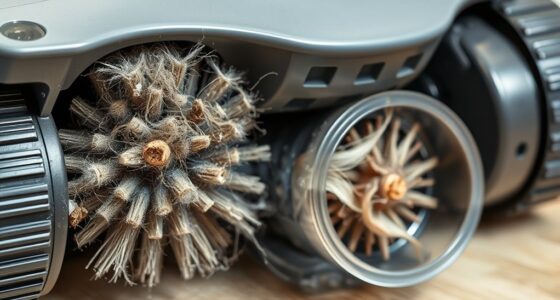
In addition to these technical aspects, pay attention to your vacuum’s brushes and filters, which interact with your floor type. For hardwood or tile, smooth brushes and fine filters work best, while carpets benefit from more aggressive brushes that lift dirt effectively. Keep these parts clean and replace them as recommended, especially if you notice reduced suction or poor cleaning performance.
Maintaining your robot vacuum according to the specific floor type can also involve adjusting the cleaning modes and settings, which can further optimize its performance. Matching your robot vacuum’s maintenance to your floor type involves more than just a once-over. It’s about actively managing battery health and ensuring sensors are calibrated properly to adapt to your home’s surfaces. Doing so keeps your robot running at peak performance, minimizes energy waste, and guarantees thorough cleaning. With consistent upkeep tailored to your floors, you’ll enjoy a cleaner, more efficient home and extend the life of your device.
robot vacuum sensor calibration kit
As an affiliate, we earn on qualifying purchases.
As an affiliate, we earn on qualifying purchases.
Frequently Asked Questions
How Often Should I Replace the Vacuum’s Brushes?
You should replace your robot vacuum’s brushes every 6 to 12 months, depending on usage and floor type. Regular brush replacement helps maintain ideal cleaning and prevents damage to the motor. Keep an eye on wear and tear, especially if your vacuum’s battery lifespan seems shortened. Proper maintenance ensures your brushes stay effective, reducing the need for frequent repairs and keeping your floors spotless.
Can Different Floor Types Affect Battery Life?
Yes, different floor types can affect your robot vacuum’s battery life. Hard floors often require less effort, aiding battery efficiency, while carpets may demand more power, draining the battery faster. Ensuring your vacuum is compatible with your floor type improves efficiency and battery lifespan. Regularly adjusting settings based on floor compatibility helps maximize runtime, so you get the most out of each charge and keep your device functioning at its best.
Are There Specific Filters for Pet Hair Removal?
Like a loyal friend, some filters are designed for pet hair removal. You should look for pet hair filters that trap fur effectively and fit your vacuum model. Regularly emptying the hair collection bins prevents clogs and maintains suction power. By choosing the right pet hair filters and keeping the hair collection bins clean, you’ll guarantee your robot vacuum tackles pet hair efficiently and keeps your floors spotless.
How Do I Prevent the Vacuum From Scratching Delicate Floors?
To prevent your robot vacuum from scratching delicate surfaces, always choose models with soft brushes and gentle suction settings. Use the scratch prevention feature if available, and regularly inspect the brushes and wheels for debris that could cause damage. Additionally, avoid running the vacuum over high-pile carpets or uneven surfaces. When in doubt, lift the vacuum or switch to manual cleaning to protect your delicate surface from scratches.
What Maintenance Is Needed for Robot Vacuum Sensors?
Did you know that sensor calibration can improve obstacle detection by up to 30%? To maintain your robot vacuum’s sensors, regularly clean them with a soft, dry cloth to remove dust and debris. Check for calibration issues and recalibrate if necessary, especially if the vacuum struggles with obstacle detection. Proper maintenance guarantees your robot navigates smoothly, avoiding collisions and cleaning efficiently.
Conclusion
Matching your robot vacuum’s maintenance to your floor type keeps it running smoothly. Think of it like tuning a guitar—each string (or floor) needs the right tension (or care). Even if your floors are mixed, regular cleaning and specific adjustments prevent clogs and damage. By doing so, you’ll enjoy spotless floors without the hassle of repairs. It’s simple: adapt your maintenance, and your robot will handle any surface like a pro.