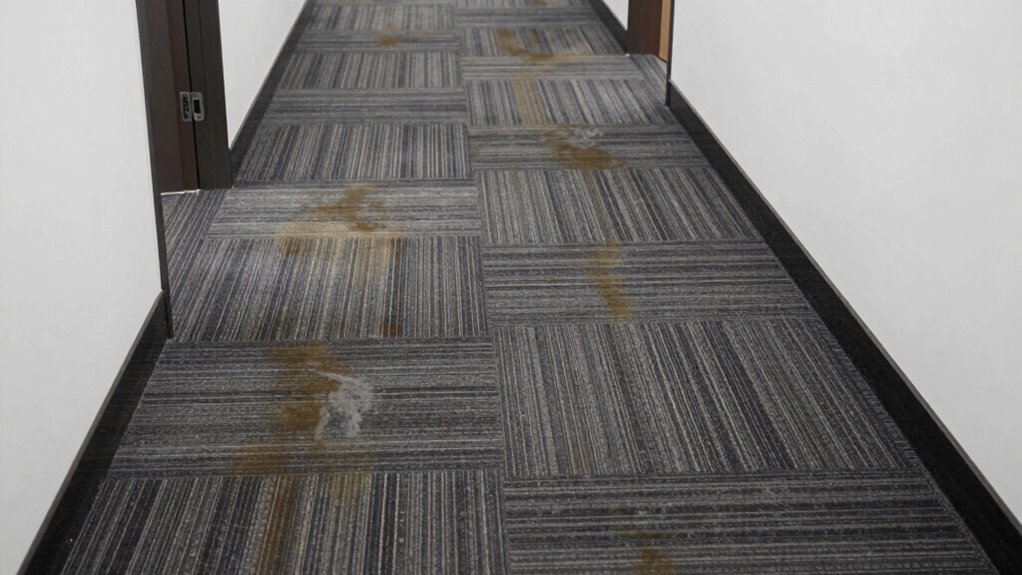

Traffic lanes look dirty faster because constant foot traffic causes fibers to weaken and deteriorate. Friction from frequent walking breaks down the carpet fibers, trapping dirt and stains more easily. Over time, this wear creates dull, faded areas that hide grime and make the dirt more noticeable. Regular cleaning can’t fully prevent this damage, but understanding the causes can help you take better steps to protect your carpet—if you keep exploring, you’ll find more helpful tips.
Key Takeaways
- Repeated foot traffic causes fibers to break down and trap dirt more easily.
- Deteriorated fibers lose resilience, allowing dirt and stains to embed deeper.
- High-traffic areas experience faster fiber wear and color fading, making dirt more noticeable.
- Regular cleaning removes surface dirt but cannot prevent underlying fiber damage.
- Lack of protective measures accelerates fiber deterioration, leading to quicker dirt buildup.
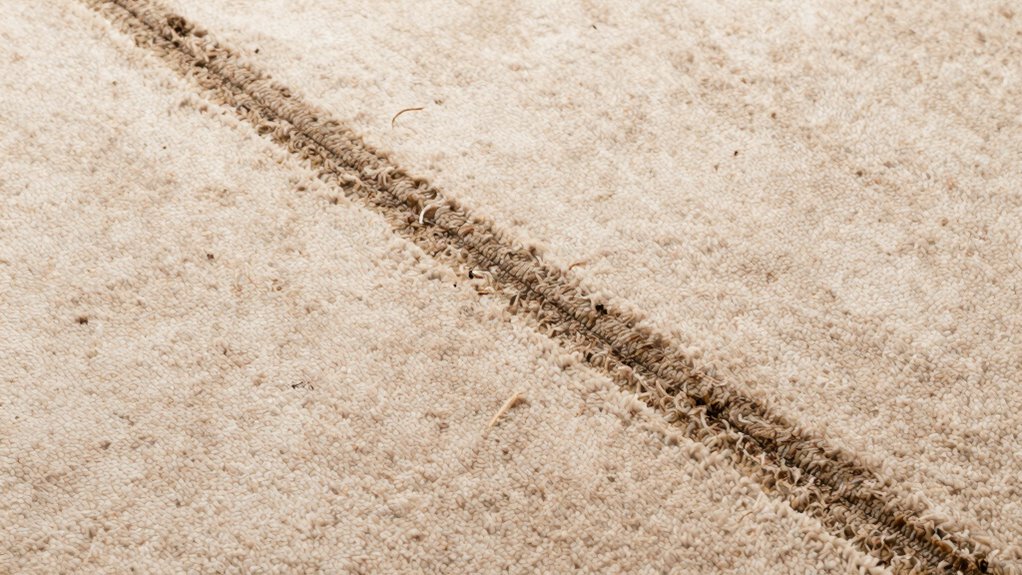
If you’ve noticed that certain areas of your carpet tend to look dirtier faster than the rest, you’re not imagining it. These high-traffic zones, often called traffic lanes, tend to accumulate dirt, grime, and wear much more quickly than the surrounding areas. This isn’t just about appearance; it’s an issue rooted in the very fibers that make up your carpet. When people walk over the same spots repeatedly, the carpet fibers undergo deterioration. Over time, this constant friction causes the fibers to break down, making those areas more receptive to dirt and stains. The fibers become less resilient, losing their original texture and strength, which means dirt gets embedded more easily and is harder to remove during regular cleaning.
High-traffic areas cause carpet fibers to break down and trap dirt more easily over time.
You’ll also notice that these traffic lanes often look duller and less vibrant than the rest of your carpet. This is due to color fading effects, which happen when the carpet fibers are repeatedly subjected to foot traffic and cleaning. The constant friction, combined with exposure to sunlight and cleaning products, gradually strips away the dye from the fibers. As a result, the high-traffic areas lose their original color intensity, giving them a faded, worn-out appearance. This fading accentuates the dirt and grime buildup, making the lanes look even dirtier and more neglected. Regular maintenance can slow this process, but it cannot completely prevent the damage caused by fiber deterioration.
The combination of carpet fiber deterioration and color fading effects explains why these sections seem to deteriorate faster than other parts of your carpet. Each step you take repeatedly abrades the fibers, weakening their structure and making them more susceptible to trapping dirt. Meanwhile, the fading diminishes the visual contrast between the worn lanes and the surrounding carpet, so dirt and stains stand out even more. Regular vacuuming helps remove surface debris, but it can’t fully combat the underlying damage caused by foot traffic. Without proper maintenance or protective measures like area rugs or carpet protectors, these lanes will continue to degrade and appear dirtier over time. Additionally, understanding the impact of fiber deterioration on carpet longevity can motivate more diligent care to preserve your carpet’s appearance. Proper preventative measures, such as protective coverings, can help extend the life of your carpet and minimize visible wear. Taking steps to reduce foot traffic in vulnerable areas can also significantly slow down this process.

RESILIA Deep-Pile Carpet Runner – Plastic Vinyl Carpet & Rug Protector, Waterproof Clear Vinyl Floor Runners, 27 Inches Wide x 6 Feet Long, Made in The USA
- Non-slip Carpet Protection: Prevents slipping and bunching
- Durable Waterproof Material: Resists spills, tears, and stains
- Safe and Eco-friendly: Made from recycled, phthalate-free PVC
As an affiliate, we earn on qualifying purchases.
As an affiliate, we earn on qualifying purchases.
Frequently Asked Questions
How Can I Prevent Traffic Lanes From Appearing Dirty Quickly?
To prevent traffic lanes from appearing dirty quickly, choose carpets with stain resistance and color fading protection. Regularly vacuum these areas to remove dirt before it settles, and clean spills immediately to avoid stains. Using mats at entrances also helps trap dirt. Additionally, consider professional deep cleaning periodically. These steps maintain the carpet’s appearance longer, keeping traffic lanes looking cleaner and more vibrant over time.
Do Certain Carpet Materials Hide Dirt Better?
Think of your carpet fiber as a shield, hiding dirt like a secret kept safe. Certain materials, especially those with stain resistance, conceal dirt better because their fibers resist stains and grime from settling deep. You’ll find that carpets made from nylon or polyester with stain-resistant treatments can hide dirt longer, keeping traffic lanes looking cleaner. Choosing the right fiber acts like a hidden armor, maintaining a fresh look even in high-traffic areas.
How Often Should I Deep Clean High-Traffic Areas?
You should deep clean high-traffic areas at least every 6 to 12 months to maintain carpet fiber durability and keep stains resistant treatments effective. Regular professional cleaning removes dirt and debris that cause traffic lanes to look dirty faster. If your home experiences heavy foot traffic, consider more frequent cleanings. Using stain-resistant treatments can also help your carpet stay cleaner longer, but they aren’t substitutes for deep cleaning to preserve their effectiveness.
What Are the Best Vacuum Settings for Traffic Lanes?
Think of your vacuum like a race car—maximize its power and adjust the brush height for the track. Set your vacuum power high enough to pick up dirt without damaging fibers, and choose a lower brush height for traffic lanes to lift embedded debris. For example, I found that increasing power and lowering the brush in busy hallways kept my traffic lanes looking cleaner longer, just like a well-tuned engine.
Can Area Rugs Help Reduce Traffic Lane Dirt Buildup?
Yes, area rugs can help reduce traffic lane dirt buildup. By strategically placing rugs in high-traffic areas, you create a barrier that traps dirt and prevents it from spreading across the carpet. Choose rugs with a strong color contrast to hide dirt better and make maintenance easier. Proper rug placement guarantees these entry points and pathways stay cleaner longer, preserving your carpet’s appearance and reducing the need for frequent deep cleaning.
Conclusion
Think of your traffic lanes as the veins of your home’s carpet — channels that carry the pulse of daily life. As they bear the weight of footsteps, they mirror the passage of time and the stories we create. While they may appear dirtier faster, it’s a reminder that life’s movement leaves its mark. With care, you can nurture these veins, allowing your home to remain a vibrant tapestry of life’s journey, not just a canvas of wear.