Allergen-reducing appliances work better with good bedding habits because they target airborne allergens, but clean bedding reduces the overall allergen load. Proper mattress choices and regular bedding maintenance, like washing pillows and sheets, help minimize dust mites and pet dander. When combined, these habits lessen the strain on your air purifier and improve your indoor air quality. Keep exploring to discover how this all-encompassing approach can make your home more allergy-friendly.
Key Takeaways
- Proper bedding reduces surface allergens, decreasing the workload for air purifiers and increasing their efficiency.
- Allergen-proof bedding prevents dust mites and mold, complementing the filtration capabilities of appliances.
- Regular bedding maintenance minimizes allergen buildup, enhancing overall indoor air quality.
- Using hypoallergenic materials in bedding decreases allergen presence, amplifying appliance effectiveness.
- Combining good bedding practices with appliances creates a comprehensive environment for allergy relief.
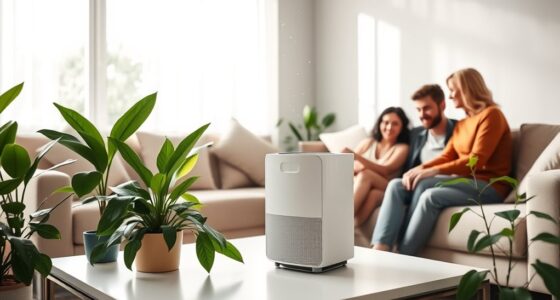
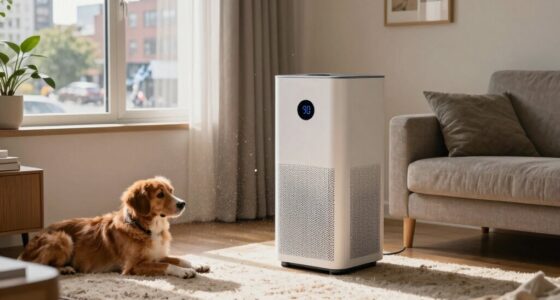
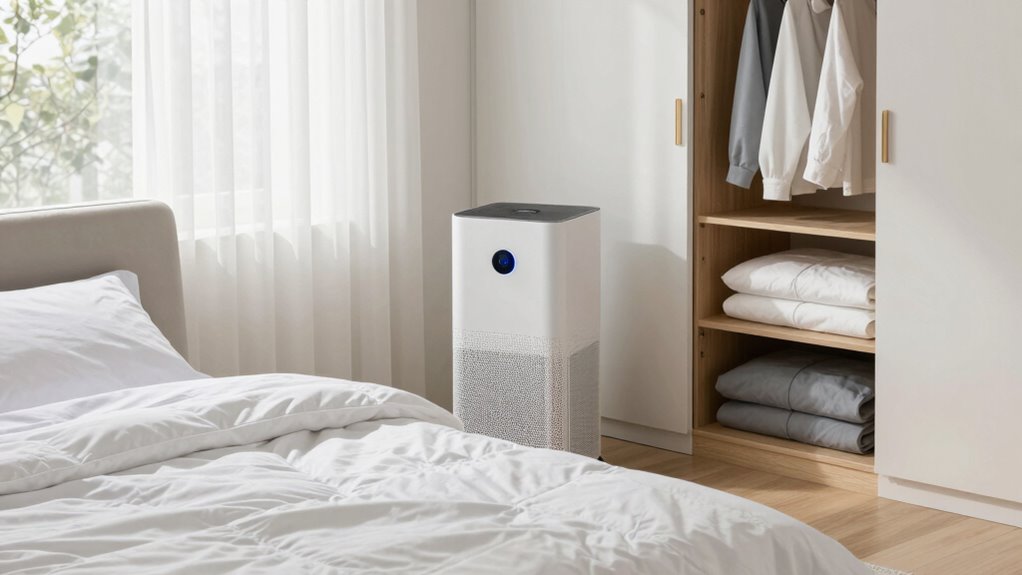
If you suffer from allergies, adopting allergen-reducing appliances and bedding habits can make a significant difference in your daily comfort. These tools work best when combined with mindful choices about your bedding, creating a comprehensive approach to allergy relief. An air purifier’s effectiveness, for example, hinges on proper placement and consistent use. A high-quality air purifier can trap airborne particles like pollen, pet dander, and dust mites, but its full potential is realized when your bedding doesn’t contribute to the problem. That’s why selecting the right mattress material choices is crucial. Mattresses made from hypoallergenic materials, such as latex or memory foam, resist dust mites and mold better than traditional innerspring options, reducing the overall allergen load in your sleeping environment.
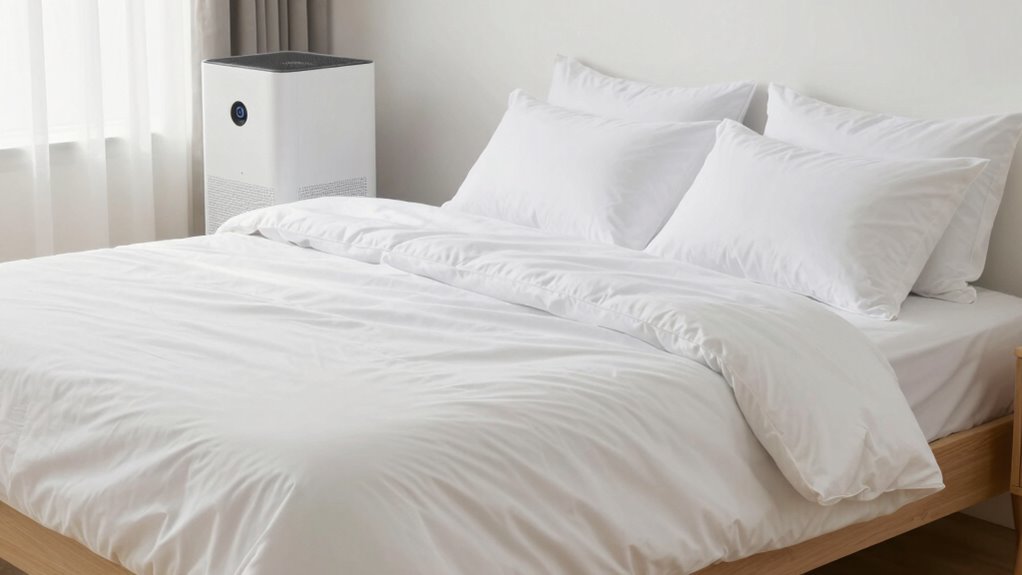
Using hypoallergenic mattresses and good bedding habits enhances allergy relief and air purifier effectiveness.
Your bedding habits directly impact how well allergen-reducing appliances work. Clean, allergen-proof covers on pillows and mattresses prevent dust mites from burrowing into your bedding, making it easier for air purifiers to do their job. Regular washing of sheets and pillowcases in hot water helps eliminate surface allergens, keeping your sleeping area cleaner and more breathable. When your bedding is free of allergens, your air purifier can focus on filtering airborne particles, improving air quality more efficiently. Understanding the effectiveness of different appliances can help you optimize your allergy management strategy. Additionally, understanding the role of bedding materials can guide you toward choices that further minimize allergen accumulation. This synergy between bedding habits and appliances creates an environment where allergens are minimized at every level, making your sleep safer and more restful.
Choosing mattress materials wisely also influences the overall effectiveness of your allergy reduction strategy. Natural fibers like cotton are often less allergenic, but they can still harbor dust mites if not washed frequently. Hypoallergenic mattresses, however, are designed to resist dust, mold, and bacteria, providing a barrier against common allergens. When combined with allergen-proof bedding covers and regular laundering, these mattresses significantly cut down on allergen buildup. This means your air purifier doesn’t have to work as hard to clean the air, as fewer allergens are present in your sleeping space from the start. Being mindful of bedding maintenance can further enhance your efforts to reduce allergens.
In essence, allergen-reducing appliances and bedding habits are most effective when they complement each other. Your choice of mattress material and consistent bedding maintenance amplify the benefits of your air purifier, creating a cleaner, healthier indoor environment. By investing in the right mattress and maintaining good bedding practices, you enhance the air purifier’s effectiveness and significantly reduce your allergy symptoms. Together, these strategies help you breathe easier and sleep more soundly, transforming your home into a true allergy-safe sanctuary.
As an affiliate, we earn on qualifying purchases.
Frequently Asked Questions
Can Bedding Habits Eliminate All Airborne Allergens?
Bedding habits alone can’t eliminate all airborne allergens, but they substantially reduce dust mite and pet dander levels. Regularly washing sheets in hot water, using allergen-proof covers, and keeping bedding clean helps limit allergen buildup. Combining these habits with allergen-reducing appliances enhances your efforts. While you can’t completely eliminate airborne allergens, consistent bedding practices greatly improve indoor air quality and reduce allergy symptoms.
How Often Should I Replace Allergen-Reducing Bedding?
If you want to reduce allergy triggers effectively, replace your allergen-reducing bedding every 6 to 12 months. For instance, Sarah noticed her allergy symptoms worsened despite using special bedding, so she replaced it annually, which made a difference. Regular bedding maintenance, including washing and replacing, keeps allergens like dust mites at bay. By staying consistent, you’ll improve your sleep quality and reduce allergy triggers markedly.
Are Natural Bedding Materials Better for Allergy Sufferers?
Yes, natural bedding materials like cotton and linen are better for allergy sufferers because they often use natural fibers and are less likely to trap allergens. Hypoallergenic fabrics, such as silk or specially treated cotton, also reduce allergy symptoms by resisting dust mites and mold. By choosing these materials, you improve your sleep environment, especially when combined with allergen-reducing appliances, making your bedroom a healthier, more comfortable space.
Do Different Allergen-Reducing Appliances Target Specific Allergens?
Think of allergen-reducing appliances as specialized detectives, hunting down specific culprits like dust mites or pet dander. Yes, different appliances target particular allergens; for example, HEPA filters excel at capturing dust mites, while activated carbon filters help reduce pet dander. By choosing appliances tailored to your allergens, you double your chances of a cleaner, healthier sleep environment. So, pick the right device, and let it do the detective work for you.
Can Bedding Habits Improve Allergy Symptoms Overnight?
Yes, your bedding habits can improve allergy symptoms overnight. By practicing dust mite control through regular bedding maintenance—like washing sheets weekly in hot water and using allergen-proof covers—you reduce allergen buildup. These habits complement allergen-reducing appliances, making them more effective. Keeping your bedding clean and allergen-free minimizes exposure, so you breathe easier and experience better relief from allergy symptoms quickly.
Conclusion
By combining allergen-reducing appliances with better bedding habits, you’re creating a fortress against allergens. Think of your home as a sanctuary—every small step you take, from washing your bedding regularly to using air purifiers, is like adding bricks to your fortress. Don’t just rely on appliances alone; your habits are the mortar that seals out allergens. Together, they unite to give you cleaner air and a healthier, more comfortable home—your personal haven from allergy triggers.