Proper labeling and regular cleaning help you keep your compact freezer organized, prevent food waste, and improve energy efficiency. Clear labels guarantee you quickly find what you need, while cleaning removes ice buildup and spills that hinder performance. Well-maintained freezers stay cooler, save energy, and last longer. If you want to get the most out of your freezer and avoid common problems, understanding these habits will make a big difference.
Key Takeaways
- Proper labeling prevents items from being forgotten, reducing waste and making retrieval easier in small, cluttered spaces.
- Regular cleaning maintains airflow and prevents ice buildup, ensuring the freezer operates efficiently and extends its lifespan.
- Clear labels help differentiate similar packages, saving time and effort in a compact freezer’s limited space.
- Consistent cleaning and organization optimize energy use by preventing cold air leaks and reducing the freezer’s workload.
- Routine maintenance keeps the freezer hygienic, prevents spoilage, and maintains peak performance in tight storage environments.
Compact freezers are convenient appliances that save space and keep your frozen items organized, but their small size can lead to clutter and forgotten items over time. When you don’t label or clean your freezer regularly, it becomes harder to find what you need quickly, and energy efficiency can suffer. Poor storage organization causes you to waste power by leaving the unit running longer than necessary, trying to locate or thaw forgotten food. To get the most out of your compact freezer, adopting better labeling and cleaning habits is essential.
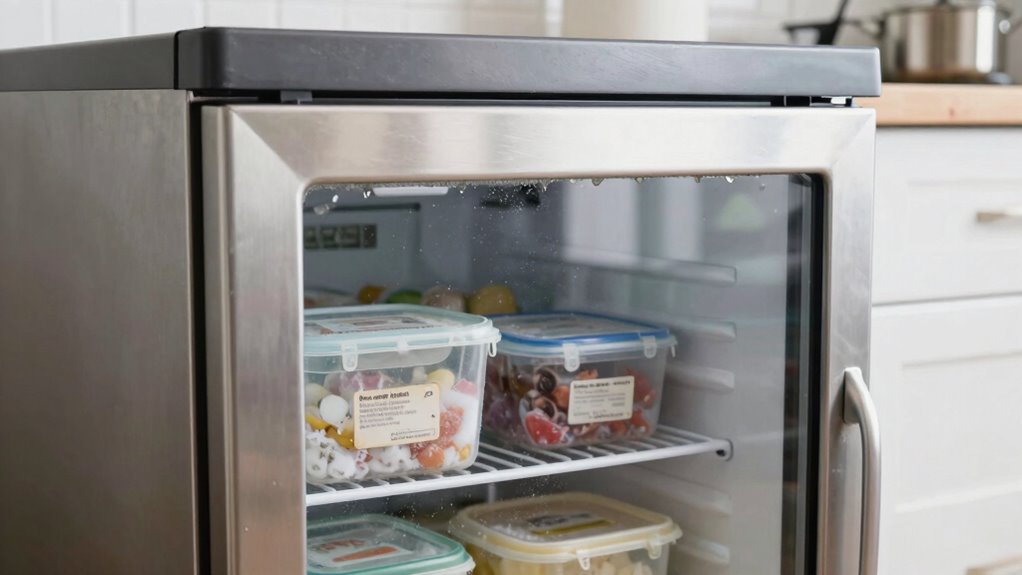
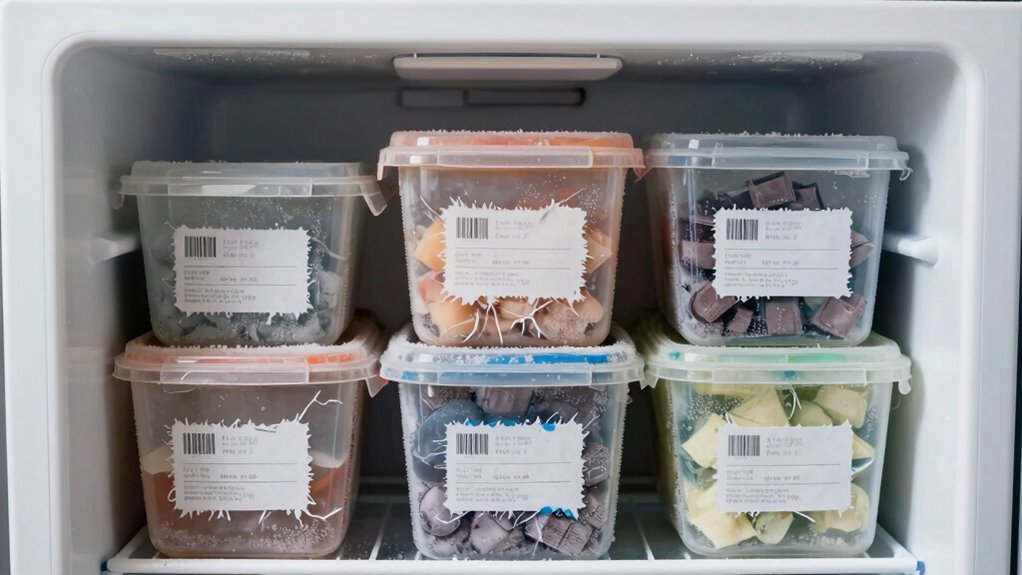
Labeling is your first step toward improved storage organization. When you clearly mark each item with dates and descriptions, you avoid digging through piles of frozen goods. It’s easy to forget what’s buried at the bottom or back of the freezer, especially when there are multiple similar-looking packages. Using waterproof markers or pre-made labels ensures your notes stay legible over time. This practice not only prevents food waste but also helps you plan meals better, saving time and reducing unnecessary trips to buy replacements. Proper labeling also promotes energy efficiency because you don’t have to leave the door open longer, searching for specific items. Additionally, understanding storage organization techniques can help optimize space and reduce clutter in small freezers. Regularly reviewing your inventory can further prevent food waste and improve overall efficiency.
Label items with dates and descriptions to stay organized and save energy.
Cleaning your freezer regularly is equally important. Over time, ice buildup or spills can block airflow and reduce the efficiency of your appliance. When your freezer isn’t clean, it has to work harder to maintain the desired temperature, which increases energy consumption. Set a schedule to defrost and wipe down the interior, paying attention to corners and seals. Cleaning the door gaskets ensures a tight seal, preventing cold air from escaping and warm air from entering. Additionally, removing expired or spoiled items helps keep the space organized and minimizes clutter, making it easier to locate what you need. Regular maintenance and cleanliness are also vital for preventing ice buildup, which can impair freezer performance. When your freezer stays clean, it runs more efficiently, saving you money on electricity bills.
Incorporating these habits into your routine doesn’t have to be complicated. Dedicate a few minutes every month to check and update labels, and perform a quick clean. This ongoing effort keeps your freezer organized and running at peak efficiency. As a result, you’ll notice that your frozen foods stay fresher longer, and your energy bills stay lower. Proper labeling and cleaning aren’t just about maintaining neatness—they’re practical strategies to maximize your compact freezer’s lifespan and performance. With a little effort, you transform your freezer into an organized, energy-efficient space that saves you time, money, and frustration.
As an affiliate, we earn on qualifying purchases.
Frequently Asked Questions
How Often Should I Defrost My Compact Freezer?
You should defrost your compact freezer whenever frost buildup reaches about a quarter-inch thick. Regular defrosting, typically every 3 to 6 months, helps maintain efficient freezer performance and saves energy. Consistent freezer maintenance, including defrosting, prevents ice accumulation that can block airflow and compromise temperature control. Keep an eye on the frost level, and defrost promptly to guarantee your compact freezer runs smoothly and lasts longer.
Are There Eco-Friendly Cleaning Products Suitable for Freezers?
Ironically, you’d think cleaning a freezer would be simple, but finding eco-friendly cleaning products that are freezer safe isn’t. Luckily, many brands now offer eco-friendly cleaning solutions perfect for freezers. These products are designed to be gentle yet effective, ensuring your appliance stays clean without harmful chemicals. You can confidently use these freezer safe products, knowing you’re protecting the environment and maintaining a healthy, spotless freezer.
Can Improper Labeling Lead to Food Safety Issues?
Yes, improper labeling can lead to food safety issues. When labels are unclear or inaccurate, you might forget to use older items first, disrupting proper food rotation. This increases the risk of spoiled or contaminated food, which can cause illness. Precise labeling ensures you keep track of expiration dates and contents, helping you maintain safe storage practices and prevent health hazards in your freezer.
What Are the Signs of Freezer Malfunction?
When your freezer starts acting up, it’s like a noisy neighbor—excessive freezer noise or frost buildup signals trouble. You might notice strange sounds or thick ice layers, indicating a malfunction. These signs suggest your compressor struggles or there’s poor insulation. Don’t ignore these clues; they can lead to food spoilage. Regularly check for unusual noises and frost, and address issues promptly to keep your freezer running smoothly.
How Do Temperature Fluctuations Affect Stored Food?
Temperature fluctuations can seriously harm your stored food by disrupting temperature stability. When the freezer’s temperature isn’t consistent, food can thaw and refreeze, leading to freezer burn, texture changes, and nutrient loss. These fluctuations compromise food preservation and increase spoilage risks. To keep your food safe and fresh, make sure your freezer maintains a steady temperature, and regularly check and adjust the settings if needed.
Conclusion
By paying closer attention to labeling and cleaning your compact freezer, you’re gently guiding yourself toward a smoother, more organized experience. It’s a small step that quietly invites better habits and less frustration down the line. When you treat your freezer with care, you’re subtly encouraging harmony in your kitchen. Remember, a little consistency now preserves the pleasant surprises later—making your freezer a welcoming space rather than a hidden mystery.