
Vacuuming alone usually doesn’t permanently remove carpet odors because these smells often come from deep inside the fibers or beneath the surface, not just on top. Surface cleaning temporarily masks odors, but the molecules trapped deep within can keep re-emerging. Without additional treatments like odor neutralizers or good airflow, smells can come back quickly. If you want to learn more about effectively controlling stubborn carpet odors, keep exploring the options available.
Key Takeaways
- Vacuuming removes surface dirt but often doesn’t eliminate odors trapped deep within carpet fibers.
- Odors can re-emerge as volatile compounds off-gas from within the fibers after vacuuming.
- Poor air circulation allows odors to settle back into the carpet and surrounding air.
- Without odor-neutralizing treatments, embedded smells can reappear over time.
- Combining vacuuming with proper ventilation and odor absorbers prevents odors from returning immediately.
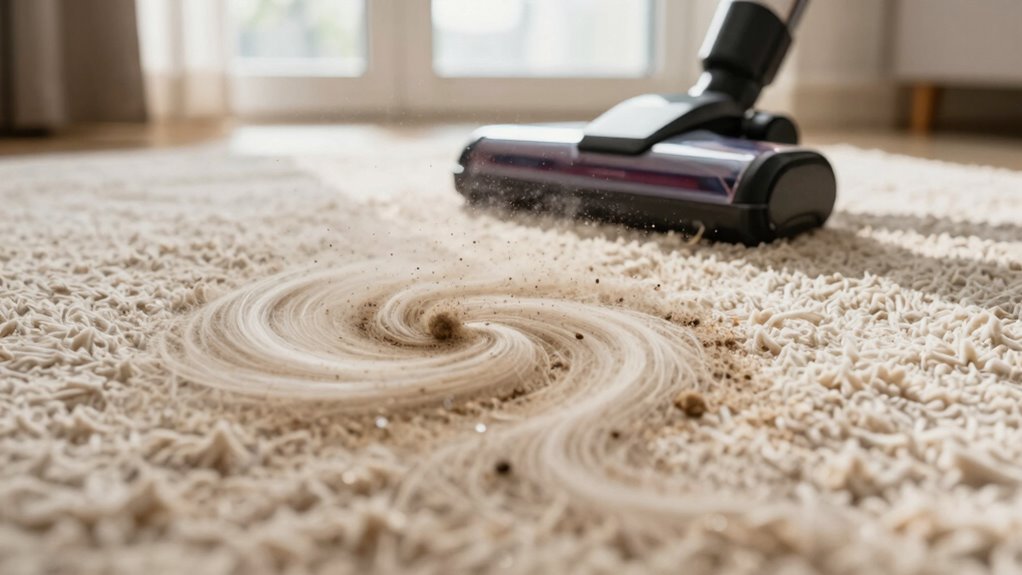
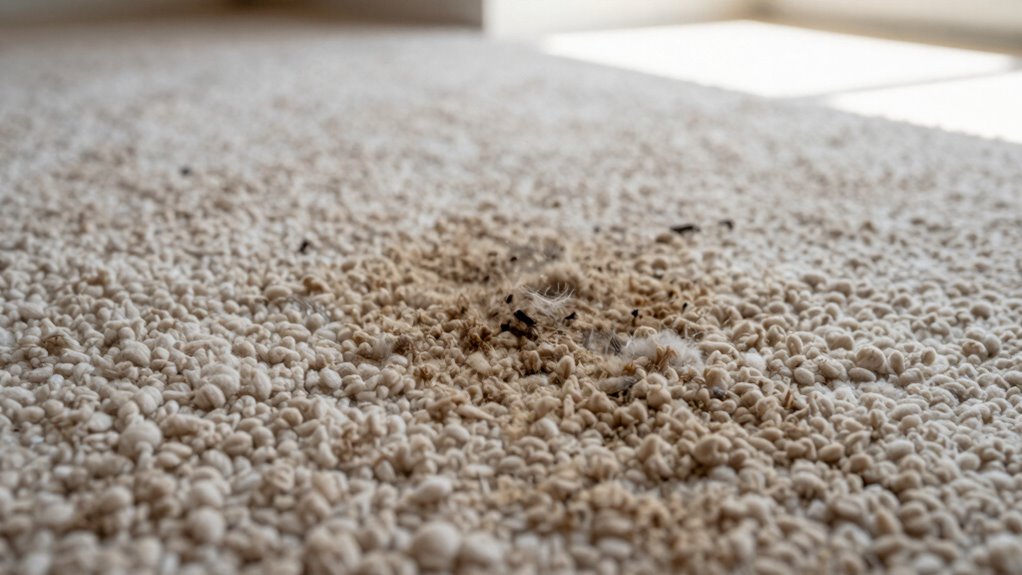
You might notice that some carpet odors seem to return immediately after you vacuum, leaving your space smelling fresh only briefly. This happens because vacuuming alone often isn’t enough to eliminate deep-seated smells. Instead, it temporarily masks them, giving you a false sense of cleanliness. To truly understand why odors come back, you need to contemplate how air circulation and odor absorption work. When you vacuum, you remove surface dirt and debris, but odors often originate from within the fibers or beneath the carpet’s surface. These smells can linger and resurface once the vacuuming stops.
Air circulation plays an essential role here. If your room isn’t well-ventilated, odors tend to stay trapped in the carpet fibers and the surrounding air. Once vacuuming stirs up these particles, the smell might seem to fade momentarily but quickly reappears as the air stagnates. Improving air circulation by opening windows or using fans helps disperse odor molecules and prevents them from settling back into the fibers. Better airflow also speeds up the process of odor absorption into porous materials in the room, like curtains, furniture, or even the walls. Additionally, proper ventilation can significantly reduce the concentration of odor-causing compounds, making your space smell fresher for longer. Incorporating airflow management techniques is essential for maintaining a fresher environment. Recognizing how air circulation impacts odor control can empower you to take more effective steps in your cleaning routine.
Furthermore, understanding the role of odor absorption in textiles can help you choose better cleaning products and methods. Carpets, especially those that are older or made from synthetic fibers, can absorb and trap odors deeply within their structure. Vacuuming pulls surface dirt but often doesn’t reach the depths where these smells reside. As a result, the odors are merely displaced temporarily. Without additional treatment, these smells can re-emerge as volatile compounds slowly off-gas from within the fibers. Absorbing substances like baking soda can help neutralize odors at a molecular level, making a noticeable difference in freshness.
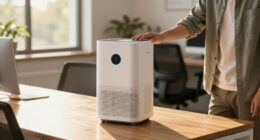
To combat this, you need to incorporate odor-absorbing solutions into your cleaning routine. Using baking soda before vacuuming can help, as it absorbs some of the odors at a molecular level. After vacuuming, applying a specialized carpet deodorizer or using an air purifier with activated carbon filters can further reduce lingering smells. These methods work by trapping odor molecules, preventing them from escaping back into the room’s air.
Ultimately, understanding the interplay between air circulation and odor absorption can help you develop more effective cleaning strategies. Simply vacuuming isn’t enough; you need to promote good airflow and use odor-neutralizing products. This combined approach ensures that your carpet stays fresh longer, and the unpleasant smells don’t just temporarily disappear only to return moments later.
As an affiliate, we earn on qualifying purchases.
Frequently Asked Questions
Can Certain Carpet Fibers Trap Odors More Than Others?
Yes, certain carpet fibers trap odors more than others. Fibers with higher porosity, like wool or synthetic blends, absorb odors more easily due to their structure. This means that even after vacuuming, the fibers can hold onto smells, causing odors to come back. To combat this, you should consider deep cleaning or using odor-neutralizing treatments tailored to the specific fiber type, ensuring your carpet stays fresh longer.
Do Vacuum Filters Impact Odor Removal Effectiveness?
Think of vacuum filters as the gatekeepers of freshness. Vacuum technology relies on effective filters to trap odors and particles, preventing them from sneaking back into your carpet. If you skip filter maintenance, it’s like closing the gate only partially—smells can leak through. Regularly cleaning or replacing your filters guarantees your vacuum’s odor removal stays strong, keeping your home smelling fresh and your carpets cleaner longer.
How Long Do Carpet Odors Typically Linger After Cleaning?
Carpet odors from pet stains can linger for several days after cleaning, especially if the smell penetrates deep into carpet fibers. You might notice the odor returning shortly after vacuuming because surface cleaning doesn’t fully eliminate trapped smells. To reduce lingering odors, focus on deep cleaning methods, such as steam cleaning or enzyme treatments, to break down pet stains and odors embedded in your carpet fibers.
Are There Specific Cleaning Products That Prevent Odor Return?
You can prevent odor return by choosing cleaning products with odor masking properties and designed for carpets. Look for solutions that target stubborn carpet stains and contain odor-neutralizing agents. Regularly using a deep-cleaning shampoo or spray with odor control can help, as well as sealing in odors after cleaning. This way, you reduce the chances of unpleasant smells coming back shortly after vacuuming, keeping your carpet fresh longer.
Does Humidity Influence the Persistence of Carpet Odors?
Humid air is like a sponge, soaking up odors and making them cling to your carpet. High moisture levels slow down air circulation, trapping smells deeper in the fibers. When humidity rises, these odors are more likely to bounce back after vacuuming because the damp environment gives them a place to hide and linger. To keep smells at bay, control moisture and boost airflow in your space.
Conclusion
To keep your carpets smelling fresh, you need to address the root causes, not just the surface odors. Clean thoroughly, deodorize regularly, and vacuum consistently. Don’t ignore hidden sources of odor—like pet stains or trapped dirt—that keep odors lingering. By taking proactive steps, by preventing buildup, by maintaining cleanliness, you guarantee your carpets stay fresh, your home smells inviting, and you enjoy a cleaner, more comfortable living space every day.