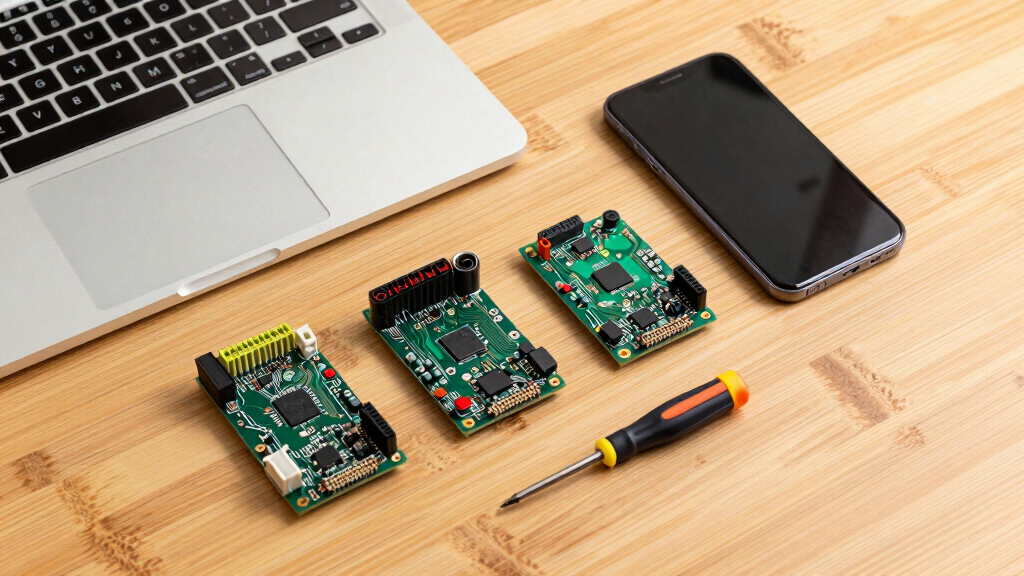

The best RISC-V development boards depend on whether you want to learn the instruction set, build a connected device, or run a small computer. My best overall pick is the Orange Pi RV2, which offers a more capable single-board-computer starting point than the microcontroller modules in this roundup. For compact experiments, the GODIYMODULES CH32V003 Type-C board is a simpler low-power option, while the Waveshare ESP32-C6 boards pair RISC-V-based control with modern wireless features. The main tradeoff is between small, focused MCU boards and larger systems with more computing headroom; header installation, wireless needs, and software support also shape the choice. Read on for the full comparison and guidance by project type.

Get cleaning gear delivered free with Prime
- Fast, free delivery on millions of items
- Prime Video, Amazon Music and more included
- Member-only deals all year
Complete the kit


Key Takeaways
- The Orange Pi RV2 stands apart as the roundup’s more capable single-board-computer option; it fits Linux-oriented experiments better than the MCU boards.
- CH32V003 boards favor simple, low-power MCU work, with the GODIYMODULES two-pack offering an accessible format for small experiments.
- ESP32-C6 options combine RISC-V-based control with Wi-Fi 6, making them better suited to connected projects than bare-bones MCU modules.
- Several listings are close variants: the Waveshare ESP32-C6 boards differ by presentation and headers, so buyers should check the exact board and included assembly.
- Many products in the list are not RISC-V boards: the Arduino UNO R4 WiFi uses a Renesas RA4M1, and the Nano ESP32 and Raspberry Pi Pico 2 W use non-RISC-V main processors.


| RISC-V development board | Processor | Wireless |
|---|---|---|
| GODIYMODULES CH32V003 Type-C U | — | — |
| Arduino UNO R4 WiFi [ABX00087] | — | Wi-Fi and Bluetooth 5.0 |
| Waveshare ESP32-C6 Wi-Fi 6 Dev | 32-bit RISC-V single-core | — |
| Waveshare ESP32-C6 Wi-Fi 6 Dev | 32-bit single-core RISC-V | Wi-Fi 6 (802.11ax), Bluetooth 5, IEEE 802.15.4 |
| 5pcs CH32V003F4P6 RISC-V Devel | — | — |
| Freenove Raspberry Pi Pico 2 W | Dual Arm Cortex-M33 or dual Hazard3 RISC-V | 2.4 GHz 802.11n Wi-Fi, Bluetooth 5.2 |
| ESP32-P4-NANO Development Boar | ESP32-P4 RISC-V dual-core and single-core processors | Wi-Fi 6, Bluetooth 5/BLE |
| Waveshare ESP32-C6 RISC-V Micr | 32-bit single-core RISC-V, up to 160 MHz | Wi-Fi 6, Bluetooth LE, IEEE 802.15.4 (Zigbee 3.0 and Thread) |
| Waveshare ESP32-C5 Dual-Band W | ESP32-C5 RISC-V, 240 MHz | Dual-band Wi-Fi 6 |
| Orange Pi RV2 RISC-V Single-Bo | KY X1, 8 cores, 1.6 GHz | Wi-Fi 5, Bluetooth 5, BLE |
| Orange Pi RV RISC-V Single-Boa | 4-core, 64-bit RISC-V JH-7110, up to 1.5 GHz (as stated) | — |
| Arduino Nano ESP32 with Header | ESP32-S3 dual-core Xtensa 32-bit LX7 | — |
More Details on Our Top Picks
GODIYMODULES CH32V003 Type-C USB Development Board, 2-Pack
The two-board bundle makes this a practical starting point for small CH32V003 projects: one board can stay wired into a prototype while the other is available for a separate experiment. Its 24 MHz crystal, reset button, and LED give basic timing and debugging tools without adding much setup complexity. Compared with the five-board CH32V003F4P6 set, this kit provides fewer boards but specifies a Type-C connection and crystal oscillator; the five-board set instead lists more I/O pins and a higher clock speed. Both are compact MCU options rather than full Linux-capable RISC-V computers such as the Orange Pi RV2. The tradeoff is a modest 24 MHz chip and one USB port per board, so this is best for focused firmware practice rather than projects needing extensive connectivity.
Pros:- Two boards let buyers keep separate prototypes or use one as a spare
- 24 MHz crystal oscillator provides a defined clock source
- Reset button and LED support basic debugging
- USB Type-C provides the board’s stated connection
Cons:- 24 MHz processor is modest for more demanding embedded workloads
- Only one USB port per board
- The provided specs do not list memory capacity or wireless connectivity
Best for: Learners and hobbyists building small CH32V003 firmware prototypes who want two boards and a Type-C connection.
Not ideal for: Developers who need higher listed clock speed, extensive onboard connectivity, or a single-board computer capable of running Linux.
- Chip:CH32V003F4U6
- Processor speed:24 MHz
- Connectivity:USB Type-C
- USB ports:1 per board
- Board pin count:22
- Pack quantity:2 boards
- Manufacturer:GODIYMODULES
- Warranty:2 years
Our verdict“Choose this two-board kit for straightforward CH32V003 experiments with a crystal and Type-C connection, and look elsewhere for faster or more connected projects.”
Arduino UNO R4 WiFi [ABX00087] – Renesas RA4M1 + ESP32-S3, Wi-Fi, Bluetooth, USB-C, CAN, 12-bit DAC, OP AMP, Qwiic Connector, 12×8 LED Matrix
– Renesas RA4M1 + ESP32-S3, Wi-Fi, Bluetooth, USB-C, CAN, 12-bit DAC, OP AMP, Qwiic Connector, 12×8 LED Matrix” image=”https://m.media-amazon.com/images/I/614tXIQWSRL._AC_SX300_SY300_QL70_FMwebp_.jpg” link=”0″]Best for Arduino Projects That Need Wireless and Peripherals
View Latest PriceThe UNO R4 WiFi suits Arduino users who value a ready collection of interfaces more than a RISC-V processor. Its Renesas RA4M1 is an ARM Cortex-M4, paired with an ESP32-S3 for Wi-Fi and Bluetooth 5.0; the CAN interface, Qwiic connector, DAC, op-amp, and LED matrix widen the kinds of projects the board can support. That makes it more feature-rich for connected prototypes than the CH32V003 kits, which focus on small MCU experiments. It also differs from the Waveshare ESP32-C6 boards, which use a RISC-V core and list Zigbee and Thread support. The key tradeoff for this roundup is architectural: this is not a RISC-V board. Its broader hardware set may also add setup complexity for beginners who only need a basic MCU.
Pros:- Wi-Fi and Bluetooth 5.0 are built into the board
- CAN and Qwiic expand peripheral and device connection options
- 12-bit DAC and op-amp support analog output projects
- 12×8 LED matrix offers onboard visual feedback
Cons:- Renesas RA4M1 uses an ARM Cortex-M4, so it does not meet the RISC-V focus
- Multiple chips and interfaces can make setup more involved
- The provided product data gives limited setup detail
Best for: Arduino developers building connected prototypes that need Wi-Fi, Bluetooth, CAN, analog output, or onboard visual feedback.
Not ideal for: Buyers specifically seeking a RISC-V development board or beginners who want a minimal MCU setup.
- Microcontroller:Renesas RA4M1 (ARM Cortex-M4)
- Wireless:Wi-Fi and Bluetooth 5.0
- Connectivity:USB-C, CAN, Qwiic connector
- Analog output:12-bit DAC and OP-AMP
- Display:12×8 LED matrix
- Board family:Arduino UNO R4 WiFi
Our verdict“Pick the UNO R4 WiFi for an interface-rich Arduino project if RISC-V architecture is not a requirement.”
Waveshare ESP32-C6 Wi-Fi 6 Development Board with Pin Headers
This Waveshare board stands out when a RISC-V project needs several current wireless protocols on one compact development platform. The 160 MHz single-core processor and 8 MB of flash pair with Wi-Fi 6, Bluetooth LE, Zigbee 3.0, and Thread, giving connected-device developers room to explore more than basic Wi-Fi firmware. Compared with the CH32V003 Type-C board, it offers far more listed memory and wireless capability, while the CH32V003 remains the simpler choice for small MCU exercises. It also includes pre-soldered headers and online ESP-IDF examples, which can shorten the path to wiring peripherals and trying sample code. Its single core is a real constraint for workloads that benefit from parallel processing, and the wireless feature set brings more software choices to learn than a bare-bones board.
Pros:- Combines Wi-Fi 6, Bluetooth LE, Zigbee 3.0, and Thread
- 160 MHz RISC-V processor and 8 MB flash support connected firmware projects
- Pre-soldered headers simplify breadboard and peripheral connections
- Online ESP-IDF examples and tutorials are available
Cons:- Single-core processor may constrain parallel workloads
- Wireless protocol support can add software setup and learning overhead
- One USB-C connector serves the development connection
Best for: IoT developers and learners prototyping RISC-V devices that use Wi-Fi 6, Bluetooth LE, Zigbee, or Thread.
Not ideal for: Buyers who need a multicore processor or want a minimal board for learning basic MCU control without wireless stacks.
- Module:ESP32-C6-WROOM-1-N8
- Processor:32-bit RISC-V single-core
- Processor speed:Up to 160 MHz
- Flash:8 MB
- ROM:320 KB
- SRAM:512 KB HP SRAM and 16 KB LP SRAM
- Wireless connectivity:2.4 GHz Wi-Fi 6, Bluetooth LE, IEEE 802.15.4 (Zigbee 3.0 and Thread)
- Interfaces:SPI, UART, I2C, I2S, LED PWM, SDIO
- Connector and USB/UART chips:USB-C; CH334 USB hub and CH343 UART
Our verdict“Choose this board for RISC-V IoT prototypes that need broad wireless protocol support and ready-to-use headers.”
Waveshare ESP32-C6 Wi-Fi 6 Development Board with Pre-Soldered Headers
For buyers who want to get a connected RISC-V board onto a breadboard quickly, this ESP32-C6 variant puts pre-soldered headers and a USB Type-C development connection at the center of the package. It shares the ESP32-C6-WROOM-1-N8, 160 MHz single-core processor, 8 MB flash, and Wi-Fi 6, Bluetooth 5, Zigbee, and Thread capabilities found in the other Waveshare ESP32-C6 pick. That makes the two boards close alternatives: the B0CNVDL98Y listing gives more detail on its USB hub, UART chips, memory breakdown, interfaces, and tutorials, while this one explicitly notes that its castellated module can be soldered onto a carrier board. That feature favors embedded integration, though it adds little for a breadboard-only learner. Like its sibling, the single-core design limits parallel workloads and there is only one listed USB connector.
Pros:- Pre-soldered headers reduce initial assembly work
- Supports Wi-Fi 6, Bluetooth 5, Zigbee 3.0, and Thread
- USB Type-C supports USB and UART development
- Castellated module can be soldered directly to carrier boards
Cons:- Single-core processor limits workloads that benefit from multiple cores
- Only one USB port is listed
- Product data provides fewer memory and interface details than the other Waveshare ESP32-C6 listing
Best for: Makers who want a pre-headered ESP32-C6 board for quick wiring, with the option to solder its castellated module onto a carrier.
Not ideal for: Developers who need a multicore processor, or buyers who prefer the richer implementation details and tutorial information listed for the other Waveshare ESP32-C6 board.
- Module:ESP32-C6-WROOM-1-N8
- Processor:32-bit single-core RISC-V
- Processor speed:Up to 160 MHz
- Flash:8 MB
- Wireless:Wi-Fi 6 (802.11ax), Bluetooth 5, IEEE 802.15.4
- Protocols:Zigbee 3.0 and Thread
- Connector:USB Type-C
- Development interfaces:USB and UART
- Model:ESP32-C6-DEV-KIT-N8-M
Our verdict“Choose this ESP32-C6 variant for quick header-based prototyping or carrier-board integration, while checking the other Waveshare listing for more implementation detail.”
5pcs CH32V003F4P6 RISC-V Development Board Low Power MCU Module for IoT Projects
This five-board CH32V003 set is aimed at buyers who want to repeat a small design across several prototypes or nodes. The listed 48 MHz clock, 16 I/O pins, and 2.4–5.5 V supply range give it a different emphasis from the GODIYMODULES two-pack, which specifies a 24 MHz crystal, 22 pins, and USB Type-C. Here, the stronger case is quantity and stated low-power operation: the product data lists 1.8 µA sleep current, making it relevant to battery-powered experiments, though the cited battery-life figure depends on the project and should not be treated as a universal result. At just 32 KB flash and 4 KB RAM, it is suited to compact firmware rather than feature-heavy applications. Compatibility claims mention Arduino IDE and Raspberry Pi, but integration still calls for some technical familiarity.
Pros:- Five boards support multiple prototypes or repeated small builds
- 48 MHz clock is higher than the 24 MHz listed for the GODIYMODULES CH32V003 kit
- Listed sleep current is 1.8 µA for low-power design work
- 2.4–5.5 V supply range supports 3.3 V or 5 V operation
Cons:- 32 KB flash and 4 KB RAM constrain larger firmware
- Integration requires some technical knowledge
- Included accessories and connection details are not specified
Best for: Embedded developers or hobbyists building several compact, low-power MCU prototypes or IoT nodes with modest firmware needs.
Not ideal for: Beginners who need a highly documented plug-and-play kit or developers whose programs require substantial memory or built-in wireless connectivity.
- Microcontroller:CH32V003F4P6
- Clock speed:48 MHz
- Flash memory:32 KB
- RAM:4 KB
- Power supply voltage:2.4 V to 5.5 V
- Supported VDD:3.3 V or 5 V
- Sleep mode current:1.8 µA
- I/O pins:16
- Pack quantity:5 boards
Our verdict“Choose this set for several low-power CH32V003 experiments with small firmware, and favor a more connected board for wireless projects.”
Freenove Raspberry Pi Pico 2 W Development Board with Pre-Soldered Headers
The Pico 2 W gives me a useful way to compare Hazard3 RISC-V and Arm Cortex-M33 on one microcontroller board. Its 26 multifunction pins and pre-soldered headers make it approachable for breadboard work, while Wi-Fi and Bluetooth 5.2 add wireless projects without a separate radio module. Compared with the Waveshare ESP32-C6, it offers the unusual option of switching processor architectures, but the ESP32-C6 has broader built-in smart-home protocol support, including Zigbee and Thread. The Pico 2 W’s 520 KB SRAM and 4 MB flash also place it closer to small embedded experiments than memory-heavy workloads. Tutorials and examples are downloadable, and some projects need extra components, so I’d choose it for learning and prototyping rather than a ready-to-run kit.
Pros:- Switchable dual Arm Cortex-M33 or dual Hazard3 RISC-V cores
- Built-in 2.4 GHz Wi-Fi and Bluetooth 5.2
- Pre-soldered headers simplify breadboard prototyping
- Downloadable tutorials cover MicroPython, C, and Processing
Cons:- 520 KB SRAM and 4 MB flash limit larger workloads
- Tutorials are downloadable rather than printed
- Some example projects require additional components
Best for: Learners and embedded developers who want to compare Arm and RISC-V on the same wireless microcontroller board
Not ideal for: Buyers building memory-intensive applications or expecting printed instructions and every project component in the box
- Processor:Dual Arm Cortex-M33 or dual Hazard3 RISC-V
- Maximum clock speed:150 MHz
- RAM:520 KB SRAM
- Flash:4 MB QSPI
- GPIO:26 multifunction pins
- Wireless:2.4 GHz 802.11n Wi-Fi, Bluetooth 5.2
- USB:1 port
- In the box:Board with pre-soldered headers, USB cable, pinout card, and two sets of pinout stickers
Our verdict“Choose the Pico 2 W if comparing Arm and RISC-V matters more than having the Waveshare ESP32-C6’s Zigbee and Thread support.”
ESP32-P4-NANO Development Board with Wi-Fi 6 and Bluetooth 5/BLE
The ESP32-P4-NANO is the most interface-focused microcontroller board in this group. MIPI-CSI and MIPI-DSI, USB 2.0 OTG, Ethernet, a microphone, and a speaker give me more paths into camera, display, and voice projects than the Waveshare ESP32-C6’s simpler sensor and IoT focus. Its 32 MB PSRAM and 16 MB flash also leave more room for data-heavy experiments than the Pico 2 W. That flexibility comes with a steeper setup and a need for additional modules in many builds; the listed connectivity is extensive, but project requirements still determine what must be added. I’d rank it for developers who need those interfaces, not for someone seeking the easiest first RISC-V board or a simple wireless sensor node.
Pros:- MIPI camera and display interfaces support richer multimedia prototypes
- USB 2.0 OTG and Ethernet add wired connectivity options
- 32 MB PSRAM and 16 MB flash support larger experiments
- Onboard microphone, speaker, and RTC battery header broaden project options
Cons:- Complex setup may call for advanced development experience
- Additional modules may be needed for full project builds
- Its interface breadth may be unnecessary for simple microcontroller tasks
Best for: Experienced embedded developers prototyping camera, display, Ethernet, or voice applications that can use its broad interfaces
Not ideal for: Beginners seeking a straightforward board for basic GPIO experiments or plug-and-play IoT projects
- Processor:ESP32-P4 RISC-V dual-core and single-core processors
- Memory:768 KB HP L2MEM, 32 KB LP Static RAM, 8 KB TCM, 32 MB PSRAM
- Flash:16 MB Nor Flash
- Wireless:Wi-Fi 6, Bluetooth 5/BLE
- GPIO:28 programmable GPIOs
- Interfaces:MIPI-CSI, MIPI-DSI, USB 2.0 OTG, Ethernet, SDIO 3.0 TF card slot
- Audio and power:Microphone, speaker, RTC battery header
- Security:Secure Boot, Flash Encryption, cryptographic accelerators, TRNG
Our verdict“Pick the ESP32-P4-NANO when camera, display, or voice interfaces matter more than the simpler IoT focus of the ESP32-C6.”
Waveshare ESP32-C6 RISC-V Microcontroller Development Board
The ESP32-C6 is a focused choice for wireless IoT development, with Wi-Fi 6, Bluetooth LE, Zigbee 3.0, and Thread on a single-core RISC-V board. That protocol range gives it a clearer smart-home role than the Pico 2 W, whose appeal is switching between Arm and RISC-V, and a more direct route to low-power network experiments than the larger ESP32-P4-NANO. With 8 MB flash, USB-C, and SPI, UART, I2C, and I2S interfaces, it covers common embedded connections without the P4-NANO’s multimedia interface set. The tradeoff is a single core and a development setup that requires ESP-IDF or another suitable environment. I’d choose it for connected sensors and protocol experiments, but not for applications that need substantial compute or camera and display interfaces.
Pros:- Combines Wi-Fi 6, Bluetooth LE, Zigbee 3.0, and Thread
- 8 MB flash accommodates firmware and project data
- USB-C supports USB and UART development
- SPI, UART, I2C, and I2S support common peripheral connections
Cons:- Single-core processor limits parallel workloads
- Requires a configured development environment
- Does not offer the P4-NANO’s MIPI camera and display interfaces
Best for: IoT developers building connected sensors or smart-home devices that need Thread, Zigbee, or Wi-Fi 6
Not ideal for: Developers needing multicore processing, large memory workloads, or MIPI camera and display connections
- Module:ESP32-C6-WROOM-1-N8
- Processor:32-bit single-core RISC-V, up to 160 MHz
- Flash:8 MB
- Memory:320 KB ROM, 512 KB HP SRAM, 16 KB LP SRAM
- Wireless:Wi-Fi 6, Bluetooth LE, IEEE 802.15.4 (Zigbee 3.0 and Thread)
- Interfaces:SPI, UART, I2C, I2S, LED PWM, SDIO
- USB:USB-C; CH343 and CH334 USB and UART chips
- Operating system:FreeRTOS
Our verdict“Choose the ESP32-C6 for Thread and Zigbee projects; choose the Pico 2 W if comparing Arm and RISC-V is the priority.”
Waveshare ESP32-C5 Dual-Band Wi-Fi 6 Development Board with Pre-Soldered Headers
The ESP32-C5 stands out here for dual-band Wi-Fi 6 paired with 8 MB PSRAM, a useful combination for IoT prototypes that juggle wireless traffic and larger in-memory tasks. Its pre-soldered headers also make it easier to start wiring than a board that arrives with loose headers, such as the Waveshare ESP32-C6. The C6 has a more clearly documented protocol mix, including Zigbee and Thread, while the C5 description emphasizes multitasking and multiple protocol stacks without listing those specific standards. That makes the C5 a less defined fit for smart-home protocol work. The available data also describes it for medium-load applications, so I wouldn’t treat its 240 MHz processor and PSRAM as evidence of high-end compute capacity. It suits wireless prototypes more than an open-ended RISC-V learning platform.
Pros:- Dual-band Wi-Fi 6 supports wireless designs across two bands
- 8 MB PSRAM provides room for memory-intensive tasks
- Pre-soldered headers reduce initial wiring work
- 240 MHz RISC-V processor is specified for multitasking and real-time IoT
Cons:- Product information describes support for medium-load applications
- Specific protocol support beyond dual-band Wi-Fi 6 is not detailed
- The listed 24-pin main power connector may constrain wiring choices
Best for: Embedded developers prototyping dual-band wireless IoT devices that benefit from pre-soldered headers and extra PSRAM
Not ideal for: Buyers who need clearly documented Zigbee or Thread support, extensive tutorials, or a high-load compute board
- Model:ESP32-C5-WROOM-1
- Processor:ESP32-C5 RISC-V, 240 MHz
- Wireless:Dual-band Wi-Fi 6
- RAM:8 MB PSRAM
- Power connector:24-pin
- Memory slots:1
- Headers:Pre-soldered
- Warranty:1 year
Our verdict“Choose the ESP32-C5 for a dual-band wireless prototype with onboard headers; choose the ESP32-C6 when documented Thread and Zigbee support matters.”
Orange Pi RV2 RISC-V Single-Board Computer, 4GB RAM
The Orange Pi RV2 is a different scale of RISC-V development: its eight-core KY X1, 4 GB LPDDR4X, and Ubuntu 24.04 support suit Linux software and single-board computer projects, while the other picks are microcontroller boards aimed at embedded firmware. Compared with the Orange Pi RV 2GB model elsewhere in this roundup, this version offers more listed RAM; its two M.2 M-Key slots and Gigabit Ethernet also make it a stronger base for storage and network experiments than any of the microcontroller options here. The tradeoffs are its larger footprint and the need to supply an NVMe SSD separately. The listing also conflicts on memory capacity, with 4 GB in the title and 8 GB in one description, so I’d verify the board configuration before relying on that figure.
Pros:- Eight-core processor and Ubuntu 24.04 support Linux development
- Two M.2 M-Key slots provide NVMe expansion options
- Gigabit Ethernet complements Wi-Fi and Bluetooth
- Five USB ports provide room for peripherals
Cons:- NVMe SSD is not included
- Product details conflict on whether memory is 4 GB or 8 GB
- Larger SBC form factor is less suited to small embedded builds
Best for: Developers who want a Linux-capable RISC-V SBC for networking, software development, or NVMe storage experiments
Not ideal for: Beginners seeking a low-complexity microcontroller board, or buyers who need the SSD included and confirmed memory capacity
- Processor:KY X1, 8 cores, 1.6 GHz
- RAM:4 GB LPDDR4X (title; description also mentions 8 GB)
- AI computing:2 TOPS
- Storage:16 GB capacity; NVMe SSD not included
- Operating system:Ubuntu 24.04
- Wireless:Wi-Fi 5, Bluetooth 5, BLE
- Ethernet:Gigabit Ethernet
- Expansion and dimensions:Two M.2 M-Key slots, PCIe 2.0 2-lane; 3.5 × 2.2 × 0.5 in
Our verdict“Choose the RV2 for Linux and storage expansion; choose a microcontroller such as the ESP32-C6 for compact wireless firmware projects.”
Orange Pi RV RISC-V Single-Board Computer, 2GB LPDDR4
The Orange Pi RV is the more suitable pick here for experimenting with a 64-bit RISC-V Linux system. Its four-core JH-7110, 2GB of LPDDR4, and Debian support make it a small computer for software and embedded projects, while the Arduino Nano ESP32 is a microcontroller board aimed at wireless and HID work. Wi-Fi 5, Bluetooth 5.0, Gigabit Ethernet, PCIe, and camera and display interfaces give this board more ways to connect peripherals than the Nano ESP32. That breadth comes with a tradeoff: 2GB limits memory-heavy workloads, and the product listing contains conflicting hardware and memory details, so buyers should verify the exact board configuration before relying on those specifications. Its 4K video decoding and 1080p encoding are useful media capabilities, but do not make it a substitute for a larger workstation.
Pros:- Four-core, 64-bit RISC-V processor with Linux and Debian support
- Mix of Wi-Fi 5, Bluetooth 5.0, Gigabit Ethernet, PCIe, and USB 3.0
- MIPI camera and display connections plus a 40-pin expansion port
- Video decoding up to 4K at 30 fps and encoding up to 1080p at 30 fps
Cons:- Listing conflicts about the hardware, including a reference to RK3588
- Memory details conflict across the listing, complicating configuration checks
- 2GB of LPDDR4 constrains memory-intensive Linux tasks
Best for: Developers who want a compact board for Debian-based RISC-V software experiments and embedded projects with camera, display, or PCIe connections.
Not ideal for: Buyers who need a clearly documented hardware configuration or substantial memory for heavier Linux workloads; the listing has conflicting specifications and this model is stated to have 2GB.
- Processor:4-core, 64-bit RISC-V JH-7110, up to 1.5 GHz (as stated)
- Memory:2GB LPDDR4 (title)
- Operating system:Linux, Debian
- Connectivity:Wi-Fi 5, Bluetooth 5.0, Gigabit Ethernet
- Expansion and USB:PCIe 2.0, USB 3.0, 40-pin expansion port
- Video:Decode up to 4K at 30 fps; encode up to 1080p at 30 fps
- Camera and display:MIPI-CSI, MIPI-DSI
- Power:Type-C, 5V 4A
Our verdict“Choose the Orange Pi RV for a compact, feature-rich RISC-V Linux platform if you can confirm the board configuration and work within 2GB of memory.”
Arduino Nano ESP32 with Headers [ABX00083] – ESP32-S3, USB-C, Wi-Fi, Bluetooth, HID Support, MicroPython Compatible for IoT & Embedded Projects
– ESP32-S3, USB-C, Wi-Fi, Bluetooth, HID Support, MicroPython Compatible for IoT & Embedded Projects” image=”https://m.media-amazon.com/images/I/61X7ynACnQL._AC_SX300_SY300_QL70_FMwebp_.jpg” link=”0″]Best for Wireless Microcontroller Projects
View Latest PriceThe Arduino Nano ESP32 is the clearest fit for wireless, microcontroller-scale projects in this pair. Its dual-core ESP32-S3, Wi-Fi, Bluetooth 5.0, HID support, and MicroPython compatibility suit small IoT devices or custom USB input projects. Compared with the Orange Pi RV, it is built around a microcontroller rather than a Linux-capable RISC-V computer, so it is a better match for focused embedded tasks than for running Debian or exploring RISC-V software. USB-C makes programming and power connection straightforward, but the listing gives little detail about GPIO and expansion, and it mentions no onboard sensors. One point needs care: the ESP32-S3 uses Xtensa cores, so despite its place in this mixed-board roundup, this is not a RISC-V development board.
Pros:- Dual-core ESP32-S3 processor running at 240 MHz
- Wi-Fi and Bluetooth 5.0 for connected embedded projects
- HID support enables custom USB input device projects
- MicroPython compatibility supports rapid prototyping
Cons:- Uses Xtensa cores, so it is not a RISC-V board
- Listing provides limited information about GPIO and expansion
- No onboard sensors or additional peripherals are described
Best for: Makers building Wi-Fi or Bluetooth IoT devices, MicroPython prototypes, or USB HID projects around an ESP32-S3.
Not ideal for: Buyers specifically seeking RISC-V architecture, a Linux-capable single-board computer, or documented GPIO and peripheral options.
- Processor:ESP32-S3 dual-core Xtensa 32-bit LX7
- Processor speed:240 MHz
- Connectivity:Wi-Fi, Bluetooth 5.0
- USB:USB-C; two total USB ports listed
- Operating system:FreeRTOS
- Programming support:MicroPython compatible
- HID support:Yes
- Memory:SRAM; listing also states 16GB memory storage capacity
Our verdict“Pick the Nano ESP32 for wireless and HID microcontroller projects, but skip it if RISC-V architecture is a requirement.”

How We Picked
I ranked these boards by how well their processor architecture, capabilities, and form factor fit the promise of a RISC-V development board. That makes architecture a first filter: several products in the supplied lineup use non-RISC-V main processors, so they can be useful alternatives for embedded work but are poor matches for buyers specifically seeking RISC-V development. Among the RISC-V options, I weighed the difference between microcontroller boards for focused firmware projects and single-board computers suited to broader software experiments.
I also considered wireless capability, expansion and connectivity, assembly needs such as soldered headers, and how clearly each board fits a buyer’s likely project. The Orange Pi RV2 ranks highest for buyers who want more computing room; the ESP32-C6 choices are compelling when wireless projects matter; and the CH32V003 boards make sense for compact, low-power MCU work. Similar-looking listings are separated by their stated configuration, while non-RISC-V models rank lower for this particular roundup even when their connectivity or beginner-friendly features are attractive.
Factors to Consider When Choosing Best RISC-V Development Boards
Before choosing a board, decide what you want to learn or build. A RISC-V label alone does not tell you whether a board suits bare-metal firmware, wireless sensor work, or Linux experiments. The following factors help match the board to the project and avoid paying for capabilities—or wrestling with setup—you will not use.
Check the processor architecture first
Product titles can emphasize wireless features or development-board branding while saying little about the CPU architecture. Confirm the main processor in the board documentation before buying if RISC-V instruction sets or toolchains are your reason for choosing it. Wireless co-processors and auxiliary chips do not necessarily make the main development target RISC-V. This matters when you are following a tutorial, porting code, or comparing compiler behavior across boards. A board based on a different architecture can still teach embedded development, but it will not meet the same learning objective. Treat architecture as a project requirement, not a feature to infer from the product name.
Choose MCU or single-board-computer workflows
Microcontrollers and single-board computers call for different development habits. An MCU is a natural fit for firmware that starts quickly, controls sensors, or runs within tight power and memory limits. A single-board computer offers a broader environment for operating-system-level work, but it brings a different setup and resource profile. A common mistake is choosing the most capable board even when the project only needs a small controller; the added complexity may slow down early experiments. Conversely, a tiny MCU can frustrate work that depends on a larger software stack. Write down the software you intend to run before comparing board specifications.
Treat wireless standards as project requirements
Wireless capability can save space and simplify a connected prototype, but a standard name alone does not predict the whole result. Check whether the board’s radio, antenna arrangement, supported protocols, and software examples suit the network and device you plan to use. A Wi-Fi 6 feature may be valuable in a connected project, while an offline sensor or timing-focused controller may gain little from it. Bluetooth support can matter for setup or nearby device links, but it does not replace a reliable Wi-Fi path when the project needs one. Confirm that the libraries and development tools you expect to use support the board’s wireless hardware. This keeps a radio feature from becoming a setup obstacle.
Account for headers, wiring, and expansion
Header configuration affects how soon you can connect a board to a breadboard or expansion hardware. Pre-soldered headers reduce assembly work and are convenient for quick prototypes, while unsoldered boards offer more flexibility for compact mounting or custom wiring. Check the pin layout and voltage requirements before choosing sensors or add-on modules; a familiar connector does not guarantee electrical compatibility. Also look at the interfaces your project actually needs, such as USB, CAN, or expansion connectors. Buyers often focus on the processor and discover later that their chosen board makes a required peripheral awkward to attach. A short wiring plan can reveal that mismatch early.
Value software support over headline specifications
For a development board, usable documentation and examples can save more time than a headline specification. Look for a current toolchain, clear setup instructions, supported libraries, and examples that resemble your project. Sparse documentation can make even a capable board a poor first choice, especially when you are learning a new architecture. Check whether the board’s community resources discuss the exact revision and configuration being sold. Similar product names may hide differences in headers, pin access, or board layout. When your goal is to learn RISC-V, a well-documented board that meets your project needs can be a better starting point than a more powerful but poorly supported option.
Match board capability to power and deployment needs
Development convenience and final deployment needs may point to different boards. For battery-powered or always-on devices, consider the full system’s power draw, including radios and attached peripherals, rather than relying on a low-power claim for the processor alone. For a desk prototype, access to USB and easy debugging may matter more than minimizing every component. If the board will become part of a product, check its physical dimensions, connector placement, and how it can be mounted in an enclosure. Avoid choosing by compute capacity alone when the finished device has strict size or power limits. Planning around the deployed system can prevent a later redesign.
Frequently Asked Questions
Are all 12 boards in this roundup actually RISC-V?
No. The roundup includes alternatives whose main processors are not RISC-V, including the Arduino UNO R4 WiFi, Arduino Nano ESP32, and Raspberry Pi Pico 2 W. Those may still suit embedded projects, but they do not offer the same RISC-V development experience. Check the processor model in the board documentation before choosing one for architecture-specific learning or code. The ESP32-C6 options and CH32V003 boards are among the clearer RISC-V-oriented MCU choices here.
Should I choose the Orange Pi RV2 or a microcontroller board?
Choose based on the software and hardware behavior your project needs. The Orange Pi RV2 is the stronger fit for single-board-computer experiments and a broader computing environment. A microcontroller board is better aligned with focused firmware, sensor control, and compact embedded builds. More computing capability does not automatically improve a small controller project, and an MCU may not suit work that depends on an operating-system environment. Decide whether your code needs a general computing platform or direct control of peripherals.
Do I need a board with Wi-Fi 6 for an IoT project?
Not necessarily. The right wireless feature depends on the network, range, device links, and libraries your project requires. Wi-Fi 6 on an ESP32-C6 or ESP32-C5 board may suit a connected design, but an offline controller or a device using another communication method may not benefit. Check the board’s software support and antenna details alongside the standard. For a first prototype, choose the radio that matches the actual network and use case rather than the newest label.
Is a board with pre-soldered headers a better choice for a beginner?
Pre-soldered headers can make breadboard experiments easier because the board is ready to connect. That convenience helps when you want to focus on firmware and circuits instead of soldering. An unsoldered board can be a better fit for custom mounting, compact wiring, or someone who wants soldering practice. Before deciding, check that the header layout works with your breadboard and planned modules. Header status is a practical setup detail, not a measure of processor capability.
What should I verify before buying a board with a similar product name?
Confirm the exact processor, board revision, header configuration, and included accessories in the listing and manufacturer documentation. Similar ESP32-C6 listings in this roundup illustrate why that check matters: product names may distinguish pin headers or pre-soldered headers. Review the pinout and supported examples as well, since small board differences can affect wiring and setup. Verify that the toolchain supports the exact model you plan to buy. Those checks help avoid selecting a variant that does not fit your project.
Conclusion
For a broader RISC-V computing platform, I recommend the Orange Pi RV2 as the best overall. The CH32V003 boards are my best value direction for simple, low-power MCU experiments, while the Orange Pi RV2 is also the premium pick for buyers who need more computing headroom. Beginners focused on RISC-V can start with a clearly documented CH32V003 or ESP32-C6 board, choosing the latter when wireless features matter. For connected builds, look first at the ESP32-C6 and ESP32-C5 options; for Linux-oriented work, choose the Orange Pi. If RISC-V architecture is a firm requirement, skip the non-RISC-V alternatives even if their feature lists look appealing.