
The First Alert Rechargeable 1-A:10-B:C Fire Extinguisher is my best overall pick among the best home fire safety products because it combines broad fire-class coverage, recognized UL rating information, and refillable construction. The First Alert Home2Pro offers greater 2-A capacity for buyers willing to pay more, while the Kidde Smart Smoke and Carbon Monoxide Detector is the standout for app-based alerts. The main choice is between early detection and active suppression, followed by tradeoffs involving capacity, portability, installation, and maintenance. No single product covers every household risk, so a strong setup usually pairs alarms with accessible suppression tools. Continue reading for my full breakdown of where each option fits and which buyers should skip it.

Get cleaning gear delivered free with Prime
- Fast, free delivery on millions of items
- Prime Video, Amazon Music and more included
- Member-only deals all year
Complete the kit


Key Takeaways
- The First Alert Rechargeable 1-A:10-B:C model ranks first because it balances multi-class coverage, manageable size, a UL rating, and refillable construction better than the smaller or more specialized extinguishers.
- The First Alert Home2Pro leads on suppression capacity, but its heavier 2-A:10-B:C format makes more sense for garages, workshops, and larger homes than for buyers prioritizing easy handling.
- Detector power design creates the biggest installation divide: the First Alert BRK six-pack suits coordinated hardwired coverage, while the First Alert SMI100 two-pack and Kidde 10-year combo alarm avoid electrical work.
- Kidde’s Ring-enabled detector earns the smart-home role through remote smoke and carbon monoxide alerts, though buyers who only need dependable local warning can spend less on a conventional alarm.
- Fire blankets are approachable but limited: the SecuCaptain and Prepared Hero two-packs can smother certain small, contained fires, yet neither replaces a rated extinguisher for ordinary combustibles or a smoke alarm for early warning.
| SecuCaptain Emergency Fire Blanket, 2-Pack |  | Best Mess-Free Fire Suppression | Blanket size: 40 x 40 inches | Pack quantity: 2 blankets | Material: 100% flame-retardant woven fiberglass | VIEW LATEST PRICE | See Our Full Breakdown |
| First Alert HOME1 Rechargeable Fire Extinguisher |  | Best Standard Home Extinguisher | Model: HOME1 FE1A10GR | UL rating: 1-A:10-B:C | Fire classes: A, B, and C | VIEW LATEST PRICE | See Our Full Breakdown |
| AmzBoom 2-Pack Fire Extinguishers with Mounting Brackets |  | Best for Cars and Multiple Locations | Quantity: 2 extinguishers | Listed fire types: A, B, C, and K | Formula: Water-based | VIEW LATEST PRICE | See Our Full Breakdown |
| First Alert BRK SMI100-AC Hardwired Smoke Detector, 6-Pack |  | Best Whole-Home Detection System | Quantity: 6 alarms | Primary power: 120-volt AC | Backup power: 9-volt battery | VIEW LATEST PRICE | See Our Full Breakdown |
| First Alert HOME2PRO Heavy-Duty Fire Extinguisher | 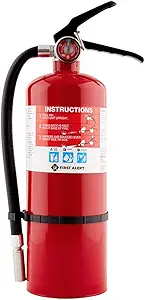 | Best Heavy-Duty Protection | Model: HOME2PRO | UL rating: 2-A:10-B:C | Construction: All-metal | VIEW LATEST PRICE | See Our Full Breakdown |
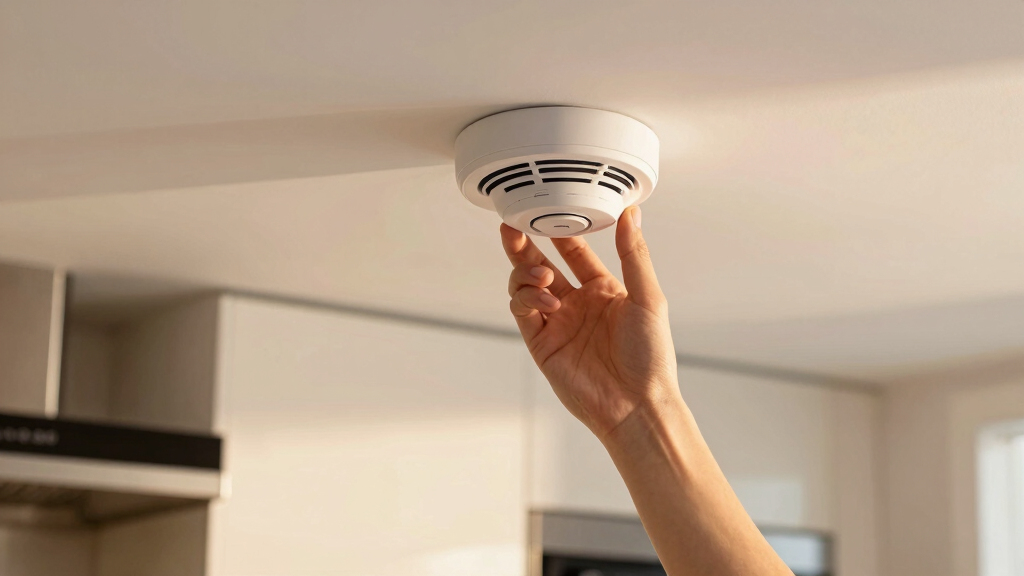
| Kidde Smart Smoke and Carbon Monoxide Detector, Ring App Enabled |  | Best Smart Detector | Detection Types: Smoke and carbon monoxide | Mobile Platform: Ring app | Alarm Linking: Wire-free interconnectivity | VIEW LATEST PRICE | See Our Full Breakdown |
| Kidde Kitchen Fire Extinguisher 711A RESSP |  | Best Kitchen-Specific Extinguisher | Model: 711A, RESSP | Extinguishing Agent: Dry chemical | Weight: 2.5 pounds | VIEW LATEST PRICE | See Our Full Breakdown |
| Prepared Hero Emergency Fire Blanket 2-Pack |  | Best Mess-Free Fire Suppression | Material: Fiberglass | Surface Layer: Fire-retardant film | Dimensions: 39 x 39 inches per blanket | VIEW LATEST PRICE | See Our Full Breakdown |
| Kidde Basic 110 Fire Extinguisher FA110G | 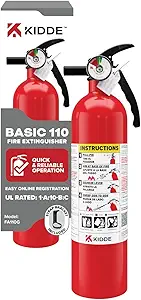 | Best Everyday Household Extinguisher | Model: FA110G | Weight: 2.5 pounds | Fire Rating: 1-A:10-B:C | VIEW LATEST PRICE | See Our Full Breakdown |
| First Alert SMI100 Battery-Operated Smoke Alarm 2-Pack |  | Best Simple Two-Room Smoke Coverage | Model: SMI100 | Detection Type: Smoke | Power Source: Battery operated | VIEW LATEST PRICE | See Our Full Breakdown |
| Kidde Basic 5 Fire Extinguisher |  | Best Compact Extinguisher for Garages | Extinguishing agent: Dry chemical | Capacity: 2 lbs | Fire rating: 5-B:C | VIEW LATEST PRICE | See Our Full Breakdown |
| Kidde 30CUD10 Smoke and Carbon Monoxide Detector |  | Best Low-Maintenance Combination Detector | Detection types: Smoke and carbon monoxide | Power source: Battery powered | Battery life: 10 years | VIEW LATEST PRICE | See Our Full Breakdown |
| Kidde Living Area Fire Extinguisher |  | Best Multipurpose Disposable Extinguisher | Model: KD143-210ABC | Fire rating: 2-A:10-B:C | Weight: 4 lbs | VIEW LATEST PRICE | See Our Full Breakdown |
| home fire safety product | Model | Warranty |
|---|---|---|
| SecuCaptain Emergency Fire Bla | — | — |
| First Alert HOME1 Rechargeable | HOME1 FE1A10GR | — |
| AmzBoom 2-Pack Fire Extinguish | — | 6 years |
| First Alert BRK SMI100-AC Hard | — | 10 years |
| First Alert HOME2PRO Heavy-Dut | HOME2PRO | 12-year limited |
| Kidde Smart Smoke and Carbon M | — | — |
| Kidde Kitchen Fire Extinguishe | 711A, RESSP | 6-year limited |
| Prepared Hero Emergency Fire B | — | — |
| Kidde Basic 110 Fire Extinguis | FA110G | 6-year limited |
| First Alert SMI100 Battery-Ope | SMI100 | — |
| Kidde Basic 5 Fire Extinguishe | — | 6-year limited manufacturer warranty |
| Kidde 30CUD10 Smoke and Carbon | 30CUD10 | — |
| Kidde Living Area Fire Extingu | KD143-210ABC | 6 years |
More Details on Our Top Picks
SecuCaptain Emergency Fire Blanket, 2-Pack
I rank the SecuCaptain Emergency Fire Blanket as the strongest mess-free option because it can smother a small cooking fire without scattering dry chemical across a kitchen. Its two 40-by-40-inch blankets also let buyers cover two locations, while the fiberglass construction tolerates temperatures up to 1076°F. Compared with the First Alert HOME1, this set is simpler to deploy and needs no professional recharge, making it more approachable for people uncomfortable with extinguisher controls. The tradeoff is narrower capability: a blanket requires close physical access to the flames and is meant only for small, containable fires. I would also handle the woven fiberglass carefully and practice locating the pull tabs, since slow, controlled deployment matters. It complements an extinguisher rather than replacing one.
Pros:- Two blankets provide coverage for separate rooms or vehicles
- Leaves no dry-chemical cleanup after deployment
- Woven fiberglass resists temperatures up to 1076°F
- Reusable design has no stated expiration date
Cons:- Suitable only for small fires that can be fully covered
- Close deployment may expose the user to heat or fiberglass irritation
- Must be pulled down slowly and positioned correctly
Best for: Apartment dwellers, home cooks, and families seeking simple, residue-free suppression for small kitchen fires
Not ideal for: Buyers needing distance from the flames or protection against a spreading fire, since deployment requires close access and physical coverage
- Blanket size:40 x 40 inches
- Pack quantity:2 blankets
- Material:100% flame-retardant woven fiberglass
- Maximum temperature resistance:1076°F (580°C)
- Suppression method:Fire-smothering blanket
- Recommended fire scale:Small, containable fires
- Intended locations:Home, kitchen, camping, and vehicle
Our verdict“I recommend this two-pack as an accessible kitchen-fire supplement, but not as a substitute for a rated extinguisher.”
First Alert HOME1 Rechargeable Fire Extinguisher
The First Alert HOME1 earns my standard-home recommendation by balancing broad fire coverage, durable hardware, and a manageable 1-A:10-B:C rating. It handles ordinary combustibles, flammable liquids, and energized electrical equipment, giving it wider utility than the SecuCaptain fire blanket. Compared with the First Alert HOME2PRO, the HOME1 has a lower Class A rating and is less suited to workshops or larger combustible loads, but it is the more practical choice for routine household placement. Its all-metal construction and safety seal support long-term readiness, while marine approval adds flexibility for boat owners. Buyers still need to check its condition and arrange professional service after discharge. I place it below the HOME2PRO for raw capability, yet ahead of compact sprays for recognized UL-rated coverage.
Pros:- UL-rated for Class A, B, and C fire hazards
- Rechargeable after professional servicing
- All-metal construction offers greater durability than lightweight disposable designs
- Approved for home and marine use
Cons:- Lower Class A rating than the First Alert HOME2PRO
- Professional recharging is required after any discharge
- Metal construction may feel heavy to users with limited grip strength
Best for: Homeowners and boat owners wanting a conventional rechargeable extinguisher for common household fire classes
Not ideal for: Workshops and larger properties that would benefit from the HOME2PRO’s higher Class A capacity
- Model:HOME1 FE1A10GR
- UL rating:1-A:10-B:C
- Fire classes:A, B, and C
- Construction:All-metal
- Rechargeable:Yes, by a certified professional
- Approved use:Home and marine
- Pack size:1 extinguisher
- Color:Red
Our verdict“I see the HOME1 as the sensible default for buyers who want certified, rechargeable household coverage without moving to a bulkier heavy-duty unit.”
AmzBoom 2-Pack Fire Extinguishers with Mounting Brackets
I chose the AmzBoom 2-Pack for buyers who want lightweight suppression tools in more than one location. The included brackets make it easy to assign one unit to a car and another to a kitchen or grill area, while the water-based, non-toxic formula is designed to leave less troublesome residue than a dry-chemical extinguisher. It also lists coverage for A, B, C, and K hazards and resistance to reignition. Against the First Alert HOME1, however, AmzBoom trades a familiar UL rating and professional recharge pathway for portability and simpler activation. Its compact format is intended for small incidents, so I would not treat it as the primary device for a large home or workshop. The six-year warranty is useful, but buyers must track service life and may need several units for broad coverage.
Pros:- Two compact units can protect separate locations
- Covers listed A, B, C, and K fire types
- Water-based, non-toxic formula is designed for minimal residue
- Mounting brackets support accessible placement
Cons:- Limited capacity makes it unsuitable for large or spreading fires
- No UL rating is provided in the supplied product data
- Units require maintenance or replacement as their six-year service period approaches
Best for: Drivers, renters, grill owners, and households wanting two compact units that can be mounted in separate small spaces
Not ideal for: Buyers seeking a primary heavy-duty extinguisher with a stated UL rating and professional recharge support
- Quantity:2 extinguishers
- Listed fire types:A, B, C, and K
- Formula:Water-based
- Formula claims:Eco-friendly, non-toxic, and residue-free
- Included hardware:Mounting brackets
- Warranty:6 years
- Intended locations:Home, kitchen, car, and grill area
- Recommended fire scale:Small-scale fires
Our verdict“I recommend this pair for portable backup coverage in cars and compact spaces, while a UL-rated full-size extinguisher remains the stronger primary defense.”
First Alert BRK SMI100-AC Hardwired Smoke Detector, 6-Pack
The First Alert BRK SMI100-AC six-pack ranks as my best whole-home detection choice because interconnected alarms warn occupants beyond the room where smoke begins. Up to 18 compatible units can communicate, while 9-volt battery backup keeps each alarm active during an outage. That makes this system far broader than the battery-operated First Alert SMI100 two-pack, especially for multiroom houses already wired for alarms. It also serves a different purpose from the First Alert HOME2PRO: detection buys escape time, while the extinguisher addresses a fire after someone discovers it. The compromises are installation requirements and a lack of stated smart-home features. Its 85 dB alert is intentionally forceful, and six devices mean recurring battery changes. I favor it for coordinated household warning, not for renters unable to modify wiring.
Pros:- Six alarms provide coordinated coverage across multiple rooms
- Interconnects with up to 18 compatible units
- Battery backup maintains detection during power outages
- Open mounting and side-load battery access simplify routine servicing
Cons:- Requires compatible 120-volt hardwiring
- No smart-home or phone-alert capability is listed
- Six 9-volt backup batteries create an ongoing replacement burden
Best for: Owners of multiroom homes with existing 120-volt alarm wiring who want interconnected smoke alerts and outage backup
Not ideal for: Renters, smart-home buyers, and homes without compatible hardwiring, since installation may require electrical work and app connectivity is not listed
- Quantity:6 alarms
- Primary power:120-volt AC
- Backup power:9-volt battery
- Battery included:Yes
- Alarm level:85 dB
- Interconnection capacity:Up to 18 units
- Installation design:Open mounting with side-load battery compartment
- Warranty:10 years
- Security feature:Tamper-resistant locking pins
Our verdict“I recommend this six-pack for wired homes where broad, interconnected warning matters more than app-based monitoring.”
First Alert HOME2PRO Heavy-Duty Fire Extinguisher
I give the First Alert HOME2PRO the heavy-duty position because its 2-A:10-B:C rating doubles the Class A capability listed for the HOME1 while retaining coverage for flammable-liquid and electrical hazards. That extra capacity makes more sense in a workshop, garage, office, or larger home where wood, paper, trash, and plastics create a greater combustible load. Compared with the AmzBoom 2-Pack, it sacrifices portability and low-residue convenience for a recognized UL rating, all-metal construction, and a pressure gauge that makes readiness easier to check. Mono ammonium phosphate can create substantial cleanup, and the unit’s bulk may discourage placement in a cramped kitchen cabinet. Professional recharging also adds cost after discharge. Even so, its 12-year limited warranty and broad listed coverage make it my strongest suppression pick when capability outweighs compact storage.
Pros:- Higher 2-A rating provides more Class A capability than the First Alert HOME1
- UL-rated for common solid, liquid, and electrical fire hazards
- All-metal construction and corrosion-resistant gauge support long-term readiness
- Rechargeable design and 12-year limited warranty suit sustained ownership
Cons:- Bulkier and harder to store than compact extinguishers
- Mono ammonium phosphate can leave extensive residue
- Requires professional recharging after use
Best for: Homeowners, workshop users, and small-office operators who need more Class A capability from a durable rechargeable extinguisher
Not ideal for: Small-apartment residents or buyers prioritizing lightweight handling and minimal cleanup over higher suppression capacity
- Model:HOME2PRO
- UL rating:2-A:10-B:C
- Construction:All-metal
- Extinguishing agent:Mono ammonium phosphate
- Rechargeable:Yes, by a certified professional
- Covered hazards:Wood, paper, trash, plastics, gasoline, oil, and electrical fires
- Included equipment:Wall hook and pressure gauge
- Gauge:Corrosion-resistant pressure gauge
- Warranty:12-year limited
Our verdict“I would choose the HOME2PRO for garages, workshops, offices, and larger homes where added capacity justifies the extra bulk and cleanup.”
Kidde Smart Smoke and Carbon Monoxide Detector, Ring App Enabled
I rank the Kidde Smart Smoke and Carbon Monoxide Detector highest for connected households because it combines two hazards, mobile alerts, and wire-free alarm linking in one battery-powered unit. Compared with the First Alert SMI100, it adds carbon monoxide detection, Ring notifications, Alexa compatibility, and broader warning coverage when linked with compatible alarms. That makes it better suited to owners who want updates while away, not merely an audible signal at home. Its claimed faster detection and reduced nuisance alarms also address response time and alarm fatigue. The tradeoffs are ongoing: 24/7 professional monitoring requires a separate Ring subscription, and two AA batteries create recurring maintenance. Buyers who dislike app dependence may prefer Kidde’s 10-year-battery smoke and CO detector, while Ring households gain the most from this model’s connected features.
Pros:- Detects both smoke and carbon monoxide in one unit
- Sends real-time alerts through the Ring app
- Wire-free interconnectivity can extend warnings throughout a home
- Designed for faster detection with fewer nuisance alarms
Cons:- 24/7 professional monitoring requires a separately sold Ring subscription
- Two AA batteries need periodic replacement
- Connected benefits depend on a compatible app and wireless setup
Best for: Ring and Alexa households seeking remote smoke and carbon monoxide alerts across several rooms
Not ideal for: Subscription-averse buyers or landlords who want sealed 10-year batteries with minimal maintenance
- Detection Types:Smoke and carbon monoxide
- Mobile Platform:Ring app
- Alarm Linking:Wire-free interconnectivity
- Voice Compatibility:Alexa
- Power Source:Battery powered
- Battery Requirement:2 AA batteries, included
- Safety Standard:UL 217
- Wireless Compliance:FCC
Our verdict“This is my smart-home pick for Ring users who want remote dual-hazard alerts and accept subscription and battery upkeep.”
Kidde Kitchen Fire Extinguisher 711A RESSP
I place the Kidde Kitchen Fire Extinguisher 711A RESSP in the kitchen-specialist role because its flared nozzle is designed to limit splashing when tackling small cooking-oil and grease fires. That focus separates it from the Kidde Basic 110, which covers a wider mix of household fire classes but lacks the same cooking-fire nozzle design. A visible pressure indicator and lightweight 2.5-pound body make readiness checks and handling more manageable, while metal construction offers more durability than a disposable aerosol-style product. There are firm limits: its five-foot discharge range provides less stand-off distance than larger extinguishers, and the 8-to-10-second discharge window leaves little room for hesitation. It is also single-use and non-refillable. I would choose it beside a stove, while keeping a broader-rated extinguisher elsewhere in the home.
Pros:- Flared nozzle helps reduce splashing around cooking fires
- Compact 2.5-pound body is easier to handle and store
- All-metal construction supports long-term cabinet or wall storage
- Pressure indicator makes readiness checks straightforward
Cons:- Single-use design cannot be refilled
- Five-foot range offers limited distance from the flames
- Kitchen-focused design does not replace broader whole-home protection
Best for: Home cooks who want a compact extinguisher specifically shaped for small grease and cooking-oil fires
Not ideal for: Large kitchens or buyers seeking a refillable extinguisher with greater range and broader household coverage
- Model:711A, RESSP
- Extinguishing Agent:Dry chemical
- Weight:2.5 pounds
- Discharge Time:8–10 seconds
- Discharge Range:5 feet
- Operating Pressure:100 PSI
- Construction:All-metal
- Warranty:6-year limited
Our verdict“This is my focused stove-area pick for home cooks who value controlled grease-fire suppression over refillability and longer range.”
Prepared Hero Emergency Fire Blanket 2-Pack
I see the Prepared Hero Emergency Fire Blanket as a mess-free companion to an extinguisher, especially for small pan fires where covering the flames can cut off oxygen without spreading dry chemical around the kitchen. Compared with the Kidde Kitchen Fire Extinguisher, this two-pack requires no pressure checks and can also serve as a thermal shield. Each 39-inch-square blanket is light and deploys using pull tabs, so one can stay in the kitchen and the other in a garage or vehicle. The compromise is reach and scale: a user must get close enough to place the blanket correctly, while an extinguisher can discharge from several feet away. Its small-fire limitation also makes it unsuitable once flames have spread. I would treat these reusable fiberglass blankets as accessible backup tools, not substitutes for alarms, evacuation, or a rated extinguisher.
Pros:- Suppresses small grease and liquid fires without chemical residue
- Two-pack supports placement in separate high-risk areas
- Pull tabs allow quick deployment without operating a pin or trigger
- Can serve as a thermal shield and does not expire
Cons:- Only appropriate for small, contained fires
- Deployment requires closer proximity than a ranged extinguisher
- Effectiveness depends on visible, accessible storage and correct placement
Best for: Households wanting two compact, chemical-free suppression tools for small pan fires, garages, or vehicles
Not ideal for: Buyers who need ranged suppression for spreading fires or cannot safely approach a small fire
- Material:Fiberglass
- Surface Layer:Fire-retardant film
- Dimensions:39 x 39 inches per blanket
- Temperature Resistance:Up to 1076°F (580°C)
- Pack Quantity:2 blankets
- Deployment:Pull-tab release
- Stated Reusability:Reusable
Our verdict“This is my mess-free backup pick for buyers who want simple small-fire coverage alongside, rather than instead of, a rated extinguisher.”
Kidde Basic 110 Fire Extinguisher FA110G
I rate the Kidde Basic 110 FA110G as the most practical everyday extinguisher here because its 1-A:10-B:C rating covers common fires involving ordinary combustibles, flammable liquids, and energized electrical equipment. Compared with the Kidde Kitchen Fire Extinguisher, it sacrifices the grease-focused flared nozzle but handles a broader range of household threats. The 2.5-pound body, pressure gauge, and included mounting bracket make it suitable for a hallway, utility area, or garage where fast access matters. Its compromises come after deployment: the unit is single-use, requires replacement after use or by 12 years, and monoammonium phosphate can leave damaging residue on computers and similar electronics. The chemical may also irritate skin. I favor it for general coverage, while buyers wanting a serviceable unit should move to the rechargeable First Alert Home2Pro.
Pros:- 1-A:10-B:C rating covers several common household fire types
- Lightweight 2.5-pound design is manageable for many adults
- All-metal construction includes corrosion protection
- Pressure indicator and included bracket support visible, accessible storage
Cons:- Must be replaced after use and no later than 12 years
- Dry chemical residue can damage computers and similar equipment
- Monoammonium phosphate may irritate skin
Best for: Homeowners seeking a lightweight, broadly rated extinguisher for hallways, garages, or utility rooms
Not ideal for: Computer rooms and buyers who prefer a rechargeable unit that can be serviced after discharge
- Model:FA110G
- Weight:2.5 pounds
- Fire Rating:1-A:10-B:C
- Extinguishing Agent:Monoammonium phosphate
- Construction:All-metal
- Mounting Hardware:UL-approved plastic strap bracket
- Approvals:UL Listed, Coast Guard, and DOT
- Warranty:6-year limited
Our verdict“This is my straightforward general-home pick for buyers who want broad fire-class coverage and accept a disposable dry-chemical design.”
First Alert SMI100 Battery-Operated Smoke Alarm 2-Pack
I give the First Alert SMI100 two-pack the simple-coverage role because it supplies two battery-operated smoke alarms without requiring wiring, an app, or a smart-home account. Precision Detection sensing is designed to reduce cooking-related nuisance alarms while still providing early warning, which may discourage occupants from silencing alarms out of frustration. Compared with the Kidde Smart Smoke and Carbon Monoxide Detector, the SMI100 omits carbon monoxide sensing, phone alerts, Alexa support, and wireless interconnection. What it offers instead is uncomplicated installation, a front-access battery compartment, and end-of-life notification across two rooms. That simplicity carries a safety tradeoff: one alarm does not trigger the other, and alerts cannot reach someone away from home. Batteries also need replacement over time. I would use this pack for a small property with separate carbon monoxide protection already installed.
Pros:- Two alarms provide immediate coverage for two separate areas
- Precision Detection technology is designed to reduce nuisance alarms
- Front-access battery compartments simplify routine maintenance
- End-of-life warning identifies when replacement is due
Cons:- Does not detect carbon monoxide
- No stated interconnection or remote mobile alerts
- Battery replacement remains an ongoing maintenance task
Best for: Apartment residents or small-home owners who need two uncomplicated smoke alarms and already have separate carbon monoxide coverage
Not ideal for: Large or multistory homes that need interconnected alarms, remote notifications, or combined smoke and carbon monoxide sensing
- Model:SMI100
- Detection Type:Smoke
- Power Source:Battery operated
- Pack Quantity:2 alarms
- Detection Technology:Precision Detection advanced sensing technology
- Battery Access:Front compartment
- Controls:Test/silence button
- Replacement Alert:End-of-life warning
Our verdict“This is my no-app two-room pick for small homes that already have separate carbon monoxide protection and do not need linked alerts.”
Kidde Basic 5 Fire Extinguisher
Kidde Basic 5 earns its place as the compact specialist in this group, not as a do-everything extinguisher. Its two-pound format is easier to lift, mount, or tuck near a garage workbench than the four-pound Kidde Living Area model, while the readable gauge makes a quick readiness check simple. The 5-B:C rating targets small flammable-liquid, gas, and energized-electrical incidents, so it suits garages, utility spaces, and boats better than general living rooms. That focus is also its biggest limit: unlike the Kidde Basic 110, it has no Class A rating for wood, paper, or trash. A 4-to-6-foot reach and 8-to-12-second discharge leave little margin if a fire is spreading. I rank it as a secondary extinguisher for buyers who value light handling, not as the home’s only unit.
Pros:- Two-pound aluminum body is easy to lift and store
- Handles flammable-liquid, gas, and energized-electrical fires
- Readable pressure indicator supports quick readiness checks
- UL Listed and approved by the US Coast Guard
Cons:- No Class A rating for common wood, paper, or trash fires
- Four-to-six-foot range requires getting relatively close to the fire
- Small capacity and short discharge window limit it to early-stage incidents
Best for: Homeowners seeking a lightweight secondary extinguisher for a garage, utility room, workshop, or boat
Not ideal for: Buyers choosing one extinguisher for an entire home, since it cannot address Class A fires involving wood, paper, or trash
- Extinguishing agent:Dry chemical
- Capacity:2 lbs
- Fire rating:5-B:C
- Discharge time:8 to 12 seconds
- Discharge range:4 to 6 feet
- Operating pressure:100 PSI
- Approvals:UL Listed and US Coast Guard approved
- Warranty:6-year limited manufacturer warranty
- Service life:12 years
Our verdict“Choose this as a light, compact backup for B:C hazards, but pair it with a Class A-rated extinguisher for wider household coverage.”
Kidde 30CUD10 Smoke and Carbon Monoxide Detector
Kidde 30CUD10 is my low-upkeep pick because one ceiling device watches for both smoke and carbon monoxide while its 10-year battery removes annual battery swaps. Compared with the First Alert SMI100 Battery-Operated Smoke Alarm, the combined detection closes a major coverage gap without adding a separate CO alarm. LED status lights make device state easier to read, and the 85 dB siren provides a familiar local warning. It is less capable than the Kidde Smart Smoke and Carbon Monoxide Detector for households that want Ring app alerts or remote awareness; no smart integration is listed. The single-pack format also makes a multiroom rollout less convenient than the six-pack First Alert BRK SMI100-AC, and its five-inch body may not suit cramped mounting points. I favor it for decade-long local protection, not connected-home monitoring.
Pros:- Detects both smoke and carbon monoxide in one device
- Ten-year battery removes routine battery replacements
- Advanced sensing technology is designed to reduce false alarms
- LED status lights provide a quick visual condition check
Cons:- No smart-home or mobile-alert capability is listed
- Single-pack packaging is less convenient for whole-house installations
- Five-inch housing may be awkward in tight mounting locations
Best for: Homeowners and landlords who want smoke and CO detection in one low-maintenance, battery-powered unit
Not ideal for: Connected-home users who need phone notifications, Ring integration, or remote alarm monitoring
- Detection types:Smoke and carbon monoxide
- Power source:Battery powered
- Battery life:10 years
- Alarm volume:85 dB
- Diameter:5 inches
- Status indicators:LED lights
- Sensing feature:Advanced false-alarm reduction technology
- Model:30CUD10
- Pack size:1 detector
Our verdict“Pick this for straightforward smoke and CO coverage with minimal battery upkeep, but choose the Kidde Smart model if remote alerts matter.”
Kidde Living Area Fire Extinguisher
Kidde Living Area KD143-210ABC is a capable general-purpose disposable extinguisher for residential rooms. Its 2-A:10-B:C rating covers wood, paper, and trash as well as flammable liquids, gases, and electrical equipment, a far broader household mix than the B:C-only Kidde Basic 5. The 12-to-18-foot range also lets a user begin farther from flames, while the 13-to-15-second discharge provides more working time. Compared with the lighter Basic 5, though, its four-pound weight is less handy in tight storage spots. The all-metal construction and included wall hanger support visible, durable placement in a hallway or living area. Its defining compromise is disposability: unlike the rechargeable First Alert Home2Pro, this unit must be replaced after use. I favor it for broad residential coverage when rechargeability matters less than simple deployment.
Pros:- 2-A:10-B:C rating covers a broad mix of household fire types
- Twelve-to-eighteen-foot range provides more distance than the Kidde Basic 5
- All-metal construction offers a durable housing
- Wall hanger supports accessible, visible storage
Cons:- Single-use design requires replacement after discharge
- Four-pound weight is less convenient for small cabinets or buyers with limited grip strength
- Residential design is not intended to replace equipment selected for commercial requirements
Best for: Homeowners who want one multipurpose extinguisher for living areas, hallways, or other spaces with mixed Class A, B, and C risks
Not ideal for: Buyers expecting repeated professional servicing, since this model is single-use and cannot be recharged
- Model:KD143-210ABC
- Fire rating:2-A:10-B:C
- Weight:4 lbs
- Discharge time:13 to 15 seconds
- Discharge range:12 to 18 feet
- Operating pressure:100 PSI
- Construction:All-metal
- Included storage hardware:Wall hanger
- Warranty:6 years
Our verdict“Choose this for broad household fire coverage and longer reach, provided replacing the extinguisher after use is acceptable.”
How We Picked
I ranked these products by how well they address the central jobs of home fire safety: detecting danger early, suppressing a small fire, remaining accessible under stress, and fitting a realistic maintenance routine. For extinguishers, I gave more weight to clearly stated UL ratings, Class A, B, and C coverage, capacity, rechargeability, and mounting provisions. For alarms, I compared smoke-only and smoke-plus-CO sensing, power source, backup design, whole-home suitability, alert clarity, and remote notification options.
The ordering also reflects how broadly each item serves a typical household. A manageable multi-class extinguisher ranks ahead of a B:C-only unit because it covers more common fuel types, while larger hardware receives credit for capacity but loses ground when weight or installation narrows its audience. I treated fire blankets as supplemental tools, not replacements for alarms or rated extinguishers. Price mattered only alongside useful coverage, service life, upkeep, and the number of locations served, which is why value does not simply mean the lowest price. Products with a narrow purpose still earn a place when that purpose is clear, such as smart remote alerts, hardwired multi-room coverage, kitchen placement, or compact vehicle storage.
Factors to Consider When Choosing Best Home Fire Safety Products
I would build a home fire plan around layers rather than one multipurpose purchase. Smoke and carbon monoxide alarms provide warning, extinguishers support escape from a small controllable fire, and blankets suit a narrower set of contained incidents. The right mix depends on home layout, likely fuel sources, physical handling needs, and whether the household will keep up with inspections and replacement dates. The sections below explain how those choices affect safety and cost beyond the individual product rankings.
Build Detection and Suppression as Separate Layers
An extinguisher cannot warn a sleeping household, and a smoke alarm cannot stop flames from blocking an exit. I would start with working alarms throughout the home, then add suppression tools in accessible areas. Combination smoke-and-CO alarms reduce the number of devices needed, but they still need placement that follows their instructions and local rules. A fire blanket adds a simple option for certain small, contained fires, yet its limited reach makes it a supplement rather than a foundation. Households that buy only kitchen equipment often leave bedrooms, utility areas, garages, or upper floors without a nearby response tool. The strongest setup gives each layer one clearly defined job.
Match the Fire Rating to the Fuels in the Room
Extinguisher letters describe the fuels a unit is designed to address: Class A covers common solids, Class B covers flammable liquids, and Class C applies around energized electrical equipment. For general living areas, I favor A:B:C coverage because furniture, paper, appliances, and household liquids create mixed risks. A compact 5-B:C model can fit a vehicle or utility area, but its lack of an A rating makes it a poor choice as the home’s only extinguisher. Kitchens need extra care because deep-fat cooking fires may require specialized handling, and water can spread burning oil. The rating label matters more than a kitchen-themed product name or bright packaging. Buyers should also check local guidance for fireplaces, workshops, fuel storage, and other room-specific hazards.
Choose an Alarm Power System You Will Maintain
Hardwired alarms suit renovations, new construction, and homes already fitted with compatible wiring. Their main advantage is whole-home infrastructure with battery backup, though installation can involve an electrician and compatibility checks. Replaceable-battery alarms cost less upfront and install quickly, but recurring battery changes create another maintenance task. Sealed 10-year battery models reduce that burden, after which the entire alarm is replaced according to its service-life guidance. Smart alarms add remote notifications and app visibility, yet they introduce account, network, and platform dependencies that local sirens do not have. I would pay more for connectivity only when alerts away from home have real value, such as for frequent travelers, rental owners, or households with pets.
Balance Extinguisher Capacity Against Handling
A higher numerical Class A rating generally points to greater firefighting capability, but added agent and hardware also increase weight. I would choose the largest unit that every intended adult can lift, aim, and control quickly. A heavy extinguisher stored high on a wall can be less useful than a smaller model mounted within easy reach. Compact units fit cars and tight kitchens, though their shorter discharge supply leaves less margin for hesitation or poor aim. Rechargeable construction can justify a higher price when local inspection and refill service is available; disposable models favor low initial cost and simple replacement. Before buying, check dimensions, filled weight, gauge design, bracket type, and whether local servicing is practical.
Plan Placement Around Escape, Not the Fire
Suppression equipment should be reachable without moving toward the likely source of flames. In a kitchen, I would place an extinguisher or blanket near an exit rather than beside the stove, where fire could cut off access. Garages and workshops benefit from equipment close to the doorway for the same reason. Smoke alarms belong in the locations specified by local rules and manufacturer guidance, commonly including every sleeping room, outside sleeping areas, and each level. Avoid hiding equipment behind stored items, inside cluttered cabinets, or above the reach of shorter household members. A visible mounting point, practiced escape route, and clear decision to evacuate early matter more than owning extra devices that nobody can reach.
Treat Maintenance as Part of the Purchase Price
Low-cost equipment loses its value when batteries expire, pressure drops, or replacement dates pass unnoticed. I would keep a simple record of alarm tests, extinguisher gauge checks, and end-of-life dates. Rechargeable extinguishers may need professional service after discharge and at intervals stated on the label, while disposable units must be replaced after use or when directed. Fire blankets have little routine upkeep, but damaged packaging or contaminated fabric can make rapid deployment harder. Smart alerts can help with device status, though they do not remove the need for physical inspection and audible testing. When comparing prices, include batteries, professional installation, refill access, and eventual replacement to find the true ownership cost.
Frequently Asked Questions
Should I Buy a Fire Extinguisher or a Fire Blanket First?
If the home already has working alarms, I would buy a rated A:B:C extinguisher first because it covers a wider range of common household fires. A blanket is easier to understand at a glance and creates no chemical cleanup, but it must physically cover the burning area. That makes it better for small, contained incidents than for spreading flames, furniture, or many electrical hazards. Buyers who are uncomfortable handling an extinguisher can add a blanket as an approachable backup while learning proper extinguisher technique. In a layered setup, the extinguisher provides broader coverage and the blanket fills a narrow supporting role.
How Many Smoke Alarms and Fire Extinguishers Does a Home Need?
Alarm quantity should follow the home’s layout and local requirements rather than a simple square-foot formula. Common placement guidance calls for alarms inside each bedroom, outside sleeping areas, and on every level, including the basement. For extinguishers, I prefer at least one accessible unit on each level, with added coverage near kitchens, garages, workshops, or heating equipment when the layout calls for it. Large homes may need multiple units so nobody must cross a long hallway or stairway while a fire grows. A six-pack can make sense for multi-room alarm coverage, while a two-pack is better treated as a starting point for a smaller space.
Is a Rechargeable Extinguisher Better Than a Disposable Model?
A rechargeable extinguisher is the better long-term choice when qualified local service is easy to access. It can be inspected and refilled after use, which reduces waste and may support a longer ownership cycle. The tradeoff is a higher purchase price plus service appointments and fees. Disposable models such as the basic Kidde options suit buyers seeking lower upfront cost and simple replacement, but the entire unit must be discarded when it is used or reaches its replacement point. I give rechargeable models an editorial advantage for primary home protection, while disposable units remain sensible for secondary locations and tight budgets.
Is a Smart Smoke and Carbon Monoxide Detector Worth Paying More For?
The Kidde Ring-enabled detector makes sense when alerts away from home could change the response, such as for frequent travelers or people managing another property. App notifications may also help households monitor device status without waiting for a low-battery chirp. A smart alarm does not make smoke sensing or correct placement less important, and internet or account problems can limit remote features. Buyers who mainly need a loud local warning can choose the Kidde 10-year combo detector and avoid platform dependency. I would pay the smart premium for remote awareness, not because an app replaces proper alarm coverage.
Can a Small B:C Extinguisher Serve as the Only Extinguisher in My Home?
I would not use a 5-B:C unit as the home’s only extinguisher because it lacks a Class A rating for materials such as wood, paper, cloth, and many furnishings. Its compact size makes the Kidde Basic 5 appealing for a vehicle, grill area, or selected utility location. For general home coverage, a 1-A:10-B:C or 2-A:10-B:C model addresses a broader mix of likely fuels. The larger model may be harder to handle, so placement and user strength still matter. A B:C extinguisher works best as specialized backup equipment beside a broader primary unit.
Conclusion
For most buyers, I recommend the First Alert Rechargeable 1-A:10-B:C Fire Extinguisher as Best Overall because its broad rating, refillable design, and household-friendly capacity create the strongest balance. The Kidde Basic 110 is my Best Value for buyers who want straightforward A:B:C coverage at a lower entry point and accept disposable construction. Buyers prioritizing capacity should choose the First Alert Home2Pro as Best Premium, particularly for a garage, workshop, or larger property.
For beginners, the SecuCaptain two-pack is the easiest supplemental starting point, though I would pair its blankets with working alarms and a rated extinguisher. The Kidde Ring-enabled smoke-and-CO detector is my pick for smart remote alerts, while the First Alert BRK SMI100-AC six-pack better serves a home needing broad hardwired smoke-alarm coverage. For low-maintenance local detection, the Kidde 10-year smoke-and-CO model avoids routine battery swaps, and the Kidde Basic 5 fills a compact B:C-specific role rather than serving as primary protection. My final choice would pair the buyer’s preferred detector system with an accessible A:B:C extinguisher, adding blankets or compact units only where their narrower roles make sense.
Fall Picks
fall essentials
As an affiliate, we earn on qualifying purchases.