
The Typhur Sync 8QT AI Smart Air Fryer is my best overall pick among the best smart appliances because its wireless thermometer ties automated cooking directly to food doneness, not just a timer. The CHEF iQ MiniOven is the stronger choice for shoppers who want one connected machine to handle toast, convection baking, and air frying, while the Breville Joule Smart Oven Air Fryer Pro offers the most polished premium experience. The main choice is between genuinely connected guidance and appliances that use the word “smart” for presets, sensor-based control, or heating algorithms without app access. Buyers must also balance counter space, cooking capacity, cleanup, and price, since the most versatile models are usually the largest and most expensive. Continue reading for my full breakdown of which appliance fits each kitchen and cooking style.
Complete the kit


Key Takeaways
- Probe-led automation separated the leaders: I ranked the Typhur Sync 8QT above preset-focused air fryers because it can base cooking on internal food temperature rather than time alone.
- Connected does not always mean more useful: I found the Instant Pot Duo Plus and Breville Smart Oven Pro compelling for repeatable everyday cooking even though their intelligence is built into the appliance rather than centered on an app.
- The CHEF iQ MiniOven offers the strongest middle ground between a basket air fryer and a full premium oven, pairing broad cooking versatility with a more connected workflow.
- Breville’s models serve sharply different buyers: the Compact saves space, the BOV900 prioritizes capacity, the BOV845 favors straightforward oven performance, and the Joule adds premium app-guided cooking.
- Specialized smart features carry narrow value: the Revolution toasters make sense for toast-focused households, while the Typhur Dome 2 and Ninja Foodi Smart XL are stronger choices for wide-basket cooking and indoor grilling.
| Typhur Sync 8QT AI Smart Air Fryer with Built-in Wireless Meat Thermometer |  | Best Overall Smart Air Fryer | Capacity: 8 quarts | Maximum Temperature: 450°F | Basket Size: 10.3 inches square | VIEW LATEST PRICE | See Our Full Breakdown |
| CHEF iQ MiniOven Smart Toaster Oven Air Fryer Combo |  | Best Connected Countertop Oven | Capacity: 25 quarts | Temperature Range: 70–500°F | Power: 1750W | VIEW LATEST PRICE | See Our Full Breakdown |
| Revolution R180 Connect Smart Toaster and Toastie Press Bundle |  | Best Smart Toaster | Bread Slots: 2 | Dimensions: 11.6 x 6.1 x 8.4 inches | Color: Black | VIEW LATEST PRICE | See Our Full Breakdown |
| Breville Smart Oven Air Fryer Compact |  | Best Compact Smart Oven | Dimensions: 12 x 10 x 4.25 inches | Material: Brushed stainless steel | Air-Fry Modes: 5 | VIEW LATEST PRICE | See Our Full Breakdown |
| Breville BOV900BSS Smart Oven Air Fryer Pro and Convection Oven |  | Best for Large-Capacity Cooking | Power: 1800W | Voltage: 120V | Cooking Functions: 13 | VIEW LATEST PRICE | See Our Full Breakdown |
| Breville BOV845BSS Smart Oven Pro |  | Best Countertop Oven Without Air Frying | Power: 1800 watts | Voltage: 110–120 volts | Cooking Functions: 10 | VIEW LATEST PRICE | See Our Full Breakdown |
| Revolution R180 Connect Plus Smart Toaster |  | Best Connected Toaster | Bread Programs: 38+ types, including gluten-free | Browning Levels: 7 | Dimensions: 11.6 x 6.1 x 8.4 inches | VIEW LATEST PRICE | See Our Full Breakdown |
| Emerson SmartVoice 5.3QT Air Fryer |  | Best for Hands-Free Control | Capacity: 5.3 quarts | Power: 1500 watts | Cooking Functions: Air fry, bake, reheat, dehydrate, broil, and keep warm | VIEW LATEST PRICE | See Our Full Breakdown |
| Instant Pot Duo Plus 9-in-1 Multicooker |  | Best All-in-One Meal Prep | Capacity: 6 quarts | Power: 1000 watts | Voltage: 120 volts | VIEW LATEST PRICE | See Our Full Breakdown |
| Typhur Dome 2 AI Smart Air Fryer |  | Best Premium Air Fryer | Capacity: 5.6 quarts | Cooking Functions: 15 | Heating System: Top-and-bottom dual heating | VIEW LATEST PRICE | See Our Full Breakdown |
| Typhur Sync Oven |  | Best for Probe-Guided Cooking | Capacity: 27 QT | Temperature range: 85–450°F | Fan speeds: 3 | VIEW LATEST PRICE | See Our Full Breakdown |
| Ninja Foodi Smart XL Indoor Grill and Air Fryer | 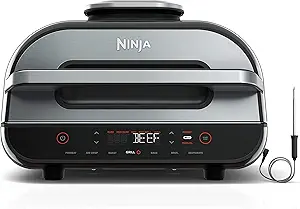 | Best Indoor Grilling Pick | Capacity: 4 qt | Cooking functions: 6 | Functions: Grill, Air Fry, Roast, Bake, Broil, and Dehydrate | VIEW LATEST PRICE | See Our Full Breakdown |
| Breville Joule Smart Oven Air Fryer Pro |  | Best Premium Smart Oven | Interior dimensions: 16 x 13.5 x 7 inches | Preset functions: 13 | Specialty functions: Air frying and dehydrating | VIEW LATEST PRICE | See Our Full Breakdown |
| smart appliance | Connectivity | Capacity | Cooking Functions |
|---|---|---|---|
| Typhur Sync 8QT AI Smart Air F | Wi-Fi with app control | 8 quarts | — |
| CHEF iQ MiniOven Smart Toaster | Wi-Fi with app control | 25 quarts | Bake, broil, roast, air fry, dehydrate, proof, and slow cook |
| Revolution R180 Connect Smart | Wi-Fi | — | — |
| Breville Smart Oven Air Fryer | No built-in Wi-Fi or app control | — | — |
| Breville BOV900BSS Smart Oven | — | — | 13 |
| Breville BOV845BSS Smart Oven | — | — | 10 |
| Revolution R180 Connect Plus S | Wi-Fi | — | — |
| Emerson SmartVoice 5.3QT Air F | No Wi-Fi or app control | 5.3 quarts | Air fry, bake, reheat, dehydrate, broil, and keep warm |
| Instant Pot Duo Plus 9-in-1 Mu | — | 6 quarts | 9-in-1 |
| Typhur Dome 2 AI Smart Air Fry | Wi-Fi; Typhur app requires iOS 16+ or Android 8+ | 5.6 quarts | 15 |
| Typhur Sync Oven | — | 27 QT | — |
| Ninja Foodi Smart XL Indoor Gr | — | 4 qt | 6 |
| Breville Joule Smart Oven Air | Wi-Fi | — | — |
More Details on Our Top Picks
Typhur Sync 8QT AI Smart Air Fryer with Built-in Wireless Meat Thermometer
I rank the Typhur Sync 8QT first among the dedicated air fryers because its built-in wireless thermometer turns smart features into a practical cooking advantage: buyers can track internal temperature without opening the basket or purchasing another probe. Its broad 450°F range and square 8-quart basket suit family dinners while occupying less space than the CHEF iQ MiniOven. Compared with the larger Typhur Sync Oven, this model is better suited to buyers who mainly air fry and want faster everyday setup. The ceramic-coated basket also offers a useful alternative to conventional nonstick surfaces. The compromise is specialization: it cannot replace a toaster oven, and the most distinctive AI recipes and controls depend on the app. I also expect its advanced sensing hardware to command a higher price than simpler air fryers.
Pros:- Wireless meat probe supports temperature-based cooking without repeatedly opening the basket
- Eight-quart square basket provides useful space for family portions
- Ceramic-coated dishwasher-safe parts simplify cleanup
- Wi-Fi controls and AI-powered recipes add meaningful guidance
Cons:- Full AI recipe features require a compatible smartphone and app
- Dedicated basket format is less versatile than a countertop oven
- Advanced probe and connectivity features may raise the price
Best for: Families who regularly cook meat and want app-guided air frying with automatic temperature tracking
Not ideal for: Buyers seeking one appliance for toast, large casseroles, and full oven-style cooking
- Capacity:8 quarts
- Maximum Temperature:450°F
- Basket Size:10.3 inches square
- Voltage:120V
- Cooking System:9-in-1
- Cooking Modes:Air fry, roast, bake, grill, dehydrate, reheat, wings, bacon, and preheat
- Connectivity:Wi-Fi with app control
- Basket Material:Ceramic-coated with dishwasher-safe parts
Our verdict“I recommend this model to families who value accurate meat cooking more than toaster-oven versatility.”
CHEF iQ MiniOven Smart Toaster Oven Air Fryer Combo
The CHEF iQ MiniOven earns this role because it pairs genuine remote monitoring with the flexibility of a 25-quart convection oven. Its 70–500°F range covers low-temperature proofing and dehydrating as well as high-heat roasting, making it far more adaptable than the Typhur Sync 8QT. It is also more connected than the Breville Smart Oven Air Fryer Pro, which relies on onboard controls. I see the 11 functions and generous accessory set as strong reasons to choose it for a busy family kitchen, especially when several separate appliances would otherwise consume counter space. Yet the MiniOven is not compact, and its touchscreen, app, and many modes introduce more setup than the Breville Smart Oven Air Fryer Compact. The optional iQ Sense Thermometer may also add expense for buyers who want probe-based cooking.
Pros:- Wide temperature range supports everything from proofing to high-heat roasting
- Twenty-five-quart cavity handles family meals
- Wi-Fi app access enables remote control and monitoring
- Eleven cooking functions can replace several countertop appliances
Cons:- Large housing may dominate limited countertops
- Numerous modes and connected controls create a learning curve
- Probe-based precision may require the separately compatible iQ Sense Thermometer
Best for: Connected-home households wanting one family-sized appliance for baking, air frying, roasting, and low-temperature cooking
Not ideal for: Small-kitchen buyers who need simple controls or an appliance that can be stored after each use
- Capacity:25 quarts
- Temperature Range:70–500°F
- Power:1750W
- Cooking System:11-in-1 countertop convection oven
- Cooking Functions:Bake, broil, roast, air fry, dehydrate, proof, and slow cook
- Connectivity:Wi-Fi with app control
- Controls:Touchscreen with haptic feedback
- Included Accessories:Wire rack, baking pan, air fry/dehydrator basket, egg tray, drip tray, and glide rack
- Warranty:3 years
Our verdict“I would choose the MiniOven for a connected family kitchen that needs broad cooking flexibility and has permanent counter space.”
Revolution R180 Connect Smart Toaster and Toastie Press Bundle
I give the Revolution R180 Connect bundle this narrowly defined role because it applies sensors and algorithms to a job where consistency matters more than cooking breadth. The full-color touchscreen makes bread selection and browning adjustments more direct than the dial-based routines found on conventional toasters, while the included Toastie Press adds oil-free grilled sandwiches. Compared with the Breville Smart Oven Air Fryer Compact, the R180 heats only two slices but takes up less counter width and offers Wi-Fi updates and reminders. It is also simpler than the CHEF iQ MiniOven for buyers focused on breakfast. That focus is the main drawback: the two-slice capacity slows service for families, and its connected display carries a price premium that may feel excessive when a basic toaster can handle the core task without Wi-Fi.
Pros:- Real-time sensing adjusts the toasting process for more consistent browning
- Color touchscreen provides direct bread and doneness selection
- Included Toastie Press expands breakfast and sandwich options
- Narrow body fits counters that cannot accommodate a countertop oven
Cons:- Two-slice capacity is restrictive for families or group breakfasts
- Smart hardware commands more money than a conventional toaster
- Wi-Fi is needed to access updates and connected reminders
Best for: Tech-focused individuals or couples who prioritize customized toast and frequently make pressed breakfast sandwiches
Not ideal for: Larger households that need four or more slices at once or buyers who want broad oven-style cooking
- Bread Slots:2
- Dimensions:11.6 x 6.1 x 8.4 inches
- Color:Black
- Connectivity:Wi-Fi
- Controls:Full-color touchscreen
- Toasting System:Smart algorithms with real-time sensors
- Included Accessory:Toastie Press
Our verdict“I recommend this bundle to one- or two-person households willing to pay more for customized toast and pressed sandwiches.”
Breville Smart Oven Air Fryer Compact
The Breville Smart Oven Air Fryer Compact is my space-saving pick because it offers oven-style flexibility without the 25-quart footprint of the CHEF iQ MiniOven. Its capacity for an 11-inch pizza or four toast slices is practical for couples and small households, while five air-fry modes give buyers more control than a basic compact oven. Breville’s heating algorithms manage cooking adjustments onboard, so this model suits people who want smart automation without another account or phone app. That also places it behind connected appliances such as the Revolution R180 Connect for remote features and updates. Capacity is the harder limit: although it can hold a 4.5-pound chicken, it is less accommodating than the Breville Smart Oven Air Fryer Pro for batch cooking and large pans. The brushed stainless-steel body may also cost more than simpler compact ovens.
Pros:- Compact dimensions preserve valuable countertop space
- Five air-fry modes and five smart cooking functions cover varied everyday meals
- Onboard heating algorithms automate cooking without requiring an app
- Interior fits an 11-inch pizza or a small whole chicken
Cons:- Interior is restrictive for large batches and full-size cookware
- No Wi-Fi or app control despite the smart-appliance positioning
- Premium construction may cost more than basic compact ovens
Best for: Couples, apartment dwellers, and small households needing air frying and oven functions in a limited footprint
Not ideal for: Large families or connected-home buyers who expect Wi-Fi monitoring and app controls
- Dimensions:12 x 10 x 4.25 inches
- Material:Brushed stainless steel
- Air-Fry Modes:5
- Smart Cooking Functions:5
- Supported Functions:Toast, bagel, pizza, broil, bake, and roast
- Chicken Capacity:Up to 4.5 pounds
- French Fry Capacity:Up to 1 pound
- Pizza and Toast Capacity:11-inch pizza or 4 toast slices
- Connectivity:No built-in Wi-Fi or app control
Our verdict“I would pick this Breville for a small kitchen where dependable onboard automation matters more than remote connectivity.”
Breville BOV900BSS Smart Oven Air Fryer Pro and Convection Oven
I rank the Breville Smart Oven Air Fryer Pro as the large-capacity choice because its cavity accepts most 9-by-13-inch pans and even a 14-pound turkey. That makes it more useful for batch cooking and holiday overflow than the Breville Smart Oven Air Fryer Compact. Its 13 functions and Element iQ heating system direct power where each cooking mode needs it, translating the “smart” label into automated heat management rather than phone control. Buyers who want remote monitoring should choose the CHEF iQ MiniOven or Breville Joule Smart Oven Air Fryer Pro instead. The BOV900BSS also demands substantial counter clearance, and its 1800-watt draw is heavier than many small appliances. Still, the large accessory package and ability to air fry, roast, bake, and dehydrate make it a capable secondary oven for households that will use its full volume.
Pros:- Large cavity fits most 9-by-13-inch pans and a 14-pound turkey
- Thirteen cooking functions support broad meal preparation
- Element iQ system manages heat distribution for different cooking modes
- Multiple racks and specialized pans are included
Cons:- Bulky body requires generous counter space and clearance
- No built-in Wi-Fi or app control
- 1800-watt power draw may strain a shared kitchen circuit
Best for: Large households and frequent hosts who need a countertop oven for full pans, batch cooking, and holiday overflow
Not ideal for: Small apartments, occasional toast makers, or buyers who require app-based remote monitoring
- Power:1800W
- Voltage:120V
- Cooking Functions:13
- Heating System:Element iQ
- Interior Dimensions:16 x 13.5 x 7 inches
- Pan Compatibility:Fits most 9 x 13-inch pans
- Turkey Capacity:Up to 14 pounds
- Display:LCD
- Included Accessories:Pizza pan, two oven racks, broil rack, enamel roasting pan, and mesh basket rack
Our verdict“I recommend the BOV900BSS as a high-capacity second oven for serious home cooking, provided remote control is not a priority.”
Breville BOV845BSS Smart Oven Pro
I rank the Breville Smart Oven Pro as the strongest choice for buyers who value precise countertop baking and roasting more than app control. Element iQ adjusts power across its heating elements, helping its 10 functions deliver more consistent results than the preset-driven Instant Pot Duo Plus. Its convection mode, roomy interior, and dedicated slow-cook setting also make it more versatile than a standard toaster oven. Compared with the Breville Smart Oven Air Fryer Compact, however, this model lacks air frying, while the Joule Smart Oven adds connected guidance and broader automation. The tradeoff is clear: I would choose this for capable standalone cooking, but not for Wi-Fi features. Its large footprint, premium price, and layered controls may also frustrate buyers seeking a simple toast-and-reheat appliance.
Pros:- Element iQ distributes heat according to the selected cooking function
- Ten functions cover baking, roasting, convection cooking, and slow cooking
- Interior accommodates family-sized dishes and a dedicated pizza pan
- LCD interface provides clear time and temperature feedback
Cons:- No air-fry function, Wi-Fi connection, or remote control
- Large countertop footprint may crowd compact kitchens
- Costs more and requires more setup than a basic toaster oven
Best for: Home cooks who want accurate countertop baking, roasting, convection cooking, and slow cooking without relying on an app
Not ideal for: Buyers seeking air frying, remote app control, or a small toaster oven that occupies minimal counter space
- Power:1800 watts
- Voltage:110–120 volts
- Cooking Functions:10
- Interior Capacity:13.5 x 11.5 x 5.5 inches
- Heating System:Element iQ
- Display:LCD
- Included Accessories:Oven rack, enamel baking pan, enamel broiling rack, and nonstick pizza pan
- Warranty:1-year limited
Our verdict“I recommend this to serious countertop cooks who want versatile, precise heating and can live without air frying or connected controls.”
Revolution R180 Connect Plus Smart Toaster
I give the Revolution R180 Connect Plus this role because it applies smart controls to a narrow task with unusual depth. Its touchscreen supports 38-plus bread selections and seven browning levels, giving buyers more tailored results for bagels, pastries, and gluten-free slices than the Breville Smart Oven Pro’s broader oven controls. Wi-Fi adds weather, clock, and photo-frame functions, although I see those as secondary benefits rather than reasons to pay the premium. The Revolution R180 bundle is the better package for toasted sandwiches because it includes the Toastie Press; here, that press and the warming rack cost extra. I would also expect the touchscreen learning curve and connected components to feel excessive for anyone who only wants medium-brown toast. This is the lineup’s most specialized smart appliance, not its most versatile one.
Pros:- Programs cover more than 38 bread types, including gluten-free choices
- Seven browning levels allow finer customization than a basic dial
- Extra-wide slots accommodate thicker slices and bagels
- Color touchscreen presents bread and browning choices visually
Cons:- Premium connected features add substantial complexity to a basic kitchen task
- Toastie Press and warming rack are sold separately
- Wi-Fi widgets and photo display may offer little practical cooking value
Best for: Bread enthusiasts and gluten-free households that want highly specific browning programs in a slim two-slice appliance
Not ideal for: Budget shoppers or buyers who prefer physical controls and have no use for Wi-Fi widgets or bread-specific presets
- Bread Programs:38+ types, including gluten-free
- Browning Levels:7
- Dimensions:11.6 x 6.1 x 8.4 inches
- Slot Type:Extra-wide
- Connectivity:Wi-Fi
- Control Interface:Full-color touchscreen
- Smart Display Features:Digital photo frame, weather widget, and clock
- Optional Accessories:Toastie Press and warming rack sold separately
Our verdict“I would pick this for households that treat toast settings as a daily priority, while casual users will get better value from a simpler appliance.”
Emerson SmartVoice 5.3QT Air Fryer
I place the Emerson SmartVoice Air Fryer ahead for cooks who need to adjust settings while their hands are occupied. Its library of more than 1,000 voice commands provides direct control without reaching for a phone, while six functions cover everyday frying, reheating, baking, and dehydrating. Compared with the Typhur Dome 2, the Emerson has a slimmer design and simpler voice-led operation, but it gives up app control, dual heating, self-cleaning, and some basket space. That makes its smart system convenient at the appliance rather than useful from another room. The 5.3-quart basket suits couples and small families, yet batch cooking will be necessary for larger groups. I see the voice-recognition setup as its main dividing line: accessibility-minded buyers may value it, while shoppers wanting dependable manual simplicity may find it unnecessary.
Pros:- More than 1,000 supported voice commands enable hands-free adjustments
- Six cooking modes cover several common meal-preparation tasks
- Slim design provides useful capacity without the Typhur Dome 2’s broad footprint
- Nonstick basket simplifies routine cleanup
Cons:- Voice recognition requires setup and may not suit every kitchen environment
- No Wi-Fi or app-based remote control
- 5.3-quart basket is restrictive for large households and party-sized batches
Best for: Couples, small families, and mobility-limited cooks who benefit from hands-free control in a compact kitchen
Not ideal for: Large families or app-focused buyers who need remote monitoring, high-volume batches, or full operation away from the appliance
- Capacity:5.3 quarts
- Power:1500 watts
- Cooking Functions:Air fry, bake, reheat, dehydrate, broil, and keep warm
- Voice Library:1,000+ commands
- Controls:Voice commands and digital presets
- Basket Surface:Nonstick, ceramic-like surface
- Design:Compact slim body
- Connectivity:No Wi-Fi or app control
Our verdict“I recommend the Emerson to smaller households that value voice accessibility more than app connectivity or maximum capacity.”
Instant Pot Duo Plus 9-in-1 Multicooker
I rank the Instant Pot Duo Plus as the best meal-prep generalist because its smart programs automate pressure, temperature, and cooking time across nine appliance functions. Unlike the Breville Smart Oven Pro, it handles pressure cooking, steaming, rice, yogurt, and wet slow-cooked dishes in one sealed pot; the Breville remains better for browning baked or roasted food. The six-quart size works well for family dinners and planned leftovers, while the stainless steel inner pot avoids the coated basket used by the Emerson SmartVoice Air Fryer. Its “smart” label refers to onboard programs, though, not Wi-Fi, voice commands, or remote monitoring. I would also allow time to learn pressure release and sealing-ring care. The bulky body and many modes make it less appealing for tiny kitchens or cooks who mainly want crisp food.
Pros:- Nine functions replace several single-purpose cooking appliances
- Pressure cooking can shorten preparation time for beans, stews, and tougher cuts
- Six-quart stainless steel pot suits family meals and avoids a nonstick coating
- Dishwasher-safe components and extra sealing rings support varied recipes
Cons:- No Wi-Fi, voice operation, or remote cooking controls
- Pressure settings and release methods require a learning period
- Large body offers no air-frying or countertop-baking capability
Best for: Families and weekly meal preppers who cook soups, rice, beans, stews, yogurt, or pressure-cooked mains in sizable batches
Not ideal for: Cooks focused on crisp textures, remote app controls, or a compact appliance for very limited counter and cabinet space
- Capacity:6 quarts
- Power:1000 watts
- Voltage:120 volts
- Cooking Functions:9-in-1
- Programs:Customizable smart programs
- Inner Pot:Stainless steel
- Included Accessories:Extra sealing rings and steam rack
- Safety Features:Overheat protection, safety lid lock, and multiple pressure safeguards
Our verdict“I would choose the Duo Plus for versatile batch cooking, but not for connected control or crisp, oven-style results.”
Typhur Dome 2 AI Smart Air Fryer
I rank the Typhur Dome 2 as the premium air-fryer pick because its broad basket and top-and-bottom heating target two common problems: crowded food and uneven browning. It can hold a 12-inch pizza, while 15 modes and app-based AI recipes offer more cooking guidance than the Emerson SmartVoice Air Fryer. The Emerson costs less conceptually and favors voice control; the Dome 2 answers with Wi-Fi operation, quieter 51 dB performance, and app-activated self-cleaning. Against the Typhur Sync 8QT, however, its 5.6-quart capacity is smaller and it lacks the Sync model’s built-in wireless meat thermometer. Its shallow 2.36-inch interior also suits flat foods better than tall dishes. I would pay the premium for even, low-intervention cooking, but the wide footprint and app dependence weaken its case in small or offline kitchens.
Pros:- Dual top-and-bottom heating promotes even browning with less manual turning
- Wide basket accommodates a 12-inch pizza and multiple portions
- Fifteen cooking functions and AI recipes broaden meal options
- PFAS-free ceramic basket and self-cleaning cycle reduce maintenance concerns
Cons:- Full AI controls and self-cleaning activation depend on the mobile app
- Wide body can consume substantial counter space
- Shallow 2.36-inch interior limits taller foods, while capacity trails the Typhur Sync 8QT
Best for: Tech-focused households that regularly cook pizza, wings, steaks, and other flat foods and want even heating plus app-guided recipes
Not ideal for: Small-kitchen owners, offline households, or large families needing an eight-quart basket and integrated meat-temperature tracking
- Capacity:5.6 quarts
- Cooking Functions:15
- Heating System:Top-and-bottom dual heating
- Voltage:120 volts
- Noise Level:51 dB
- Basket Material:PFAS-free ceramic
- Interior Height:2.36 inches
- Connectivity:Wi-Fi; Typhur app requires iOS 16+ or Android 8+
Our verdict“I recommend the Dome 2 to connected-kitchen buyers willing to pay more for even dual-sided heating, a wide basket, and app-assisted cleanup.”
Typhur Sync Oven
I rank the Typhur Sync Oven as the strongest choice for cooks who want smart guidance tied directly to food temperature. Its ±0.5°F wireless probe can manage roasts and poultry with less guesswork, while five protein presets make doneness easier to target. Compared with the CHEF iQ MiniOven, Typhur places more emphasis on probe-based cooking and AI recipe generation; compared with the Ninja Foodi Smart XL Grill, its 27-quart chamber and 12 modes cover a broader mix of baking, toast, pizza, and air-frying jobs. I also value the three fan speeds because they provide more control over browning. The tradeoffs are a steeper setup process, substantial ventilation clearance, and possible heat overshoot on the lowest rack. I would choose it for precision and versatility, but not for a cramped counter.
Pros:- Wireless probe provides temperature feedback with ±0.5°F stated accuracy
- AI recipe generation reduces planning and setup work
- Large 27-quart chamber accommodates varied family meals
- Twelve modes and three fan speeds support precise cooking adjustments
Cons:- Needs at least four inches of surrounding ventilation space
- High-heat cooking on the lowest rack may exceed the selected temperature
- App features, probe presets, and numerous modes create a learning curve
Best for: Cooks who regularly prepare meat, poultry, and multi-component family meals and want probe-controlled doneness plus app-guided recipes
Not ideal for: Apartment kitchens with shallow counters or buyers who want simple controls without app setup and feature learning
- Capacity:27 QT
- Temperature range:85–450°F
- Fan speeds:3
- Cooking modes:12
- Probe presets:5: beef, fish, pork, lamb, and poultry
- Wireless probe accuracy:±0.5°F
- Included accessories:Air-fryer basket, roasting pan, wire rack, crumb tray, and wireless probe
- Counter requirements:At least 16.4 inches deep with about 4 inches of clearance
Our verdict“I recommend the Typhur Sync Oven for buyers who value probe-driven precision more than compact dimensions or immediate simplicity.”
Ninja Foodi Smart XL Indoor Grill and Air Fryer
I place the Ninja Foodi Smart XL ahead of the countertop ovens for buyers whose main goal is grilling indoors. Its 500°F maximum heat and cyclonic grilling system are geared toward searing and browning, while the smart thermometer helps stop meat at the selected doneness. The Typhur Sync Oven handles toast, pizza, and proofing more capably, but the Ninja provides a more focused route to grilled family meals with less smoke than a conventional indoor grill. Six functions add air frying, roasting, baking, broiling, and dehydrating, though the 4-quart capacity is less accommodating than Typhur’s 27-quart chamber. I would also account for its bulky body and layered controls before buying. This is a specialized smart appliance: strong for meat and vegetables, less persuasive as a full toaster-oven replacement.
Pros:- Reaches up to 500°F for stronger searing and browning
- Smart thermometer manages meat doneness without repeated checking
- Smoke-control system makes indoor grilling more practical
- Six cooking functions extend its use beyond grilling
Cons:- Four-quart capacity limits large batches and full-meal flexibility
- Bulky housing can consume considerable counter space
- Multiple inserts and smart controls take time to learn and clean
Best for: Families and apartment residents who want high-heat indoor grilling with thermometer-guided meat doneness and reduced smoke
Not ideal for: Frequent bakers or large-batch cooks who need the chamber space and broader oven controls offered by a 25- or 27-quart model
- Capacity:4 qt
- Cooking functions:6
- Functions:Grill, Air Fry, Roast, Bake, Broil, and Dehydrate
- Maximum temperature:500°F
- Temperature monitoring:Smart thermometer
- Grilling system:Cyclonic grilling technology with smoke control
- Included cookware:Grill grate, crisper basket, and cooking pot
- Finish:Black and silver
Our verdict“I recommend the Ninja Foodi Smart XL when indoor grilling is the priority, but I would choose a larger smart oven for baking and batch cooking.”
Breville Joule Smart Oven Air Fryer Pro
I rank the Breville Joule Smart Oven Air Fryer Pro as the premium pick because its smart features extend beyond timers and temperature alerts. The Joule app supplies guided recipes and remote monitoring, while Alexa and Google Assistant support hands-free commands during meal preparation. Compared with the Breville BOV900BSS Smart Oven Air Fryer Pro, this model makes more sense for buyers who will use connected guidance; compared with the Typhur Sync Oven, it favors a polished recipe platform and 13 preset functions over probe-centered meat cooking. Its large interior can serve family meals, but that room comes with a counter-space penalty. I would also weigh the premium price and setup learning against how often the app and voice controls will be used. Buyers who cook manually may pay for intelligence they rarely need.
Pros:- Thirteen preset functions cover broad everyday cooking needs
- Joule app offers guided recipes and remote monitoring
- Alexa and Google Assistant provide hands-free control
- Large interior supports family-size dishes
Cons:- Premium pricing is hard to justify without regular use of the connected features
- Large footprint can overwhelm shallow or crowded counters
- App, voice, and preset systems add setup and learning demands
Best for: Connected-home cooks who want guided family recipes, remote oven monitoring, and Alexa or Google Assistant control
Not ideal for: Budget-focused buyers, small-kitchen households, or confident manual cooks who are unlikely to use app guidance
- Interior dimensions:16 x 13.5 x 7 inches
- Preset functions:13
- Specialty functions:Air frying and dehydrating
- Connectivity:Wi-Fi
- App features:Guided recipes, app control, and remote monitoring
- Voice compatibility:Amazon Alexa and Google Assistant
- Material:Brushed stainless steel
- Appliance format:Countertop smart oven and air fryer
Our verdict“I recommend the Breville Joule for buyers who will actively use its guided cooking ecosystem and can accommodate its price and size.”
How We Picked
I ranked these appliances by how well their smart features improve a real cooking outcome. Temperature accuracy, automatic adjustments, guided programs, and remote control received more weight than a touchscreen or a long preset list. I then compared cooking range, usable capacity, control clarity, heating design, and the amount of attention each appliance demands. Models earned higher positions when their automation reduced guesswork across several common meals rather than adding novelty to one task. I treated reliable standalone controls as a benefit because an appliance should remain useful when Wi-Fi, an app, or a cloud service is unavailable.
I also weighed countertop footprint, cleaning effort, build quality, and price against the number of appliances each model could realistically replace. The Typhur Sync 8QT rose to the top because its thermometer-driven cooking has broad practical value without requiring the space of a countertop oven. The CHEF iQ MiniOven ranked highly for versatility, while the Breville Joule earned the premium position through its deeper guided-cooking system. Lower-ranked products are not poor choices; I placed them there when their smart functions were narrower, their size limited their audience, or a less expensive model covered the same daily needs.
| smart appliance | Connectivity |
|---|---|
| Typhur Sync 8QT AI Smart Air F | Wi-Fi with app control |
| CHEF iQ MiniOven Smart Toaster | Wi-Fi with app control |
| Revolution R180 Connect Smart | Wi-Fi |
| Breville Smart Oven Air Fryer | No built-in Wi-Fi or app control |
| Breville BOV900BSS Smart Oven | — |
| Breville BOV845BSS Smart Oven | — |
| Revolution R180 Connect Plus S | Wi-Fi |
| Emerson SmartVoice 5.3QT Air F | No Wi-Fi or app control |
| Instant Pot Duo Plus 9-in-1 Mu | — |
| Typhur Dome 2 AI Smart Air Fry | Wi-Fi; Typhur app requires iOS 16+ or Android 8+ |
| Typhur Sync Oven | — |
| Ninja Foodi Smart XL Indoor Gr | — |
| Breville Joule Smart Oven Air | Wi-Fi |
Factors to Consider When Choosing Best Smart Appliances
I would start by deciding which cooking problem the appliance needs to solve, then judge whether connectivity actually helps with that problem. Useful automation should reduce checking, timing, or temperature guesswork, while decorative screens and oversized preset libraries may add cost without changing results. The sections below explain the tradeoffs that matter beyond any single model.
Decide What “Smart” Needs to Mean
I separate smart appliances into connected, sensor-led, and preset-led designs. Connected models can provide app guidance, remote alerts, recipe updates, or voice control, while sensor-led appliances adjust cooking from temperature data. Preset-led machines may still cook consistently, but they usually automate time and heat rather than respond to the food. A common buying mistake is paying for Wi-Fi when the desired benefit is simply repeatable one-touch cooking. I would prioritize a probe or responsive sensor for meats and large portions, while app guidance is more useful for buyers learning multi-stage recipes. The best type of intelligence depends on the task, not on how many digital features appear in the product name.
Match the Cooking Chamber to Your Meals
I would compare usable surface area before relying on quart capacity alone. A wide basket can spread fries, vegetables, or chicken pieces into a single layer, while a tall narrow basket may require more tossing and batch cooking. Countertop ovens accept toast, pans, and larger foods, but their extra air volume can make small portions less efficient. Indoor grills suit buyers who prioritize searing and smoke management, yet they are less natural for baking or multiple racks. Measuring a favorite baking dish, pizza, or typical protein portion gives a clearer capacity target than the advertised volume. Meal shape matters as much as meal size, which is why the Typhur Dome 2, Ninja Foodi grill, and larger smart ovens suit different family routines.
Know When a Thermometer Is Worth Paying For
A wireless thermometer adds the most value when I am comparing appliances for whole chicken, steaks, roasts, and thick fish. These foods can brown before the center reaches the desired temperature, so a timer alone cannot reliably judge doneness. Probe-guided programs can also reduce repeated door opening, which helps the appliance hold heat. The feature matters less for frozen snacks, toast, thin vegetables, or foods cooked mainly for crispness. I would check the probe’s temperature range, cleaning instructions, replacement cost, and whether automatic shutoff can use its reading. Buy the probe for doneness control, not merely for another graph in an app.
Account for Apps, Voice Control, and Product Lifespan
I treat an app as a convenience layer rather than the only control panel. Apps can make guided recipes and alerts easier, but accounts, network pairing, software support, and service changes add dependencies that mechanical controls do not have. Voice commands work best for hands-busy actions such as checking time or changing temperature, though they rarely replace a clear physical interface. I would verify that core cooking modes remain available from the appliance itself. Buyers who dislike account setup should favor sensor automation or strong onboard presets over a cloud-heavy design. Good standalone controls protect long-term usefulness if connected features stop receiving support.
Calculate the Real Cost in Space, Power, and Cleanup
The purchase price tells only part of the story because large ovens demand permanent counter space and may require clearance around hot surfaces. I would measure the full depth with the door open, not just the appliance body, and check whether cabinets sit above the planned location. A multifunction machine offers better value when it can replace appliances that would otherwise stay on the counter. Cleaning also changes how often a feature gets used: removable dishwasher-safe parts encourage daily cooking, while awkward racks, crumb trays, or grill plates can make a versatile model feel burdensome. High-wattage appliances may share a circuit poorly with kettles, microwaves, or coffee makers, especially in older kitchens. The best value comes from frequent use, not from owning the longest feature list.
Frequently Asked Questions
Do I Need Wi-Fi for a Smart Appliance to Be Worth Buying?
No. I would choose Wi-Fi only when remote alerts, guided recipes, or app-based control fit the way the appliance will be used. Models such as the Instant Pot Duo Plus and several Breville ovens rely more on onboard programming and heating control, which may be preferable for buyers who want less setup. Connected features carry more value when cooking includes several stages or when an alert can prevent overcooking. If the appliance cannot perform its core functions without an account, I would view that as a long-term drawback. Useful automation matters more than connectivity itself.
Should I Buy a Smart Air Fryer or a Smart Countertop Oven?
I would choose a basket air fryer for quick meals, crisp surfaces, easy shaking, and a smaller footprint. A countertop oven makes more sense for toast, pizza, baking dishes, multiple cooking levels, and replacing a traditional toaster oven. Oven-style models usually cost more and take longer to clean, while baskets can force families to cook in batches. A flat, wide air fryer narrows that gap for foods that need surface area but still cannot handle every pan or bread shape. Choose around the meals cooked most often, rather than the machine with the most modes.
Is a Built-In Smart Thermometer Better Than Using a Separate Probe?
An integrated thermometer is better when the appliance can change heat, select a cooking phase, or stop automatically from the probe reading. A separate thermometer can still provide accurate alerts, but it may leave the cook responsible for every adjustment. Integration also keeps the temperature data and cooking program in one interface. The drawback is that a proprietary probe may be costly to replace or work only with that appliance. I would pay more for integration when meat is cooked often and automatic doneness control will be used regularly.
Is It Worth Replacing a Working Appliance With a Smart Model?
I would replace a working appliance only when the new model solves a repeated frustration, such as uneven cooking, missed doneness, limited capacity, or too many separate machines. App control by itself rarely justifies the expense and added electronic complexity. A multifunction oven may earn its place by replacing a toaster, air fryer, and small convection oven, while a probe-led fryer may help households that regularly overcook protein. Buyers satisfied with simple presets may gain little from a connected upgrade. A clear daily benefit should justify the replacement, not the appeal of a new screen.
Which Smart Appliance Format Works Best in a Small Kitchen?
For a small kitchen, I would compare footprint, door clearance, and replacement potential together. The Breville Smart Oven Air Fryer Compact fits buyers who still want oven-style versatility, while a basket model such as the Typhur Sync 8QT may be easier to place and clean. A larger multifunction oven can still make sense if it replaces several appliances and earns a permanent position. I would avoid choosing a narrow machine solely from its width because handles, ventilation space, and an open door can interfere with nearby work areas. Measure the working footprint, then choose the format that covers the greatest share of regular meals.
Conclusion
The Typhur Sync 8QT AI Smart Air Fryer is my best overall recommendation because its wireless thermometer makes automation directly useful while its basket format remains manageable for everyday cooking. For value, I would choose the Instant Pot Duo Plus when broad cooking utility matters more than app connectivity; beginners who want simple voice-assisted air frying should look at the Emerson SmartVoice 5.3QT. The Breville Joule Smart Oven Air Fryer Pro is my premium pick for buyers who want polished guided cooking and a large oven-style platform, while the CHEF iQ MiniOven offers a more balanced blend of connected features and versatility. Small kitchens are better served by the Breville Smart Oven Air Fryer Compact, and large-batch air-fryer shoppers should favor the Typhur Dome 2. For indoor grilling, the Ninja Foodi Smart XL has the clearest specialist role; for toast enthusiasts, the Revolution R180 Connect bundle offers focused convenience that broader cooking appliances cannot match.