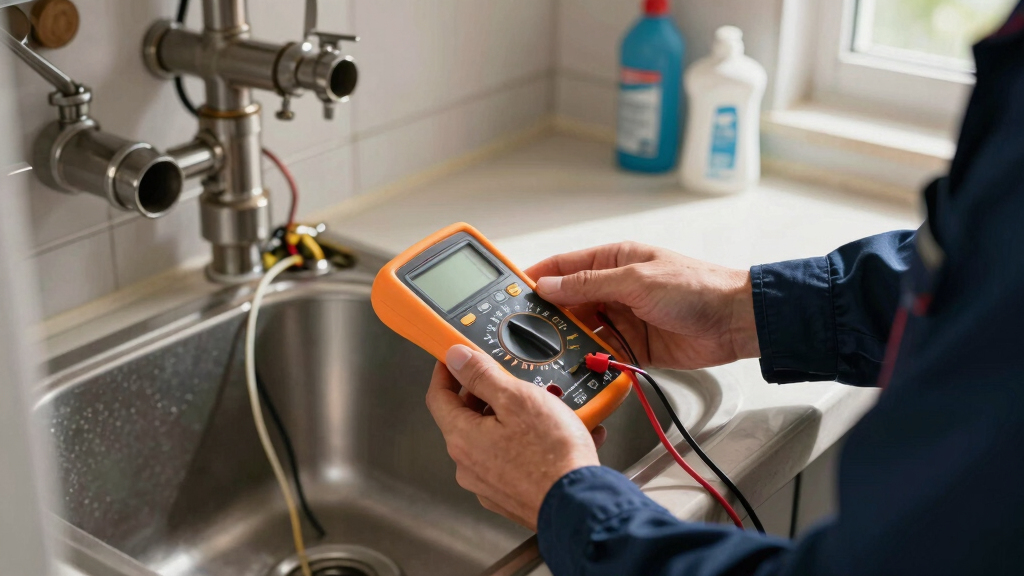

The Klein Tools MM720 is my best overall digital multimeter because it combines True RMS measurement, automatic ranging, a low-impedance mode, and a 1000-volt ceiling at a more approachable price than premium Fluke models. The Fluke 117 is my premium pick for electricians who want non-contact voltage detection and a low-impedance input, while the KAIWEETS 6000 Count offers the strongest value for general-purpose work. The main choices are between manual and automatic ranging, average-responding and True RMS measurement, and affordable versatility versus stronger safety credentials and long-term support. Beginners can save money with a basic meter, but regular mains or commercial work gives better reason to pay for stronger input protection and more dependable construction. Continue reading for the full breakdown of all 11 options and the buyer types each one suits.

Get cleaning gear delivered free with Prime
- Fast, free delivery on millions of items
- Prime Video, Amazon Music and more included
- Member-only deals all year
Complete the kit


Key Takeaways
- The Klein Tools MM720 leads this roundup because its True RMS, LoZ, automatic ranging, and 1000-volt capability create the most balanced package for serious electrical work.
- The Fluke 117 earns the premium position through its electrician-focused low-impedance input and non-contact voltage detection, but its price is harder to justify for occasional household measurements.
- KAIWEETS delivers the strongest feature-to-price ratio with True RMS and a 6000-count display, although the Fluke and Klein models remain more persuasive for frequent mains work.
- The AstroAI 2000 Count is the easiest entry point for batteries, continuity checks, and simple household troubleshooting, while its manual ranging and limited resolution leave less room for growth.
- Brand and price did not decide every role: the compact Fluke 106 favors portability, the Klein MM325 favors straightforward manual control, and the MM420 occupies the middle ground between basic and professional models.
| Klein Tools MM325 Multimeter | 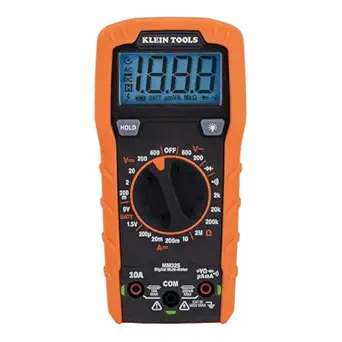 | Best Manual-Ranging Pick | Voltage range: Up to 600V AC/DC | Maximum current: 10A DC | Resistance range: Up to 2MΩ | VIEW LATEST PRICE | See Our Full Breakdown |
| Klein Tools MM720 Digital Multimeter |  | Best Feature-Rich Klein Meter | Voltage range: Up to 1000V AC/DC | Current range: Up to 10A AC/DC | Resistance range: Up to 60MΩ | VIEW LATEST PRICE | See Our Full Breakdown |
| Klein Tools MM420 Digital Multimeter |  | Best Midrange All-Rounder | Voltage range: Up to 600V AC/DC | Current range: Up to 10A AC/DC | Resistance range: Up to 50MΩ | VIEW LATEST PRICE | See Our Full Breakdown |
| KAIWEETS HT118A Digital Multimeter | 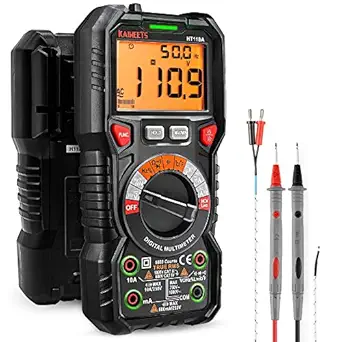 | Best for Automotive Diagnostics | DC voltage range: Up to 1000V | AC voltage range: Up to 750V | Current range: Up to 10A AC/DC | VIEW LATEST PRICE | See Our Full Breakdown |
| Fluke 17B+ Digital Multimeter |  | Best for Commercial Electrical Basics | Maximum voltage: 1000V AC/DC | Maximum current: 10A | Safety rating: CAT III 600V | VIEW LATEST PRICE | See Our Full Breakdown |
| Fluke 115 Multimeter |  | Best for Field Technicians | Measurement Method: True RMS | Display Resolution: 6000 counts | Safety Rating: CAT III 600V | VIEW LATEST PRICE | See Our Full Breakdown |
| AstroAI Digital Multimeter Tester 2000 Counts |  | Best Budget Pick | Display Count: 2000 counts | Display: 3½-digit backlit LCD | Voltage Measurement: AC and DC | VIEW LATEST PRICE | See Our Full Breakdown |
| Fluke 117 Digital Multimeter |  | Best for Electricians | Voltage Detection: Non-contact AC detection | Measurement Method: True RMS | Voltage Selection: Automatic AC/DC selection | VIEW LATEST PRICE | See Our Full Breakdown |
| Fluke 106 Palm-Sized Digital Multimeter |  | Best Compact | Voltage Range: Up to 600V | Current Measurement: AC/DC up to 10A | Safety Rating: CAT III 600V | VIEW LATEST PRICE | See Our Full Breakdown |
| AstroAI Digital Multimeter and Analyzer TRMS 6000 Counts |  | Best Feature-Rich Value | Display Resolution: 6000 counts | Measurement Method: True RMS | Range Selection: Automatic | VIEW LATEST PRICE | See Our Full Breakdown |
| Fluke 15B+ Digital Multimeter |  | Best for Straightforward Electrical Work | Safety Rating: CAT III 600V | AC/DC Voltage Range: Up to 1000V | AC/DC Current Range: Up to 10A | VIEW LATEST PRICE | See Our Full Breakdown |
More Details on Our Top Picks
Klein Tools MM325 Multimeter
I rank the Klein Tools MM325 as the manual-ranging choice for buyers who prefer direct control over measurement ranges. Its 600V AC/DC ceiling, 10A DC capacity, and continuity and diode testing cover common household, automotive, and workshop checks. Compared with the auto-ranging Klein Tools MM420, it requires more input from the operator and lacks True RMS measurement, so it is less forgiving when diagnosing variable-speed equipment or distorted AC signals. The payoff is a focused interface without the MM720’s larger menu of advanced functions. A backlit display and 6.6-foot drop rating make it better suited to dim or rough work areas than many entry-level meters. I would skip it when speed, automatic range selection, or AC current measurement carries more weight than simplicity.
Pros:- Manual range control suits buyers who want deliberate measurement settings
- Measures voltage, DC current, resistance, continuity, and diodes
- Backlit LCD remains readable in poorly lit work areas
- Six-and-a-half-foot drop resistance supports jobsite use
Cons:- Manual ranging is slower and easier to misconfigure than auto-ranging
- Current measurement is limited to DC rather than AC and DC
- Two AAA batteries are required and are listed as not included
Best for: I recommend it for DIYers, maintenance workers, and automotive hobbyists who understand manual range selection and need a durable meter for routine checks.
Not ideal for: I would steer beginners and technicians working with complex AC loads toward an auto-ranging True RMS model.
- Voltage range:Up to 600V AC/DC
- Maximum current:10A DC
- Resistance range:Up to 2MΩ
- Ranging:Manual
- Display:Backlit LCD
- Additional tests:Continuity and diode
- Drop resistance:6.6 feet (2 meters)
- Power:2 AAA batteries
Our verdict“The MM325 is my pick for confident DIY users who value durability and manual control more than automatic operation.”
Klein Tools MM720 Digital Multimeter
I place the Klein Tools MM720 above the MM420 for technicians who need more than core electrical measurements. Both provide auto-ranging and True RMS operation, but the MM720 raises the voltage limit to 1000V, expands resistance to 60MΩ, and adds low-impedance LoZ testing to reduce misleading readings caused by ghost voltage. Temperature, capacitance, frequency, and duty-cycle modes also make it better suited to HVAC controls and component diagnostics. Compared with the KAIWEETS HT118A, its standout difference is LoZ rather than display size or a CAT IV rating. That extra capability brings a steeper learning curve, and the bulkier body is less convenient for a crowded tool pouch. I rank it as a specialist’s option rather than the default choice for occasional household troubleshooting.
Pros:- True RMS measurement supports more accurate readings on distorted AC signals
- LoZ mode helps reject misleading ghost-voltage readings
- Broad diagnostic set includes temperature, capacitance, frequency, and duty cycle
- Reverse-contrast LCD emphasizes visibility across varied lighting
Cons:- Numerous modes create a steeper learning curve for casual users
- Bulkier construction is less comfortable for pocket carry
- Its advanced functions may go unused in basic household work
Best for: I recommend it for electricians, HVAC technicians, and maintenance professionals who regularly diagnose variable AC loads, controls, and ghost-voltage readings.
Not ideal for: I would skip it for occasional outlet checks or buyers wanting a small meter with only basic controls.
- Voltage range:Up to 1000V AC/DC
- Current range:Up to 10A AC/DC
- Resistance range:Up to 60MΩ
- Ranging:Automatic
- AC measurement:True RMS
- Low-impedance mode:LoZ
- Display:Reverse-contrast LCD
- Diagnostic functions:Temperature, capacitance, frequency, duty cycle, continuity, and diode testing
- Power source:Battery
Our verdict“The MM720 makes the most sense for working technicians who will benefit from LoZ, True RMS, and its wider diagnostic range.”
Klein Tools MM420 Digital Multimeter
I see the Klein Tools MM420 as the most balanced Klein option here. It upgrades the MM325 with auto-ranging and True RMS, reducing setup work while improving AC readings on non-sinusoidal signals. Its 600V AC/DC, 10A AC/DC, and 50MΩ ranges suit household electrical work, automotive diagnosis, and general maintenance without reaching the MM720’s complexity. The meter also retains the same 6.6-foot drop resistance associated with both Klein models, giving it a practical advantage in rough work settings. Compared with the Klein Tools MM720, however, it stops at 600V and lacks LoZ, frequency, duty-cycle, and the broader advanced feature set. I rank it below the MM720 for specialist diagnostics but ahead of the MM325 for buyers who want faster, more adaptable everyday measurements.
Pros:- Auto-ranging reduces manual setup during routine troubleshooting
- True RMS supports dependable readings across more AC load types
- Measures both AC and DC current up to 10A
- Six-and-a-half-foot drop resistance suits active work areas
Cons:- The 600V ceiling is lower than the MM720 and several 1000V alternatives
- No listed LoZ, frequency, or duty-cycle modes
- Its feature set offers less room for advanced component diagnosis
Best for: I recommend it for serious DIYers, apprentices, and general maintenance workers who want True RMS accuracy without a specialist-level control set.
Not ideal for: I would choose another model for industrial technicians who need 1000V capacity, LoZ, frequency, or duty-cycle measurement.
- Voltage range:Up to 600V AC/DC
- Current range:Up to 10A AC/DC
- Resistance range:Up to 50MΩ
- Ranging:Automatic
- AC measurement:True RMS
- Display:Backlit
- Drop resistance:6.6 feet (2 meters)
- Included probe accessory:Thermocouple
Our verdict“The MM420 is my balanced recommendation for buyers who want True RMS convenience and jobsite durability without paying for seldom-used specialist modes.”
KAIWEETS HT118A Digital Multimeter
I select the KAIWEETS HT118A for automotive hobbyists and home mechanics who want broad diagnostic coverage in one meter. Its auto-ranging True RMS system measures AC and DC current, while temperature, capacitance, and diode modes help investigate batteries, charging circuits, sensors, and individual components. The 2.9-inch backlit display is a stronger selling point than the less specifically described screens on the Fluke 17B+ and Klein MM420. It also carries listed CAT III 1000V and CAT IV 600V ratings, exceeding the category information supplied for several alternatives in this group. The tradeoff is a busier interface that can slow simple checks, and the protective cap must be removed before connecting the leads. Compared with the MM720, it lacks the explicitly listed LoZ mode for rejecting ghost voltage.
Pros:- Broad measurement set supports automotive and household diagnostic work
- Large 2.9-inch backlit screen improves readability
- Auto-ranging and True RMS reduce setup while supporting varied AC signals
- Listed CAT III 1000V and CAT IV 600V ratings cover demanding measurement environments
Cons:- The large function set can feel crowded during basic tasks
- The protective cap must be removed before attaching the test leads
- No LoZ mode is listed for suppressing ghost-voltage readings
Best for: I recommend it for home mechanics and technically confident DIYers who need temperature, capacitance, and electrical measurements from one meter.
Not ideal for: I would skip it for beginners who want minimal controls or electricians who specifically need LoZ ghost-voltage suppression.
- DC voltage range:Up to 1000V
- AC voltage range:Up to 750V
- Current range:Up to 10A AC/DC
- Resistance range:Up to 60MΩ
- Display:2.9-inch backlit LCD
- Ranging:Automatic
- AC measurement:True RMS
- Safety ratings:IEC CAT III 1000V and CAT IV 600V
- Additional tests:Temperature, capacitance, and diode
Our verdict“The HT118A is my automotive-focused choice for buyers who want wide measurement coverage and a large display in a single meter.”
Fluke 17B+ Digital Multimeter
I rank the Fluke 17B+ as a straightforward professional option for electrical work that calls for a 1000V measurement range and familiar core functions. Alongside voltage and 10A current measurement, it covers continuity, resistance, diode checks, capacitance, frequency, and temperature up to 400°C. That makes it more versatile than its “basic” positioning might suggest. Compared with the Klein Tools MM720, though, the supplied data does not identify True RMS or LoZ support, leaving the Klein better equipped for distorted AC signals and ghost-voltage checks. Its CAT III 600V rating also needs to be matched to the circuit being measured rather than confused with the meter’s 1000V display range. Buyers prioritizing a stated backlight or large screen receive clearer display details from the KAIWEETS HT118A.
Pros:- Measures AC/DC voltage up to 1000V and current up to 10A
- Temperature capability extends to 400°C with a Type K thermocouple
- Includes capacitance and frequency alongside standard electrical tests
- CAT III 600V rating is suited to matching commercial electrical environments
Cons:- True RMS and LoZ capability are not identified in the supplied product data
- No display size or backlight specification is provided
- CAT III protection is rated to 600V despite the 1000V measurement range
Best for: I recommend it for commercial electricians and maintenance staff who need broad core measurements plus temperature testing in CAT III 600V environments.
Not ideal for: I would choose another meter for HVAC or industrial diagnostics requiring explicitly stated True RMS, LoZ, CAT IV protection, or a documented backlit display.
- Maximum voltage:1000V AC/DC
- Maximum current:10A
- Safety rating:CAT III 600V
- Temperature range:Up to 400°C
- Temperature probe:Type K thermocouple
- Component measurements:Resistance and capacitance
- Signal measurement:Frequency
- Additional tests:Continuity and diode
Our verdict“The Fluke 17B+ is my choice for professionals seeking broad everyday electrical functions and temperature measurement without a specialist diagnostic interface.”
Fluke 115 Multimeter
I rank the Fluke 115 as the field-service pick because its True-RMS accuracy and 6000-count display suit troubleshooting variable-speed equipment and other non-linear loads. Min/Max/Average capture also helps technicians track intermittent behavior without watching the screen continuously. Compared with the Fluke 106, it offers a more capable display and stronger diagnostic positioning, while remaining compact enough for a tool bag. The white LED backlight is useful around panels and mechanical rooms. Its limits explain why I place it below more advanced industrial meters: the CAT III 600V rating does not cover higher-energy CAT IV work, and there is no Bluetooth or logging for documented trend analysis. It also costs more than the AstroAI TRMS 6000 Counts, so casual household users may be paying for durability and measurement confidence they do not need.
Pros:- True-RMS measurement handles non-linear loads more accurately
- 6000-count display provides finer reading detail than basic 2000-count meters
- Min/Max/Average mode helps identify intermittent fluctuations
- CAT III 600V rating supports commercial field-service work
Cons:- No Bluetooth connectivity or built-in data logging
- CAT III 600V rating is insufficient for CAT IV utility work
- Higher cost than feature-rich meters aimed at home and automotive users
Best for: Field technicians troubleshooting commercial equipment, controls, and non-linear electrical loads
Not ideal for: Utility electricians working in CAT IV environments or technicians who require wireless logging and downloadable records
- Measurement Method:True RMS
- Display Resolution:6000 counts
- Safety Rating:CAT III 600V
- Recording Modes:Minimum, maximum, and average
- Resistance and Continuity:Supported
- Frequency Measurement:Supported
- Capacitance Measurement:Supported
- Display Lighting:White LED backlight
Our verdict“I recommend the Fluke 115 for field technicians who value dependable measurements and practical diagnostics more than connectivity.”
AstroAI Digital Multimeter Tester 2000 Counts
The AstroAI 2000 Counts earns my budget role by covering basic household, automotive, and electronics checks without charging for advanced modes. It measures AC/DC voltage, DC current, resistance, and diodes, while the continuity buzzer speeds up checks for broken wires and blown fuses. Compared with the AstroAI TRMS 6000 Counts, this model has a simpler 1999-count display, fewer measurement types, and no stated True-RMS capability, making it less suitable for complex AC loads. The backlight, data hold, silicone cover, and double fuses add practical value at this price. Buyers must still work within meaningful limits: it cannot measure AC current, readings below 100mV AC are outside its stated capability, and manual range and socket selection leave more room for operator error. I see it as a starter tool, not a meter for demanding professional diagnostics.
Pros:- Low-cost coverage of common household and automotive measurements
- Backlit display and data hold make readings easier to capture
- Continuity buzzer speeds up wire and fuse checks
- Double fuses and silicone cover add useful protection
Cons:- Cannot measure AC current
- Does not measure AC voltage below 100mV
- Manual range and input-socket selection increase the risk of user error
Best for: Budget-conscious homeowners and hobbyists checking outlets, batteries, wiring continuity, and basic DC circuits
Not ideal for: HVAC technicians or electricians who need AC-current measurement, True-RMS readings, or finer display resolution
- Display Count:2000 counts
- Display:3½-digit backlit LCD
- Voltage Measurement:AC and DC
- Current Measurement:DC only
- Resistance Measurement:Supported
- Diode and Continuity Tests:Supported with continuity buzzer
- Convenience Features:Data hold and automatic shutoff
- Protection:Double fuses and silicone cover
- Included Items:Batteries, test leads, and user manual
Our verdict“I recommend this AstroAI meter as an inexpensive starter model for straightforward checks, provided AC-current testing is not required.”
Fluke 117 Digital Multimeter
I give the Fluke 117 the electrician-focused role because it combines True-RMS measurement with non-contact AC voltage detection, automatic AC/DC selection, and a low-impedance mode. That combination makes routine branch-circuit work faster while reducing misleading ghost-voltage readings. Compared with the Fluke 115, the 117 favors quick voltage identification over Min/Max/Average-focused field diagnostics; compared with the AstroAI 2000 Counts, it is far better suited to non-linear loads and busy professional workflows. The large backlit display and stated 400-hour battery life also support long workdays. My reservations are practical: non-contact detection is a screening aid rather than proof that a circuit is de-energized, and the supplied data gives only a 600.0mV DC range point with 0.1mV resolution, not a full range table. No dustproof or waterproof rating is stated either.
Pros:- Built-in non-contact voltage detection speeds up preliminary live-wire checks
- Low-impedance mode helps suppress ghost-voltage readings
- True-RMS measurement supports non-linear electrical loads
- Automatic AC/DC selection reduces mode changes during voltage work
Cons:- Non-contact detection cannot replace a direct de-energization test
- No stated waterproof or dustproof protection
- Provided specifications do not include a full measurement-range table
Best for: Residential and commercial electricians who frequently identify live conductors and troubleshoot branch circuits
Not ideal for: Outdoor or plant-maintenance crews who need a stated dustproof, waterproof, or CAT IV-rated meter
- Voltage Detection:Non-contact AC detection
- Measurement Method:True RMS
- Voltage Selection:Automatic AC/DC selection
- Low-Impedance Mode:Supported
- Listed DC Range Point:600.0mV
- Listed Resolution:0.1mV
- Operating Temperature:-10°C to +50°C
- Battery Life:Up to 400 hours
Our verdict“I recommend the Fluke 117 to electricians who want faster voltage troubleshooting and better control of false readings.”
Fluke 106 Palm-Sized Digital Multimeter
The Fluke 106 is my compact choice for buyers who need a capable meter without dedicating much tool-bag space. At 200 grams with a pocket-sized body, it is easier to carry than the Fluke 115, yet it still measures voltage, resistance, continuity, capacitance, frequency, and AC/DC current up to 10A. Data hold is especially helpful when the display is difficult to view while probing. Portability brings clear compromises: the Fluke 115 supplies a 6000-count display and Min/Max/Average recording, while the Fluke 117 adds non-contact voltage detection and low-impedance testing. The 106 offers neither advanced feature set in the supplied data. Its CAT III 600V ceiling also rules out higher-energy utility environments, and no accessories beyond the meter itself are listed. I rank it for mobile convenience rather than maximum diagnostic depth.
Pros:- Pocket-sized design is easy to carry in a small service kit
- Measures AC and DC current up to 10A
- Includes capacitance, frequency, resistance, and continuity functions
- Data hold helps capture readings in awkward positions
Cons:- Lacks the advanced recording modes listed for the Fluke 115
- CAT III 600V rating does not cover higher-energy CAT IV work
- No additional accessories or advanced detection features are specified
Best for: Mobile technicians and electronics workers who need a lightweight meter for routine voltage, current, and continuity checks
Not ideal for: Utility crews or diagnostic specialists who need CAT IV protection, event capture, or non-contact voltage detection
- Voltage Range:Up to 600V
- Current Measurement:AC/DC up to 10A
- Safety Rating:CAT III 600V
- Resistance and Continuity:Supported
- Capacitance Measurement:Supported
- Frequency Measurement:Supported
- Display Function:Data hold
- Weight:200 grams
- Design:Pocket-sized and slim
Our verdict“I recommend the Fluke 106 when portability matters more than advanced diagnostics or high-energy site coverage.”
AstroAI Digital Multimeter and Analyzer TRMS 6000 Counts
I rank the AstroAI TRMS 6000 Counts as the feature-rich value because it covers far more than basic voltage and resistance checks. True-RMS measurement, auto-ranging, AC/DC current, capacitance, frequency, duty cycle, and temperature give automotive and household troubleshooters room to tackle varied jobs with one meter. Compared with the AstroAI 2000 Counts, it provides finer display resolution and broader AC capability; compared with the Fluke 115, it adds temperature and duty-cycle functions at a more value-oriented position. The large backlit screen, kickstand, and data hold improve bench use, while ceramic fuses strengthen input protection. That breadth creates a steeper learning curve, and the manual becomes necessary for correct modes and sockets. Users must also remove the protective test-lead caps where appropriate before probing, which can cause confusion during setup. I favor it for versatility, not streamlined simplicity.
Pros:- True-RMS and 6000-count operation support more detailed AC troubleshooting
- Broad function set includes temperature, frequency, duty cycle, and capacitance
- Auto-ranging, data hold, kickstand, and backlight improve usability
- Double ceramic fuses provide stronger input protection than basic glass-fuse designs
Cons:- Numerous modes and sockets create a steeper learning curve
- The manual is needed to use advanced functions correctly
- Protective test-lead caps may need removal before some measurements
Best for: Automotive DIYers and advanced homeowners who want temperature, duty-cycle, and AC/DC current testing in one meter
Not ideal for: First-time users seeking a simple meter with minimal mode and input-socket decisions
- Display Resolution:6000 counts
- Measurement Method:True RMS
- Range Selection:Automatic
- Voltage and Current:AC and DC
- Resistance and Capacitance:Supported
- Frequency and Duty Cycle:Supported
- Diode and Continuity Tests:Supported
- Temperature Measurement:Supported
- Protection:F400mA/600V and F10A/600V ceramic fuses in explosion-resistant tubes
Our verdict“I recommend this AstroAI model to value-focused troubleshooters who will use its wide measurement range and do not mind consulting the manual.”
Fluke 15B+ Digital Multimeter
I rank the Fluke 15B+ as the practical choice for electricians who want dependable core measurements without paying for advanced diagnostic features. Its CAT III 600V rating, glove-friendly controls, and support for voltage, current, resistance, continuity, diode, and capacitance measurements suit routine residential and commercial jobs. Compared with the Fluke 106, this model offers a larger working format and current measurement up to 10A, though it sacrifices the smaller meter’s portability. The Fluke 115 is the stronger choice for variable-frequency equipment because it explicitly provides True-RMS measurement and a backlit 6000-count display. The 15B+ also lacks detailed guide information in the supplied product data, which may frustrate new users. I see its appeal in simple operation and broad everyday coverage, not advanced troubleshooting.
Pros:- CAT III 600V safety rating suits common residential and commercial electrical environments
- Measures AC/DC voltage up to 1000V and AC/DC current up to 10A
- One-handed, glove-friendly design supports practical field use
- Covers resistance, continuity, diode, and capacitance testing
Cons:- True-RMS capability is not stated, limiting confidence with distorted electrical waveforms
- Detailed user-guide information is not included in the supplied product data
- Battery-only operation creates an ongoing replacement requirement
Best for: Residential and commercial electricians who need a glove-friendly meter for routine voltage, current, continuity, resistance, diode, and capacitance checks
Not ideal for: Technicians diagnosing variable-frequency drives or electronically controlled equipment, since True-RMS capability is not stated
- Safety Rating:CAT III 600V
- AC/DC Voltage Range:Up to 1000V
- AC/DC Current Range:Up to 10A
- Additional Measurements:Resistance, continuity, diode, and capacitance
- Power Source:Battery powered
- Maximum Operating Voltage:1000V
- Weight:460 grams
- Dimensions:8.46 x 2.76 x 5.91 inches
- Standards:CE, CSA, EN 61010-1, ETL, IEC 61010-1:2000-1, UL
Our verdict“Choose the Fluke 15B+ for dependable everyday electrical measurements, but pick the Fluke 115 when True-RMS analysis matters.”
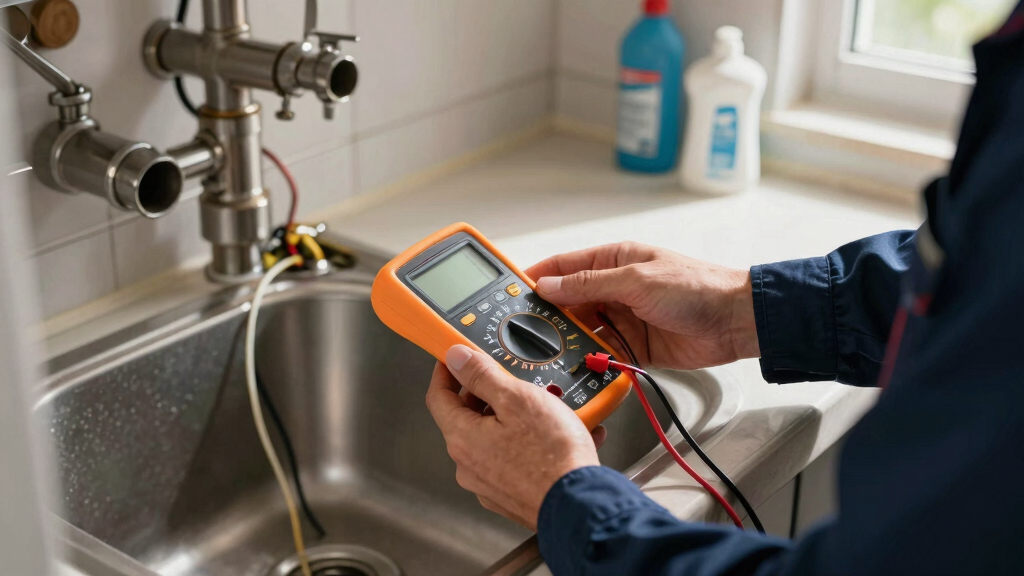
How We Picked
I ranked these meters by measurement capability, electrical safety, usability, and value. True RMS performance received extra weight because modern loads such as variable-speed motors, dimmers, and inverter-powered equipment can distort an AC waveform. I also compared ranging method, display resolution, voltage and current limits, low-impedance modes, non-contact voltage detection, safety-category claims, and the practical layout of the controls and input jacks. A longer feature list did not automatically earn a higher place; each feature had to provide a clear benefit for the buyer type assigned to that meter.
The order favors balanced usefulness over the lowest price. The Klein MM720 ranks ahead of simpler models because it covers more serious troubleshooting jobs without moving fully into Fluke pricing, while the Fluke 117 ranks as the premium specialist rather than the default choice for everyone. Budget meters moved higher when they paired useful measurement modes with an accessible price, but they moved lower when manual operation, limited resolution, or less persuasive long-term support narrowed their audience. I treated portability, beginner friendliness, and specialized electrical features as separate strengths, which gives every recommendation a distinct role instead of presenting 11 interchangeable meters.
Factors to Consider When Choosing Best Digital Multimeters
I would choose a digital multimeter by matching its protection, measurement method, and controls to the circuits it will actually encounter. A meter for checking batteries and automotive sensors does not need the same design as one used inside a commercial distribution panel. Paying for the wrong upgrade can leave a buyer with unused functions while missing a feature that affects daily work. The following factors explain where extra spending changes the ownership experience and where a simpler model remains enough.
Match the Safety Category to the Work
I treat the printed voltage limit and the CAT safety rating as separate specifications. A meter capable of displaying 600 volts is not automatically suitable for every 600-volt environment because available fault energy and transient spikes vary by location. CAT II generally covers loads connected to receptacles, CAT III applies to building wiring and distribution work, and CAT IV covers points near the service entrance or utility connection. I would match the meter, probes, and accessories to the highest category present rather than relying on the display range alone. For regular mains work, protected input jacks, suitable fuses, and intact shrouded leads matter more than extra secondary functions. A low-cost meter remains sensible for batteries and isolated electronics, but I would pay more before using one around high-energy panels.
Know When True RMS Changes the Reading
True RMS measurement matters most on distorted AC waveforms produced by dimmers, variable-speed drives, electronic power supplies, and some HVAC equipment. An average-responding meter can remain adequate on clean sine-wave power, DC circuits, batteries, and basic resistance checks. I would not pay extra for True RMS solely because it appears on the box; the expected loads should justify it. Display counts tell a different story by describing how finely a meter can show a changing value, not how close that value is to reality. A 6000-count display can reduce range changes and expose smaller differences, but resolution is not the same as accuracy. I compare the published accuracy specification after checking counts, especially when electronics or sensor work depends on small voltage changes.
Choose Between Automatic Ranging, Manual Control, and LoZ
Automatic ranging speeds up unfamiliar measurements because the meter selects a suitable scale, making it the friendlier choice for mixed troubleshooting. Manual ranging costs less and gives direct control, which can help a beginner learn how measurement ranges work, but selecting the wrong range slows the job. I would choose manual control for occasional battery and continuity checks, then move to automatic ranging for frequent electrical work. A low-impedance mode solves a different problem by loading the circuit enough to suppress ghost voltages caused by capacitive coupling. That makes LoZ valuable in building wiring, yet high-impedance mode remains safer for delicate electronics that should not be loaded unnecessarily. Non-contact voltage detection is useful for an initial scan, but I would still confirm a de-energized conductor with a properly connected meter.
Be Realistic About Current Measurement
Current measurement carries more room for user error than voltage measurement because I must open the circuit and move the lead to a current jack. Leaving that lead in the current jack before measuring voltage can create a short, so clear jack markings and fused inputs have real value. A 10-amp label may describe a short-duration maximum rather than a continuous working level, and the manual should state the allowed measurement time. Small current ranges also depend on the type and rating of the internal fuse. For repeated high-current work, I would use a suitable clamp meter instead of routing the load through a handheld multimeter. If current checks are rare, spending more on dependable voltage, resistance, and continuity performance usually produces a more useful tool.
Pay for the Features That Improve Daily Use
I would not judge build quality from the outer rubber shell alone. Readable digits, a responsive continuity tone, stable probes, and an accessible fuse compartment affect nearly every job. A backlight earns its place in cabinets and dim rooms, while a kickstand or magnetic hanger can free both hands for probe placement. Compact meters such as the Fluke 106 are easier to carry, though the smaller body can mean fewer dedicated controls and less convenient bench use. Higher prices can also buy stronger documentation, replacement parts, calibration options, and established service channels. For professional use, those ownership benefits can outweigh a longer feature list; for occasional home checks, a simpler meter with good leads may offer better value.
Frequently Asked Questions
Do I Need a True RMS Multimeter for Home Electrical Work?
I would choose True RMS for dimmers, motor controls, inverter outputs, and electronic appliances, where the AC waveform may not be a clean sine wave. For outlets, batteries, continuity, and basic resistance checks, an average-responding meter can provide enough information. The Klein MM720, Klein MM420, Fluke 115, Fluke 117, and both 6000-count budget models offer more room for mixed electrical work than the simplest entries. True RMS does not make every measurement more accurate, since DC accuracy, bandwidth, probes, and technique still matter. If the price gap is modest, True RMS is a useful upgrade for future flexibility.
Is a Fluke Multimeter Worth Paying More for Than Klein, KAIWEETS, or AstroAI?
I think Fluke makes the most sense for frequent professional use, where construction, documentation, service support, and consistent operation can justify the premium. The Fluke 117 is particularly well matched to electricians, while the Fluke 106 favors compact carry. Klein offers a more accessible route to electrician-oriented features, which is why the MM720 ranks higher as an all-around recommendation. KAIWEETS and AstroAI give occasional users more functions per dollar, but price-sensitive buyers must decide how much they value long-term support and premium input protection. For home maintenance, Klein or a well-matched budget meter can be the smarter purchase.
Is Automatic Ranging Better for a Beginner?
I usually recommend automatic ranging for buyers who want faster setup and fewer scale-selection mistakes. It lets a beginner focus on choosing the correct measurement function, connecting the leads properly, and placing the probes safely. Manual-ranging models such as the Klein MM325 and AstroAI 2000 Count cost less and can teach the relationship between expected values and selected ranges. They become less convenient when a reading crosses ranges or the likely value is unknown. The better choice depends on whether the goal is low-cost learning or quick everyday troubleshooting.
What CAT Rating Should I Choose for Household and Professional Work?
For household receptacles and connected appliances, I would start with a meter carrying a suitable CAT II or CAT III rating at the required voltage. Work on fixed building wiring, breaker panels, and distribution equipment calls for CAT III, while service-entrance and outdoor utility points may require CAT IV equipment. The category must apply to the meter and the probes, since the lower-rated component limits the setup. I would also inspect lead insulation and fuse condition before mains measurements rather than treating the printed rating as permanent protection. Professional work gives a stronger reason to select a higher-energy design from an established manufacturer.
Should I Buy a Compact Meter or a Full-Size Model?
I would choose a compact meter when portability outranks screen size and control space. The Fluke 106 fits a mobile kit better than larger models, yet the MM720, Fluke 115, and Fluke 117 provide interfaces better suited to extended troubleshooting. Smaller meters can be awkward when gloved hands, frequent function changes, or hands-free viewing are part of the job. Full-size bodies also have more room for jack spacing, protective structure, and dedicated buttons. For a tool that stays in one workshop, the larger format usually offers better day-to-day usability.
Conclusion
For the broadest mix of capability, usability, and price, my best overall choice is the Klein Tools MM720. Buyers seeking a lower-cost True RMS meter should choose the KAIWEETS 6000 Count as the best value, while the Klein MM420 is the stronger middle-ground option for those who prefer a familiar trade-focused brand. My premium and beginner recommendations are the Fluke 117 for professional electrical work and the AstroAI 2000 Count for basic learning. The Fluke 106 is my compact choice for a crowded mobile toolkit, and the Klein MM325 suits buyers who specifically want straightforward manual ranging. The Fluke 115 makes more sense for general electronic and electrical troubleshooting than for buyers who need the 117’s non-contact voltage detection, while the Fluke 15B+ and 17B+ appeal to users who want simpler Fluke alternatives. I would make the final choice by matching the safety category and measurement functions to the hardest circuit the meter will face, not the easiest task on the list.
Halloween Picks
halloween
As an affiliate, we earn on qualifying purchases.