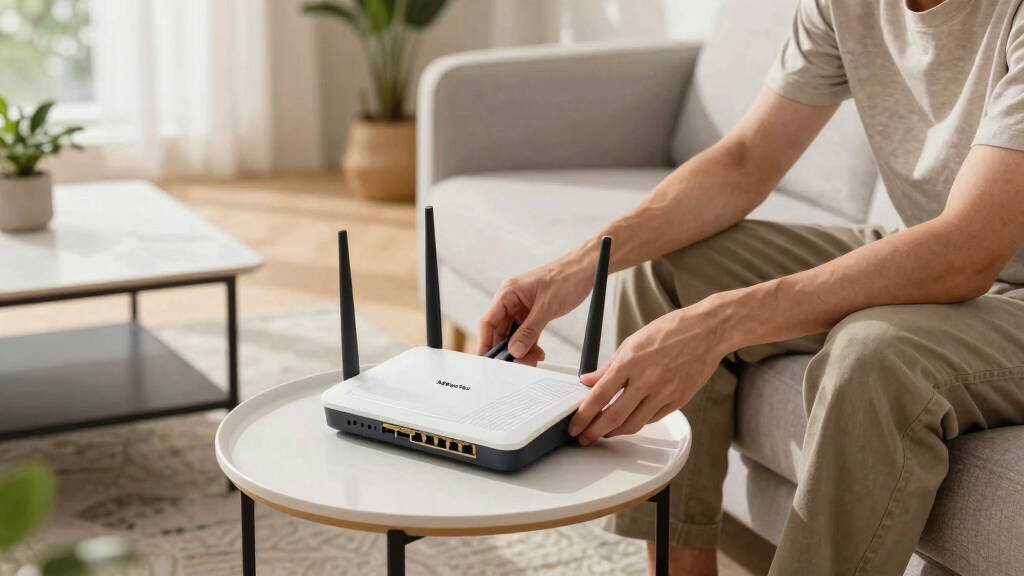

The best MikroTik home router depends on whether I need built-in Wi-Fi, a wired gateway, or faster uplink options. I rank the MikroTik hAP ax S first because Wi-Fi 6 makes it the most practical all-in-one choice for a current home network. The hEX S (2025) is my stronger pick for a wired network with separate access points, while the affordable hEX E50UG offers five Gigabit ports, an ARM processor, and 512MB of RAM without charging for wireless hardware.
The main tradeoff is flexibility versus simplicity. MikroTik routers offer unusually detailed network control, but RouterOS can demand more configuration than a typical consumer router. The wireless models reduce the number of devices I need, while the hEX models make more sense when I prefer separate Wi-Fi access points. Port speed also separates these picks: most center on Gigabit Ethernet, but the newer hEX S adds a 2.5G-capable SFP connection for a faster backbone or fiber link.
Complete the kit


Key Takeaways
- The hAP ax S ranks first because it combines Wi-Fi 6 with MikroTik routing in the most convenient format for a typical home.
- The hEX S (2025) is the strongest wired pick when a 2.5G SFP uplink, PoE out, and separate access points fit the network plan.
- The hEX E50UG offers the best balance of price, 512MB RAM, and five Gigabit Ethernet ports for an all-wired home network.
- The hAP ac3 remains useful for dual-band Wi-Fi, but its 802.11ac radio is a generation behind the hAP ax S.
- The older RB750Gr3 earns a place for compact wired and IPsec-focused installations, though its 256MB RAM and lack of Wi-Fi limit broader appeal.
| MikroTik hAP ax S Wireless Router Wi-Fi 6 |  | Best Overall | Model: hAP ax S | Router Type: Wireless home router | Wi-Fi Standard: Wi-Fi 6 (802.11ax) | VIEW LATEST PRICE | See Our Full Breakdown |
| MikroTik hEX S (2025) E60iUGS Wired Router |  | Best Premium Wired Router | Model: E60iUGS | Router Type: Wired router | Ethernet Ports: 5 | VIEW LATEST PRICE | See Our Full Breakdown |
| MikroTik hEX 5 Port Gigabit Router E50UG |  | Best Wired Value | Model: E50UG | Router Type: Wired home or small-office router | Ethernet Ports: 5 | VIEW LATEST PRICE | See Our Full Breakdown |
| MikroTik hAP ac3 |  | Best Wi-Fi 5 Alternative | Model: hAP ac3 | Region: US version | Wi-Fi Standard: 802.11ac | VIEW LATEST PRICE | See Our Full Breakdown |
| MikroTik hEX RB750Gr3 5-Port Ethernet Gigabit Router |  | Best Compact Legacy Pick | Model: RB750Gr3 | Ethernet Ports: 5 Gigabit ports | CPU: Dual-core 880MHz | VIEW LATEST PRICE | See Our Full Breakdown |
| MikroTik home router | Model | Ethernet Ports | Router Type | RAM |
|---|---|---|---|---|
| MikroTik hAP ax S Wireless Rou | hAP ax S | Not specified in supplied information | Wireless home router | Not specified in supplied information |
| MikroTik hEX S | E60iUGS | 5 | Wired router | — |
| MikroTik hEX 5 Port Gigabit Ro | E50UG | 5 | Wired home or small-office router | 512MB |
| MikroTik hAP ac3 | hAP ac3 | 5 | Wireless router and access point | — |
| MikroTik hEX RB750Gr3 5-Port E | RB750Gr3 | 5 Gigabit ports | — | 256MB |
More Details on Our Top Picks
MikroTik hAP ax S Wireless Router Wi-Fi 6
The MikroTik hAP ax S takes my top position because it addresses the needs of the broadest group: buyers who want MikroTik control without building a separate wired router and access-point system. Its defining advantage is Wi-Fi 6 support, which brings better efficiency for homes filled with phones, laptops, streaming devices, and smart-home hardware. Compared with the hAP ac3, this is the more current wireless foundation and the model I would prioritize for a new installation.
Convenience is what pushes this model above the wired hEX S. The hEX S offers stronger documented expansion features, but it needs separate wireless equipment. The hAP ax S gives me a single-device starting point, reducing power cables and management points. That makes it a better match for an apartment, modest house, or first MikroTik deployment where integrated wireless matters more than a specialized fiber or multi-gigabit backbone.
The weak point is the supplied product information. Port count, radio arrangement, processor, RAM, and detailed throughput figures are absent, so I cannot judge its wired capacity or processing headroom as confidently as I can with the E50UG. It may also be less attractive to buyers who already own ceiling-mounted access points. I rank it first for its modern wireless standard and broad usefulness, but buyers with demanding wired layouts should verify the complete manufacturer specification before ordering.
Pros:- Wi-Fi 6 supports more efficient handling of busy wireless households
- Combines wireless access and routing in one device
- More current wireless foundation than the 802.11ac hAP ac3
- Reduces the extra hardware required by wired-only hEX models
Cons:- Supplied information does not identify the Ethernet layout, CPU, or RAM
- No price or customer-rating data was provided
- Buyers cannot compare detailed throughput from the supplied specifications
Best for: Home users who want Wi-Fi 6 and MikroTik network controls in one primary router.
Not ideal for: Buyers who already use separate access points or need fully documented port and performance details before purchase.
- Model:hAP ax S
- Router Type:Wireless home router
- Wi-Fi Standard:Wi-Fi 6 (802.11ax)
- Ethernet Ports:Not specified in supplied information
- Processor:Not specified in supplied information
- RAM:Not specified in supplied information
- Detailed Throughput:Not specified in supplied information
Our verdict“The hAP ax S is my best overall choice for buyers who want a current Wi-Fi standard and MikroTik routing without assembling a multi-device setup.”
MikroTik hEX S (2025) E60iUGS Wired Router
I rank the hEX S (2025) E60iUGS second and name it my premium wired pick. Its biggest separator is the 2.5G SFP port, which gives a compatible fiber module or network backbone more headroom than the all-Gigabit layouts of the E50UG and RB750Gr3. Five Gigabit Ethernet ports still handle ordinary clients, switches, and access points, while the faster SFP connection can serve as an uplink that is less likely to become the first bottleneck.
This model also includes PoE out and USB. PoE out can reduce cable clutter when powering a compatible access point or another network device, though buyers need to confirm power standards and requirements on both ends. Compared with the hAP ax S, this is a more modular approach: I can choose access points based on home size and place them where coverage is actually needed. That arrangement suits larger homes and structured cabling better than relying on a router placed beside the internet connection.
Modularity adds expense and setup work. There is no built-in Wi-Fi in this wired model, and the supplied details do not state CPU frequency, RAM capacity, mounting accessories, or included extras. The dual-core processor sounds modest beside the richer connection set, so I would not assume unlimited multi-gigabit routing under heavy rules or encryption. Even with those gaps, its faster uplink and useful power feature make it the most capable wired design in this comparison.
Pros:- 2.5G SFP port provides more uplink headroom than the all-Gigabit alternatives
- Five Gigabit Ethernet ports support several wired devices
- PoE out can power a compatible network device
- USB and RouterOS broaden configuration possibilities
Cons:- Requires separate Wi-Fi access points
- CPU frequency and RAM capacity are not supplied
- Accessory and mounting details are unclear
Best for: Enthusiasts building a wired home network with separate access points, fiber equipment, or a faster backbone.
Not ideal for: Anyone seeking an inexpensive all-in-one wireless router or verified multi-gigabit routing performance.
- Model:E60iUGS
- Router Type:Wired router
- Ethernet Ports:5
- Ethernet Speed:Gigabit
- SFP Port:2.5G
- PoE Out:Yes
- USB:Yes
- Processor:Dual-core CPU
- Operating Platform:RouterOS
Our verdict“The hEX S (2025) is my preferred wired MikroTik router when a 2.5G SFP uplink and PoE out matter more than integrated Wi-Fi.”
MikroTik hEX 5 Port Gigabit Router E50UG
The hEX E50UG is my value choice for buyers who do not want to pay for an integrated radio. It pairs five Gigabit Ethernet ports with a modern ARM processor and 512MB of RAM, a useful combination for routing, firewall rules, device monitoring, and other RouterOS tasks in a home or small office. Its wired layout matches the basic port count of the hEX S, but it avoids positioning specialized 2.5G SFP connectivity as the main attraction.
The 512MB memory figure makes this model easier to evaluate than the hAP ax S, whose supplied listing omits memory and processor information. It also offers twice the stated RAM of the older RB750Gr3. That does not automatically make every task twice as fast, but it gives the E50UG more breathing room for configuration and services. For a Gigabit internet plan, wired desktops, a network-attached storage device, and one or more separate access points, this is the lineup’s clearest balance of resources and restraint.
Its value depends on already having wireless coverage or budgeting for it. The supplied description does not give throughput results, processor core count, clock speed, PoE details, or dedicated security specifications. Buyers pursuing a faster-than-Gigabit backbone should move up to the hEX S, while those wanting a one-box household router should choose the hAP ax S. I place the E50UG third because it is a strong wired foundation, not because it is the most complete home solution.
Pros:- 512MB of RAM offers more stated memory than the RB750Gr3
- ARM CPU provides a modern processing foundation
- Five Gigabit ports cover common home wired layouts
- Avoids charging for wireless hardware a modular network may not need
Cons:- No built-in wireless capability is described
- No throughput, CPU clock, or core-count figures are supplied
- Lacks the documented 2.5G SFP feature of the hEX S
Best for: Budget-minded buyers who want a Gigabit wired RouterOS gateway and plan to provide Wi-Fi separately.
Not ideal for: Homes needing built-in wireless or a 2.5G network uplink.
- Model:E50UG
- Router Type:Wired home or small-office router
- Ethernet Ports:5
- Ethernet Speed:Gigabit
- Processor Architecture:ARM
- RAM:512MB
- Wireless:Not described in supplied information
- Throughput:Not specified in supplied information
Our verdict“The E50UG is my best wired value for a Gigabit home network that uses separate wireless access points.”
MikroTik hAP ac3
The MikroTik hAP ac3 fills a narrower role than the hAP ax S: it is the alternative for a buyer who wants an integrated MikroTik wireless router but does not need the newer Wi-Fi 6 standard. Its dual-band 802.11ac Wi-Fi can separate compatible devices across two wireless bands, while five Ethernet ports give stationary equipment a wired path. That combination is more self-contained than either hEX model and can suit a smaller home with a mix of wireless and Ethernet clients.
I rank it below the wired E50UG because buying older wireless technology makes the most sense only when its price reflects that age. The hAP ax S is the better forward-looking choice for a new wireless network, particularly when many devices compete for airtime. The hAP ac3 counters with a clearly stated five-port layout and dual-band support, details missing from the supplied hAP ax S information. A buyer who values known connectivity over an incompletely documented newer listing may still prefer it.
The setup can be demanding for someone unfamiliar with RouterOS, and the supplied information does not clarify the processor, RAM, radio rates, or power-adapter package. Its US version designation also means buyers outside that market should check regional suitability. I see this as a price-sensitive Wi-Fi pick, not an equal substitute for Wi-Fi 6. If the hAP ac3 and hAP ax S cost roughly the same, I would favor the ax model.
Pros:- Dual-band Wi-Fi supports more flexible device placement than a single-band design
- Five Ethernet ports serve wired household equipment
- Combines routing and wireless access in one unit
- Advanced routing controls suit segmented home networks
Cons:- 802.11ac is one wireless generation behind the hAP ax S
- RouterOS setup may challenge beginners
- Processor, RAM, radio-rate, and power-adapter details are not supplied
Best for: Buyers seeking a dual-band MikroTik router with integrated Wi-Fi and five wired ports at a suitably lower price than a Wi-Fi 6 model.
Not ideal for: Device-heavy homes, buyers prioritizing Wi-Fi 6, or anyone wanting a simple guided setup.
- Model:hAP ac3
- Region:US version
- Wi-Fi Standard:802.11ac
- Wireless Bands:Dual-band
- Ethernet Ports:5
- Router Type:Wireless router and access point
- Processor and RAM:Not specified in supplied information
- Power Adapter:Package information not supplied
Our verdict“The hAP ac3 remains a sensible integrated Wi-Fi choice only when its price is comfortably below that of the newer hAP ax S.”
MikroTik hEX RB750Gr3 5-Port Ethernet Gigabit Router
The hEX RB750Gr3 earns fifth place as a compact, established wired option with a feature the other supplied descriptions do not call out: hardware IPsec encryption support. Its dual-core 880MHz processor, 256MB of RAM, five Gigabit ports, USB connection, and microSD slot make it more than a bare Ethernet splitter. At 113 by 89 by 28mm, it can fit neatly into a small network cabinet or crowded shelf.
Compared with the E50UG, the RB750Gr3 has half the stated RAM and an older processing platform, so I would normally choose the E50UG for a fresh general-purpose wired installation. The older model fights back with better-documented extras, including passive PoE input, storage expansion, temperature monitoring, voltage monitoring, and a mode button. Those details make it attractive for a specific compact deployment where power arrangement, monitoring, or IPsec support carries more weight than newer hardware.
There is no built-in Wi-Fi, and passive PoE requires closer compatibility checking than many buyers expect from current plug-and-play equipment. Its 16MB onboard storage is limited, even though the microSD slot adds options for supported uses. I rank it last because the E50UG offers more memory for mainstream wired routing, while the hEX S provides the stronger expansion path. The RB750Gr3 is still defensible when its particular features or a lower purchase price match the project.
Pros:- Hardware IPsec support suits encrypted wired-network roles
- Compact enclosure fits constrained installations
- Five Gigabit ports cover common wired connections
- Passive PoE input, USB, and microSD add deployment flexibility
Cons:- No built-in Wi-Fi
- 256MB RAM is lower than the E50UG’s stated 512MB
- Passive PoE and RouterOS require careful setup
Best for: Technical buyers needing a compact Gigabit router with hardware IPsec support, passive PoE input, or microSD expansion.
Not ideal for: Anyone wanting integrated Wi-Fi, newer processing resources, or a straightforward consumer-router setup.
- Model:RB750Gr3
- Ethernet Ports:5 Gigabit ports
- CPU:Dual-core 880MHz
- RAM:256MB
- Storage:16MB with microSD slot
- Power:Passive PoE input
- Expansion:USB and microSD
- Encryption:Hardware IPsec support
- Dimensions:113 x 89 x 28mm
Our verdict“The RB750Gr3 is my compact specialist pick, but newer hEX models are stronger default choices for most wired homes.”
How We Picked
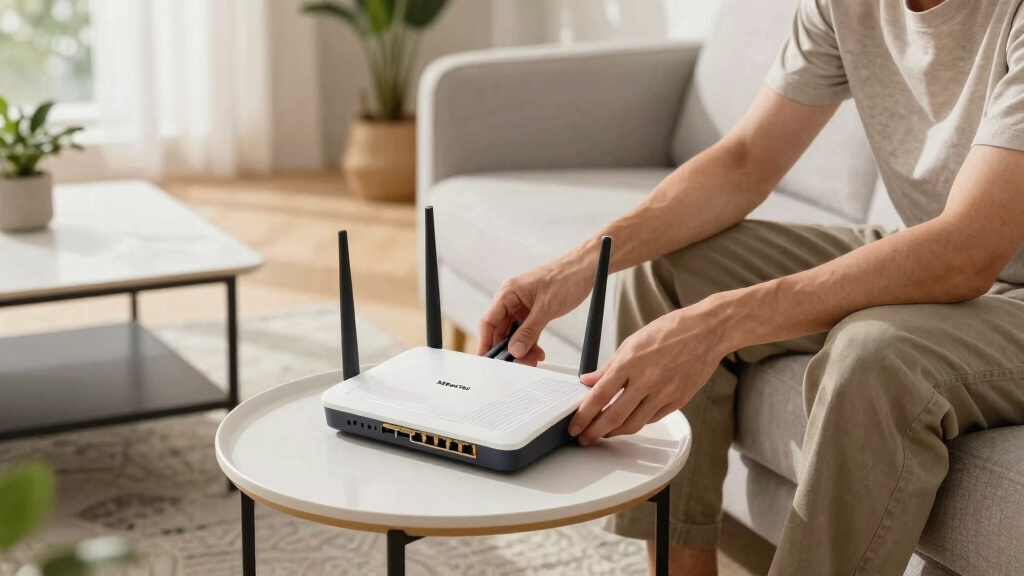
I ranked these routers by how well each one solves a recognizable home-networking need, rather than treating every MikroTik model as interchangeable. My highest priorities were wireless generation, wired connectivity, processing resources, expansion options, power features, and how much extra equipment a buyer would need. I also gave weight to clear listing information, because missing port, memory, or processor details make value harder to judge.
I placed an all-in-one Wi-Fi 6 model first because it fits more homes with fewer components. Wired routers scored well when they offered a distinct advantage, such as the hEX S model’s 2.5G SFP port and PoE out or the E50UG’s 512MB of RAM. I ranked older hardware lower when a newer model supplied a more useful connection standard or additional headroom. Price and ratings were not supplied consistently, so I did not invent comparisons based on either one.
RouterOS flexibility runs through the lineup, but I treated its learning curve as a genuine cost. A buyer who wants basic internet access with little configuration may be happier with a mainstream consumer mesh system. My rankings favor buyers who want VLANs, routing rules, VPN options, monitoring, or multiple network segments and are comfortable learning how MikroTik organizes those controls.
| MikroTik home router | Model | Router Type |
|---|---|---|
| MikroTik hAP ax S Wireless Rou | hAP ax S | Wireless home router |
| MikroTik hEX S | E60iUGS | Wired router |
| MikroTik hEX 5 Port Gigabit Ro | E50UG | Wired home or small-office router |
| MikroTik hAP ac3 | hAP ac3 | Wireless router and access point |
| MikroTik hEX RB750Gr3 5-Port E | RB750Gr3 | — |
Factors to Consider When Choosing Best MikroTik Home Routers
I would choose a MikroTik home router by starting with network shape, not the longest feature list. The right model depends on whether Wi-Fi belongs inside the router, how many wired devices need direct connections, and whether the internet or local backbone exceeds Gigabit speed.Integrated Wi-Fi or Separate Access Points
If I want one box to provide routing and wireless coverage, I would start with the hAP ax S and treat the hAP ac3 as the lower-cost fallback. Wi-Fi 6 gives the ax model a better foundation for a busy household. The hEX routers are better when I already own access points, want to place radios away from the modem, or plan to use multiple access points for broader coverage.
Gigabit Ports and Faster Uplinks
Five Gigabit ports are enough for many homes, but they do not make every model equally capable. The hEX S adds a 2.5G SFP port, giving it an advantage for a faster uplink, compatible fiber equipment, or traffic aggregated from several Gigabit clients. I would not assume that a faster port guarantees matching routed throughput under every RouterOS configuration; processor load, firewall rules, VPN encryption, and traffic patterns can change the result.
Processor, Memory, and Workload
Router resources matter more when I add VPN tunnels, detailed firewall rules, queues, monitoring, or several network segments. The E50UG’s 512MB RAM is a clearer advantage over the RB750Gr3’s 256MB for a new general-purpose wired setup. Missing CPU and memory figures on other listings do not prove poor performance, but they reduce my confidence when comparing demanding workloads.
RouterOS and Setup Expectations
I would buy MikroTik for configuration depth and network control, not for the simplest onboarding experience. RouterOS can support sophisticated home layouts, yet its terminology and number of settings can slow down a beginner. Before changing firewall, remote-access, or management settings, I would learn the default configuration, keep a backup, and document each change so I can recover from mistakes.
PoE and Expansion Features
PoE can simplify a tidy installation, but labels alone do not establish compatibility. The hEX S supplies PoE out, while the RB750Gr3 lists passive PoE input; those are different roles. I would match voltage, power budget, connector use, and supported PoE method with the attached device. USB, SFP, and microSD features deserve similar scrutiny because their value depends on the exact network plan.
Frequently Asked Questions
Which MikroTik router is best for a typical home?
I would choose the hAP ax S for a typical home because it combines Wi-Fi 6 and routing in one device. It asks for less extra hardware than the wired hEX models and provides a newer wireless standard than the hAP ac3. I would choose differently if the home already had separate access points or needed a 2.5G SFP uplink.
Do MikroTik hEX routers include Wi-Fi?
The hEX models in this comparison are wired-router choices, so I would plan on using a separate wireless access point or mesh system. That is an advantage when I want better access-point placement or independent upgrades, but it adds cost and configuration work. Buyers wanting an integrated radio should focus on the hAP ax S or hAP ac3.
Is the hAP ac3 still worth buying in 2026?
The hAP ac3 can still make sense at a lower price for a modest dual-band network, especially when five Ethernet ports are useful. I would not choose it over the hAP ax S at similar pricing because 802.11ac is older than Wi-Fi 6. Its appeal rests on value and a clearly stated port layout, not on having the newest radio technology.
What is the advantage of the hEX S 2.5G SFP port?
The 2.5G SFP port provides a faster potential uplink than a standard Gigabit connection. I could use it with compatible networking or fiber hardware to reduce a backbone bottleneck when several clients are active. Actual routing speed still depends on hardware capability, configuration, traffic, and transceiver compatibility, so I would verify those details for the intended setup.
Are MikroTik routers suitable for beginners?
A beginner can use a MikroTik router, but I would expect a steeper learning curve than with many consumer routers. RouterOS exposes detailed routing, firewall, VPN, and network-management controls that reward careful configuration. For basic Wi-Fi with minimal setup, another brand may feel easier; for learning and building a tailored home network, MikroTik offers far more room to grow.
Conclusion
For the broadest home use, I recommend the MikroTik hAP ax S because Wi-Fi 6 and integrated routing make it the most convenient starting point. For a modular premium network, I would choose the hEX S (2025) and add separate access points, gaining a 2.5G SFP uplink and PoE out. The E50UG is my wired-value recommendation for Gigabit homes, while the hAP ac3 suits buyers who find it well below the ax model’s price. I would reserve the RB750Gr3 for compact installations that specifically benefit from hardware IPsec, passive PoE input, or microSD expansion.