TL;DR
Cordless stick vacuums are battery-powered cleaners built for quick, convenient cleaning, with performance shaped by the floor head, power setting, battery, and dust-bin size. Before buying, check runtime with the powered head, tested pickup on your flooring, battery and parts availability, and how easily you can empty and maintain the machine.
A vacuum can promise an hour of cleaning and still run out before you finish the hallway. That gap often comes down to the power setting and attachment: a motorized floor head usually draws more energy than a small non-motorized tool.

Get cleaning gear delivered free with Prime
- Fast, free delivery on millions of items
- Prime Video, Amazon Music and more included
- Member-only deals all year
Cordless stick vacuums trade the reach and long cleaning sessions of a plug-in machine for quick starts, easier carrying, and simpler storage. They are powered cleaners with a long handle, a compact body, and usually a removable dust bin; many convert into handheld vacuums for stairs, sofas, and car seats.
This guide explains what they are, how to judge real-world cleaning and battery claims, and what to check before you buy. You’ll also see when a stick vacuum can serve as your main cleaner and when a larger corded machine may better suit your home.
Check runtime with the powered floor head and your expected power setting; “up to” runtime is a best-case figure.
Look for pickup tests on the flooring you own, since hard floors, low-pile rugs, and thick carpet can produce different results.
Compare dust-bin emptying, brush-roll cleaning, filter care, and replacement-part availability before choosing.
A removable battery can make longer sessions easier and extend useful life when compatible replacements are available.
A cordless stick vacuum can serve as a primary cleaner in some smaller homes or as a convenient second vacuum in larger ones.
What a cordless stick vacuum can do in your home
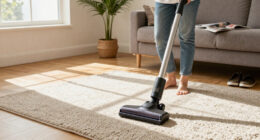
A cordless stick vacuum is a battery-powered floor cleaner with a long handle, compact body, and motorized floor head; many models detach for handheld jobs. Its main advantage is readiness: you can lift it from a wall mount and clean a trail of crumbs before it hardens into the kitchen floor.
That convenience comes with tradeoffs. Stick vacuums generally weigh and store less awkwardly than many full-size machines, but they tend to have smaller dust bins and more limited runtime or sustained suction. A small apartment with hardwood floors and a weekly rug pass may suit one well; a large house with thick carpet and daily pet fur may ask more than its battery and bin can deliver. These limits affect the rhythm of cleaning: frequent, small pickups make a short charge and small bin less noticeable, while a single whole-home session makes both constraints more consequential.
Imagine a handful of cereal scattered beside the breakfast table. A stick vacuum can sweep it up in seconds, then detach into a handheld unit to clear crumbs from a chair. For a full clean after a renovation, that same compact bin may fill quickly with fine dust, so you may need frequent emptying or a larger-capacity machine. Fine dust also makes bin size more than a convenience issue: as the bin fills, airflow can be restricted on some designs, and emptying it often can release dust back into the room.
Some current models add displays, debris sensors, anti-tangle brush rolls, removable batteries, or self-emptying docks. Each can help in a specific routine, but each can add cost, space needs, or maintenance. A removable battery matters most when one charge cannot cover your usual session; a self-emptying dock is useful when frequent bin emptying is a real burden, but it needs a place to live and may require bags or filter care. The useful question is not how many features a model lists; it is whether its design fits the floors and messes you actually have.
Products Worth Considering

Roborock Qrevo 2 Pro Robot Vacuum and Mop, 20,000 Pa Suction

Ring Battery Doorbell Pro, 1536p HD+ Head-to-Toe Video

Philips Hue Bridge Pro Smart Lighting Hub
As an affiliate, we earn on qualifying purchases.
How to judge cleaning power on your floors
Cordless stick vacuums clean well when their motor, airflow, floor head, and brush roll work together on your flooring. A strong motor alone does not guarantee good pickup: the head must move debris into the suction path without scattering it across a smooth floor or snagging on a thick rug. This is why a single suction or wattage figure is a poor shortcut: it describes one part of the system, while the head design and how the machine meets the floor determine whether that power reaches the debris.
On hard floors, a soft roller or well-designed head can pick up fine dust and larger crumbs without flinging them sideways. On carpet, a powered brush roll can agitate fibers and lift embedded debris, though the result depends on pile height and the machine. A vacuum that glides over low-pile hallway carpet might bog down or leave fur behind on a deep bedroom rug. A head that seals tightly against a smooth surface may improve fine-dust pickup, for example, but can be harder to push on dense carpet; designs that leave more clearance may move easily while letting some debris escape.
For a practical comparison, look for independent tests on the same kinds of flooring you own. If you have a low-pile runner and two cats, prioritize tested hair pickup and a brush roll that is easy to open and clean. If you mostly have tile and hardwood, check how the head handles flour-like dust and rice-sized debris. The match matters because a vacuum that performs well on the wrong surface can still leave you doing extra passes or using another tool, which erodes the convenience that justified choosing cordless.
Match the test to the mess. A demonstration with a few visible crumbs does not tell you how a machine handles fine dust, pet hair, or carpet embedded with grit. Where brand claims use different methods, compare under consistent conditions instead of treating a headline suction number as a complete performance score. Tests that use repeatable debris and report results by surface help reveal not just whether a model picks something up, but where it struggles and whether you would need to change settings or make extra passes.
Choose battery life that matches your cleaning routine
A cordless stick vacuum’s runtime depends on its model, battery condition, attachment, and power setting, so the “up to” figure is a best-case claim rather than a promise for everyday cleaning. A powered floor head or higher-power mode usually uses more energy than an energy-saving mode with a non-motorized tool. That difference changes the practical meaning of runtime: a long maximum may be useful for light dusting, yet say little about how many carpeted rooms you can clean before recharging.
Before you buy, ask how long the vacuum runs with its floor head attached on the setting you expect to use. If you clean a compact flat in short bursts, you may rarely need to think about charging. If you want to vacuum a multi-room home in one session, a short real-world run time can turn cleaning into a series of pauses. Consider the mode you will actually use, too: a lower setting may cover more area but take extra passes on dirtier carpet, while a high setting can finish stubborn spots faster at the cost of using the battery sooner.
For a 90-square-meter home with rugs in every room, check whether the battery is removable and whether compatible replacements or a second battery are available. A spare can make a long cleaning session more practical. It also matters years later, when battery wear may shorten a once-sufficient run time. Removability alone is not enough, though: confirm that the manufacturer or a reliable supplier sells compatible batteries, since a vacuum that cannot get a replacement may become unusable even if its other parts are sound.
Charging time and storage instructions vary, so check the manual for the model you choose. Follow its guidance on charging and storage, and factor replacement batteries into the long-term cost. A model with a modest runtime and an available battery can suit your needs better than one with a bigger headline number and no clear replacement option. Compare the cost of a spare against how often you would need it: paying for a second battery makes little sense for quick daily pickups, but can be worthwhile if charging breaks up a cleaning session you regularly need to finish at once.
Compare features that matter before you spend more
The best cordless stick vacuum is the one that suits your floors, cleaning time, storage, and maintenance budget. Premium features can make a daily routine smoother, but a screen or sensor does not make up for weak pickup on your carpet or a battery you cannot replace. Features have value when they solve a recurring problem; otherwise, their purchase price, storage needs, and eventual upkeep may outweigh the small convenience they add.
Use this comparison to focus on the details that affect real use. For example, a pet owner in a small home may value a washable filter and an easy-to-clear brush roll more than a self-emptying dock that takes up floor space. If the filter is washable, check how often it needs attention and how long it must dry before reuse, since a second filter may be useful if you clean frequently.
| Feature | What to check | Why it matters |
|---|---|---|
| Floor head | Pickup tests on your flooring | Hard floors and carpet need different head behavior |
| Battery | Runtime with powered head; replacement availability | Shows whether a session can finish and the machine can stay useful |
| Dust bin | Capacity and emptying design | A small or awkward bin means more stops and potentially messier disposal |
| Filtration | Filter details and whether the system is sealed | A filter label alone does not describe how the full machine retains fine particles |
| Maintenance | Brush access, filter care, replacement parts | Hair, clogged filters, and unavailable parts can add work or cost |
For someone with allergies, look for clear information on both filtration and whether the system is sealed, then keep up with filter and bin care. A filter captures particles, but leaks elsewhere in the airflow path can let some escape, so the whole system matters. For a quiet household, listen to the vacuum at the power setting you will use; high-power modes can sound noticeably louder. Compare warranty and parts support alongside price, since filters, batteries, and brush components can all carry ongoing costs.
Extra features still have a place. A debris sensor that adjusts suction can be convenient, especially when moving between a clean hard floor and a dirtier rug, but automatic boosts may shorten runtime. A wall mount can keep a narrow entryway tidy and make quick pickups easier because the vacuum is within reach. Just check what they add: an automated dock may need more space and its own upkeep, while a compact self-standing design could make more sense in a small apartment. The best comparison is the total routine: how much time the feature saves, and what space, consumables, or charging flexibility it asks in return.
Follow these steps to pick the right model
To choose a cordless stick vacuum, start with your flooring and cleaning routine, then compare real-world runtime, upkeep, and replacement support. A short checklist can keep a glossy feature list from distracting you from the jobs the machine must handle. Each step helps narrow the options by a practical constraint: the vacuum must clean your surfaces, last through your usual session, and remain manageable to use over time.
- List your floors and messes. Note carpet type, rugs, hard floors, pet hair, and the places you clean most. A home with two cats and a thick area rug needs different brush performance from a mostly tiled studio. Listing the actual messes helps avoid paying for a specialized head you rarely use while overlooking the surface that takes the most effort.
- Set a realistic cleaning session. Estimate how long it takes to clean your usual rooms, then check runtime with the powered floor head and likely power setting. Add time for furniture and repeat passes: if the estimate is too optimistic, the battery may run out before the work is done, even when the advertised maximum seems ample.
- Try the handling. If possible, lift the machine and test its balance, handle shape, trigger, and floor-head weight. A light body can still feel tiring if the weight sits far from your hand, especially when cleaning overhead. Handling affects how readily you will use the vacuum for small jobs, so comfort can matter as much as a modest difference in listed weight.
- Check the bin and brush. Look at how easily you can empty the bin and remove wrapped hair. If you have a shedding dog, a brush roll that opens without tools can save repeated fiddling with scissors. Check whether the bin can be emptied without touching debris, too; a quick cleanup can become unpleasant if dust spills or hair catches around the opening.
- Price the ongoing care. Check that filters, brush parts, and compatible batteries are available, then compare their prices and the warranty. A low purchase price can cost more over time if common parts are hard to find, while an expensive model may not be economical if its batteries and filters need frequent replacement.
Try the same checklist with two models in your budget. Say one has more attachments while the other has a replaceable battery and easier brush access. If you expect to keep the vacuum for years and regularly pick up long hair, those maintenance details may matter more than a tool you use once a season. A useful comparison weighs the cost and inconvenience you will face repeatedly against features you might only use occasionally.
A store demo can reveal balance and noise, but it cannot replace reliable tests on your carpet. Use both kinds of evidence: handling in person for comfort, and consistent performance results for pickup. Then weigh the answer against the space you can give its dock or mount. This keeps the choice grounded in both daily experience and cleaning results, rather than relying on a single appealing specification.
Know when a stick vacuum is enough—and when it isn’t
A cordless stick vacuum can replace a corded vacuum in some homes, especially smaller spaces with regular light-to-moderate cleaning. It may also work well as a second cleaner when you already own a larger machine for deep carpet cleaning or long sessions. The distinction is practical: as a primary cleaner, it needs to cover the home’s hardest jobs on its own; as a second vacuum, it only needs to make frequent, smaller jobs easier.
Consider a one-bedroom apartment with hardwood floors, a short runner, and a weekly routine. A stick vacuum that handles both the floor and sofa can be convenient as a primary cleaner. In a larger home with wall-to-wall carpet, muddy shoes, and several pets, a small bin and limited high-power runtime may make a corded or larger-capacity vacuum more practical. The latter home creates more debris and asks for more sustained cleaning, so repeated bin trips and charging breaks can outweigh the freedom from a cord.
Pet hair is a useful test case. Motorized or anti-tangle brush rolls can help collect hair, but they are not maintenance-free; long strands can still wrap around the brush. If you have a shedding retriever, check whether you can remove the roller easily and plan to inspect it regularly. Easy access changes the burden from a difficult repair into a small routine task, while a brush that traps hair can gradually reduce pickup and make the vacuum less pleasant to use.
For allergy concerns, consider the full filtration system and how you handle emptying and filter cleaning. A HEPA label or multi-stage filter is relevant, but a filter type does not by itself prove the whole vacuum retains fine particles. Clear product details, sealed-system information, and regular care help you make a more grounded choice. Emptying is part of that assessment: a bin that releases dust in a cloud can undermine the benefit of filtration for someone sensitive to airborne particles.
The right answer depends on your home, not the category name. If you can finish your normal cleaning session without running out of power or emptying the bin repeatedly, and the machine lifts the debris from your actual floors, a stick vacuum may be enough. If not, pair it with a larger machine or choose a different format. The deciding evidence is whether its limits interrupt your routine often enough to outweigh its quick access and easy handling.
Frequently Asked Questions
How long does a cordless stick vacuum run on one charge?
It varies by model, battery condition, attachment, and power setting. Check runtime with the powered floor head, since a maximum figure may come from an energy-saving mode or a non-motorized tool.
Can a cordless stick vacuum replace a corded vacuum?
It can in some smaller homes, particularly when floors are mostly hard and cleaning sessions are short. Extensive carpet, heavy debris, or long sessions may call for a corded or larger-capacity vacuum.
Are cordless stick vacuums good on carpet?
Some models pick up well on low- or medium-pile carpet, while others suit hard floors better. Look for independent tests on the carpet you have and check whether the motorized brush roll is easy to clean.
Do cordless stick vacuums work on pet hair?
Many have motorized or anti-tangle brush rolls, but hair can still wrap around a brush. If you have a shedding pet, check how easily you can remove and clean the roller.
Are they suitable for people with allergies?
Look for clear information about filtration and whether the system is sealed. The filter label alone does not describe the whole machine’s particle retention, and regular filter and bin maintenance also matters.
What should I check before buying one?
Match the model to your flooring, home size, usual session length, storage space, and budget. Compare powered-head runtime, tested pickup, bin design, handling, battery replacement, maintenance, and parts support.
Conclusion
Choose a cordless stick vacuum by testing its fit against your floors, normal cleaning time, and tolerance for emptying and upkeep. Check powered-head runtime, verified pickup, and the availability of batteries and parts before you pay extra for features.
The best model is the one that clears your everyday mess without turning a quick crumb cleanup into a battery countdown.