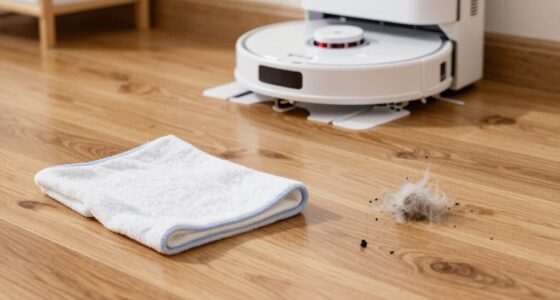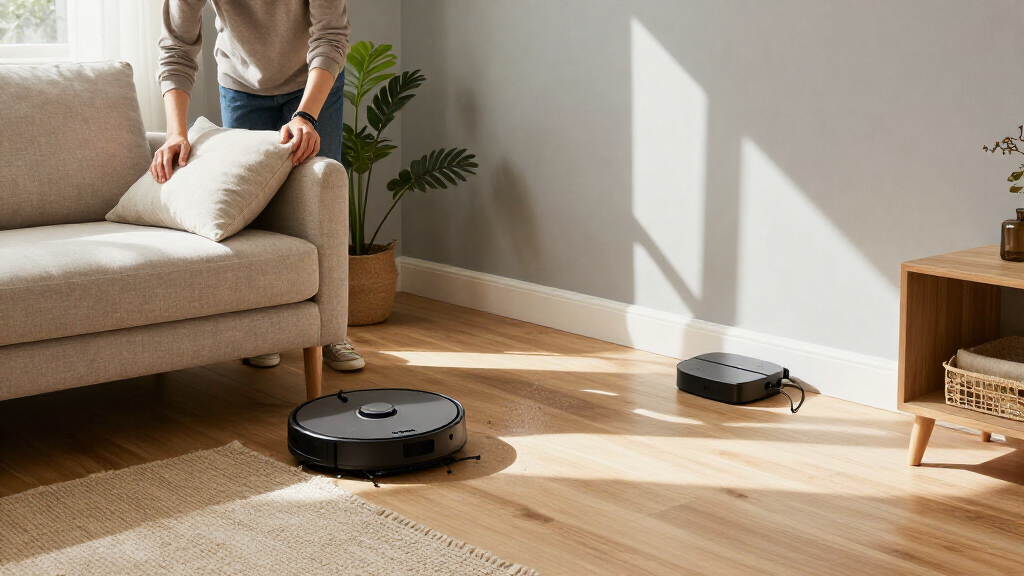

Choosing a robotic cleaner is less about whether one can move around your rooms and more about which chores you want it to take over. A dedicated robot vacuum handles dust, crumbs, and pet hair across floors with a simpler routine. A vacuum-mop combo adds a water tank and mop pad or roller so it can wipe hard floors during a scheduled run, but it asks you to manage water, dirty pads, and carpet boundaries.

Get cleaning gear delivered free with Prime
- Fast, free delivery on millions of items
- Prime Video, Amazon Music and more included
- Member-only deals all year

Roborock Q7 M5+ Robot Vacuum and Mop with Self-Emptying Dock
- ✔ Maximum suction: 10,000 Pa
- ✔ Navigation: PreciSense LiDAR
- ✔ Dust bag capacity: 2.7 L

iRobot Roomba 105 Vac Robot Vacuum
- ✔ Navigation: ClearView LiDAR
- ✔ Floor types: Carpet and hard floor
- ✔ Suction claim: Up to 70× more power-lifting suction, per product description

Tikom G8000 Max Robot Vacuum and Mop Combo
- ✔ Suction power: 5,000 Pa
- ✔ Profile height: 2.99 inches
- ✔ Dustbin capacity: 450 ml
The tradeoff is practical: pay for a more focused dry-cleaning tool or for an appliance that can cover two kinds of floor care. Neither category guarantees that you can stop cleaning manually; results depend on the model, layout, floor type, and how much debris is present. A vacuum is usually the safer choice for homes with lots of carpet, while a combo makes more sense when hard floors dominate and light, frequent wiping would save time.
At a Glance
| Criteria | Robot vacuum | Robot vacuum-mop combo | Winner |
|---|---|---|---|
| Dry debris and pet hair | Purpose-built for regular dry pickup; performance varies by model and brush design. | Also vacuums dry debris, but capability depends on the model and its vacuum design. | Depends |
| Hard-floor wiping | No wet-cleaning function; spills and sticky marks need another tool. | Adds scheduled wiping on suitable hard floors; does not replace scrubbing for stubborn messes. | B |
| Carpet compatibility | Usually the simpler fit for homes with rugs and carpet. | Needs reliable mop lifting or room and rug exclusion to avoid wetting carpet. | A |
| Routine and upkeep | Empty the dustbin or maintain the dock; no mop pad or water tank to manage. | Requires water handling and regular washing or replacement of mop parts, plus dustbin care. | A |
| Mixed-floor navigation | Can clean mixed floors without carrying mop hardware, though rugs still need sensible mapping. | Can cover both chores, but needs clear boundaries and may require more setup across rug-heavy rooms. | A |
| Purchase value | Often costs less when dry vacuuming is the main need. | Costs more; value depends on whether the wiping function gets regular use. | Depends |
Roborock Q7 M5+ Robot Vacuum and Mop with Self-Emptying Dock
The Roborock Q7 M5+ earns the top spot because it combines more of the jobs many households want from a robotic vacuum cleaner: mapped room cleaning, vacuuming, mopping, and less frequent dust disposal. Its PreciSense LiDAR supports room mapping, schedules, spot cleaning, and no-go zones, so we can set boundaries and recurring routines through the app. A 2.7 L dust bag in the dock also changes the maintenance rhythm compared with the Roomba and Tikom, both of which rely on onboard bins that we must empty ourselves.For mixed hard floors and carpet, the combination of vacuuming and a mop with three water-flow settings gives us more flexibility than the vacuum-only Roomba 105. Those settings matter because a single water level may not suit every surface or cleaning need; the tradeoff is that we must adjust them deliberately. Roborock also lists dual anti-tangle brushes intended to reduce hair wrap, a helpful design consideration for homes with shedding pets.This is the strongest fit when we want one mapped machine to handle several floor-care tasks and reduce routine bin work. Compared with Tikom, it offers a self-emptying dock and LiDAR mapping details, while Tikom is thinner and lists more ways to control it. The main constraints are 2.4 GHz Wi-Fi compatibility and manual adjustment of water flow for different mopping needs. We should skip it if our network is 5 GHz only or if we want a mop that needs no settings decisions.
Pros:
- Self-emptying dock uses a 2.7 L dust bag, reducing routine bin handling.
- PreciSense LiDAR mapping supports schedules, spot cleaning, and no-go zones.
- Vacuuming and mopping are combined, with three water-flow settings.
- Dual anti-tangle brushes are designed to reduce hair wrap.
Cons:
- App connectivity is limited to 2.4 GHz Wi-Fi.
- Water-flow settings require adjustment to suit different mopping needs.
Best for: Households seeking mapped vacuuming, adjustable mopping, and less frequent dustbin emptying, especially homes with a mix of hard floors and carpet.
Not ideal for: Buyers with only 5 GHz Wi-Fi or anyone who wants to avoid adjusting mopping settings and maintaining a dock system.
Bottom line: Choose the Roborock Q7 M5+ when we want the broadest floor-care mix and the lineup’s clearest reduction in everyday dustbin maintenance.
“Choose the Roborock Q7 M5+ when we want the broadest floor-care mix and the lineup’s clearest reduction in everyday dustbin maintenance.”
iRobot Roomba 105 Vac Robot Vacuum
The iRobot Roomba 105 Vac is our pick for buyers who want a mapped vacuuming routine without making mopping part of the decision. ClearView LiDAR maps the home for cleaning across carpets and hard floors, and the robot can return to its dock, recharge, and resume. That return-and-resume behavior is useful when a cycle needs more time than one battery charge allows; the provided description does not give a runtime figure, so we should compare its actual coverage needs with the stated 150-minute runtimes of Roborock and Tikom.Its main contrast with the Roborock is straightforward: Roomba does not mop and has no self-emptying bin, so we handle dirt disposal ourselves. In exchange, buyers focused on vacuuming can avoid choosing between mop modes and water-flow settings. The stated 70× power-lifting suction is presented as a comparison to an unspecified baseline, so we should treat it as a product claim rather than a direct measure that lets us rank it against the Pa figures listed for the other models.App, voice-assistant, and onboard-button controls give us several ways to start or manage cleaning. This model suits homes where accurate mapping and autonomous charging matter more than hands-off dust disposal or mopping. Compared with Tikom, it offers LiDAR mapping and resume cleaning in the supplied details; compared with Roborock, it gives up the mop and dock bag. We should pass if frequent manual bin emptying is inconvenient or if our cleaning plan includes damp mopping.
Pros:
- ClearView LiDAR supports mapped cleaning across carpet and hard floor.
- Returns to its dock, recharges, and resumes cleaning.
- Offers app, voice-assistant, and onboard-button controls.
- Designed for both carpets and hard floors.
Cons:
- Does not include mopping.
- Lacks a self-emptying bin, so dirt disposal is manual.
- Wi-Fi compatibility is limited to 2.4 GHz.
Best for: Buyers who want LiDAR-mapped vacuuming on carpets and hard floors, with automatic docking and resume behavior.
Not ideal for: Households that want a mop or self-emptying dust collection, or that use a 5 GHz-only Wi-Fi network.
Bottom line: Pick the Roomba 105 Vac if mapped vacuuming and recharge-and-resume matter more to us than mopping or reduced bin maintenance.
“Pick the Roomba 105 Vac if mapped vacuuming and recharge-and-resume matter more to us than mopping or reduced bin maintenance.”
Tikom G8000 Max Robot Vacuum and Mop Combo
The Tikom G8000 Max stands out for fitting into a different kind of routine: it is specified at just 2.99 inches high, vacuums and mops simultaneously, and supports app, remote, voice, and button controls. That thin profile can help it reach beneath beds, sofas, and cabinets where a taller robot may not fit. The four modes—spot, edge, zig-zag, and manual—also give us several ways to direct cleaning without relying on mapped room management.Compared with the Roborock Q7 M5+, Tikom does not list a LiDAR mapping system or a self-emptying dock. Instead, it keeps both dust and water onboard, with a 450 ml dustbin and 300 ml water tank. Those capacities make the robot self-contained, but they also mean we should expect more hands-on emptying and refilling than with Roborock’s dock setup. Its stated 5,000 Pa suction is below Roborock’s listed 10,000 Pa figure; those figures help distinguish the published specifications, though they do not alone establish real-world cleaning results.Tikom’s listed runtime of up to 150 minutes and automatic return to recharge are useful for routine coverage. The product description limits carpet suitability to short- and medium-pile carpets, making it a less flexible fit for homes with thicker pile than the Roomba or Roborock descriptions suggest. We should consider it when low clearance and simultaneous light floor care are priorities, and skip it if we want a dock to manage dust or need a robot explicitly specified for deep-pile carpet.
Pros:
- Slim 2.99-inch profile can reach beneath many low furnishings.
- Vacuums and mops simultaneously with a 300 ml water tank.
- App, remote, voice, and button controls plus four cleaning modes.
- Up to 150 minutes of runtime with automatic return to recharge.
Cons:
- 450 ml dustbin and 300 ml water tank require hands-on emptying and refilling.
- Carpet use is specified for short- and medium-pile carpets.
- No self-emptying dock or LiDAR mapping is listed.
Best for: Homes with low-clearance furniture and buyers who value simultaneous vacuuming and mopping plus several control methods.
Not ideal for: Households that want a self-emptying dock, detailed LiDAR room mapping, or support explicitly suited to thick-pile carpet.
Bottom line: Choose Tikom when low furniture clearance and flexible controls matter more to us than mapped rooms or a self-emptying dock.
“Choose Tikom when low furniture clearance and flexible controls matter more to us than mapped rooms or a self-emptying dock.”
As an Amazon Associate we earn from qualifying purchases.
Key Differences
The clearest divide is floor care. Both options can collect dry debris, but only the combo can wipe hard floors in the same cleaning routine. That extra function is useful for frequent light dust or paw marks; it is not a substitute for removing dried-on grime by hand. If most of your floors are carpet, the combo’s mop system adds little value and may complicate room planning.
The second difference is ownership effort. A dedicated vacuum generally has fewer parts to rinse or dry after a run. A combo saves the step of bringing out a separate mop, but only if you keep its pad and water system ready. The best value is the machine whose extra capability matches a chore you actually do often, not simply the one with more features.
Detailed Comparison
Dry debris and pet hair (moderate difference)
Neither category automatically wins at dry pickup: brush design, suction, bin capacity, and dock features vary more by model than by label. A dedicated vacuum keeps its purpose clear and may be the better shortlist for homes focused on hair and crumbs. A combo can still vacuum well, but compare independent pickup performance and brush maintenance rather than assuming the mop feature means weaker or stronger vacuuming. The gap is minor at category level and can be major between particular models.
Hard-floor wiping (Robot vacuum-mop combo wins — major)
The combo wins clearly because it has a mop system and the dedicated vacuum does not. For kitchens, entryways, and other hard-floor zones that collect light dust or footprints, scheduled wiping can reduce how often you mop manually. The gap is major if routine wiping is a real need, but minor if you already mop infrequently. A robot pad is generally for maintenance cleaning; dried spills and sticky patches may still call for hands-on work.
Carpet and rug use (Robot vacuum wins — moderate)
The dedicated vacuum is the simpler fit in a carpet-heavy home. It can cross between carpet and hard floor without a wet pad in the picture. A combo can work well with rugs when it reliably lifts its mop or lets you set no-mop zones, but those protections differ by model and require setup. If the home has thick rugs or many small mats, the gap is moderate to major: check the exact model’s carpet handling before paying extra for mopping.
Routine upkeep (Robot vacuum wins — moderate)
The dedicated vacuum wins on simplicity. Both machines need dustbin or dock care, brush checks, and occasional sensor cleaning, but a combo also needs water refills and a pad or roller cleaned and dried. Some docks automate parts of that work, usually at higher cost, but they do not remove all upkeep. The difference is moderate and matters most to people who want to schedule a run and avoid chores afterward.
A dedicated vacuum has an easier job across rugs and hard floors because it only has to handle dry cleaning. A combo offers broader coverage, but must recognize where wiping is appropriate or rely on user-defined zones and mop lifting. Good mapping can make that reliable, while a poor setup can leave rugs damp or areas skipped. The category gap is moderate; model-specific navigation and boundary controls matter more than the presence of a mop alone.
Purchase value (major difference)
There is no universal price winner. The dedicated vacuum usually offers better value when the household wants dependable dry pickup at a lower spend. Paying more for a combo is worthwhile when hard floors are extensive and frequent light wiping would replace a recurring manual task. If mopping would be an occasional novelty, the additional price and maintenance are hard to justify. The gap depends on usage rather than feature count.
Robot vacuum: Pros and Cons
Pros:
- Focused dry-cleaning setup suits regular vacuuming.
- Typically simpler to maintain, with no mop pad or water tank.
- Often a more economical choice for carpet-heavy homes.
Cons:
- Cannot wipe hard floors.
- Does not consolidate vacuuming and routine mopping into one device.
- Still requires model-by-model checks for hair pickup, navigation, and dock features.
Robot vacuum-mop combo: Pros and Cons
Pros:
- Combines dry pickup with light hard-floor wiping.
- Can reduce the number of separate cleaning routines.
- A good match for homes where hard floors need frequent maintenance.
Cons:
- Costs more than a comparable focused vacuum in many lineups.
- Adds water and mop-part upkeep.
- Rugs need effective lifting or no-mop boundaries, depending on the model.
Who Should Choose What
Choose Robot vacuum if:
- Most of your floor area is carpet or rugs.
- Your main problem is dust, crumbs, or pet hair and you already mop separately.
- You prefer less routine maintenance and want to spend on vacuuming performance.
Choose Robot vacuum-mop combo if:
- Hard floors make up most of your home.
- You want frequent light wiping alongside vacuuming.
- You will maintain the pad or choose a model with dock features that reduce that work.
Skip both if: Your floors need frequent heavy scrubbing, your layout prevents reliable navigation, or you expect a robot to replace hands-on cleaning entirely.
Value for Money
Pay more for a combo only when its mop function addresses a repeated chore. In a mostly hard-floor home, regular automated wiping can make the higher price worthwhile, especially if the robot can clean the right zones and its maintenance fits your routine. Look closely at the pad system, rug handling, dock capabilities, and replacement-part costs before deciding.
For carpet-heavy homes, occasional mopping, or buyers primarily seeking pet-hair pickup, put the budget toward a dedicated vacuum with the brush, mapping, and bin or dock setup that suits the household. A less expensive category can be the better value when its one job is the job you need done.
Final Verdict
Choose a dedicated robot vacuum for carpet-heavy homes, dry debris, and lower-maintenance ownership. Choose a vacuum-mop combo when hard floors dominate and routine light wiping is valuable enough to justify extra upkeep and cost. The biggest deciding factor is how often you will use the mop: if the answer is weekly or more, a capable combo may earn its premium; if not, buy the stronger vacuum for your budget.
For most households with mixed floors and no strong mopping need, the dedicated vacuum is the more dependable value. For homes built around hard floors, the combo is the more useful purchase, provided its rug controls and maintenance match your layout.
Frequently Asked Questions
Can a robot vacuum-mop replace a regular mop?
It can handle routine light wiping on suitable hard floors, but it is not a full substitute for scrubbing dried spills, edges, or heavily soiled areas. Treat it as maintenance cleaning.
Is a combo worth it in a home with rugs?
It can be, if hard floors still need frequent wiping and the model lifts its mop or supports reliable no-mop zones. In a rug-heavy home, a dedicated vacuum is usually the simpler fit.
Which type is better for pet hair?
Compare the specific models’ brush design, hair handling, bin capacity, and maintenance. A dedicated vacuum is a natural starting point when hair pickup is the main job, but category alone does not guarantee better performance.
Do robot vacuum-mop combos need more maintenance?
Usually. Along with dustbin and brush care, expect to refill water and clean or replace the mop pad or roller. A dock may automate some steps, but check what it handles.