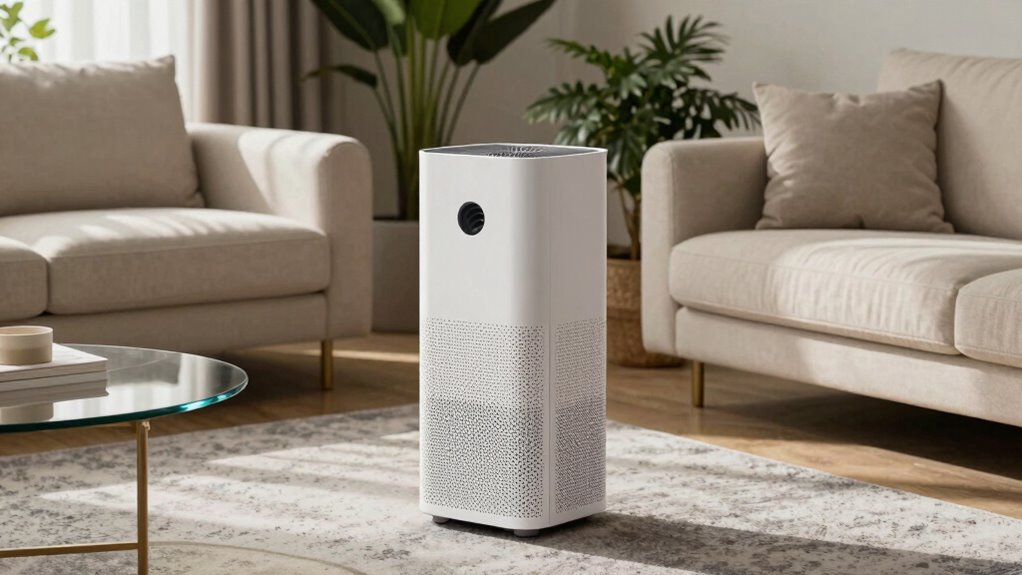

To size your air purifier correctly, start by measuring your room’s exact square footage and consider your air quality needs. Look for a unit with a CADR rating appropriate for your space and check its ACH to ensure it can filter the air multiple times per hour. Avoid guessing or choosing based solely on capacity; the right fit depends on precise measurements and understanding those ratings. Keep exploring to learn more about selecting and using your purifier effectively.
Key Takeaways
- Measure your room’s length, width, and height to calculate total volume for accurate purifier sizing.
- Use a CADR rating that matches your room size and pollution levels for effective air cleaning.
- Determine desired ACH (air changes per hour) based on room use and occupancy to select the right purifier capacity.
- Consider air quality sensors and real-time data to refine purifier choice and placement.
- Avoid guessing; match purifier specifications—CADR, ACH, and filter power—with your room’s size and needs.
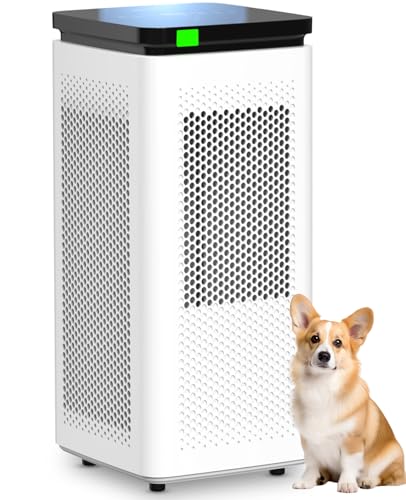
Air Purifiers for Home Large Rooms up to 3500 Ft², H13 True HEPA 0.1 Micron 99.97% Filtration with Carbon Filter, 235 CFM CADR, Removes Allergens, Pet Odor, Smoke, VOCs, 30dB Sleep Mode, PM2.5 Display
H13 True HEPA + Carbon Filter – Removes Allergens, Odors & Smoke: Equipped with H13 True HEPA (0.1μm,…
As an affiliate, we earn on qualifying purchases.
As an affiliate, we earn on qualifying purchases.
Why Correctly Sizing Your Air Purifier Matters for Your Space

Choosing the right size air purifier is essential because an undersized unit won’t effectively clean your space, leaving pollutants behind. When your purifier is too small, it struggles to improve air quality, allowing allergens, dust, and other particles to accumulate. Properly sized units ensure better air circulation and filtration, leading to healthier indoor environments. Additionally, correctly sizing your purifier enhances energy efficiency; a unit that matches your room size operates at its best without wasting electricity. Overworking a small purifier or underusing a large one both lead to inefficiency and higher costs. By selecting the right size, you ensure your air purifier works effectively to improve air quality while minimizing energy consumption, saving you money and providing cleaner, healthier air. Understanding room size is a key step in choosing the optimal air purifier for your needs, as room size measurement directly impacts the effectiveness of filtration. Moreover, accurate room measurement helps prevent inefficient energy use, ensuring your investment in air quality is both effective and economical. Correct sizing also helps avoid wasted resources and ensures you get the most out of your air purifier. Properly assessing your space can also prevent overbuying or underbuying, which can lead to unnecessary expenses or inadequate purification.

Amazon Smart Air Quality Monitor – Know your air, Works with Alexa
Know your air – Amazon Smart Air Quality Monitor makes it easy to understand what’s in your indoor…
As an affiliate, we earn on qualifying purchases.
As an affiliate, we earn on qualifying purchases.
How to Measure Your Room and Air Quality Needs
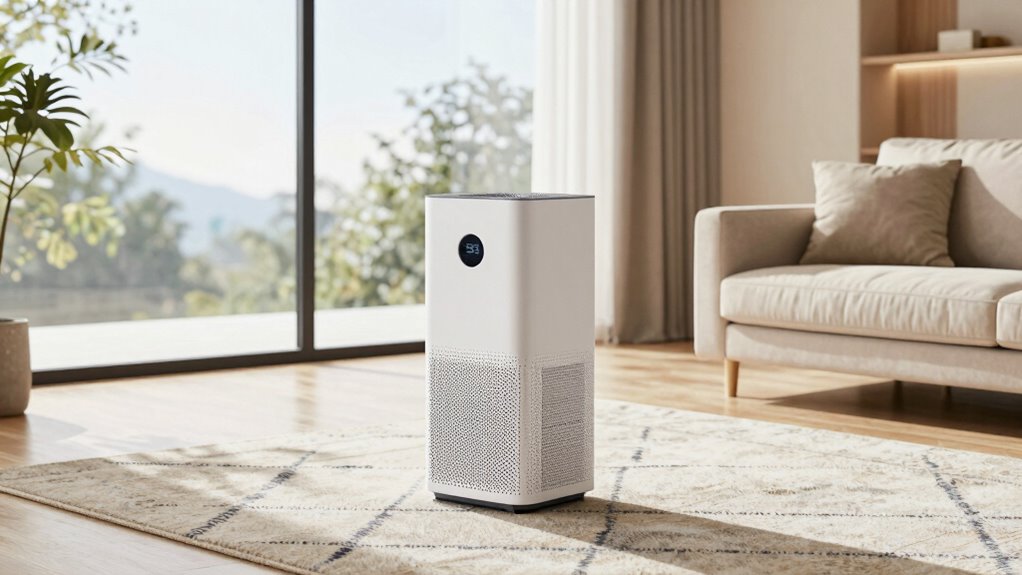
How do you determine the right size air purifier for your space? First, measure your room’s square footage—length times width. Consider placing air quality sensors to monitor your current indoor air quality, especially if you have indoor plants, which can affect humidity and pollutants. Take note of these factors to decide on the purifier’s capacity. Keep in mind:
Measuring your room and monitoring air quality helps select the right air purifier size.
- Room size and layout
- Presence of indoor plants or pets
- Existing air quality sensor readings
- Specific air pollutants you want to target
- Volume of daily activities that generate dust or VOCs
- Home theater projectors and their impact on indoor air quality, especially if they generate heat or dust during operation.
- Additionally, consider air circulation patterns to ensure even distribution of purified air throughout the space, which can be optimized using European cloud solutions for smart ventilation controls. Understanding air quality dynamics can help you choose the most effective purifier for your needs. Incorporating proper room airflow strategies can further enhance overall air purification efficiency.

Air Purifiers for Home with H13 Quiet HEPA Filter Up to 1076 Ft² for Pet Hair, Odors, Pollen, Smoke, Compact Air Cleaner with 3 Speeds, Timer, Aroma Quiet 360°Intake Filter, White
Effortless Operation: Simplified control panel with intuitive design makes it easy to operate. No complicated setup—just one tap,…
As an affiliate, we earn on qualifying purchases.
As an affiliate, we earn on qualifying purchases.
Understanding CADR and ACH Ratings for Air Purifiers
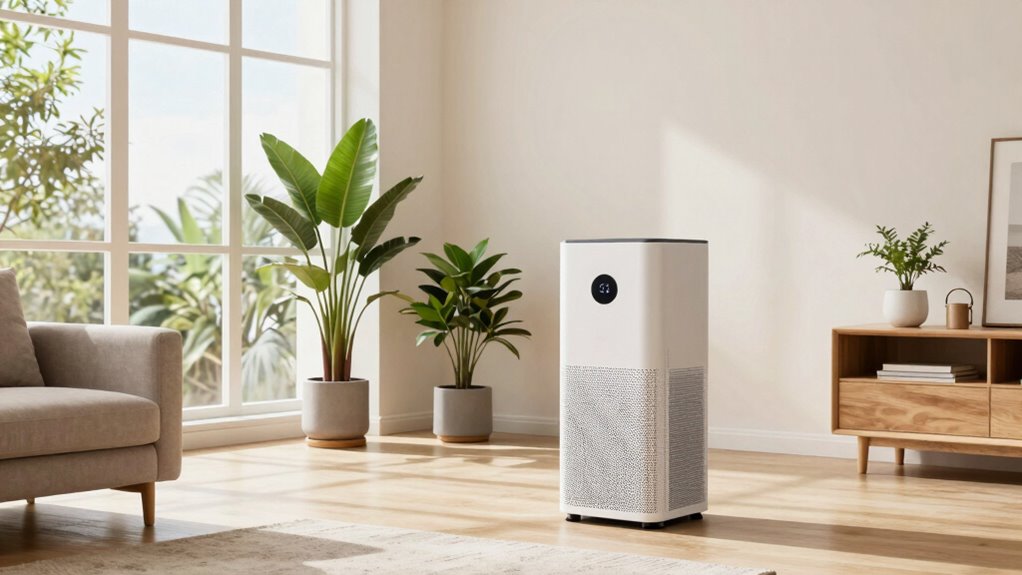
Once you’ve measured your room and assessed your air quality needs, understanding the ratings that indicate an air purifier’s effectiveness becomes key. CADR ratings (Clean Air Delivery Rate) show how much air an purifier can clean per minute, while ACH ratings (Air Changes per Hour) indicate how many times the device can filter the entire room’s air each hour. Higher CADR ratings mean faster removal of pollutants like dust and smoke. ACH ratings help you determine if the purifier can handle your room size effectively. Here’s a quick comparison:
| Rating Type | What It Measures | Ideal For |
|---|---|---|
| CADR | Speed of air cleaning | Pollutant removal efficiency |
| ACH | Frequency of complete air exchange | Room size compatibility |
Matching these ratings to your room ensures exemplary air quality.

LEVOIT Air Purifiers for Bedroom Home Dorm, AHAM Verified, 3-in-1 Filter Cleaner With Aroma Pad, Filters Smoke, Allergens, Pet Dander, Odor, Dust, Office, Desktop, Core Mini-P, White
𝗥𝗘𝗠𝗢𝗩𝗘 𝗣𝗢𝗟𝗟𝗨𝗧𝗔𝗡𝗧𝗦 𝗘𝗩𝗘𝗥𝗬𝗪𝗛𝗘𝗥𝗘: Our Pre-Filter and Main Filter capture allergens as lint, hair, pet dander, pet hair, fine…
As an affiliate, we earn on qualifying purchases.
As an affiliate, we earn on qualifying purchases.
How to Choose the Right Air Purifier Size Based on Your Room
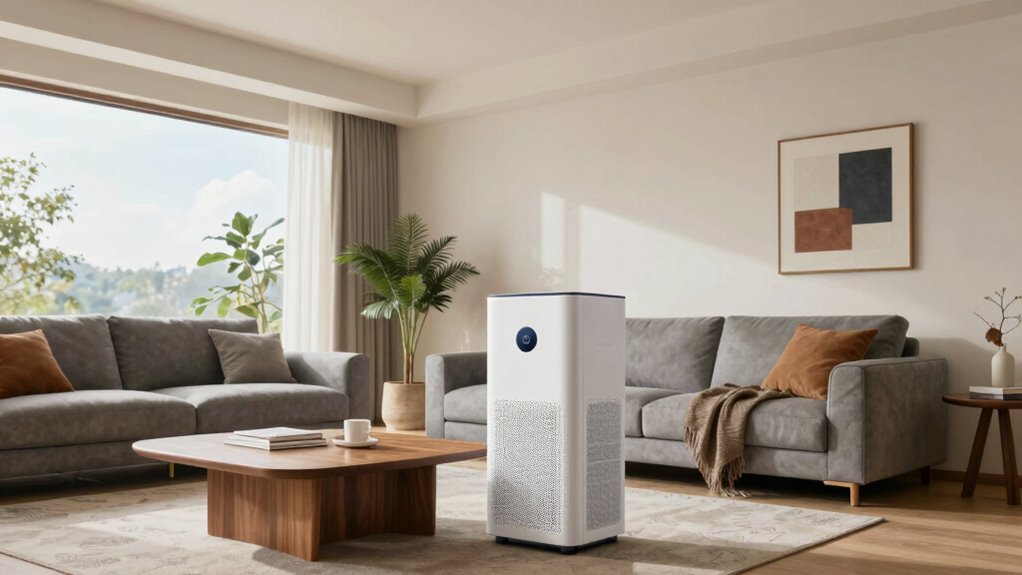
To guarantee your air purifier effectively cleans your space, you need to select a model that matches your room size. Measure your room accurately, and consider using air quality monitors for real-time data. Look for purifiers with CADR ratings suited to your room’s square footage. Keep in mind that larger rooms need higher capacity units. To help narrow your choice, consider these factors:
- Room size and layout
- Air quality monitor readings
- Purifier capacity and CADR
- Room decor and placement options
- Noise levels and energy efficiency
Additionally, understanding air filtration efficiency can help you select a unit that provides optimal purification. Choosing the right size ensures ideal purification and maintains a healthy environment. Properly sized units improve air quality without unnecessary noise or energy use, making your space more comfortable and safer.
Common Mistakes to Avoid When Picking Your Air Purifier

Many people make mistakes when choosing an air purifier that can reduce its effectiveness. You might ignore your room size, forget to take into account air change rates, or overlook filter power. Avoiding these errors helps make certain you pick the right device for your needs. Additionally, understanding your home’s backup power options can ensure consistent operation during outages. Using a monitoring system can help you keep track of air quality and filter performance, ensuring your purifier operates optimally. Having a properly sized air purifier can also improve air quality and energy efficiency in your space. Proper sizing involves considering factors like air purifier maintenance to sustain optimal performance over time. Regular maintenance and understanding air quality metrics can further enhance your device’s effectiveness.
Ignoring Room Size
Ignoring room dimensions and volume is crucial because an inaccurate assessment can lead to choosing an air purifier that’s either underpowered or unnecessarily large. If you select a unit that’s too small, it won’t improve your air quality efficiently. Conversely, a too-large purifier can be costly and unnecessary. To get it right, consider these common pitfalls:
- Overlooking room dimensions and volume
- Assuming all air purifiers handle the same space
- Ignoring manufacturer recommendations for room size
- Relying solely on CADR ratings without context
- Failing to match purifier capacity with your specific air quality needs
- Neglecting to assess room size compatibility to ensure optimal performance. Additionally, understanding the air exchange rate can help determine how quickly a purifier can clean the air in your space. Properly measuring your space and understanding your needs can prevent ineffective purchases and ensure you get the best air quality results. Paying attention to room airflow patterns can also enhance purification efficiency and overall indoor air quality. A comprehensive understanding of air purifier specifications can help you make more informed decisions and avoid costly mistakes.
Overlooking Air Changes
Failing to take into account air changes per hour (ACH) when selecting an air purifier can lead to inadequate air cleaning. Ventilation standards emphasize the importance of proper air change rates to maintain healthy indoor air quality. Without considering air change significance, you may choose a purifier that doesn’t keep up with your room’s needs, leaving pollutants and allergens lingering. Achieving the right ACH ensures your air purifier removes contaminants efficiently and maintains fresh air levels. Remember, higher ACH rates are essential in spaces with higher occupancy or pollution sources. Neglecting this factor can result in overestimating your purifier’s effectiveness, leading to wasted money and continued air quality issues. Always check the recommended ACH for your room size and specific needs to make an informed choice.
Neglecting Filter Power
When choosing an air purifier, it’s essential to pay attention to the filter’s power and efficiency; overlooking this aspect can seriously undermine your air quality. A filter with high efficiency captures more pollutants, ensuring cleaner air. Additionally, consider the filter lifespan, as a short lifespan means frequent replacements and higher costs. Neglecting filter power can lead to poor performance, regardless of the purifier’s capacity. Keep in mind:
- Poor filter efficiency reduces air purity
- Short filter lifespan increases maintenance
- Weak filters struggle with pollutants
- Overestimating filter capacity wastes money
- Ignoring filter quality compromises health
Choosing a model with a durable, efficient filter guarantees better indoor air quality over time. Prioritize filter power to maximize your purifier’s effectiveness and longevity.
Tips for Using Your Air Purifier Effectively in Any Room
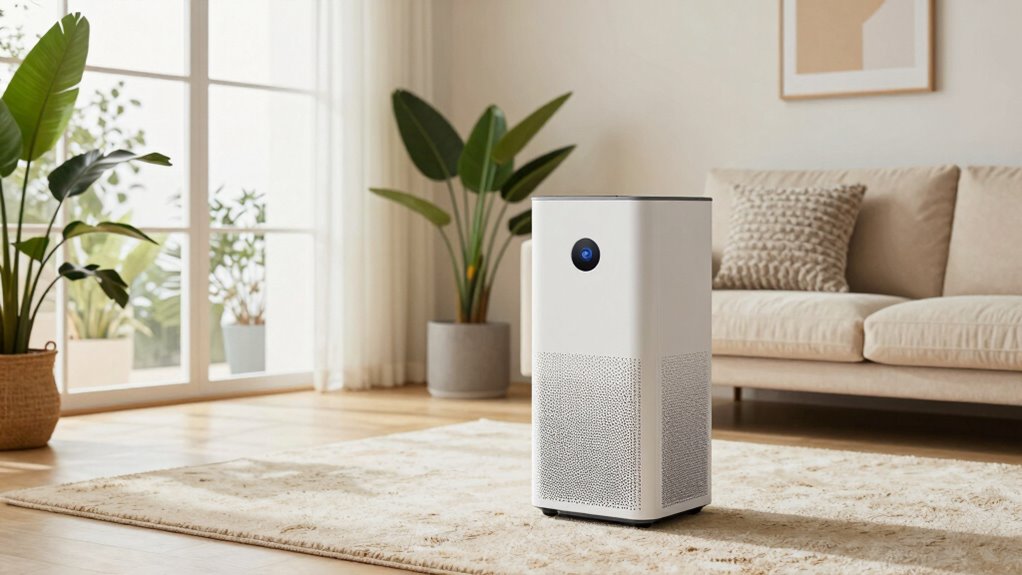
To get the most out of your air purifier, focus on proper placement—avoid corners and obstructions that block airflow. Make sure to perform regular filter maintenance so your device stays efficient and effective. Following these tips guarantees cleaner air in any room you use it in, and integrating smart technology can help you monitor and optimize its performance for long-term health. Additionally, understanding the importance of airflow can help you achieve the best results from your device by ensuring air circulates freely around the room. Proper placement and airflow management are crucial for maximizing the efficiency of your air purifier, especially when considering outdoor kitchen setups where fresh air exchange is key. Awareness of filtration systems can also enhance your ability to select the right device for your space.
Proper Placement Strategies
Proper placement of your air purifier is essential for maximizing its effectiveness. To improve air quality and guarantee ideal air circulation, position it in a central location away from obstructions. Keep it at least a few feet from walls or furniture to allow unrestricted airflow. Place it near sources of pollution, like busy hallways or kitchens, for quicker pollutant removal. Avoid corners or enclosed spaces where air circulation is limited. Consider using a slightly elevated surface to prevent dust and debris from settling underneath. Remember, the right placement helps your purifier work more efficiently, reducing airborne pollutants faster. By following these tips, you’ll get the most out of your device and enjoy cleaner, healthier air every day.
Regular Filter Maintenance
Regular filter maintenance is key to guaranteeing your air purifier works efficiently and provides the clean air you need. Over time, filters accumulate dust, allergens, and pollutants, which diminishes their effectiveness. To maximize filter lifespan, follow the manufacturer’s recommended replacement schedules—usually every 6 to 12 months. Regularly checking the filter status helps you catch when it’s time for a change, preventing strain on the motor and maintaining ideal air quality. When filters become clogged, your purifier has to work harder, increasing energy use and decreasing air cleaning performance. Keep a maintenance calendar, and replace filters promptly. This simple habit keeps your air purifier running smoothly, ensures fresh air, and extends the device’s lifespan. Consistent filter care is essential for effective, long-term use.
Frequently Asked Questions
How Often Should I Replace the Air Purifier Filters?
You should replace your air purifier filters based on the filter lifespan provided by the manufacturer, typically every 6 to 12 months. Pay attention to replacement indicators such as a decrease in airflow or a change in filter color. Regularly checking these signs guarantees your purifier remains effective. Don’t wait until it’s visibly dirty or the device signals—timely replacements keep your air clean and your purifier working efficiently.
Can an Air Purifier Be Too Large for a Room?
Yes, an air purifier can be too large for a room. When the capacity exceeds the room size, it may cycle on and off frequently, wasting energy and reducing efficiency. To guarantee maximum performance, match the air purifier’s capacity to your room size. Proper room size matching helps maintain consistent air cleaning, prolongs filter life, and provides better overall air quality. Always choose an air purifier suited to your space.
Do Different Filters Target Specific Pollutants Effectively?
Yes, different filters target specific pollutants effectively. HEPA filters excel at capturing airborne particles, guaranteeing high HEPA efficiency for dust and allergens. Activated carbon filters, on the other hand, combat odors and volatile organic compounds, improving odor removal. Combining these filters enhances overall air quality. Keep in mind, a filter’s lifespan varies based on pollutant levels, so regular maintenance ensures consistent performance. This way, your purifier tackles a broad range of indoor pollutants efficiently.
Is Noise Level a Concern When Choosing a Size?
Yes, noise level is a concern when choosing an air purifier size. Higher sound levels can cause sleep disturbance or discomfort, especially if you plan to use it in your bedroom. Look for models with quiet or sleep modes to minimize sound during rest. Consider the purifier’s decibel rating and how it might affect your environment, ensuring itwon’t disrupt your sleep or daily activities.
How Does Room Layout Affect Purifier Performance?
Room layout greatly impacts your air purifier’s performance. Airflow patterns created by furniture placement can block or divert clean air, reducing efficiency. To optimize, arrange furniture to allow unobstructed airflow around the purifier. Place it centrally or near pollution sources, avoiding corners and tight spaces. This setup ensures better circulation, maximizes filtration, and keeps your air cleaner and healthier.
Conclusion
By balancing size, skills, and smart choices, you’ll breathe better and beat airborne annoyances. Don’t guess; get precise, measure meticulously, and match your air purifier’s power to your space. With mindful monitoring and maintenance, you’ll master your environment and maximize freshness. Remember, selecting smartly, sizing specifically, and using your purifier diligently transforms your room into a haven of health and harmony—making every breath a breeze.