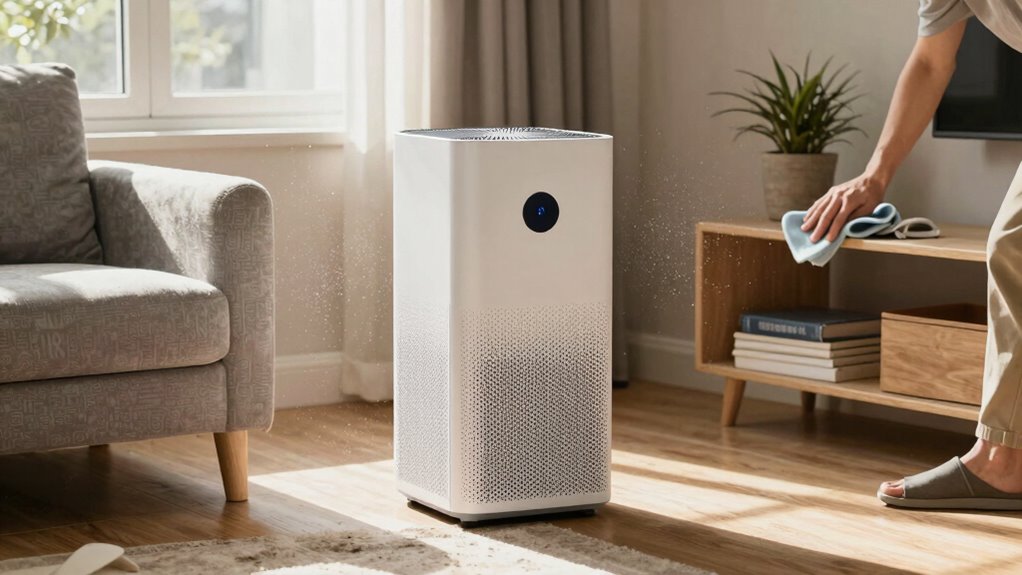
To make your air purifier work its best, you need better cleaning habits to reduce the pollution it targets. Regular dusting, vacuuming, and washing bedding lower surface allergens and prevent them from settling or becoming airborne. Fixing leaks, ventilating well, and using natural cleaners also cut down mold, smoke, and chemicals. These practices lighten the purifier’s load, helping it operate longer and more efficiently. Keep going to discover how to boost your indoor air quality even further.
Key Takeaways
- Regular cleaning reduces surface allergens, decreasing the burden on air purifiers to filter airborne particles.
- Cleaning prevents allergen buildup and disturbance, helping air purifiers operate more efficiently.
- Removing sources like mold, dust, and pet hair minimizes pollutants that air purifiers need to filter.
- Proper cleaning limits allergen re-entry into the air, supporting cleaner indoor environments.
- Combining cleaning with air filtration maximizes overall indoor air quality improvements.
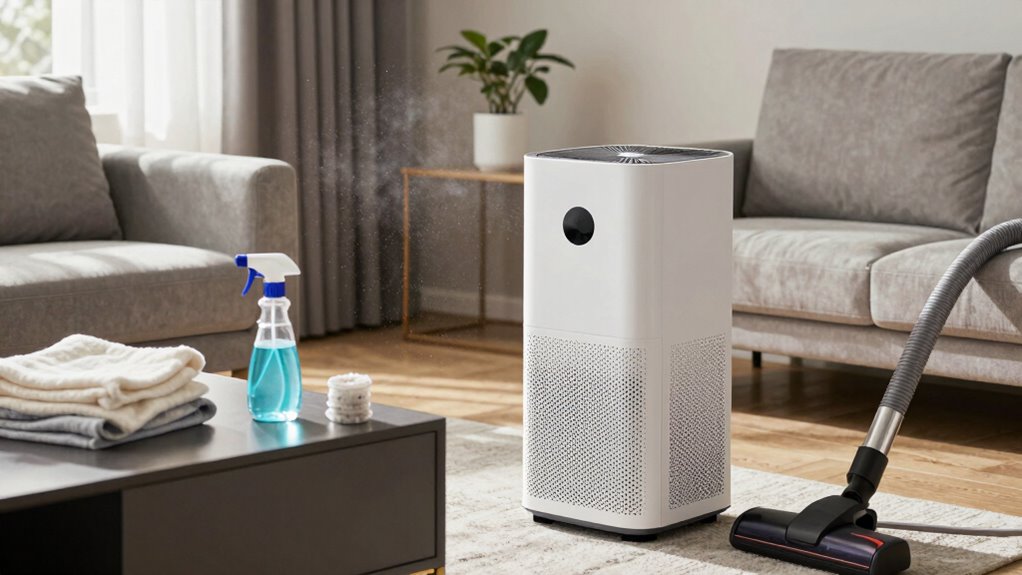
Air purifiers can considerably improve indoor air quality, but their effectiveness depends largely on your cleaning habits. While these devices are designed to filter out pollutants, dust, pet dander, and other allergens, they aren’t magic bullets. To truly benefit from an air purifier, you need to support it with consistent, good cleaning practices. This combination helps guarantee that the indoor environment remains healthy and comfortable.
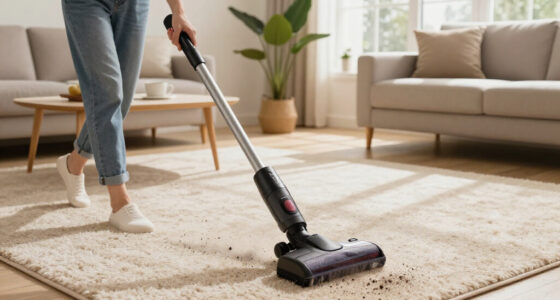
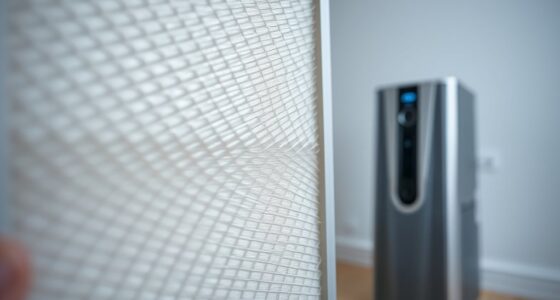
One of the main reasons you need better cleaning habits alongside your air purifier is to enhance allergen reduction. Air purifiers, especially those with HEPA filters, are excellent at trapping airborne particles. However, if dust or pet hair accumulates on surfaces, the purifier works harder to keep the air clean but doesn’t eliminate the sources of allergens. Regular dusting, vacuuming with a HEPA-filtered vacuum, and cleaning surfaces prevent these allergens from settling and re-entering the air. Without these steps, your purifier might be constantly battling a high load of debris, reducing its overall efficiency and lifespan.
Regular cleaning reduces allergen buildup, helping your air purifier work more efficiently and last longer.
Indoor air quality isn’t only about filtering the air; it’s also about minimizing the sources of pollution. For example, smoking indoors, using harsh cleaning chemicals, or neglecting to remove mold can all undermine your efforts. Cleaning habits need to target these issues directly. Using natural cleaning products, fixing leaks to prevent mold growth, and ensuring proper ventilation are all essential parts of maintaining good indoor air quality. When you keep these habits in check, your air purifier can do its job more effectively, resulting in cleaner, healthier air. Recognizing pollutant sources within your home is crucial for a comprehensive approach to air quality. Additionally, understanding the importance of air quality management helps you identify and control the various factors that contribute to indoor pollution. Incorporating ventilation strategies can also significantly reduce indoor contaminants, making your cleaning efforts even more effective.
It’s also important to recognize that your cleaning routine influences allergen levels on surfaces, which can contribute to airborne allergens when disturbed. Vacuuming carpets and upholstery regularly, washing bedding frequently, and decluttering can reduce the amount of dust and pet dander that become airborne during daily activities. These efforts lessen the burden on your air purifier’s filters, helping them last longer and perform better. In addition, using air quality monitoring devices can help you better understand the levels of pollutants in your home and adjust your cleaning routines accordingly.
Additionally, understanding the importance of home environment management can support your efforts in maintaining better indoor air quality. Ultimately, a combination of good cleaning habits and an air purifier creates a more extensive approach to indoor air quality. While the purifier handles airborne particles, your efforts in cleaning surfaces, controlling moisture, and reducing pollutant sources cut down on the overall allergen load. This synergy not only improves allergen reduction but also makes your home a healthier space to breathe. Your ongoing commitment to cleaning complements your investment in an air purifier, ensuring you get the best results in your quest for cleaner indoor air.

LEVOIT Air Purifier for Home Allergies and Pets Hair Smokers in Bedroom, H13 True HEPA Filter, 24db Filtration System Cleaner Odor Eliminators, Remove 99.97% Dust Smoke Mold Pollen, Core 300, White
- Certified for Performance and Efficiency: AHAM Verifide accredited for reliability
- Powerful Air Cleaning: 56W motor with 143 CFM CADR
- Effective for Large Spaces: Covers up to 1073 ft²
As an affiliate, we earn on qualifying purchases.
As an affiliate, we earn on qualifying purchases.
Frequently Asked Questions
How Often Should I Replace My Air Purifier Filters?
You should replace your air purifier filters based on the recommended replacement frequency, which varies by model and usage. Typically, you need to check the filter maintenance schedule every 3 to 6 months. If you notice reduced airflow or lingering odors, it’s time for a replacement. Regularly monitoring your filters guarantees peak performance, improves air quality, and extends the lifespan of your device.
Can Cleaning Habits Completely Eliminate Indoor Air Pollutants?
Cleaning habits alone can’t completely eliminate indoor pollutant sources, but they can dramatically reduce them—like clearing an endless cloud of dust and VOCs. A diligent cleaning routine impacts airborne pollutants by removing dust, mold, and pet dander, making your air purifier’s job easier. Think of it as clearing the runway for cleaner air; combined efforts create a healthier environment, though some pollutants may still linger stubbornly.
Do Air Purifiers Work Effectively in Large Open Spaces?
Air purifiers can work effectively in large open spaces if you choose one with adequate purifier coverage. For open spaces, look for models designed for bigger areas, as smaller purifiers may not circulate air efficiently. You may need multiple units or a high-capacity purifier to guarantee proper air cleaning. Keep in mind, proper placement and supporting cleaning habits boost the purifier’s efficiency in maintaining clean indoor air.
Are There Specific Cleaning Products That Improve Air Purifier Efficiency?
Sure, using “magic” cleaning solutions might seem tempting, but they won’t magically boost your air purifier’s efficiency. Instead, focus on cleaning products designed for your filter type and confirm filter compatibility. Regularly replace or clean filters with manufacturer-approved solutions, and avoid DIY concoctions that could clog or damage your device. Remember, a well-maintained filter paired with proper cleaning solutions keeps your air fresh and your purifier working at its best.
How Do Humidity Levels Affect Air Purifier Performance?
Humidity levels greatly influence your air purifier’s performance. Proper humidity management prevents excess moisture, which can cause mold or dust mite growth, reducing air quality. High moisture impacts filter efficiency and can lead to clogging, while low humidity causes dryness that irritates your respiratory system. By maintaining ideal humidity, you guarantee your air purifier works efficiently, improving indoor air quality and protecting your health.
Conclusion
Remember, an air purifier alone isn’t a magic fix; it’s like trying to clean a muddy window with a squeegee. Without better cleaning habits—dusting, vacuuming, and reducing pollutants—you’re just moving dirt around, not removing it. Think of your home as a garden: the purifier is the net, but regular tending keeps the weeds out. Combining both creates a cleaner, healthier space, where fresh air and a tidy home work hand in hand for your well-being.