To safeguard your home from wildfire smoke, use high-quality HEPA filters in your air purifier, as they can trap tiny ash and soot particles. Regularly check and replace filters per the manufacturer’s instructions to guarantee peak performance. Seal gaps around windows and doors to prevent smoke infiltration. Combining proper filtration with outdoor barriers and sealing strategies creates a layered defense. Keep enjoying a clean indoor environment—discover more ways to enhance your home’s protection below.
Key Takeaways
- Regularly check and replace HEPA filters to ensure optimal filtration during wildfire season.
- Use high-quality HEPA filters that effectively trap fine ash, soot, and pollutants from wildfire smoke.
- Install outdoor smoke barriers like dense hedges or windbreaks to reduce smoke infiltration.
- Seal gaps around windows and doors with weather stripping and caulking to prevent smoke entry.
- Combine proper filtration with outdoor barriers and sealing for comprehensive protection against wildfire smoke.
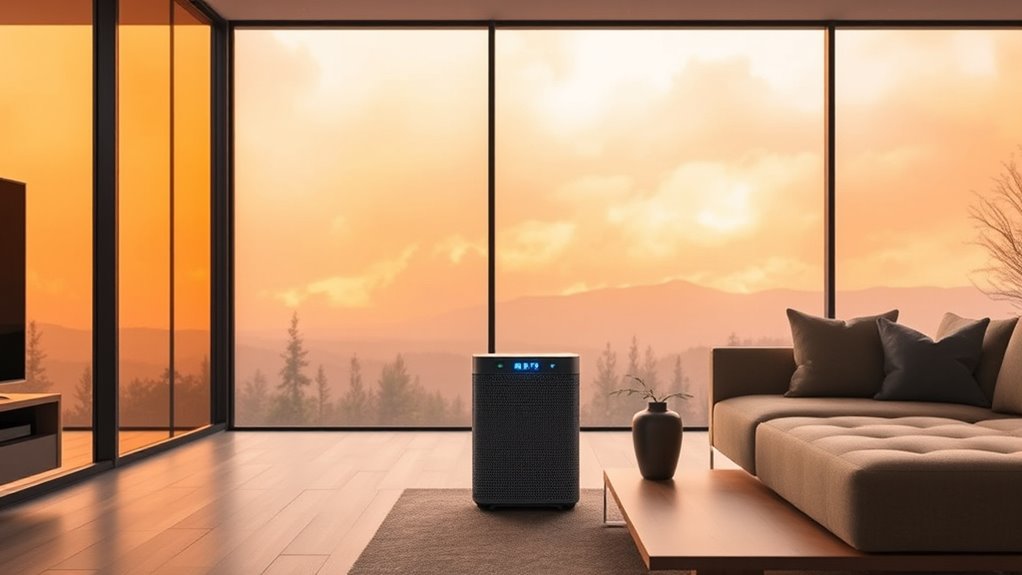
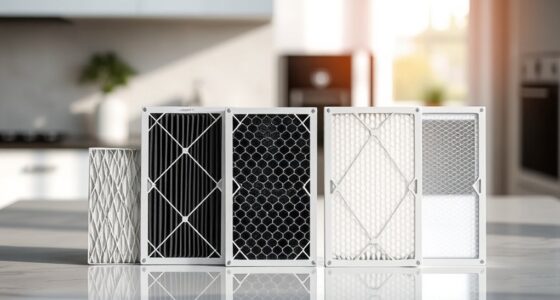
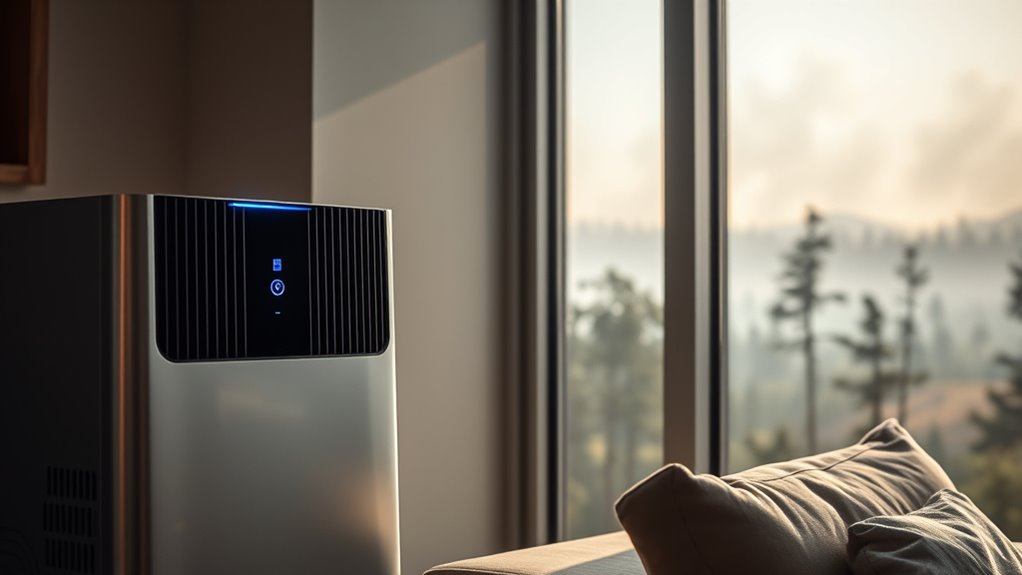
When wildfire smoke threatens your area, taking proactive steps can considerably reduce its impact inside your home. One of the most effective ways is to incorporate high-quality filters and maintain your air purification systems properly. Regular air purifier maintenance ensures that these devices operate at peak efficiency, trapping harmful particles and preventing smoky air from circulating indoors. Check filters monthly, and replace them as recommended by the manufacturer, especially during wildfire season. HEPA filters are particularly effective, capturing tiny particles that standard filters might miss, including ash, soot, and other pollutants from wildfire smoke.
Regularly check and replace air purifier filters, especially HEPA, during wildfire season for optimal indoor air quality.
In addition to indoor air quality measures, outdoor smoke barriers serve as a vital first line of defense. Installing outdoor barriers such as dense hedges, privacy screens, or windbreaks made from non-flammable materials can help reduce the amount of smoke that drifts toward your home. These barriers act as physical shields, dispersing the smoke and preventing it from entering your property as easily. Strategically placing them around vulnerable areas, like vents, windows, and air intakes, minimizes the infiltration of smoky air. Combining outdoor smoke barriers with sealing gaps around doors and windows further enhances your home’s protection. Utilizing advanced filtration technology in your air purifier can improve its ability to capture airborne wildfire pollutants more effectively.
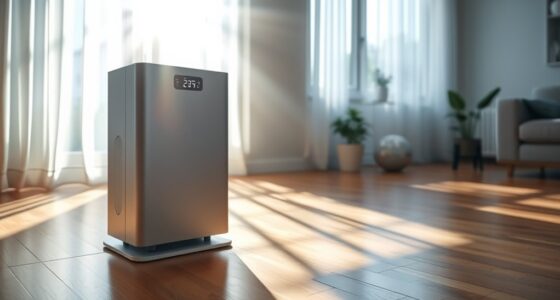
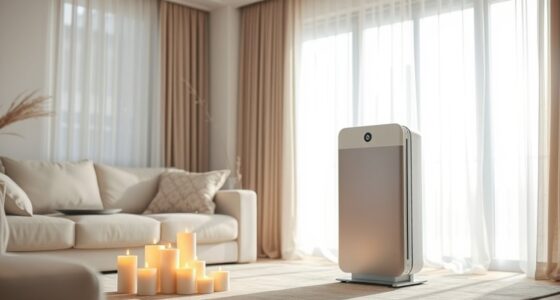
Another important step is to create a clean, sealed environment indoors. Use weather stripping and caulking to seal gaps around windows and doors, preventing smoke from infiltrating. When wildfire smoke is thick, consider creating a “clean room” in your home—an interior space with minimal ventilation openings—where you can stay comfortably and breathe cleaner air. During active smoke days, keep windows and exterior doors shut, and use exhaust fans to vent indoor air outdoors rather than pulling in outside air. Running your air purifier with a fresh filter during these times can make a noticeable difference in indoor air quality.
When setting up your home’s defenses, remember that outdoor smoke barriers and proper air purifier maintenance work synergistically. While outdoor barriers reduce the amount of smoke that reaches your home, maintaining your air purifier ensures that any smoke that does enter is filtered out effectively. This combination provides a layered defense, giving you peace of mind during wildfire events. Staying informed about local air quality reports also helps you decide when to intensify these measures or seek refuge indoors. By taking these proactive steps, you protect your health and create a safer, more comfortable environment during wildfire seasons.
Top picks for "protect home wildfire"
Open Amazon search results for this keyword.
As an affiliate, we earn on qualifying purchases.
Frequently Asked Questions
How Often Should I Replace Air Filters During Wildfire Season?
You should replace your air filters every 1 to 2 months during wildfire season, depending on filter type and indoor air quality. Follow your filter replacement schedule closely, especially when wildfire season timing peaks, as smoke particles can clog filters faster. Regular changes help maintain airflow and filter efficiency, providing better protection against harmful smoke. Keep an eye on filter condition and replace more often if you notice reduced airflow or increased dust.
Are There Specific Brands Recommended for Wildfire Smoke Filtration?
Think of wildfire smoke as an unwelcome guest trying to sneak in. For effective filtration, choose trusted HEPA filter brands like Honeywell or Filtrete, and pair them with activated carbon filters for odor and harmful gases. These brands are proven to trap tiny particles and chemicals, keeping your indoor air safe. Regularly replace these filters during wildfire season to guarantee your home remains a sanctuary from smoke’s harmful effects.
Can Outdoor Air Purifiers Effectively Reduce Indoor Smoke Levels?
Outdoor air purifiers can help reduce indoor smoke levels, but their effectiveness depends on proper outdoor filtration and air quality monitoring. You should guarantee the device is designed for wildfire smoke and has a HEPA filter. Regularly monitor air quality to adjust settings or use additional filtration if needed. Combining outdoor filtration with good ventilation practices keeps your indoor air cleaner and safer during wildfire events.
What Are the Signs That My Current Filters Are No Longer Effective?
Did you know filters lose about 50% of their effectiveness after six months? You’ll notice your current filters aren’t working if your air quality indicators show higher levels of smoke or pollutants indoors. Additionally, if airflow decreases or you see more dust accumulation on surfaces, it’s a sign your filter’s lifespan has concluded. Regularly checking these signs helps guarantee your home stays protected from wildfire smoke.
Do Window Filters Provide Sufficient Protection Against Wildfire Smoke?
Window filters alone may not provide sufficient protection against wildfire smoke, especially during heavy events. Their effectiveness depends on proper installation and regular maintenance to guarantee they seal tightly and block particulates. To maximize protection, consider upgrading to high-efficiency filters or air purifiers. Check your window filters frequently for damage or dirt buildup, and replace or clean them as needed to maintain ideal performance against wildfire smoke.
Conclusion
By choosing the right filters, you’re building a shield against wildfire smoke, turning your home into a fortress of clean air. Think of filters as the gatekeepers, standing firm against the invisible threat outside. When you prioritize proper filtration, you’re not just protecting your space—you’re creating a safe haven amid the storm. Keep your filters fresh and your air pure, so you can breathe easy, knowing you’ve fortified your home’s defenses against the wildfire’s silent assault.