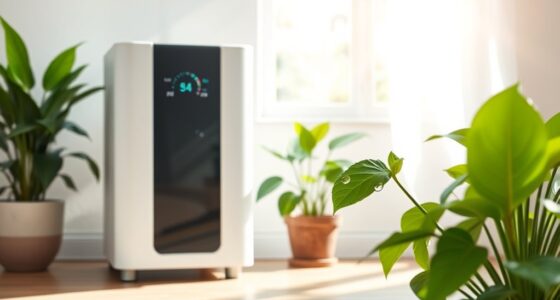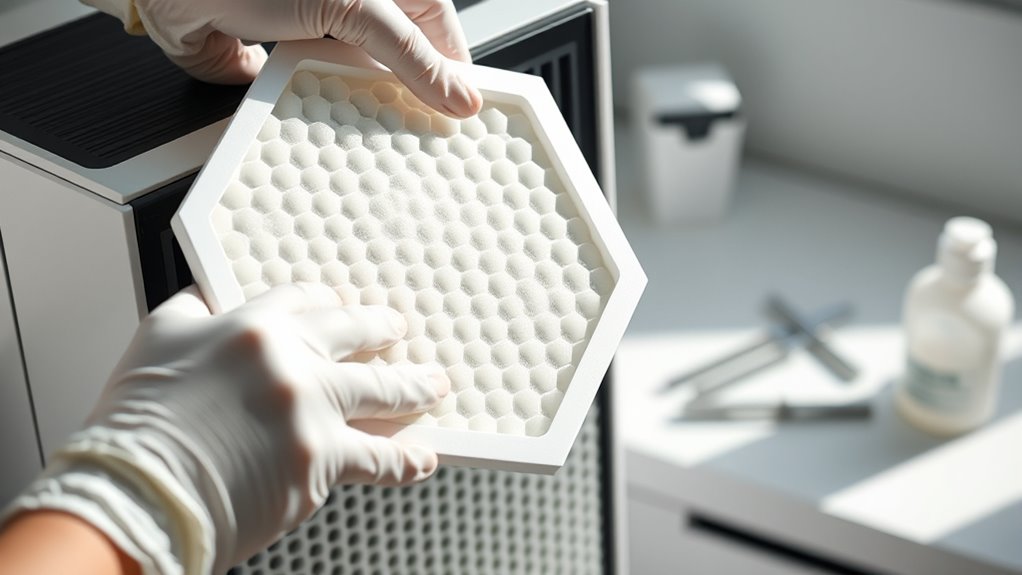

To maintain and clean your air purifier filters properly, regularly check the filter status and replace or clean them as recommended—usually every 3 to 6 months. Always turn off and unplug the device before servicing, and carefully remove the filters to avoid spreading dust. Clean exterior surfaces and pre-filters weekly with a damp cloth or vacuum. Knowing the right techniques helps keep your air purifier working efficiently; discover more tips to optimize your device’s performance.

Get cleaning gear delivered free — and shop member deals
- Fast, free delivery on millions of items
- Access to Prime Big Deal Days deals on October 6–7
- Prime Video, Amazon Music and more included
Key Takeaways
- Turn off and unplug the air purifier before removing or cleaning filters to ensure safety.
- Regularly clean exterior and pre-filters with a damp cloth or vacuum to extend main filter life.
- Follow manufacturer instructions to properly replace or wash filters, ensuring correct fit and dry thoroughly if washable.
- Replace filters every 3 to 6 months, or as recommended, based on usage and air quality conditions.
- Use knowledge of filter technology to select suitable filters and maintain optimal device performance.
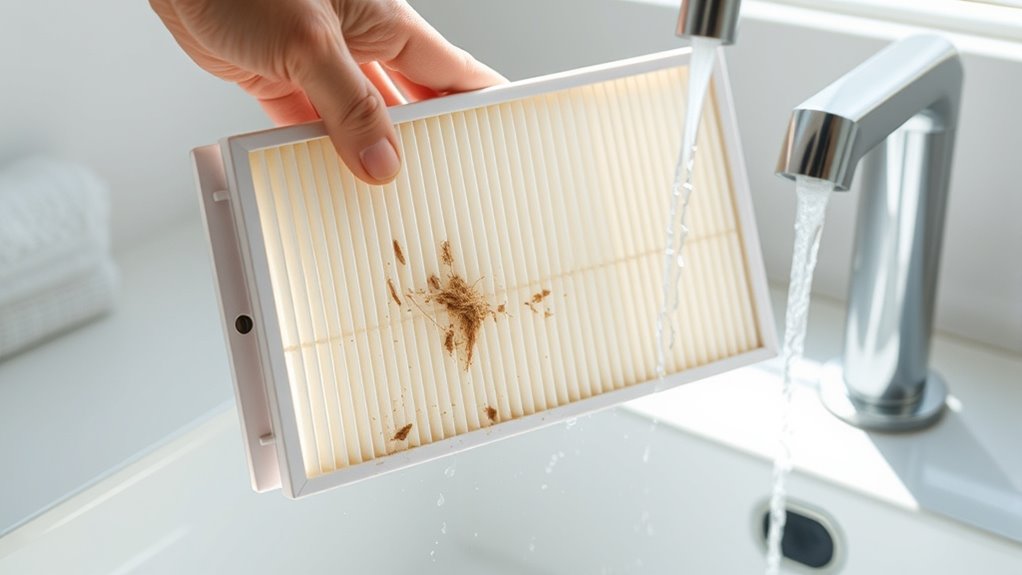
Keeping your air purifier functioning effectively requires regular maintenance and cleaning of its filters. One of the most significant steps is understanding when to perform filter replacement. Over time, filters become clogged with dust, pollen, pet dander, and other airborne particles, which reduces their efficiency. If you ignore this, your air purifier will have to work harder, consuming more energy and potentially shortening its lifespan. To maintain peak performance, you need to be aware of your filter’s lifespan—most filters come with an estimated duration, often ranging from three to six months, depending on usage and air quality. Regularly checking the manufacturer’s recommendations guarantees you don’t replace filters too early or too late. Replacing filters at the right intervals keeps your air purifier running smoothly and guarantees it continues to remove pollutants effectively.
When it’s time to replace your filter, do so promptly. Using a filter past its recommended lifespan can lead to reduced air quality and strain on the device. Before replacing, turn off and unplug your air purifier. Open the filter compartment following the manufacturer’s instructions, and carefully remove the old filter. Handle it gently to avoid spreading dust or allergens. If the filter is washable, clean it according to the instructions—usually rinsing with water and letting it dry completely before reinserting. If it’s a disposable filter, discard it responsibly and insert a new one, making sure it fits snugly into place. Proper installation is vital for preventing unfiltered air from bypassing the filter.
Maintaining the filter’s lifespan also involves regular cleaning of the surrounding areas and pre-filters, if your unit has them. Dust and debris can accumulate on the exterior and on pre-filters, reducing overall efficiency. Cleaning these parts weekly with a damp cloth or vacuuming gently helps prolong the filter’s life and prevents unnecessary strain on the main filter. Additionally, keeping the air purifier in a location with good airflow and away from excessive dust sources can help extend the time between filter replacements. This proactive approach minimizes the frequency of filter changes and reduces ongoing costs.
Furthermore, understanding the importance of filter technology in your air purifier can help you select the most suitable filters and optimize their lifespan, ensuring better air quality and device performance.
air purifier replacement filters
As an affiliate, we earn on qualifying purchases.
As an affiliate, we earn on qualifying purchases.
Frequently Asked Questions
How Often Should I Replace My Air Purifier Filters?
You should replace your air purifier filters based on the recommended filter lifespan, typically every 6 to 12 months. The replacement frequency depends on factors like filter type, air quality, and usage. Check your user manual for specific guidance, and monitor your filter’s condition regularly. If it looks dirty or clogged sooner, don’t wait—substitute it to ensure your purifier works efficiently and maintains good air quality.
Can I Use Water to Clean HEPA Filters?
You shouldn’t use water to clean HEPA filters because water damage can ruin the filter and reduce its effectiveness. HEPA filters are usually not washable and should be replaced instead of cleaned with water. Using water can cause mold growth and decrease filter longevity. Instead, gently vacuum or tap the filter outside to remove dust, following your manufacturer’s instructions. This helps keep your air purifier running efficiently and safely.
Are There Eco-Friendly Filter Options Available?
Like finding a needle in a haystack, eco-friendly filter options can seem rare, but they’re out there. You can choose filters made from eco-friendly materials like bamboo or activated charcoal, which are biodegradable. Recyclable filters are also available, helping reduce waste. These options not only protect your air quality but also support sustainability, making them a smart choice for environmentally conscious households.
What Signs Indicate a Filter Needs Replacing Sooner?
You’ll know your filter needs replacing sooner if you notice decreased airflow, persistent odors, or increased allergy symptoms. These are clear replacement indicators that your filter’s lifespan is ending. Also, if your air purifier’s indicator light signals it’s time for a change, don’t ignore it. Regularly checking these signs helps guarantee your filter functions effectively, maintaining clean air and peak performance for your device.
How Do I Prevent Mold Growth on Filters?
Think of your air purifier filters as a garden that needs careful tending. To prevent mold growth, always keep filters dry and replace or clean them regularly, especially in humid conditions. Proper filter maintenance is key—avoid leaving filters damp or dirty. Use a dehumidifier if needed and ensure good airflow. By doing so, you stop mold before it starts, keeping your air clean and safe.
Conclusion
By giving your air purifier filters a gentle touch-up and regular care, you’re gently nurturing a healthier home environment. Think of it as tending to a delicate garden—each small effort helps keep the air invigorating and inviting. With just a bit of attention, you’ll enjoy cleaner air and a more comfortable space effortlessly. Remember, a little maintenance goes a long way in preserving the crispness you desire, making your home truly a breath of fresh air.
Fall Picks
fall essentials
As an affiliate, we earn on qualifying purchases.