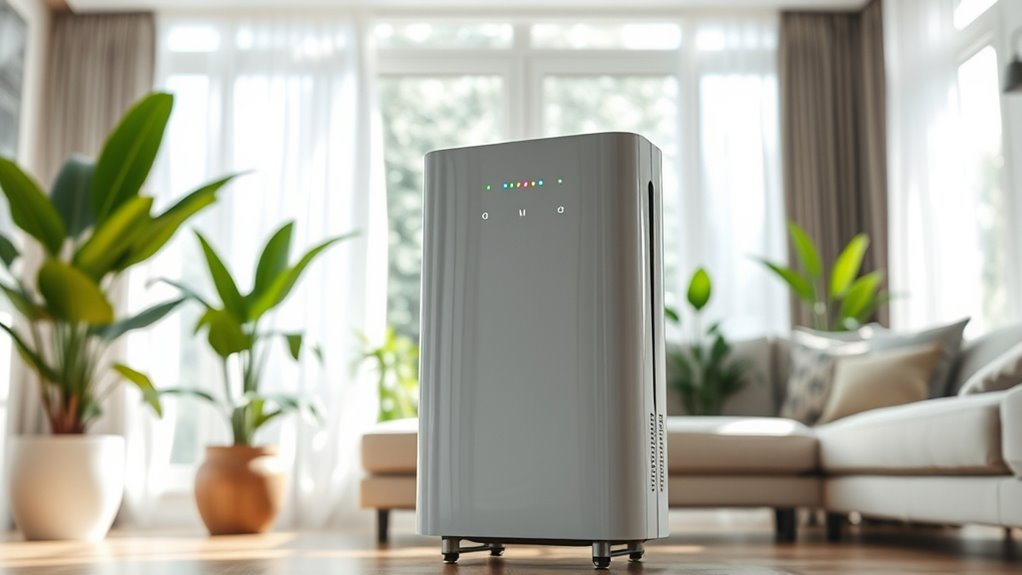

Multi-sensor air purifiers monitor air quality by using several sensors that detect pollutants like dust, VOCs, humidity, and airborne chemicals in real time. These sensors measure different aspects of your indoor environment, providing continuous data that the device uses to respond appropriately—whether increasing filtration or alerting you to issues. This multi-faceted approach guarantees accurate, reliable readings. Keep exploring how these sensors work together to keep your air clean and healthy.
Key Takeaways
- Multi-sensor air purifiers continuously track indoor pollutants like dust, VOCs, and humidity for comprehensive air quality assessment.
- They use calibrated sensors to ensure measurement accuracy and avoid false alarms.
- The devices analyze real-time data to detect pollution levels and respond by adjusting purification settings.
- Connectivity features enable remote monitoring, instant notifications, and data sharing for better air management.
- Regular calibration and maintenance maintain sensor precision, ensuring reliable long-term air quality monitoring.
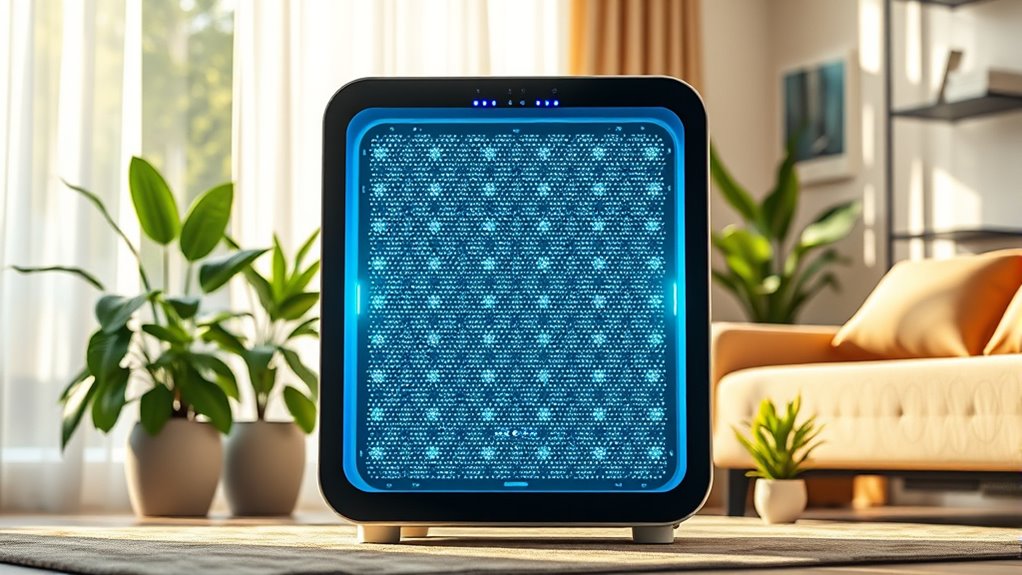
Multi-sensor air purifiers are advanced devices that continuously monitor your indoor air quality using multiple sensors. These sensors detect various pollutants like dust, VOCs, humidity, and airborne chemicals, providing a thorough picture of your environment. To guarantee accurate readings, sensor calibration is essential. Regular calibration aligns the sensors’ measurements with standard references, helping the device distinguish between true pollutants and false alarms. When your purifier’s sensors are properly calibrated, you get reliable data, which means the device can respond appropriately—whether that’s increasing filtration or alerting you to air quality issues.
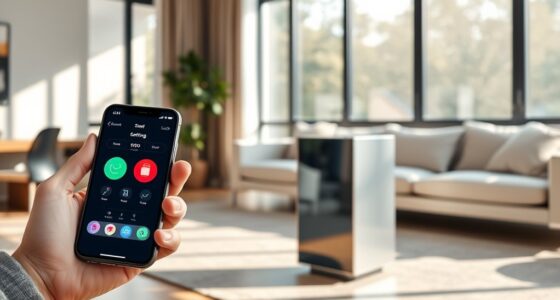
Device connectivity plays a pivotal role in how effectively your multi-sensor air purifier monitors air quality. Many models connect wirelessly to your smartphone or home Wi-Fi network, allowing real-time updates and remote control. This connectivity ensures that you can track your indoor air quality on the go and receive instant notifications if pollutant levels spike. It also enables the purifier to operate intelligently, adjusting its filtration levels based on live data, which helps optimize energy use and prolong filter life. With seamless device connectivity, you don’t have to rely solely on manual checks; instead, your purifier becomes a proactive part of your smart home setup.
Many multi-sensor air purifiers connect wirelessly for real-time air quality monitoring and remote control.
The sensors in these devices work together to create a detailed air quality report, but their accuracy depends heavily on proper maintenance and calibration. Over time, sensors can drift from their original calibration, leading to inaccurate readings. That’s why many purifiers feature self-calibration routines or prompts for manual calibration. When you perform sensor calibration as recommended by the manufacturer, it restores the sensors’ accuracy, ensuring the device’s responses remain precise. This process typically involves exposing the sensors to known reference conditions or using calibration tools provided with the purifier. Additionally, considering sensor drift and implementing regular maintenance can significantly improve long-term performance.
Device connectivity also allows the purifier to store and analyze historical air quality data. By reviewing trends over days or weeks, you can better understand what influences your indoor air quality—be it cooking, cleaning, or outdoor pollution. This data-driven approach helps you take targeted actions to improve your environment. Plus, with connected devices, you can often customize settings or create schedules based on your daily routines, further enhancing air quality management.
Frequently Asked Questions
How Often Do Multi-Sensor Air Purifiers Require Calibration?
You should calibrate your multi-sensor air purifier’s sensors every six to twelve months to maintain accurate pollutant detection. Regular sensor calibration guarantees the device correctly interprets air quality data, preventing false readings or missed pollutants. If you notice inconsistent performance or unusual readings, perform calibration sooner. Properly calibrated sensors help your purifier respond effectively, keeping your air clean and safe.
Can Sensors Distinguish Between Different Types of Airborne Pollutants?
You might wonder if sensors can distinguish between different airborne pollutants. Multi-sensor air purifiers use advanced sensor specificity for pollutant identification, allowing them to recognize various particles like dust, VOCs, and smoke. While they can differentiate broad pollutant types, their accuracy varies depending on sensor quality. So, yes, they can identify different pollutants to some extent, but their precision isn’t perfect, especially with complex or overlapping contaminants.
What Is the Typical Lifespan of the Sensors in These Purifiers?
You’ll usually find that sensors in multi‑sensor air purifiers last about 2 to 5 years, depending on usage and quality. Sensor degradation over time can reduce accuracy, so you should expect to replace them periodically. Replacement frequency varies, but manufacturers recommend checking and replacing sensors roughly every 2 to 3 years to ensure peak air quality monitoring and purifier performance.
Do Multi-Sensor Purifiers Require Regular Software Updates?
Yes, multi-sensor purifiers often require regular firmware updates to maintain sensor accuracy. These updates enhance the purifier’s ability to detect air quality changes precisely and fix any bugs. You should check for updates periodically through the device’s app or control panel. Keeping firmware current ensures your air purifier functions at its best, providing cleaner air and reliable monitoring. Regular updates help sustain sensor performance over time.
How Do Sensors Perform in Varying Environmental Conditions?
You’ll find that sensors in multi‑sensor air purifiers are designed for environmental resilience, so they perform well even in varying conditions. Their accuracy might slightly fluctuate with extreme humidity, temperature, or pollution levels, but advanced calibration helps maintain reliable readings. Regular maintenance and placement in ideal spots also improve sensor accuracy, ensuring your purifier adapts effectively to different environmental changes and keeps your air quality consistently high.
Conclusion
Remember, knowledge is power. Multi-sensor air purifiers give you real-time insights into your air quality, allowing you to take control and create a healthier environment. By constantly monitoring your space, they help you breathe easier and stay ahead of pollutants. Don’t wait for symptoms to appear—stay proactive. After all, an ounce of prevention is worth a pound of cure, so trust these smart devices to keep your air clean and your mind at ease.