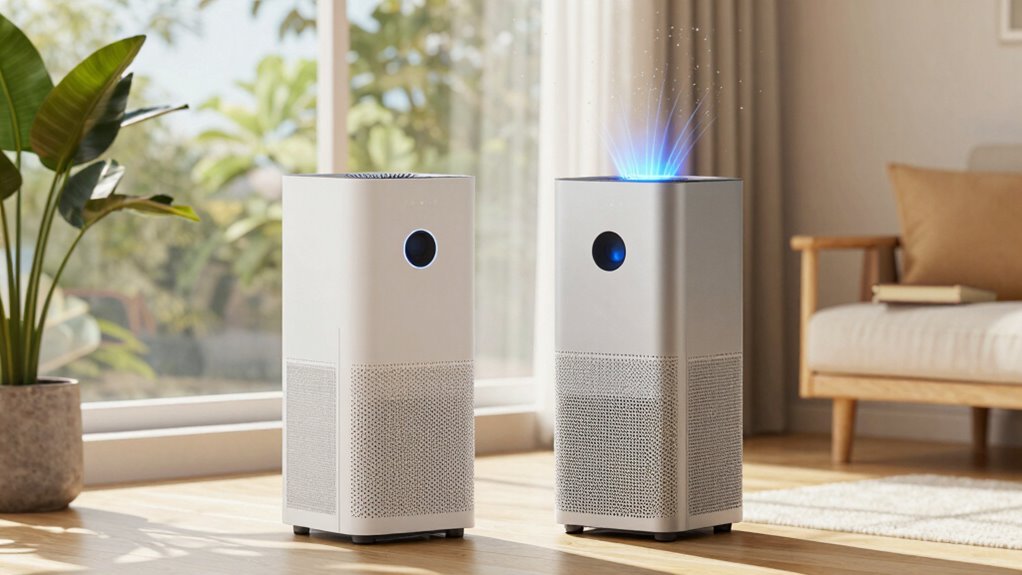
Ozone-free air purifiers use physical filters like HEPA and activated carbon to trap particles and odors without producing ozone, making them a safer choice for your home. Ionizers release negatively charged ions that cause particles to clump and settle or stick to surfaces, but some may emit trace ozone, risking respiratory irritation. To decide which works best for you, it helps to understand their differences and safety details—and you’ll find out more below.

Get cleaning gear delivered free with Prime
- Fast, free delivery on millions of items
- Prime Video, Amazon Music and more included
- Member-only deals all year
Key Takeaways
- Ozone-free air purifiers use filters like HEPA and activated carbon, avoiding ozone production entirely.
- Ionizers release negative ions to attract particles, often without emitting harmful ozone if properly maintained.
- Ozone-free purifiers are generally safer, while some ionizers may produce trace ozone that can irritate the respiratory system.
- Ionizers excel at removing airborne particles but may be less effective against gases and chemical odors.
- Choosing depends on safety preferences and specific air quality needs, with ozone-free options being the safer choice for most users.
As an affiliate, we earn on qualifying purchases.
What Are Ozone-Free Air Purifiers and How Do They Work?
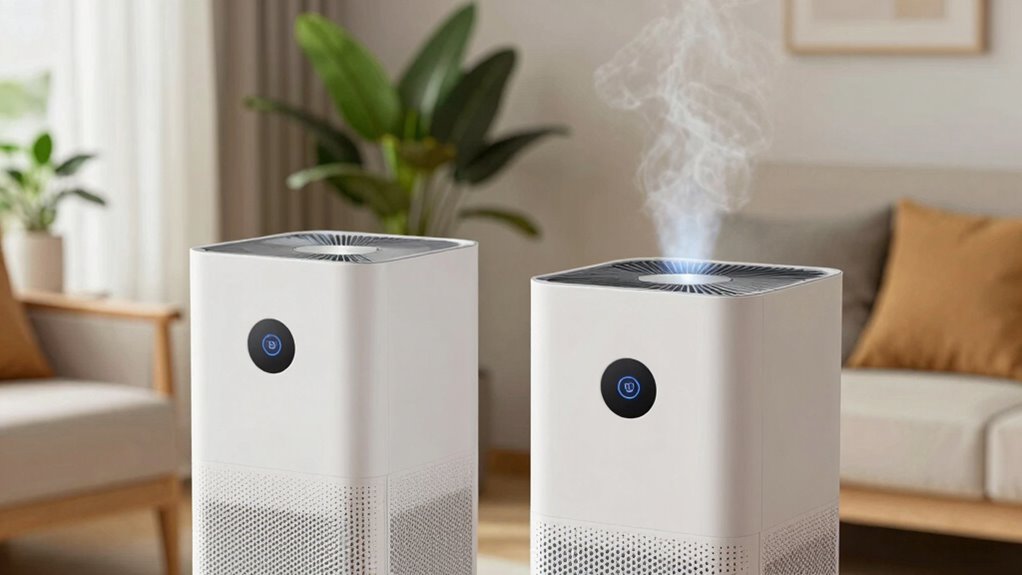
Ozone-free air purifiers are devices designed to clean the air without producing ozone, a harmful byproduct common in some purification methods. They work by using various air filtration technologies like HEPA filters, activated carbon, and UV light to trap and neutralize pollutants. These purifiers effectively remove airborne allergens, dust, pet dander, bacteria, and volatile organic compounds (VOCs). Unlike ozone-generating units, ozone-free models rely on physical and chemical filtration processes that don’t produce harmful ozone as a byproduct. This makes them safer for your indoor environment. By focusing on pollutant removal through advanced filtration, you ensure cleaner, healthier air without risking ozone exposure. Additionally, air quality standards often recommend ozone-free options to maintain a safe indoor environment. These devices are ideal for sensitive individuals or spaces where ozone emissions could pose health risks, especially since they are safe for continuous use in homes and workplaces. Incorporating advanced filtration technologies further enhances their effectiveness in removing a wide range of indoor pollutants. Utilizing filter maintenance, such as regular filter checks and timely replacements, is essential to keep these purifiers operating at peak performance.
How Do Ionizers Clean the Air, and Are They Safe?
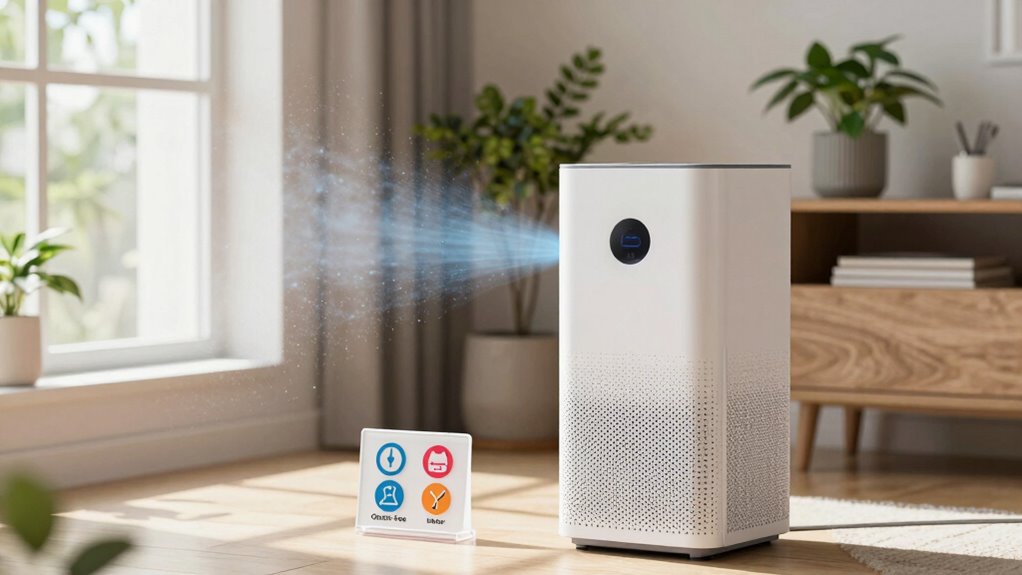
Ionizers clean the air by releasing negatively charged ions that attach to airborne particles, such as dust, pollen, and bacteria. This process, known as air ionization, causes particles to become charged and clump together, making them easier to capture on surfaces or in filters. Electrostatic attraction is the key mechanism here, pulling particles toward charged plates or surfaces within the device. This method effectively reduces airborne pollutants without producing ozone. Generally, ionizers are safe because they don’t emit harmful chemicals or ozone in significant amounts. However, some devices may produce small amounts of ozone as a byproduct, which can be a concern for sensitive individuals. air ionization works by mimicking natural processes like those found in waterfalls and forests, which can help improve indoor air quality. Additionally, design features in some ionizers are intended to minimize ozone production and enhance safety. Proper maintenance of ionizers can further reduce the risk of ozone generation and ensure optimal performance. Understanding the mechanisms of air purification can help users select safer and more effective devices. Overall, ionizers use electrostatic attraction and air ionization to improve indoor air quality safely when properly maintained, leveraging holistic approaches to health and wellness.
Which Is More Effective at Removing Indoor Pollutants?
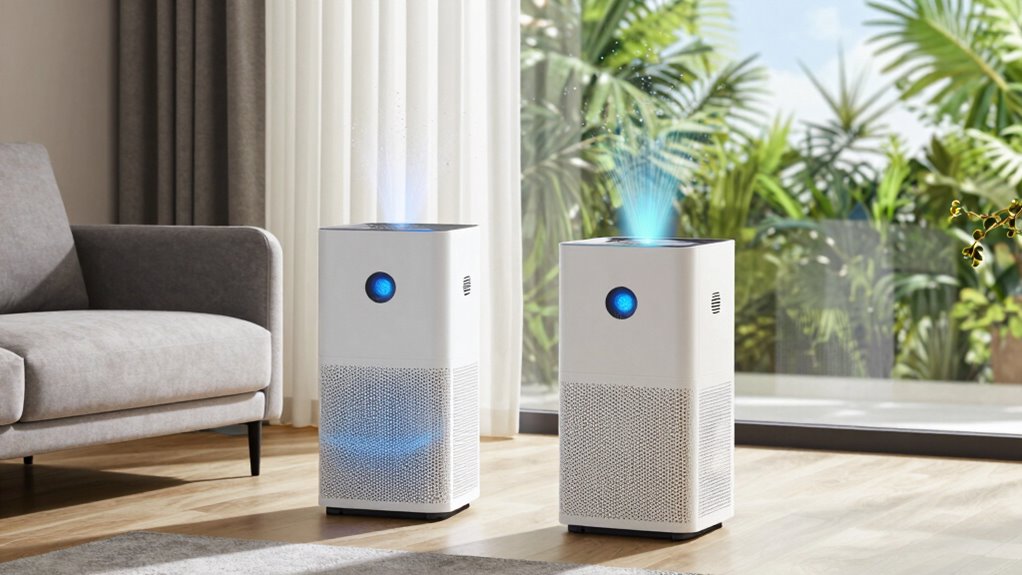
When it comes to removing indoor pollutants, high-efficiency particulate air (HEPA) filters generally outperform ionizers because they physically trap particles like dust, pollen, and pet dander with a dense filter media. HEPA filtration is effective at capturing tiny particles, improving air quality quickly. To maximize pollutant removal, consider these key points:
HEPA filters physically trap airborne particles, providing quick, effective indoor air purification.
- HEPA filters excel at removing airborne particles, providing immediate relief for allergies and asthma.
- Activated carbon filters absorb odors, volatile organic compounds (VOCs), and chemical fumes.
- Combining HEPA filtration with activated carbon creates a thorough approach to indoor air purification, targeting both particulates and gaseous pollutants effectively.
- Incorporating connected fitness technology such as smart air purifiers can help monitor and optimize air quality in real-time.
- Understanding the air purification mechanisms can help you choose the most effective device for your needs. Additionally, recognizing the limitations of ionizers ensures you select the best solution for comprehensive air cleaning.
- Knowledge about filtration efficiency can aid in selecting devices that truly improve indoor air quality by addressing a wider range of pollutants.
Are Ozone-Free Purifiers and Ionizers Safe to Use at Home?
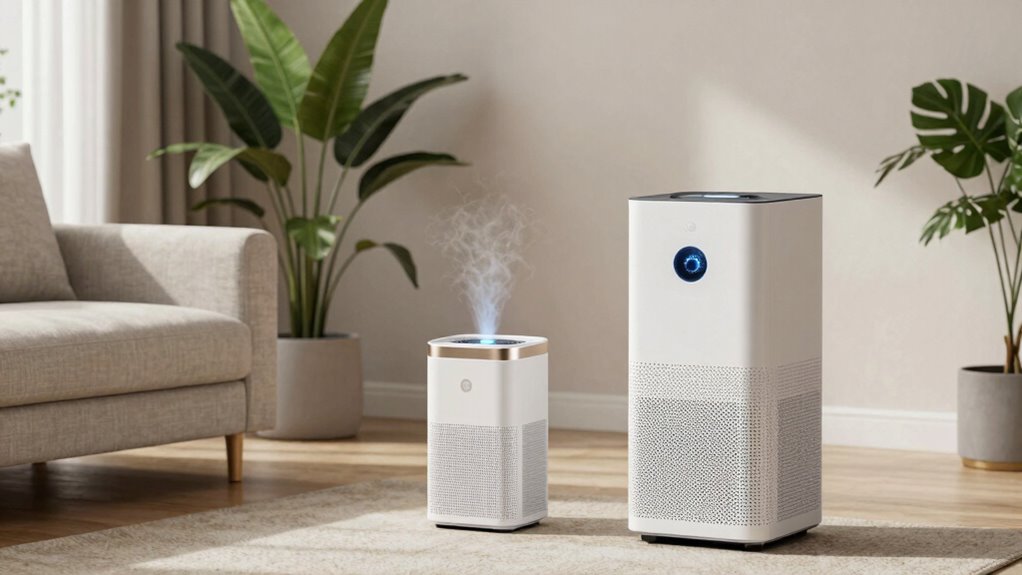
While ozone-free purifiers and ionizers are generally considered safer alternatives to traditional ozone-generating devices, it’s important to understand their safety profiles before using them at home. These devices often rely on HEPA filters and ionization to improve air quality without producing harmful ozone. However, some ionizers can still generate trace amounts of ozone, which may cause respiratory irritation for sensitive individuals. Overall, they are safer but not entirely risk-free. Consider the table below to see how different devices impact air quality and safety: air quality improvement. Additionally, understanding the safety levels of various air purifiers helps consumers make informed choices that align with their health needs. It’s also useful to review device emissions to ensure you select a model that minimizes potential ozone exposure. Recognizing that even ozone-free devices may emit low levels of ozone can help users better assess their safety. Monitoring ozone levels with air quality sensors can further ensure a safe indoor environment.
How Do You Choose Between Ozone-Free and Ionizer Air Cleaners?
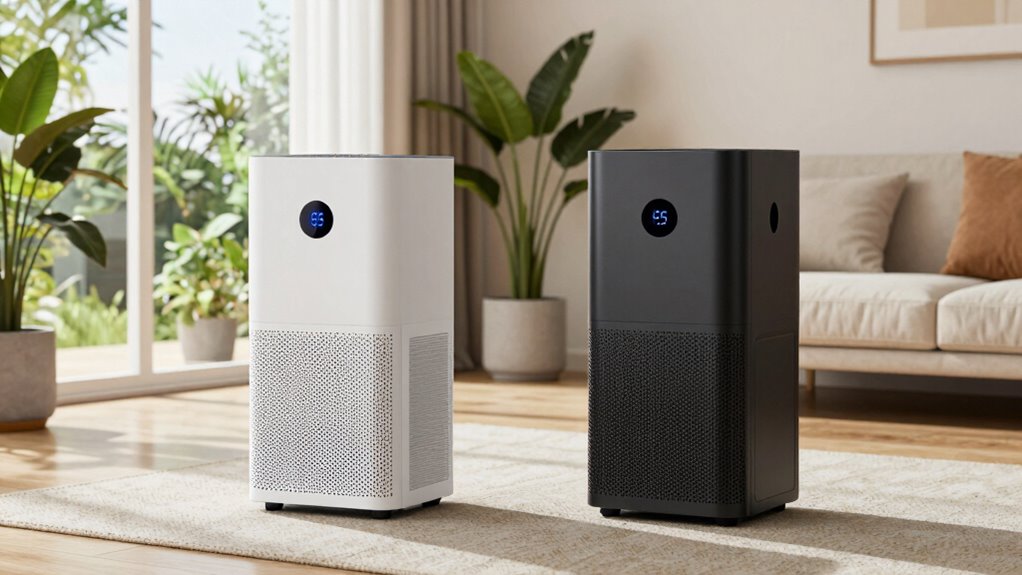
Choosing between ozone-free air purifiers and ionizers depends on your priorities for safety, effectiveness, and air quality improvement. To make an informed decision, consider the following:
- Air purification technology: Ozone-free purifiers use physical filters, while ionizers charge particles to remove them from the air. Wave and wind can influence how well these devices perform depending on indoor conditions.
- Health implications: Ozone-free options pose fewer health risks, whereas some ionizers may produce ozone or other byproducts. Understanding air filtration mechanisms can help clarify how each system operates.
- Effectiveness: Ionizers excel at removing airborne particles but might struggle with gases or odors that ozone-free filters handle better.
- Compatibility with Natural Elements: Incorporating natural elements like landscaping can enhance indoor air quality and complement your air purification system.
Ultimately, if health implications and safety are your top concerns, ozone-free air purifiers are a safer choice. However, if you prioritize removing fine particles quickly, an ionizer could be more effective.
Frequently Asked Questions
Can Ionizers Produce Harmful Ozone Levels During Operation?
Ionizers can produce harmful ozone levels during operation if they’re not designed with ozone safety in mind. Some models release ozone as a byproduct of their air cleaning process, which can pose health risks. To protect yourself, choose ionizers labeled ozone-free or certified for low ozone production. Always check the ozone production levels and follow manufacturer guidelines to guarantee safe usage and minimize ozone-related health concerns.
Do Ozone-Free Purifiers Eliminate All Types of Indoor Allergens?
Imagine your air purifier as a vigilant gatekeeper. Ozone-free purifiers, often equipped with HEPA filters, do a great job trapping most allergens like pollen, pet dander, and dust mites. However, they don’t eliminate every tiny allergen, especially some mold spores and airborne chemicals. While they substantially improve indoor air quality, if you want all-encompassing allergen removal, consider a purifier with multiple filters for a more thorough clean.
How Often Should Air Purifiers Be Maintained for Optimal Safety?
You should maintain your air purifier every 3 to 6 months for ideal safety. Regular filter replacement keeps the device running efficiently and extends its lifespan. Check the manufacturer’s recommendations, as some filters need more frequent changes, especially if you have pets or allergies. Proper maintenance prevents buildup of dust or mold, ensuring cleaner air and preventing potential health issues. Staying consistent with maintenance maximizes your purifier’s performance and safety.
Are There Specific Rooms or Environments Better Suited for Ionizers?
You should use ionizers in room-specific environments like bedrooms or living areas with low dust and allergen levels. Environmental considerations, such as avoiding high humidity or presence of sensitive electronics, make ionizers more suitable. They work best in spaces where you want continuous air cleaning without ozone concerns. Always guarantee proper ventilation and follow manufacturer guidelines for safe and effective use in these specific rooms.
What Are the Long-Term Health Impacts of Using Ozone-Free vs. Ionizer Air Cleaners?
Using ozone-free air cleaners is like planting seeds for better health; they generally pose fewer long-term health risks. Ionizers can improve air quality but may produce trace ozone, which could harm your lungs over time. The long-term health effects depend on the device; ozone-free models tend to be safer, supporting sustained air quality improvement without risking respiratory issues. Choose wisely for a healthier, cleaner environment.
Conclusion
Understanding the differences between ozone-free purifiers and ionizers helps you make safer, more informed choices. While some believe ionizers are risk-free, studies show they can produce harmful ozone levels if not properly designed. Ozone-free options generally offer peace of mind without sacrificing efficiency. So, the next time you pick an air cleaner, remember that the safety and effectiveness of your choice depend on knowing the truth behind these technologies.
Halloween Picks
halloween
As an affiliate, we earn on qualifying purchases.