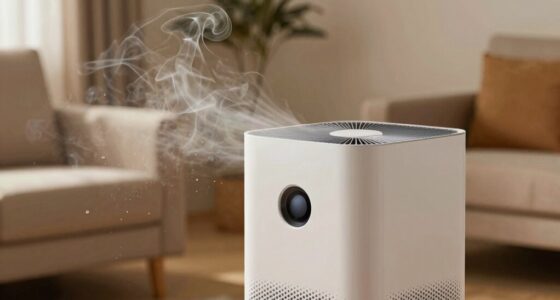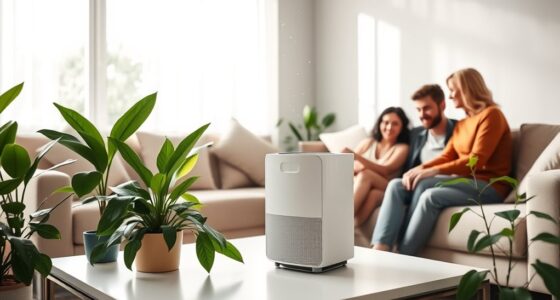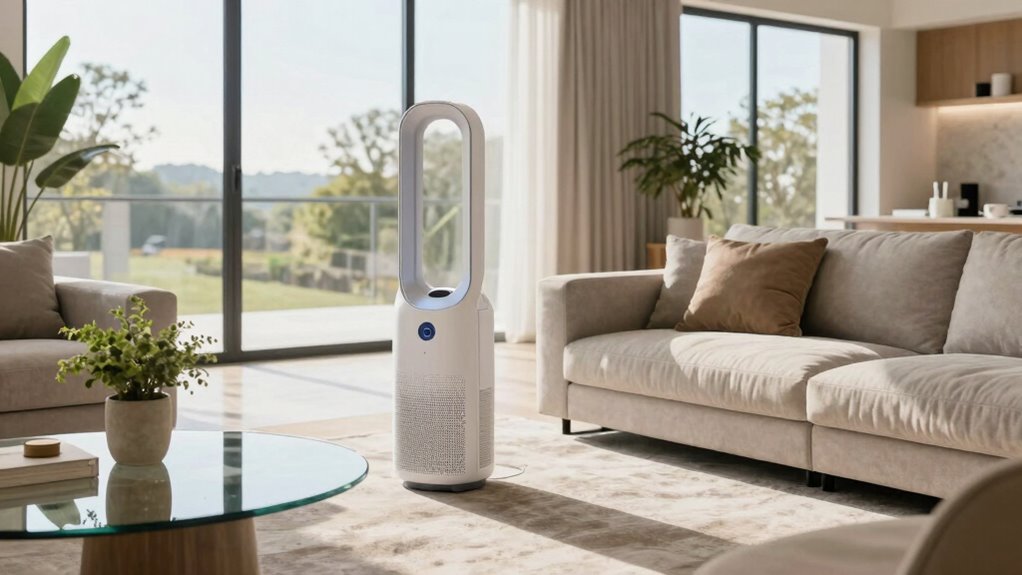
To get the best results in open-concept spaces, place your air purifier centrally, away from walls and furniture, to guarantee better airflow and coverage. Use multiple units if your space is large, and position each near pollution sources like kitchens or pet zones. Regularly change filters, clean the exterior, and monitor air quality to keep your air purifier working efficiently. Keep in mind, strategic placement and maintenance are key—keep exploring how to optimize your setup for cleaner air.
Key Takeaways
- Place the purifier centrally to maximize coverage across the open space.
- Use multiple units if the area is large or has high pollution sources.
- Maintain clear airflow by positioning units away from walls and furniture.
- Regularly monitor air quality to adjust purifier settings and placement as needed.
- Perform routine filter maintenance to ensure consistent purification performance.
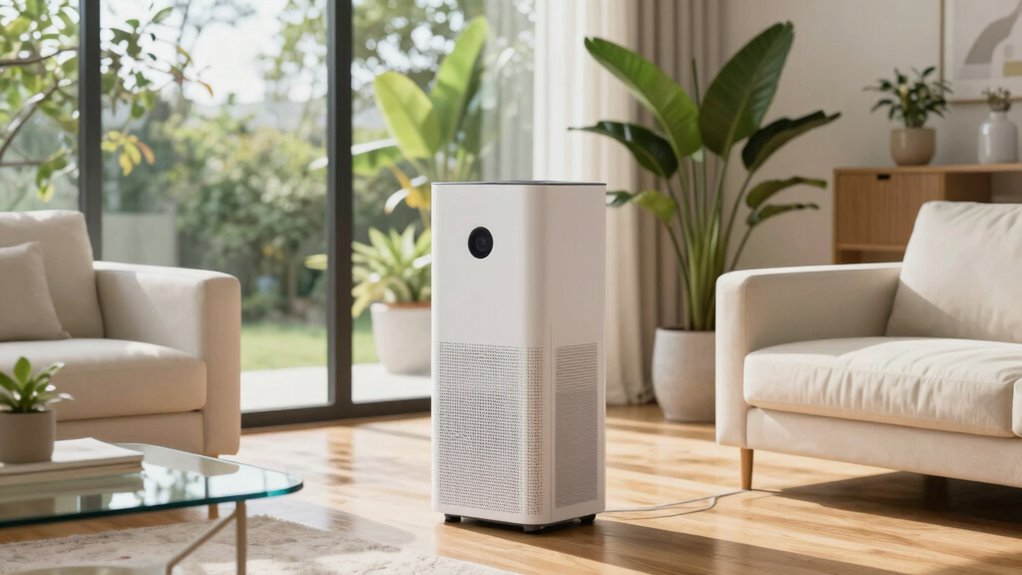
Open-concept spaces can be challenging for maintaining clean indoor air because their large, open layouts allow pollutants to circulate more freely. Without proper strategies, dust, pet dander, cooking fumes, and other airborne contaminants can spread quickly throughout the area, making it harder to breathe comfortably. To effectively use an air purifier in this setting, you need to think beyond just turning it on and hoping for the best. Proper air purifier maintenance is vital; regularly changing filters and cleaning the unit guarantees it operates at peak efficiency. When filters become clogged or dirty, the purifier can’t trap pollutants effectively, which defeats the purpose of having one in a large, open space.
Open-concept spaces need strategic air purifier use and maintenance for effective indoor air quality.
Room specific filtering is another essential factor. Many air purifiers are designed to target particular pollutants or are better suited for certain room sizes. In an open-concept layout, you might consider using multiple units strategically placed around the space. This approach ensures that cleaner air reaches every corner, rather than relying on a single device that may not cover the entire area adequately. Position your air purifiers near common sources of pollution—like the kitchen, living room, or pet zones—to maximize their effectiveness. If your purifier has adjustable settings or multiple filters, tailor them to target specific pollutants prevalent in your home. Additionally, understanding indoor air quality and how pollutants disperse in large spaces can help you make more informed decisions about device placement and operation. Knowing how pollutants spread within open areas can further optimize your air purification strategy.
Placement also matters greatly. Place your air purifier away from walls and furniture that could obstruct airflow, and ensure it’s on a stable, level surface. For open spaces, a central location often works best, allowing the air to circulate freely through the device. Incorporating airflow patterns into your planning can further enhance purification efficiency. Remember, the effectiveness of your air purifier depends on both its capacity and your maintenance routine. Regularly check and replace filters as recommended by the manufacturer, and clean the unit’s exterior to prevent dust buildup that could hinder airflow. Furthermore, incorporating air quality monitors can help you evaluate the overall health of your indoor environment and optimize your purification efforts. Being aware of pollutant sources within your home can aid in targeting the areas that need the most attention. By maintaining your units properly, placing them strategically, and monitoring indoor air quality, you create a healthier environment. This proactive approach ensures that your open-concept space remains fresh, clean, and comfortable for everyone living there.
As an affiliate, we earn on qualifying purchases.
Frequently Asked Questions
Can I Use Multiple Air Purifiers in One Open Space?
Yes, you can use multiple air purifiers in one open space. To maximize effectiveness, place them strategically around the room, avoiding obstructed airflow. Keep noise levels in mind, choosing quieter units if needed, so they don’t disturb activities. Proper placement guarantees better air circulation and cleaner air. Using a few well-placed purifiers, rather than one large unit, helps target different areas and maintains a comfortable environment.
How Often Should I Replace the Air Purifier Filters?
You should replace your air purifier filters based on the filter lifespan indicated by the manufacturer, typically every 3 to 6 months. Follow a regular maintenance schedule to guarantee peak performance. Keep an eye on filter indicators if your device has them, and replace filters promptly when they become dirty or clogged. Regular maintenance helps your air purifier work efficiently, maintaining cleaner air in your open-concept space.
Are There Specific Air Purifiers Better for Large Open Areas?
Think of a large open space as a giant lungs needing clean air; specific air purifiers are your best allies. Choose models designed for bigger areas, with high ACH ratings, and place them centrally for even coverage. Keep an eye on air purifier noise levels to guarantee comfort, and position the unit away from walls to optimize airflow. This way, you’ll breathe easier in your expansive living area.
Do Air Purifiers Reduce Odors Effectively in Open-Concept Rooms?
Yes, air purifiers can effectively reduce odors in open-concept rooms. They work through odor absorption, neutralizing smells from cooking, pets, or smoke. To maximize their effectiveness, you should guarantee proper air circulation by placing the purifier centrally and running it continuously. Regularly replacing filters also helps maintain odor control. With the right setup, your space stays fresher and more inviting.
Can Air Purifiers Help With Outdoor Air Pollution in Open Spaces?
Think of an open-air filter catching outdoor pollution like a net catching fish. While air purifiers can help reduce indoor pollutants, they aren’t designed to combat outdoor pollution effectively in open spaces. They work best with indoor odors and allergens. For outdoor air pollution, consider outdoor-specific filtration systems or air quality monitors. Relying solely on indoor air purifiers won’t fully clear the air in open spaces affected by outdoor pollution.
Conclusion
Using your air purifier correctly in open-concept spaces can greatly improve your indoor air quality. Remember, placing it centrally guarantees even coverage, and keeping doors and windows closed helps maximize its effectiveness. Did you know that poor indoor air quality can be up to five times more polluted than outdoor air? By following these tips, you’re not just cleaning the air—you’re protecting your health and creating a safer, more comfortable home environment for you and your loved ones.