
To clean tile around toilets and tight spaces effectively, start by using a small brush or toothbrush to reach corners and grout lines. Mix warm water with a mild cleaner or baking soda, and apply it with a soft cloth or sponge for scrubbing stubborn stains. After cleaning, dry the surfaces thoroughly to prevent mold, and use vinegar or dedicated grout sealers for deep-cleaning and protection. Keep exploring for more tips on maintaining a spotless bathroom!

Get cleaning gear delivered free — and shop member deals
- Fast, free delivery on millions of items
- Access to Prime Big Deal Days deals on October 6–7
- Prime Video, Amazon Music and more included
Key Takeaways
- Use small brushes or old toothbrushes to reach tight spaces and around the toilet base effectively.
- Mix warm water with mild cleaner or baking soda for gentle yet thorough tile and grout cleaning.
- Ensure surfaces are dried thoroughly after cleaning to prevent moisture buildup and mold growth.
- Seal grout annually to prevent water and dirt infiltration in hard-to-reach areas.
- Improve ventilation during and after cleaning to reduce humidity and inhibit mold development.
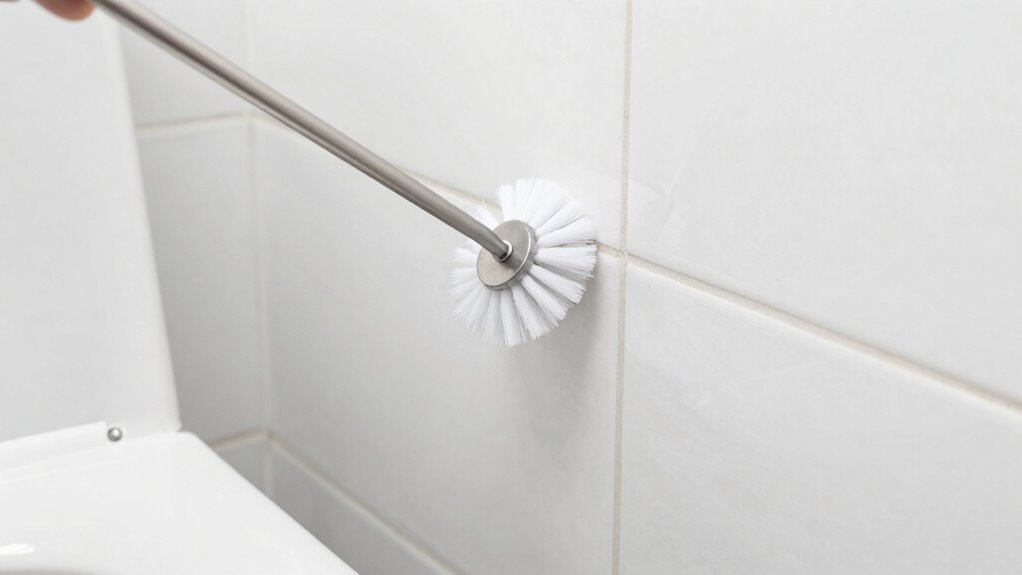
Cleaning tile around toilets and in tight bathroom spaces can be challenging, but with the right techniques, you can achieve a spotless, germ-free environment. Bathrooms are prone to moisture buildup, which encourages mold growth and makes cleaning more difficult. To prevent mold from taking hold, focus on keeping these areas dry and well-ventilated. After cleaning, wipe down tiles and grout lines with a dry cloth to remove excess moisture. Regularly inspecting and addressing leaks or drips also helps prevent mold from developing in hidden spots.
Keep bathroom tiles dry and well-ventilated to prevent mold and maintain a germ-free space.
When it comes to grout sealing, it’s essential to keep the grout lines protected from water and dirt. Proper grout sealing creates a barrier that prevents moisture from seeping in, reducing the risk of mold and mildew growth. Before applying a sealant, verify the grout is thoroughly cleaned and completely dry. Use a grout sealer recommended for bathroom tiles, and follow the manufacturer’s instructions carefully. Seal the grout at least once a year to maintain its protective barrier, especially in high-moisture areas around toilets and tight corners where dirt and grime tend to accumulate. Sealing grout is an effective way to prolong the life of your tiles and keep your bathroom cleaner. Additionally, choosing the right cleaning products can make a significant difference in maintaining tile longevity.
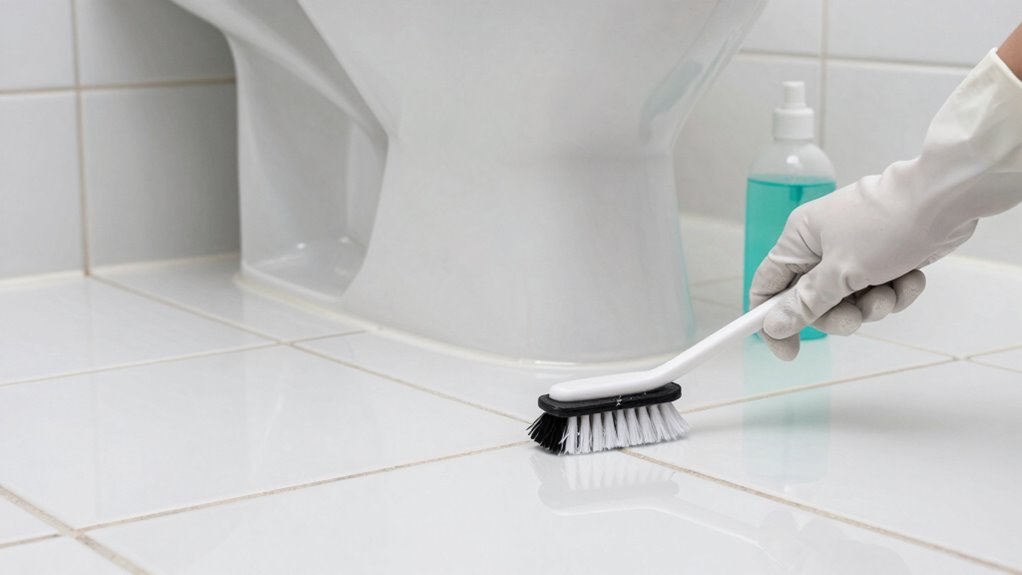
To clean the tile itself, start with a gentle, effective solution. Mix warm water with a few drops of a mild, non-abrasive cleaner or a mixture of baking soda and water. Use a soft brush or a cloth to scrub the tiles and grout lines, paying extra attention to corners and tight spaces. For stubborn stains or soap scum, you can apply a vinegar-based solution, but avoid using harsh chemicals that might damage the grout or tile surface. For hard-to-reach spots, a small brush or an old toothbrush works well to get into narrow gaps around the toilet base and in tight corners. Proper cleaning techniques help ensure all areas are thoroughly sanitized and prevent buildup. Using appropriate cleaning tools like grout brushes and microfiber cloths can improve cleaning efficiency. It’s also helpful to incorporate mold prevention strategies into your routine to keep your bathroom healthier over time.
Deep cleaning these areas regularly not only keeps your bathroom looking fresh but also reduces the chances of mold and bacteria spreading. After cleaning, ensure you dry all surfaces thoroughly. Ventilation is key—run the exhaust fan or open a window during and after cleaning to help moisture escape. This ongoing maintenance, combined with periodic grout sealing and mold prevention strategies, will make your bathroom cleaner, safer, and easier to maintain over time. Proper ventilation techniques are crucial for controlling humidity levels and preventing mold growth.
As an affiliate, we earn on qualifying purchases.
Frequently Asked Questions
How Often Should I Deep Clean Bathroom Tiles?
You should deep clean your bathroom tiles every 6 to 12 months to maintain their appearance and hygiene. During deep cleaning, focus on grout sealing to prevent stains and mold buildup. Use tile polishing to restore shine and remove stubborn grime. Regularly cleaning and sealing grout helps keep your tiles looking fresh longer, while polishing enhances their overall look. Adjust cleaning frequency based on usage and moisture levels for best results.
Are Natural Cleaning Solutions Effective for Tough Stains?
You might think natural remedies are just for hippies, but they’re surprisingly effective for tough stain removal. While they may not always match chemical cleaners, natural cleaning solutions can handle common stains when you give them time and a little effort. For stubborn spots, a mix of vinegar, baking soda, or lemon often does the trick. So yes, you can rely on natural remedies to tackle those tricky bathroom stains.
What Tools Are Best for Reaching Tight Spaces?
You should use extendable scrubbers and high pressure washers to reach tight spaces effectively. Extendable scrubbers let you access hard-to-reach areas without straining, making cleaning more efficient. High pressure washers are perfect for blasting away stubborn dirt and grime in narrow gaps. Together, these tools give you the power and reach needed to thoroughly clean around toilets and in tight bathroom corners, ensuring a spotless, hygienic space.
How Can I Prevent Mold From Forming Around Tiles?
To prevent mold from forming around tiles, you should focus on mold prevention techniques like proper ventilation and regular cleaning. Apply a quality tile sealing product to create a barrier against moisture, which helps keep mold at bay. Keep the area dry, especially after showers, and wipe down tiles regularly. These steps guarantee your bathroom stays mold-free and your tiles stay looking fresh longer.
Is It Safe to Use Bleach on Bathroom Tiles?
Yes, using bleach on bathroom tiles is generally safe if you follow proper bleach safety guidelines. Avoid using too much bleach, and always dilute it with water to prevent tile discoloration or damage. Ventilate the area well during cleaning, and rinse thoroughly afterward. Be cautious with prolonged contact, as bleach can cause tile discoloration or harm grout. When used correctly, bleach can effectively disinfect your bathroom surfaces.
Conclusion
Now that you know the tricks to clean those tricky bathroom corners, tackling grime becomes less like fighting a losing battle and more like winning a small victory. With a little elbow grease and the right tools, you’ll make your bathroom sparkle brighter than a diamond in the rough. Remember, a clean bathroom isn’t just about looks—it’s about creating a space where you can breathe easy. So roll up your sleeves and turn those tight spots into shining examples of cleanliness.
Fall Picks
fall essentials
As an affiliate, we earn on qualifying purchases.