To clean sealed hardwood floors effectively, use a gentle, pH-neutral soap mixed with warm water and a damp mop. Wring out excess water to prevent seepage into seams, and work in small sections with a gentle motion. After mopping, go over the surface with a clean, damp cloth to remove any residue. Allow the floor to air dry or dry with a microfiber cloth. Continue exploring for more tips on keeping your floors looking their best.
Key Takeaways
- Use a mild, pH-neutral soap mixed with warm water for gentle cleaning.
- Wring out the mop thoroughly to avoid excess water that can damage the floor.
- Mop in a figure-eight or back-and-forth motion, working in small sections for even results.
- Follow up with a clean, damp cloth or microfiber to remove soap residue and residual moisture.
- Allow the floor to air dry or buff with a dry microfiber cloth to prevent streaks and water spots.
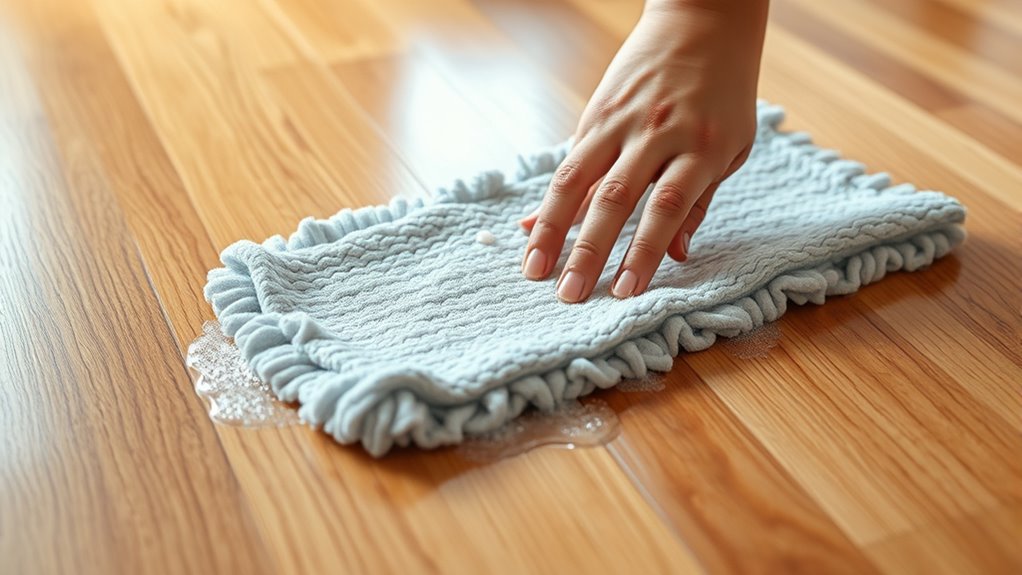
Keeping sealed hardwood floors clean is essential for maintaining their beauty and longevity. One of the most effective ways to do this is by using gentle soap and a damp mop. When it comes to mopping techniques, you want to be deliberate and careful, ensuring you don’t damage the finish or push dirt into the wood. Start by choosing the right cleaning solutions—avoid harsh chemicals that can strip or dull the sealant. Instead, opt for a mild, pH-neutral soap designed specifically for hardwood floors or a homemade mixture of a few drops of gentle dish soap in a bucket of warm water. This creates a safe cleaning solution that effectively lifts dirt without harming the surface.
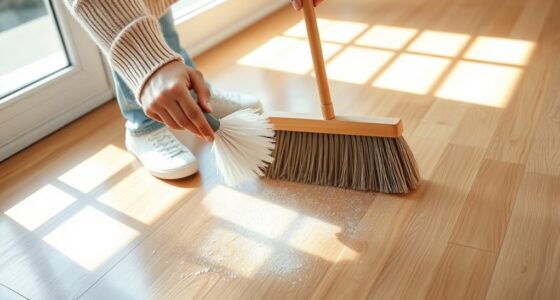
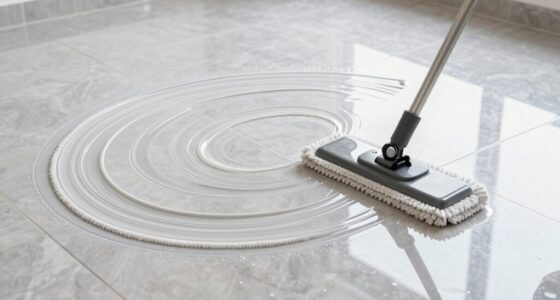
Before you begin mopping, dust or sweep the floor thoroughly to remove loose debris, dust, and pet hair. This step prevents scratching during the mopping process and ensures you’re not just spreading dirt around. When you’re ready to mop, dampen your mop with the cleaning solution—never soak it or leave it dripping wet. Excess water can seep into the seams and damage the wood over time, so wring out the mop thoroughly. Use a figure-eight motion or gentle back-and-forth strokes, working small sections at a time. This technique ensures even cleaning and prevents streaks or water spots from forming.
Dust or sweep your floor thoroughly before mopping to prevent scratches and dirt spread.
As you mop, pay close attention to high-traffic areas and spots with visible stains or buildup. If you encounter stubborn spots, don’t scrub aggressively; instead, spot clean with a soft cloth dipped in your cleaning solution. After mopping, go over the floor with a clean, damp mop or microfiber cloth to remove any residual soap and moisture. This extra step helps prevent soap residue from dulling the surface or attracting more dirt. Allow the floor to air dry or use a dry microfiber cloth to speed up the process, ensuring no lingering dampness remains. Additionally, regular cleaning with appropriate solutions helps maintain the protective finish of your hardwood floors, preventing premature wear.
Maintaining a consistent routine with gentle soap and proper mopping techniques will keep your sealed hardwood floors looking pristine. Remember, the key is to use the right cleaning solutions and avoid excess water, which can cause damage over time. Regular cleaning not only preserves the shine but also prolongs the life of your floors. With patience and care, you can keep your hardwood surfaces beautiful, resilient, and free from scratches or stains, all while avoiding the harsh effects of stronger chemicals or abrasive cleaning methods.

Zep Neutral PH Industrial Floor Cleaner – 1 Gallon – ZUNEUT128 – Concentrated Pro Trusted All-Purpose Floor Cleaner
Maintains polish without stripping protective coating
As an affiliate, we earn on qualifying purchases.
As an affiliate, we earn on qualifying purchases.
Frequently Asked Questions
How Often Should I Clean My Sealed Hardwood Floors?
You should clean your sealed hardwood floors at least once a week to prevent dirt accumulation. Regular cleaning helps maintain their shine and prevents scratches caused by debris. If you have pets or high foot traffic, increase the cleaning frequency to twice a week. Use gentle soap and a damp mop to avoid damaging the finish. Consistent cleaning keeps your floors looking beautiful and extends their lifespan.
Can I Use Vinegar or Harsh Chemicals on Sealed Hardwood?
Did you know that using vinegar cleaning on hardwood floors can actually damage the finish? You should avoid harsh chemical use because it can strip the sealed surface, leading to costly repairs. Instead, stick with gentle soap and a damp mop to keep your floors clean without risking damage. Vinegar cleaning and harsh chemicals aren’t safe for sealed hardwood, so always choose products specifically designed for hardwood floors.
What Should I Do if My Floor Develops Water Stains?
If your floor develops water stains, act quickly by gently blotting the area with a soft, damp cloth to prevent further damage. For water stain removal, you can try a mixture of baking soda and water or a mild hardwood floor cleaner. To avoid future issues, take preventive measures like wiping up spills immediately, using rugs in high-moisture areas, and maintaining proper humidity levels in your home.
Are There Specific Mops Best Suited for Hardwood Floors?
You might worry about damaging your hardwood floors, but microfiber mops are your best choice—they’re gentle, attract dust, and don’t scratch surfaces. Steam mops can be effective but should be used cautiously; if used improperly, they might harm the finish. Stick with microfiber mops for routine cleaning, and only opt for a steam mop if you’re sure it won’t cause damage. Always follow your floor’s manufacturer instructions.
How Do I Prevent Scratches During Cleaning?
To prevent scratches during cleaning, you should carefully arrange furniture to avoid dragging it across the floor. Use soft, non-abrasive mops or cloths, and consider placing area rugs in high-traffic zones to protect the surface. Always lift furniture when moving it, and avoid harsh cleaning tools. Regularly check your mop’s pad for debris, and clean the floor gently to maintain its finish and prevent scratches.

Microfiber Mops for Hardwood Floor Cleaning – BPAWA Flat Floor Mop with 4 Washable Pads for Laminate Wood Tile Vinyl Home Kitchen Bathroom – 59" Adjustable Handle
Microfiber Mops for Floor Cleaning: Flat floor mop with adjustable long handle, flexible lightweight but sturdy, great for…
As an affiliate, we earn on qualifying purchases.
As an affiliate, we earn on qualifying purchases.
Conclusion
To keep your sealed hardwood floors looking their best, remember to clean gently, rinse thoroughly, and dry carefully. Use a mild soap, a damp mop, and avoid excess water to protect your floors’ finish. Regular maintenance, gentle cleaning, and mindful care will preserve their beauty and durability. Keep your floors shining with consistency, care, and patience—because a clean, well-maintained floor reflects your commitment to your home. Stay gentle, stay consistent, and enjoy your beautiful floors.

CLEANHOME Mops for Floor Cleaning with 3 Different Washable Pads and Extendable 55” Long Handle, Multifunction Dust Mop for Hardwood,Marble,Tile Floor Mopping,Orange
Economical and durable mop: This microfiber dust mop with 3 pieces reusable refill mop pads, the chenille microfiber…
As an affiliate, we earn on qualifying purchases.
As an affiliate, we earn on qualifying purchases.

Aunt Fannie's Ultra Concentrated Hardwood Floor Cleaner, Vinegar-Free Plant Based Hardwood Floor Cleaner for Mopping, Bright Lemon Scent, 32 oz. (Pack of 1)
Aunt Fannie's Hardwood Floor Cleaner: Contains 32 ounces of lemon-scented natural plant-based floor cleaner that leaves floors sparkling…
As an affiliate, we earn on qualifying purchases.
As an affiliate, we earn on qualifying purchases.