TL;DR
Cordless stick vacuums pair a lightweight upright-style body with a rechargeable battery for convenient everyday cleaning, but their real performance depends on the floor head, power setting, bin, and maintenance. Match the brush to your floors, treat maximum runtime as a best-case figure, and check replacement parts and filtration before buying.
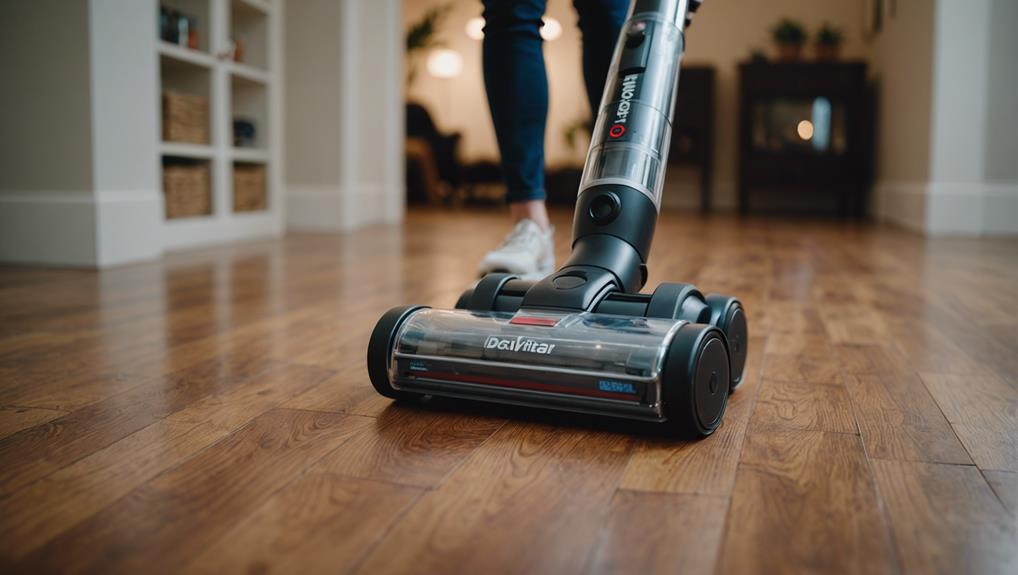
Choose the floor head to match your surfaces: a soft roller often suits hard floors, while carpet calls for a motorized brush.
Treat advertised maximum runtime as a best-case figure; check the floor head, tool, and power setting used in the test.
Check bin access, filter cleaning, and brush-roll upkeep before buying, especially if pets shed in your home.
Add the price of replacement batteries, filters, and brush rolls to the purchase cost, and read the warranty terms.
For large homes or thick carpet, consider whether a spare battery or a full-size vacuum will suit your biggest cleaning session.

Get cleaning gear delivered free with Prime
- Fast, free delivery on millions of items
- Prime Video, Amazon Music and more included
- Member-only deals all year
What cordless stick vacuums can handle around your home
Cordless stick vacuums are lightweight, battery-powered cleaners for quick household jobs, and many convert into handheld vacuums for stairs, furniture, and tight spaces. They work especially well for daily crumbs, hard floors, and smaller homes, although carpet performance and whole-home coverage depend on the model. For instance, a quick pass under the breakfast table can take less time than dragging a canister out of a closet. The design has a practical tradeoff: you gain easy handling, but usually get a smaller dust bin and less capacity for a long cleaning session. A stick model can replace a full-size vacuum in a compact apartment with mostly hard flooring. In a large home with thick carpet on every level, it may work better as a convenient daily cleaner alongside a larger machine. Many newer models add removable batteries, dirt sensors, automatic suction adjustment, or displays that show charge and settings. These features can make cleaning easier, but don’t let a bright screen distract you from the basics. A well-designed floor head and a bin you can empty without a dust cloud matter more in everyday use than an app you rarely open. Think of the vacuum as a nimble kitchen knife: handy for routine work, but a poor substitute when the job calls for a bigger tool. If you mostly want to clear everyday messes, its convenience may mean you clean more often—and let less grit settle into the corners.Products Worth Considering

eufy Security Essential 7-Piece Alarm System

LG 55-Inch QNED73B Mini LED 4K Smart TV (2026)

Dyson V15 Detect Cordless Stick Vacuum
As an affiliate, we earn on qualifying purchases.
How to compare cleaning power on your floors
Cordless stick vacuum performance depends on the floor head, brush roll, airflow, and power setting—not just the motor’s advertised power. The head determines how debris reaches the suction opening: a roller that works well on one surface can scatter crumbs or drag on another. A soft roller is often a good fit for hard floors, while a motorized brush can help lift dirt and hair from carpet by agitating the pile. For instance, rice scattered across tile and dog hair embedded in a rug are different tests; one impressive suction number won’t tell you how well a model handles both.| Floor or mess | Feature to check | What to expect |
|---|---|---|
| Hardwood and tile | Soft roller or hard-floor head | Helps collect fine dust and larger crumbs without scattering debris. |
| Rugs and carpet | Motorized brush roll | Can agitate carpet pile to lift trapped debris and hair. |
| Upholstery and stairs | Handheld conversion and small tools | Makes the vacuum easier to steer across cushions and steps. |
How to estimate battery life for a real cleaning session
Cordless stick vacuum runtime is the amount of cleaning time you get under a particular setup, not a single number that applies to every room. Advertised maximum runtime is often measured in an energy-saving mode with a non-motorized tool, while powered floor heads and high suction can shorten a session considerably. That difference matters because the floor head is usually what you’ll use for most of a room, and the strongest setting may be tempting on carpet even though it draws more energy. For instance, the display might promise enough minutes for a whole apartment, but you may spend far less time on maximum power while tackling a thick rug.- Check the test conditions. See whether the published runtime uses a powered floor head or a simple attachment. A number measured with a simple tool is useful for comparison only if you expect to clean that way; it may overstate time for floor cleaning.
- Match the estimate to your floors. Carpet, rugs, and high-power cleaning can drain the battery faster than a gentle pass over smooth flooring. Consider how much of your home needs the more demanding setting, not just the easiest rooms.
- Compare battery options. A removable battery can extend a session, but check its price and availability before assuming it’s an easy upgrade. A spare only helps if you can charge it and swap it conveniently.
- Plan for your largest routine. Think about the time needed to clean the whole home, stairs included, instead of judging only one small spill. If your normal routine exceeds one charge, you may need to split the clean or keep another vacuum available.
How to match the dust bin, filter, and upkeep to your routine
A stick vacuum’s small bin needs more frequent emptying than the bin on many full-size vacuums, and its filter and brush need regular care to keep cleaning well. Bin size affects how uninterrupted a routine feels: if it fills quickly with pet hair or bulky debris, you’ll stop more often and may need to empty it before finishing a room. Check the bin capacity and emptying mechanism before buying; a quick-release latch is only convenient if dust falls into the trash without puffing back toward your face. For instance, a bin that fills with pet hair after one living-room pass can turn a ten-minute clean into several stops at the rubbish bin. Filtration takes more than a filter label. A high-efficiency filter can capture fine particles, but it can’t prove that the vacuum’s entire airflow path is sealed. If air leaks around the filter or dust escapes when you empty the bin, the label alone won’t tell you what stays inside during normal use. If allergies shape your decision, check the model’s filtration details and whether emptying and cleaning the machine are manageable. No vacuum alone removes every indoor allergen, so the way you maintain it matters too. Use this quick upkeep routine:- Empty the bin when it reaches its fill mark or performance begins to drop. A packed bin can restrict airflow, so waiting until suction noticeably falls may mean cleaning has already become less effective.
- Check the brush roll for hair, especially after vacuuming long pet hair or fringe rugs. A tangled roll can stop rotating freely and reduce how well it lifts debris from carpet.
- Clean or replace filters on the schedule in the manual. A clogged filter can reduce airflow, and washing a filter that is not washable may damage it.
- Keep replacement filters, batteries, and brush rolls available from a source you trust. A vacuum that depends on hard-to-find parts can become costly or unusable before its motor wears out.
How to decide whether the price buys useful value
A higher price can buy a stronger floor head, longer usable runtime, easier maintenance, better tools, or a removable battery, but the premium only pays off if those features suit your home. Compare what you’ll use, then factor in replacement parts and warranty terms. For instance, a pet owner might value a powered upholstery tool and an anti-tangle brush more than a display showing dirt levels. Newer models may add automatic suction adjustment, sensors, flexible heads for cleaning under furniture, or self-emptying stations. Those features have real practical value for some people. A low-profile head can reach beneath a sofa without moving it, while a self-emptying dock can reduce contact with dust. But the dock takes up space and adds cost, and a sensor is less useful if you tend to vacuum the same way every time. Check the total ownership picture before you buy:- Included tools: Are the crevice and upholstery tools useful for your stairs, car, or furniture?
- Replacement parts: Can you buy a new battery, filter, or brush roll, and at what price?
- Warranty: What does the warranty cover, and for how long?
- Comfort: Is the weight balanced in floor and handheld modes, and does the trigger feel comfortable?
- Storage and sound: Can you dock or stand it safely, and is its noise tolerable at the setting you’ll use?
When a cordless model fits better than a full-size vacuum
A cordless stick vacuum can replace a corded model for many routine jobs, especially in a smaller home with mostly hard floors, but large areas and thick carpet can call for more capacity and sustained cleaning time. That difference follows from the combination of bin size and battery limits: more demanding surfaces can need repeated passes, which use charge and fill the bin sooner. Think about the home you clean, rather than treating “cordless” as a performance guarantee. A household in a 700-square-foot apartment may find a stick vacuum handles floors, stairs, and couch crumbs with little fuss. Now compare that with a two-story house where every bedroom has dense carpet and a pet sheds year-round. A smaller bin may need frequent emptying, and a single battery may not cover the full clean at a setting that lifts embedded hair. In that case, a full-size corded vacuum or an extra battery can make more sense. Either option is a tradeoff: more capacity can mean more bulk, while cordless convenience comes with charging and battery replacement to think about. The right choice depends on whether you value finishing the whole clean in one session or having a light machine ready for frequent, smaller jobs. For a mixed-floor home, decide which surfaces take the most effort. If your kitchen and hallway collect crumbs every day but the bedroom carpet only needs a weekly clean, a cordless vacuum can be the easy everyday tool. If carpet dominates the home, seek independent testing on that surface and consider keeping a larger vacuum for deeper cleans. This split can preserve convenience without asking a small battery and bin to do the hardest work every time. Try handling the model before you commit, if you can. Notice the weight you carry while cleaning, its balance when converted to handheld mode, and whether you can store it securely. A vacuum that twists your wrist or won’t stand safely can be a poor match even if its cleaning figures look impressive; comfort and storage affect whether you actually use it often.Frequently Asked Questions
Can a cordless stick vacuum replace a corded vacuum?
It can cover routine cleaning in many homes, especially smaller spaces with mostly hard floors. If you clean large areas of thick carpet, compare performance and usable runtime carefully; a corded or full-size model may have more capacity for that workload.
How long does a cordless stick vacuum battery last?
Runtime depends on the model, battery condition, floor head, and power setting. Maximum advertised time often comes from an energy-saving mode with a non-motorized tool, so check the test conditions and model-specific guidance.
Are cordless stick vacuums good for pet hair?
Many can pick up pet hair when they have a motorized brush head suited to your carpet and rugs. Anti-tangle designs can reduce hair wrapping, but you’ll still need to inspect and clean the brush roll.
How often do I need to empty the dust bin?
Stick vacuums generally have smaller bins than many full-size models, so they can need emptying more often. How often depends on the bin size, how much you clean, and whether you’re vacuuming up pet hair or larger debris.
Can I replace the battery?
Some models have user-removable batteries, while others require service. Check replacement price, availability, and warranty terms before buying, especially if you expect to use the vacuum for several years.
Are cordless stick vacuums suitable for people with allergies?
A model with effective filtration and a well-sealed airflow path may help retain fine particles, but a filter alone doesn’t guarantee the whole vacuum is sealed. Consider how dust escapes during emptying and upkeep, too; no vacuum alone can eliminate indoor allergens.