
Dust on your floors naturally moves upward through air circulation, causing your baseboards to trap dirt and allergens over time. If you don’t clean both surfaces regularly, dust builds up quickly, affecting indoor air quality and making your home look messy. Using damp cloths and vacuuming can help control this. Understanding how air flows in your home can also reduce dust migration. Keep going to discover simple tips that can make a real difference.

Get cleaning gear delivered free — and shop member deals
- Fast, free delivery on millions of items
- Access to Prime Big Deal Days deals on October 6–7
- Prime Video, Amazon Music and more included
Key Takeaways
- Dust from the floor migrates upward through air circulation, settling along baseboards over time.
- Dirty floors increase the amount of airborne dust that settles on baseboards.
- Infrequent cleaning allows dust to accumulate on both floors and baseboards.
- Proper ventilation and airflow reduction can minimize dust movement within the home.
- Regular cleaning of floors and baseboards prevents dust buildup and improves indoor air quality.
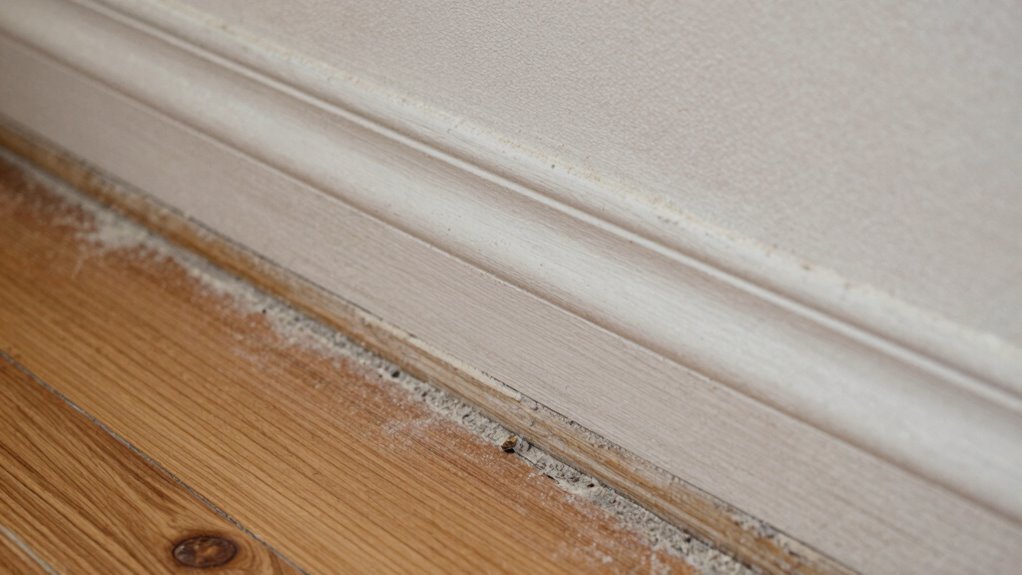
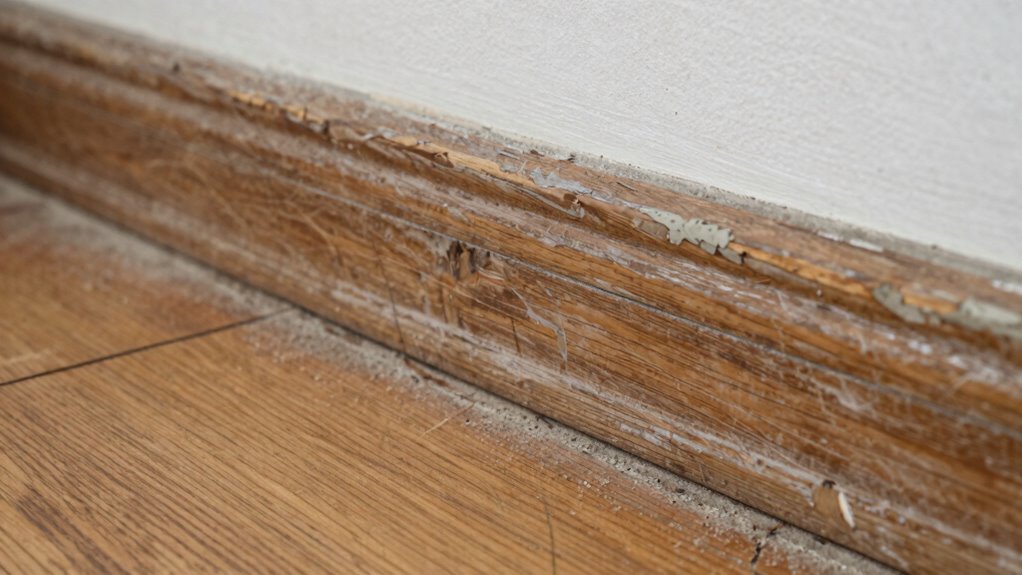
If you’ve noticed a persistent layer of dust along your baseboards, you’re not alone—this common problem can be surprisingly stubborn to fix. Dust tends to settle along the baseboards because they act as a barrier between the floor and the wall, trapping airborne allergens that linger in your home. The accumulation isn’t just an aesthetic issue; it can also impact your indoor air quality, especially if you or your family members suffer from allergies or respiratory problems. The key to tackling this problem starts with understanding the connection between dust on the baseboards and the dust on your floors. Dust from the floor naturally migrates upward due to air circulation, settling along the baseboards over time. That’s why a dirty floor often means dusty baseboards, and vice versa. To effectively reduce dust buildup, you need to evaluate both cleaning frequency and the methods you use. Regular cleaning disrupts the cycle of dust settling and prevents it from building up to unsightly levels.
You might think wiping down the baseboards just once in a while is enough, but if your cleaning schedule is infrequent, dust has plenty of time to accumulate. For best results, you should aim to clean your floors and baseboards at least once a week. This frequency keeps airborne allergens in check and minimizes the amount of dust that settles along your walls. When you clean, don’t just focus on the floor—use a microfiber cloth or a damp duster to wipe along the baseboards. The dampness helps trap dust particles, preventing them from scattering back into the air. Using a vacuum with a brush attachment can also help remove dust from hard-to-reach corners and along the baseboard edges. Additionally, understanding the role of air circulation in dust migration can help you find better ways to control dust movement within your home. Proper ventilation and airflow management can significantly reduce dust buildup by preventing stagnant air that allows dust particles to settle more easily.
Implementing air filtration methods like HEPA air purifiers can further enhance indoor air quality by capturing microscopic dust particles that traditional cleaning might miss. Remember, the goal is to interrupt the cycle of dust settling and prevent it from becoming a persistent issue. Consistency is key—by establishing a regular cleaning routine and addressing dust at its source, you’ll notice your baseboards stay cleaner longer and your indoor air quality improves. Tackling this problem isn’t just about aesthetics; it’s about creating a healthier, more comfortable environment for everyone in your home.
microfiber dusting cloth for baseboards
As an affiliate, we earn on qualifying purchases.
As an affiliate, we earn on qualifying purchases.
Frequently Asked Questions
How Often Should I Clean My Baseboards for Optimal Dust Removal?
You should clean your baseboards every two to four weeks for ideal dust removal, depending on your home’s environment. The cleaning frequency varies with baseboard material; for example, wood may need gentler cleaning, while plastic or vinyl can be cleaned more often. Regular wiping prevents dust buildup, especially in high-traffic areas. Adjust your cleaning schedule based on how quickly dust accumulates, ensuring your space stays fresh and dust-free.
Can Pet Hair Contribute to Dusty Baseboards?
Pet hair accumulation definitely contributes to dusty baseboards, much like leaves gathering in a garden corner. It traps allergens and dust, making your baseboards look dusty and dirty over time. Regular cleaning helps prevent this buildup, especially if you have pets. Use a damp cloth or vacuum to remove pet hair and dust, and you’ll keep your baseboards cleaner and healthier for everyone in your home.
Are There Specific Cleaning Products That Work Best?
You should choose cleaning products like microfiber cloths, gentle all-purpose cleaners, or dusting sprays for best results. For cleaning techniques, start by vacuuming the baseboards first to remove loose dust and pet hair, then wipe with a damp cloth or a product recommended for delicate surfaces. Avoid harsh chemicals that can damage paint or wood. Regular cleaning with these products and techniques keeps your baseboards spotless and dust-free.
Does Humidity Affect Dust Accumulation on Baseboards?
Yes, humidity levels do affect dust accumulation on baseboards. Higher humidity increases moisture in the air, which enhances dust particle adhesion, making dust stick more readily to surfaces. Conversely, low humidity helps keep dust particles airborne, reducing buildup on baseboards. Maintaining balanced humidity levels, around 40-50%, can minimize dust adhesion and keep your baseboards cleaner longer. Regular cleaning also helps combat dust accumulation regardless of humidity.
How Can I Prevent Future Dust Buildup on Baseboards?
You can prevent future dust buildup on your baseboards by regularly cleaning and using dust prevention techniques. Start by choosing smooth, easy-to-clean baseboard materials like painted wood or PVC. Incorporate weekly dusting with a microfiber cloth or a vacuum with a brush attachment. Additionally, control humidity levels to reduce airborne dust and guarantee proper ventilation. These steps keep your baseboards cleaner longer, minimizing dust accumulation over time.
Conclusion
Now, as you wipe away the dust from your baseboards, you realize that the real problem isn’t just the dirt—it’s the overlooked corners of your home where neglect quietly settles in. Just like life’s small, unnoticed moments, dust accumulates where you least expect. But with a little effort, you bring clarity and freshness, transforming a dusty mess into a clean, inviting space. Sometimes, the smallest change makes the biggest difference—starting right at the floor.
Evergreen bestsellers Picks
bestsellers
As an affiliate, we earn on qualifying purchases.