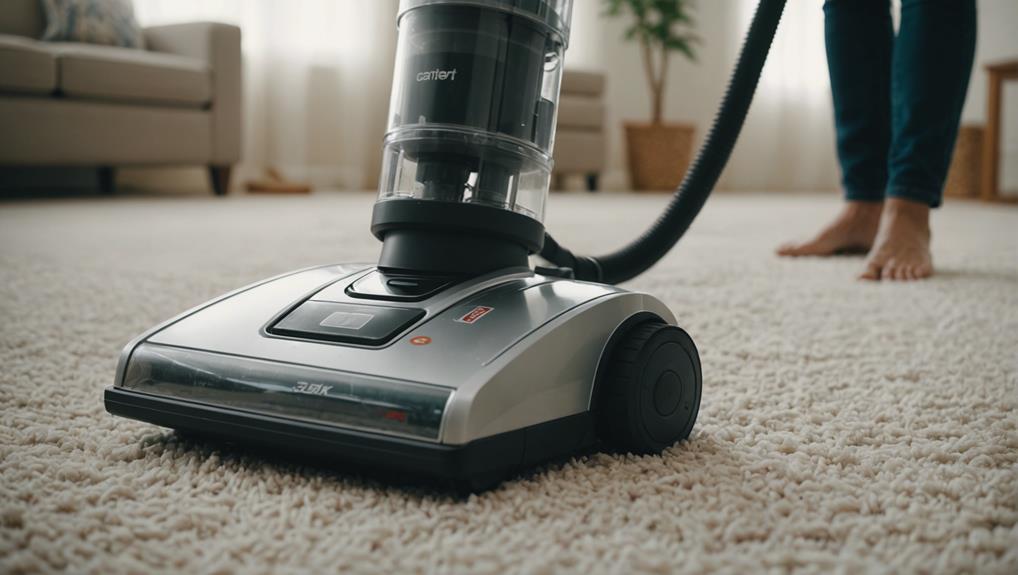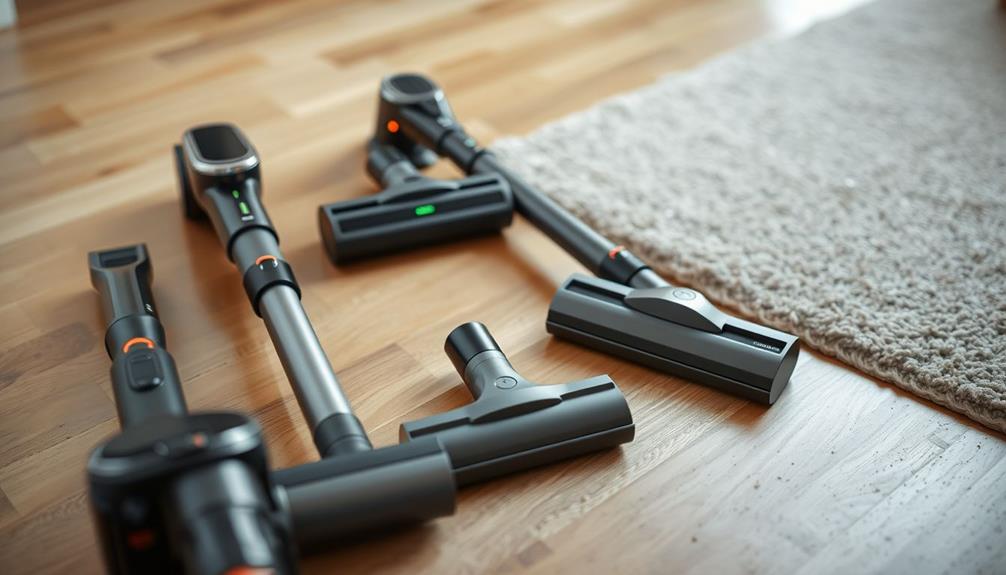
For hardwood floors, daily cleaning is best if you have pets, children, or high foot traffic, as it keeps dirt and debris from settling and causing scratches. Less busy households can comfortably opt for weekly cleaning to maintain their floors’ appearance and longevity. Regular vacuuming and spot cleaning are essential to prevent stains and damage over time. Keep in mind, finding the right balance can help protect your investment—more helpful tips await if you continue exploring.
Key Takeaways
- Daily cleaning prevents debris buildup and minimizes scratches, ideal for high-traffic or pet households.
- Weekly cleaning is sufficient for low-traffic homes, focusing on thorough mopping and dusting.
- Regular vacuuming, whether daily or weekly, reduces long-term damage caused by dirt and grit.
- Adjust cleaning frequency based on household activity level to protect the floor’s finish and prolong lifespan.
- Consistent routines, whether daily or weekly, help maintain appearance, prevent stains, and extend the hardwood’s durability.
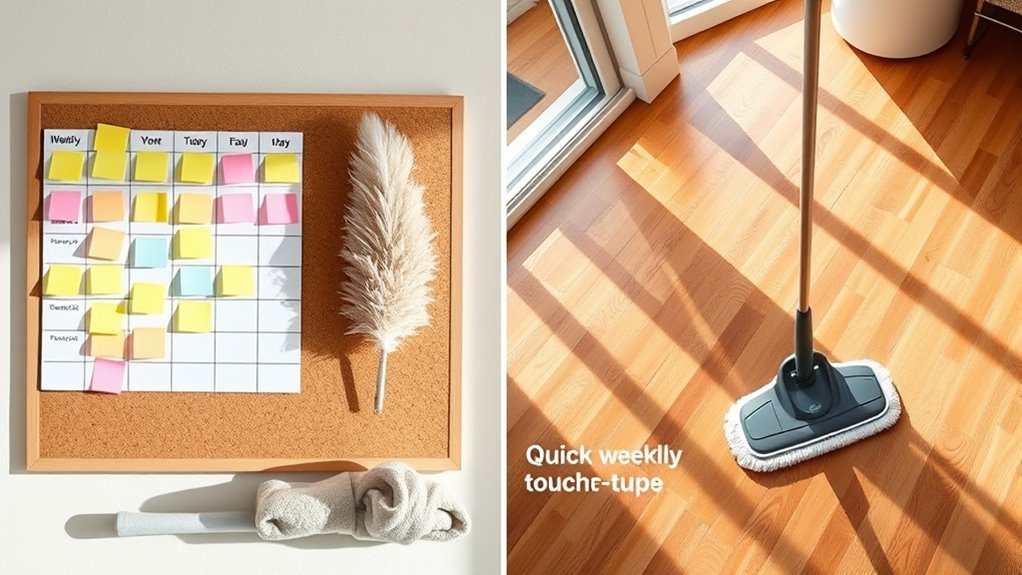
Maintaining the beauty of hardwood floors requires a consistent cleaning schedule that fits your lifestyle. One of the most important aspects of this routine is understanding whether you should clean daily or weekly. Daily cleaning keeps dirt and debris from settling into the grain, but it might not be necessary for every household. Weekly cleaning, on the other hand, can be sufficient for most homes, with some adjustments based on foot traffic and household activity. The key is striking a balance that prevents damage and keeps your floors looking their best.
When considering a cleaning routine, vacuum maintenance plays a vital role. Regularly vacuuming your hardwood floors helps remove dirt, dust, and pet hair that can scratch the surface if left unattended. Make sure your vacuum has a gentle setting and soft bristle attachments specifically designed for hardwood. This prevents unnecessary wear and tear, which aligns with stain prevention efforts. Dirt and grit act like sandpaper, gradually dulling the finish and creating tiny scratches that make your floors more susceptible to stains and damage. By vacuuming daily or on a frequent basis, you reduce the likelihood of these issues. It’s a simple, effective way to keep debris from settling into the wood and causing long-term harm.
Regular vacuuming with gentle settings prevents scratches and long-term damage to hardwood floors.
In terms of stain prevention, a consistent routine is essential. Daily sweeping or vacuuming prevents dirt buildup that can stain or discolor your floors over time. When you keep your floors free of debris, you also minimize the risk of spills seeping into cracks or scratches, which could lead to stains. For spills or messes, address them immediately with a damp cloth or mop, avoiding excess moisture that could warp the wood. Weekly mopping with a gentle, hardwood-specific cleaner helps remove any remaining dust or smudges, maintaining your floors’ luster. Regular cleaning not only preserves the appearance but also prolongs the life of the finish, ensuring you don’t need to refinish or replace your floors prematurely. Additionally, understanding home essentials like proper cleaning tools and techniques can make the maintenance more effective and less time-consuming.
Deciding between daily or weekly cleaning depends on your household’s activity level. If you have pets, children, or high foot traffic, daily vacuuming and light cleaning might be necessary to prevent damage. For less busy households, a weekly cleaning schedule could suffice, provided you stay vigilant about spot cleaning and vacuum maintenance. Ultimately, staying consistent with your cleaning routine is the best way to protect your investment. It keeps your hardwood floors looking pristine, prevents stains, and reduces long-term repair costs. Adjust your schedule as needed, but always prioritize regular, gentle cleaning to maintain the natural beauty and integrity of your hardwood floors.
Top picks for "weekly daily clean"
Open Amazon search results for this keyword.
As an affiliate, we earn on qualifying purchases.
Frequently Asked Questions
How Do Seasonal Changes Affect Cleaning Frequency?
Seasonal changes can impact how often you should clean your hardwood floors. During humid months, humidity control is essential to prevent the wood from expanding or contracting, so you might need more frequent cleaning to remove dirt and prevent damage. In dry seasons, less frequent cleaning suffices, but seasonal maintenance, like adjusting humidity levels and checking for dust or debris, helps keep your floors looking their best year-round.
Can I Use Steam Mops on Hardwood Floors?
You might be tempted to grab a steam mop for hardwood cleaning, but beware—using steam mops on hardwood floors can cause damage over time. The intense heat and moisture can warp or stain the wood. If you want a safe, effective clean, stick to damp cloths and specialized hardwood cleaning products. Save the steam mop for other surfaces, and protect your floors from costly repairs.
What Are the Signs I Need to Clean More Often?
You should clean more often when you notice dirt buildup or pet hair accumulating on your hardwood floors. These signs indicate it’s time to increase your cleaning frequency to prevent scratches and maintain their shine. If your floors look dull or feel gritty after walking, it’s a clear sign you need to sweep or vacuum more regularly. Regular cleaning keeps your floors looking great and extends their lifespan.
Is There a Recommended Cleaning Product for Daily Use?
Ever wonder what’s the best for daily cleaning? You should use recommended products like a soft microfiber mop and a gentle hardwood floor cleaner. These are perfect for daily cleaning, removing dust and dirt without damaging your floors. Is it worth risking damage with harsh chemicals? No, so stick to products specifically designed for hardwood. Regularly cleaning with the right products keeps your floors looking beautiful and lasting longer.
How Do I Prevent Scratches During Regular Cleaning?
To prevent scratches during regular cleaning, you should use proper vacuuming techniques and select gentle cleaning tools. Always vacuum with a soft brush attachment to pick up dirt without scratching the surface. Avoid using harsh or abrasive cleaning tools; opt for microfiber mops or soft cloths instead. Regularly clean your tools to prevent dirt buildup, and lift rather than drag heavy objects across the floor to maintain its finish.
Conclusion
In the epic battle between weekly and daily cleaning, mastering both schedules is your secret weapon for flawless hardwood floors. Skip a day, and dust monsters might invade; neglect weekly deep cleans, and grime could conquer your space. By sticking to these routines, you’ll keep your floors shining brighter than the sun itself, transforming your home into a sparkling palace. So, gear up, stay consistent, and watch your hardwood floors conquer the chaos—glorious and gleaming forever!