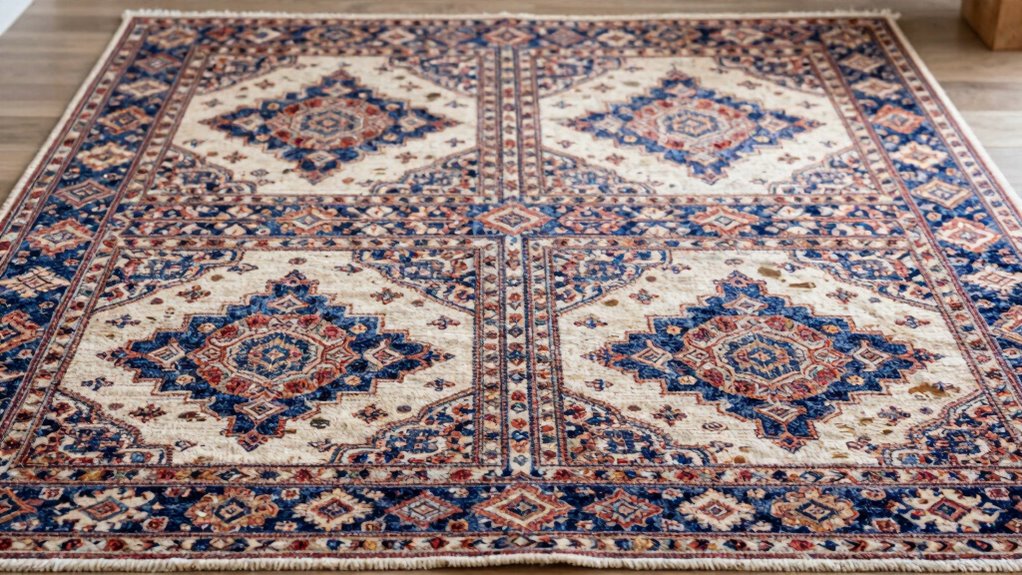
To prevent weird wear patterns on your rug, regularly rotate it every 6 months or more often in high-traffic areas. Use simple techniques like flipping or turning the rug 180 degrees or diagonally, focusing on spots with the most foot traffic or sun exposure. This helps distribute wear evenly and keeps fibers and colors vibrant. Keep your rug in top shape by following these tips, and you’ll discover even more ways to maintain its beauty.
Key Takeaways
- Rotate rugs every 3 to 6 months to evenly distribute foot traffic and prevent uneven wear patterns.
- Focus on flipping or rotating rugs in high-traffic or sun-exposed areas to balance fading and fiber pressure.
- Use diagonal or full rotations to ensure all parts of the rug experience different wear directions.
- Regularly inspect for signs of uneven wear and adjust rotation frequency accordingly.
- Incorporate rotation into your routine cleaning schedule to maintain consistent wear and prevent weird patterns.
Why Uneven Wear Patterns Damage Your Rug and Decor

Uneven wear patterns can substantially damage your rug and disrupt your decor, especially if you don’t rotate your rug regularly. When certain areas bear more weight, the fiber density in those spots decreases faster, weakening the rug’s structure over time. This uneven compression makes the fibers more susceptible to damage and reduces the rug’s overall lifespan. Additionally, persistent foot traffic in specific areas causes dye fading, dulling the rug’s vibrant colors and diminishing its visual appeal. These worn patches not only look unattractive but also detract from your decor’s harmony. By understanding how uneven wear impacts fiber density and dye fading, you realize the importance of regular rotation to preserve your rug’s beauty and integrity. Regular maintenance also involves understanding fiber density and how it influences the longevity of your rug, as well as the importance of properly distributing foot traffic to prevent uneven wear. Incorporating techniques like spot cleaning can further extend the life of your rug by preventing dirt buildup that accelerates fiber deterioration. Recognizing the signs of wear early can help you take proactive steps to maintain your rug’s appearance and structural integrity. Being aware of damage prevention strategies can further help in maintaining your rug’s overall condition over time.
How Regular Rug Rotation Prevents Common Wear Issues
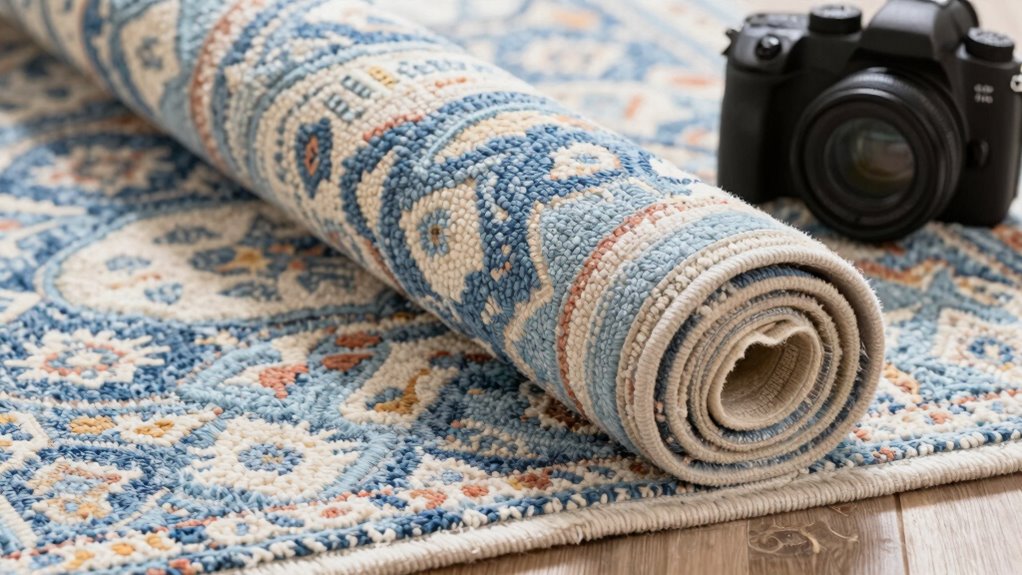
Rotating your rug regularly helps distribute foot traffic evenly, preventing certain areas from wearing out faster. This practice keeps the rug looking fresh longer and maintains its appearance. By doing so, you extend the rug’s lifespan and protect your overall decor investment. Additionally, adjusting the rug’s position can help mitigate uneven wear patterns, preserving the integrity of the fibers over time. Incorporating proper maintenance techniques can further enhance your rug’s durability and overall look. Understanding field‑of‑view considerations from other areas of home decor can also help you appreciate how balanced design elements contribute to a more harmonious space. For example, considering the Focal points within your interior layout can guide how you rotate rugs to optimize visual appeal.
Even Wear Distribution
Regularly changing the position of your rug helps guarantee that foot traffic and furniture don’t wear down specific areas prematurely. This even wear distribution prevents unsightly patches and extends your rug’s overall appearance. To maximize benefits, use proper vacuuming techniques, ensuring you clean all areas thoroughly to remove dirt and debris that can cause uneven wear. Regular rotation also helps with stain prevention by avoiding constant pressure on one spot, reducing the risk of stains setting in permanently. When you rotate your rug regularly, you promote consistent fiber health and maintain a uniform look. This simple routine keeps your rug looking fresh and prevents parts of it from deteriorating faster than others, saving you money and effort in the long run. Incorporating energy-efficient cleaning tools aligned with sustainable practices can further enhance your rug’s longevity. Additionally, understanding wear patterns can guide you in timing your rotations for optimal results. Being mindful of household maintenance routines can also contribute to preserving your rug’s condition over time. Regular inspections of your rug’s fringe and edges can help identify early signs of wear, allowing you to address issues before they become severe.
Prolongs Rug Lifespan
By consistently changing the position of your rug, you can considerably extend its lifespan and prevent common wear issues. Regular rotation helps distribute foot traffic evenly, reducing uneven wear and preventing areas from thinning prematurely. This practice also minimizes color fading caused by prolonged exposure to sunlight and friction, keeping your rug looking vibrant longer. Additionally, it makes stain removal easier, as no single spot bears the brunt of spills or dirt accumulation. Rotating your rug ensures that any stains or dirt are spread out, reducing the risk of permanent damage. Incorporating natural fibers into your rug selection can also enhance its durability and sustainability. Studies show that electric dirt bikes with lightweight designs can withstand rough conditions better, helping your rug last longer in active households. Using proper maintenance techniques, such as regular vacuuming and prompt spot cleaning, can further extend the life of your rug. Regularly inspecting and rotating your rug is also an effective preventive measure to identify and address issues early on, thereby maintaining its structural integrity. Implementing proper placement and avoiding direct sunlight can further protect your rug from fading and wear. Over time, this simple habit preserves the rug’s structural integrity and appearance, saving you money on repairs or replacements. In short, routine rotation is a practical step to maximize your rug’s durability and maintain its fresh, attractive look.
How to Properly Rotate Your Rug for Better Longevity

To help your rug wear evenly and last longer, it’s important to rotate it periodically. This simple step prevents uneven fading and wear caused by foot traffic and furniture placement. When rotating, consider your decor trends—changing the rug’s position can refresh your space. Also, keep in mind rug materials; delicate fibers like wool or silk need gentler handling. Use the table below for ideas on rotation patterns:
| Rotation Method | Area to Focus | Frequency |
|---|---|---|
| 180-degree turn | Heaviest traffic | Every 6-12 months |
| Full flip | Worn spots | Annually |
| Diagonal rotate | Sun-exposed areas | Every 6 months |
Proper rotation maximizes longevity and keeps your space stylish. Regularly assessing your rug’s wear patterns can help determine the best rotation schedule. Additionally, being aware of fiber types can guide you on handling your rug more carefully during rotation. Understanding how different rug materials react to light and foot traffic can further optimize your maintenance routine, especially for delicate fibers like wool or silk that require more careful handling.
How Often Should You Rotate Your Rug? Best Practices

Knowing how often to rotate your rug helps prevent uneven wear and fading, ensuring it looks fresh and lasts longer. Typically, rotating every 3 to 6 months is a good rule of thumb. This frequency helps minimize color fading caused by sunlight exposure and foot traffic, keeping the rug’s appearance consistent. If you have pets, rotating more often can help distribute pet damage evenly, preventing specific areas from wearing out prematurely. Regularly shifting your rug also reduces the risk of developing uneven wear patterns, which can be difficult to fix later. Proper rug maintenance can further enhance its durability and appearance over time. Consider the material composition of your rug, as some fibers are more prone to fading or uneven wear and may require more frequent rotation for optimal preservation.
Signs Your Rug Is Wearing Out and When to Rotate
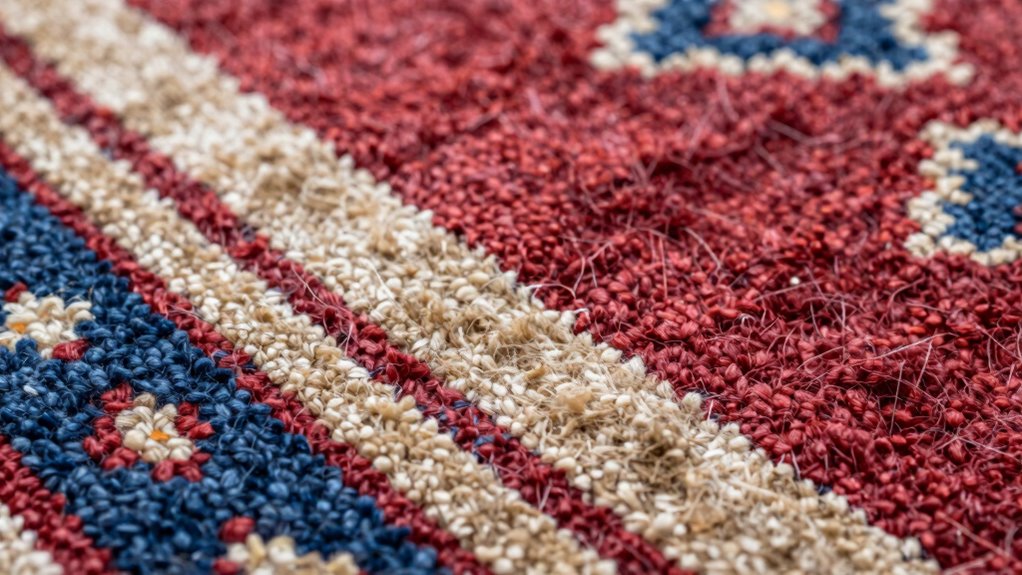
When your rug starts showing signs of wear, it’s a clear indicator that it’s time to rotate or replace it. Look for uneven fading or thinning in areas with heavy furniture placement, like under tables or chairs. Flattened or matted fibers indicate high foot traffic that’s wearing the rug down prematurely. Frayed edges or loose threads also suggest deterioration, especially in spots where furniture shifts frequently. If you notice these signs, rotating your area rugs can help distribute wear evenly, prolonging their lifespan. Pay attention to areas where the pattern or pile looks different from the rest—this uneven wear can lead to weird patterns if left unaddressed. Rotating at regular intervals keeps your rug looking fresh and helps prevent localized damage.
Which Rugs Benefit Most From Rotation and Maintenance
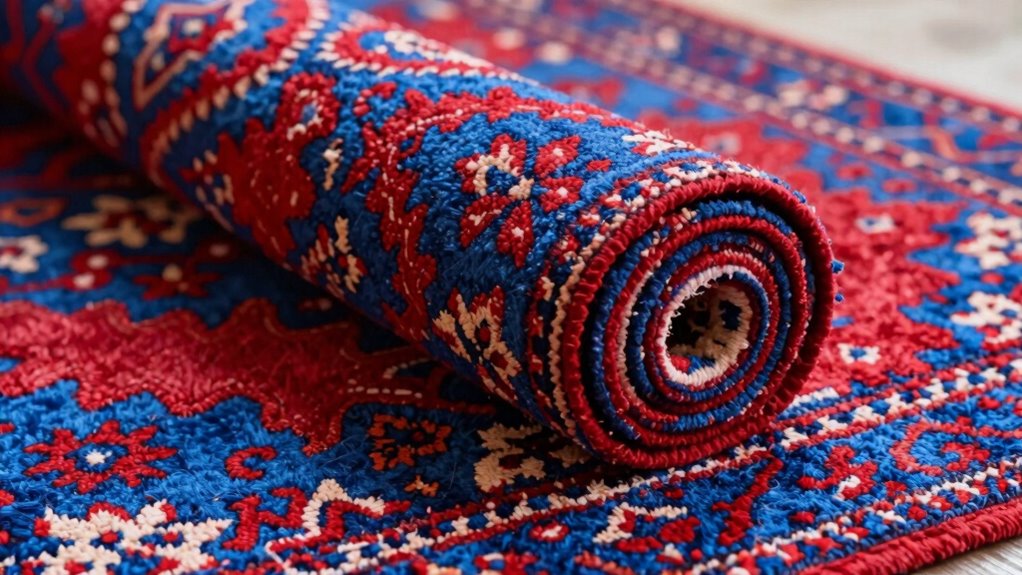
Rugs that experience high foot traffic or uneven wear patterns benefit most from regular rotation and maintenance. If your rug is made from sensitive materials like wool or silk, frequent handling helps prevent uneven material sensitivity, which can lead to deterioration over time. Additionally, rugs with vibrant or light colors are more prone to noticeable color fading when exposed to direct sunlight or heavy use. Rotating your rug evenly distributes wear and exposure, reducing the risk of one area fading faster than others. This maintenance is especially essential for delicate materials or those with bold patterns that show irregular wear easily. By staying consistent with rotation, you prolong your rug’s appearance and structural integrity, ensuring it remains beautiful and functional for years to come.
Other Care Tips to Extend Your Rug’s Life
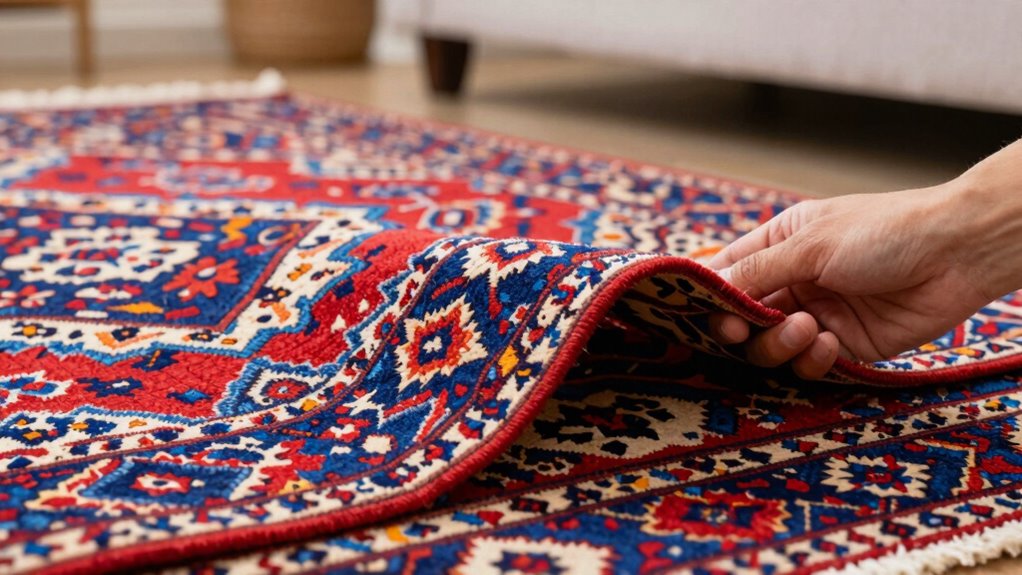
To keep your rug looking its best for years, you should regularly vacuum it to remove dirt and debris that can wear down fibers over time. Understanding your rug’s fiber types helps you choose the right cleaning method; for example, wool requires gentle care, while synthetic fibers can handle more robust cleaning. Prompt stain removal is essential, as stains can set and cause permanent discoloration or damage. Blot spills immediately with a clean cloth and use appropriate cleaning solutions based on the stain and fiber type. Avoid harsh chemicals or scrubbing, which can fray fibers or worsen stains. Regular maintenance, combined with proper stain removal techniques, prolongs your rug’s lifespan and keeps it looking fresh and vibrant longer.
Common Mistakes to Avoid When Rotating Your Rug
One common mistake is neglecting to rotate your rug regularly, which can lead to uneven wear patterns. Ignoring this simple step causes certain areas to fade or wear out faster than others. To keep your rug looking its best, make sure you rotate it consistently and avoid overlooking this important maintenance practice.
Uneven Wear Patterns
Have you noticed certain areas of your rug wearing down faster than others? Uneven wear patterns often result from improper rotation or placement. One common mistake is neglecting to consider rug padding; thin or uneven padding can cause pressure points that lead to faster degradation in specific spots. Additionally, fiber quality plays a vital role—lower-quality fibers tend to wear out unevenly, especially if exposed to high traffic. To prevent this, make certain your rug has sufficient padding and rotate it regularly to distribute wear evenly. Avoid ignoring these factors, as they can accelerate deterioration and create unsightly patches. Proper maintenance, including choosing quality fibers and using appropriate padding, helps maintain a balanced wear pattern over time.
Ignoring Regular Rotation
Ignoring regular rotation can lead to uneven wear and reduce the lifespan of your rug. When you skip rotating it, areas exposed to constant sunlight or high foot traffic develop color fading, making the rug look patchy. Also, if you have pets, pet damage becomes more pronounced in one spot, causing fraying or worn patches. Without regular turning, these issues worsen, creating an uneven appearance and weakening fibers. To prevent this, make a habit of rotating your rug every few months. This simple step helps distribute foot traffic evenly, minimizes color fading, and reduces pet-related damage. Regular rotation keeps your rug looking fresh and extends its longevity, saving you money and effort in the long run.
Making Rug Rotation Part of Your Cleaning Routine
Incorporating rug rotation into your cleaning routine is a simple yet effective way to extend the life of your carpets and keep them looking fresh. Regularly rotating your rug prevents uneven wear and preserves its appearance. To make it easier, include DIY cleaning and check your rug padding for signs of wear or shifting. When you do this, you’ll notice your rug staying plush and vibrant longer. Consider creating a schedule, such as rotating weekly or monthly, so it becomes a habit. Use this visual reminder to stay motivated:
| Timeframe | Action | Result |
|---|---|---|
| Weekly | Rotate rug 180° | Even wear, fresh look |
| Monthly | Clean and inspect | Longer-lasting rug |
| Quarterly | Check padding | Prevents uneven wear |
Making rug rotation routine keeps your space inviting and your investment protected.
What to Do When Rotation Isn’t Enough to Fix Wear Problems

When rug rotation alone doesn’t resolve uneven wear, it’s time to contemplate more targeted solutions. For vintage rugs showing persistent wear patterns, consider professional cleaning or reparative treatments to restore fibers. If the wear affects high-traffic areas, adding area rugs or mats can protect the vulnerable spots further. For allergy concerns, replacing sections with more durable, hypoallergenic materials might be necessary. You could also think about re-stretching or re-padding the rug to redistribute weight more evenly. In some cases, replacing severely worn sections or consulting a rug specialist ensures preservation of valuable vintage pieces. These steps help prevent further damage and maintain your rug’s appearance and health, especially important if allergy concerns are involved. Ultimately, combining rotation with these strategies prolongs your rug’s lifespan.
Frequently Asked Questions
Can Rug Rotation Fix Deep-Set Wear Patterns?
Yes, rotating your rug can help fix deep-set wear patterns. By regularly changing its position, you prevent concentrated foot traffic in one area, which promotes wear pattern prevention. This simple habit extends your rug’s longevity and keeps it looking fresh. Keep in mind, though, that while rotation can improve appearance and slow further damage, deep-set wear might require additional solutions like padding or professional cleaning.
Is Vacuuming Frequency Affected by Rug Rotation?
Yes, your vacuuming schedule can be affected by rug rotation, as rotating your rug helps distribute wear evenly. By doing so, you might need to adjust how often you vacuum specific areas to maintain consistent cleanliness and prevent uneven wear. Regular rug maintenance, including timely vacuuming and rotation, ensures the fibers stay in good condition and prolongs the rug’s lifespan. Keep an eye on high-traffic spots for ideal results.
How Does Furniture Placement Impact Wear and Rotation Needs?
Did you know that improper furniture arrangement can increase wear by up to 50%? Your furniture placement directly influences wear distribution on your rug, causing uneven patterns. To minimize this, regularly rotate furniture and rearrange pieces to distribute foot traffic evenly. This not only prolongs your rug’s lifespan but also maintains a consistent appearance, reducing the need for frequent rotation. Proper furniture placement truly makes a difference in wear management.
Are There Specific Rug Materials More Resistant to Uneven Wear?
You’ll find that wool rugs are more resistant to uneven wear compared to synthetic options, thanks to their natural durability and resilience. They also tend to have better stain resistance, making them easier to maintain over time. When considering durability comparison and stain resistance, choose a wool rug if you want a material that withstands foot traffic and maintains its appearance longer, reducing the need for frequent rotation.
Does Climate Influence How Often I Should Rotate My Rug?
Like the changing seasons in a well-rehearsed symphony, climate impact affects how often you should rotate your rug. In humid or sunny climates, you might need to do seasonal rotation more frequently—every few months—to prevent uneven wear and fading. Conversely, in stable, moderate climates, quarterly or biannual rotations should suffice. Pay attention to sunlight and humidity levels; these are your cues for maintaining an even, lasting rug.
Conclusion
Think of your rug as a treasured garden; with regular rotation, you prevent uneven patches from taking over. By staying consistent, you give every corner a chance to shine, keeping your decor vibrant and inviting. Don’t let wear patterns grow like weeds—nip them in the bud with simple, mindful rotations. Your rug’s longevity depends on your care, turning everyday upkeep into a nurturing act that keeps your space warm and welcoming for years to come.