To dry floors faster without marks, start by using microfiber cloths or a squeegee to remove excess water efficiently. Increase air circulation with fans or blowers for even evaporation, and keep the environment warm and well-ventilated to speed up the process. Working in sections guarantees thorough drying and reduces pooling. If you want proven tips to achieve a streak-free finish quickly, there’s more to discover that can make your floor drying routine even easier.

Get cleaning gear delivered free — and shop member deals
- Fast, free delivery on millions of items
- Access to Prime Big Deal Days deals on October 6–7
- Prime Video, Amazon Music and more included
Key Takeaways
- Use microfiber cloths and squeegees to remove excess water gently and efficiently.
- Increase airflow with fans or blowers for faster evaporation and even drying.
- Focus on drying in sections from one corner to another for consistent results.
- Ensure proper ventilation and warm temperatures to speed up moisture evaporation.
- Rinse floors with clean water after mopping to prevent soap residue and streaks during drying.
Have you ever wondered how to dry your floors quickly without leaving unsightly streaks or marks? It’s a common concern, especially when you want your space to look neat and clean in no time. The key lies in choosing the right cleaning solutions and applying effective drying techniques. First, confirm you’ve used the appropriate cleaning solutions for your floor type. For tile or laminate, a mild, pH-neutral cleaner works best to lift dirt without leaving residue. Avoid overly soapy solutions, as excess soap can cause streaks when drying. After mopping, rinse the floor with clean water to remove any leftover cleaner, which helps prevent streaking during drying.
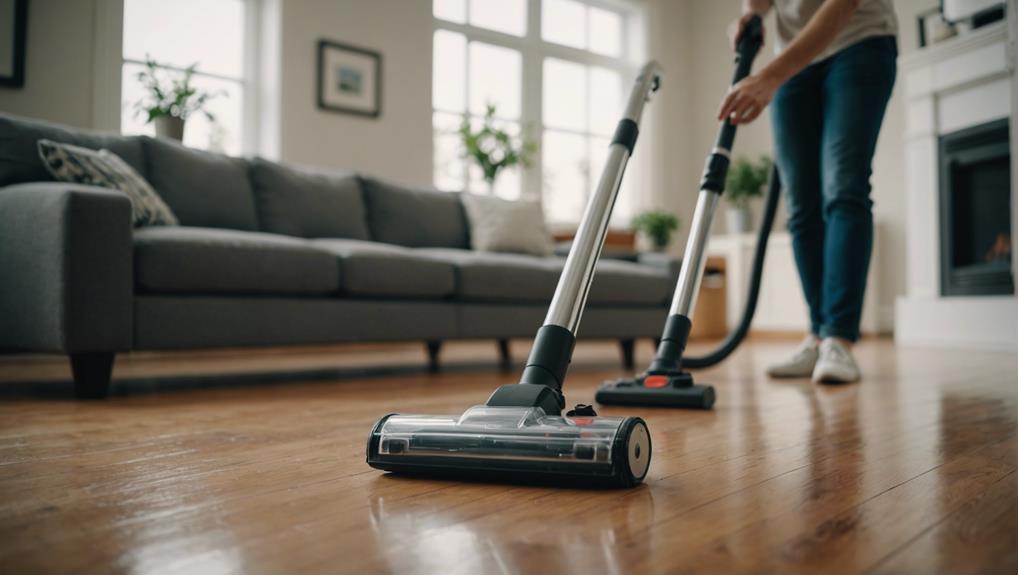
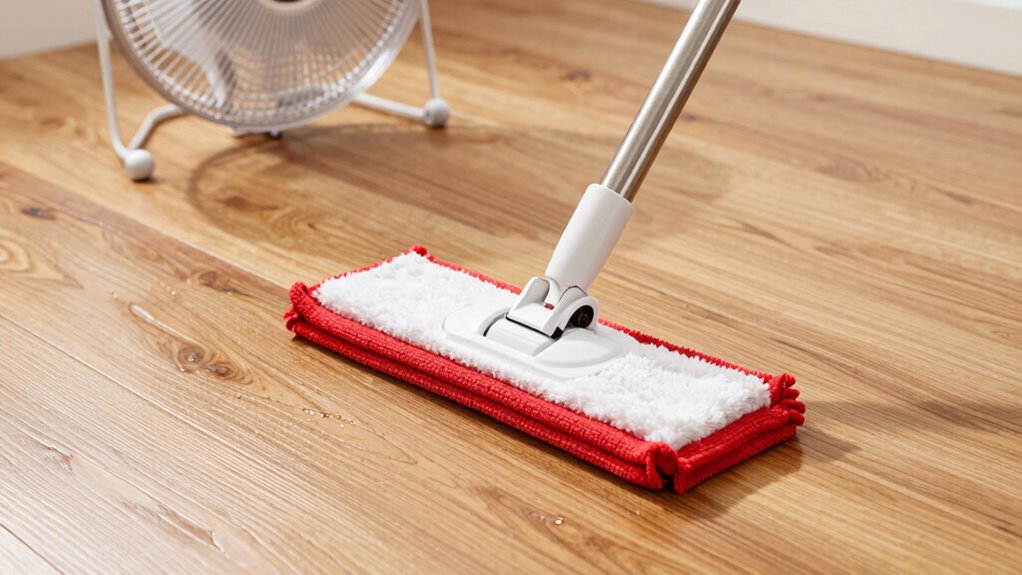
Once your floors are clean, the drying process becomes essential. A good drying technique involves more than just waiting for the floor to air dry; you want to speed things up without causing marks. Start by using a microfiber cloth or a squeegee to remove excess water. Microfiber cloths are highly absorbent and gentle on surfaces, helping to lift water without smudging. Glide the squeegee across the floor in a consistent, overlapping pattern to gather water efficiently. This step greatly reduces the amount of moisture left behind, making the final drying stage faster. Additionally, understanding drying techniques can help optimize your process and avoid streaks. Using the right drying methods can make a significant difference in achieving a streak-free finish.
Use microfiber cloths or a squeegee to quickly remove excess water and speed up floor drying.
Next, consider using fans or a portable blower to circulate air across the floor. Position fans to blow across the surface, ensuring air moves evenly to expedite evaporation. If you have a wet-dry vacuum, use it on the lowest setting to extract remaining water after wiping or squeegeeing. This is especially effective on larger areas or stubborn puddles. Avoid walking on the wet floor, as footprints can create marks, or you might unintentionally spread dirt and cause streaks. Proper ventilation can significantly influence drying times and help prevent moisture buildup.
Another helpful tip is to dry the floor in sections, working from one corner to another. This focused approach allows you to be thorough and prevents water from pooling. When drying, keep in mind that temperature and humidity levels influence drying speed. Warmer, less humid environments dry faster, so if possible, increase ventilation or turn on the heating to aid evaporation.
microfiber floor cleaning cloths
As an affiliate, we earn on qualifying purchases.
As an affiliate, we earn on qualifying purchases.
Frequently Asked Questions
Can Using a Fan Damage My Floor Finish?
Using a fan typically won’t damage your floor finish if you guarantee proper precautions. Keep the fan at a safe distance, and avoid direct airflow on sensitive surfaces. Floor sealants and moisture barriers protect your flooring, but excessive airflow might cause uneven drying or minor scratches. To stay safe, use a gentle fan, and make certain your floor’s finish and sealants are compatible with airflow. This helps dry your floor faster without damage.
Is It Safe to Use Heat to Dry Floors Faster?
Using heat to dry floors faster can be risky, especially if your floor has chemical adhesives or absorbs moisture easily. Excessive heat may damage the adhesive bonds or cause the finish to peel. Instead, focus on gentle methods like fans or dehumidifiers, which reduce moisture absorption without risking damage. Always test in a small area first, and avoid high heat to protect your floor’s integrity and finish.
What Drying Method Works Best on Hardwood Floors?
The best drying method for hardwood floors involves gentle air circulation combined with a low-speed fan. You should avoid excessive heat, which can damage the wood grain. Use a dehumidifier to reduce moisture absorption, and guarantee good ventilation. Wipe up excess water promptly with a soft cloth, and elevate furniture to prevent moisture buildup. This approach helps floors dry quickly without causing marks or damaging the wood’s natural finish.
How Do I Prevent Water Spots During Drying?
You can prevent water spots during drying by using gentle drying techniques and paying attention to water stain prevention. Start by wiping excess water with a soft microfiber cloth, then employ a drying method that lets air circulate without over-drying. Keep the humidity steady and avoid heat sources. These drying technique tips help you avoid water spots, ensuring your floors stay spotless while drying quickly and evenly.
Does Using a Hairdryer Harm the Floor Surface?
Using a hairdryer for drying floors can potentially harm the surface if you set it on high heat or hold it too close. It’s best to use gentle drying techniques and keep the dryer at a safe distance. For safe floor cleaning and drying, opt for air circulation or towel drying first, then use a hairdryer cautiously if needed. This approach prevents damage and speeds up the process without risking surface harm.
Conclusion
So, next time you’re desperately trying to dry your floors without leaving those pesky streaks, remember—patience is overrated, and speed is king. Who needs spotless, dry floors when you can have a frantic, streaky mess instead? Just grab a towel, skip the proper drying methods, and embrace your inner chaos. After all, who cares about cleanliness when you can have a little thrill of the streaky, damp adventure? Happy drying… or not!
Fall Picks
fall essentials
As an affiliate, we earn on qualifying purchases.