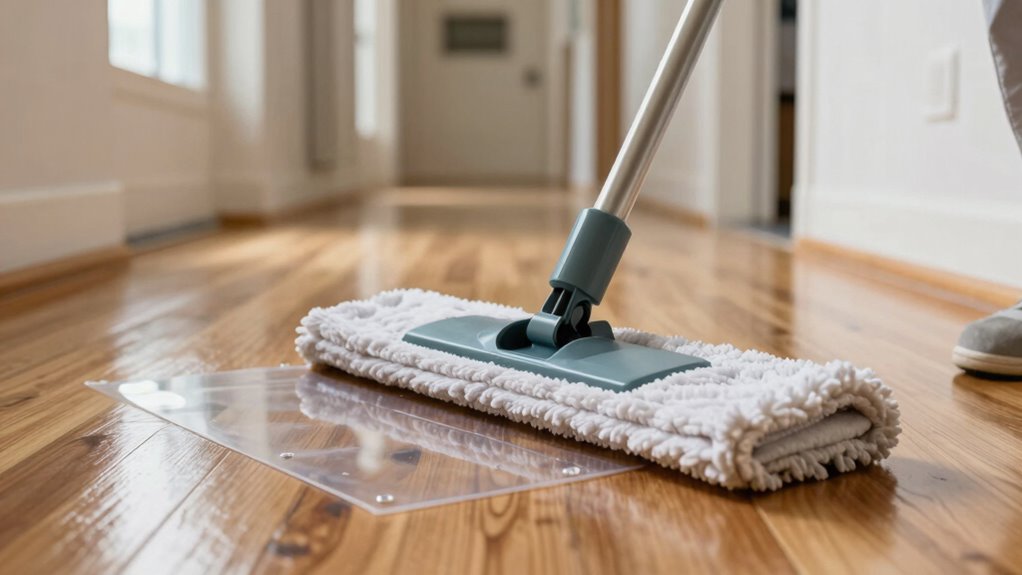

To protect your floor finishes in high-traffic areas, use microfiber mops and soft brushes to avoid scratches, and choose equipment suited for your floor type. Regularly inspect and reapply protective coatings, ensuring they remain intact and effective. Stick to pH-neutral cleaners and avoid harsh chemicals that can weaken surfaces. Proper cleaning techniques and consistent maintenance help extend your floor’s lifespan. Keep your floors looking their best—more helpful tips ahead await your discovery.
Key Takeaways
- Use microfiber mops and soft brushes to clean without scratching high-traffic floors.
- Apply and regularly inspect protective coatings to shield floors from wear and damage.
- Choose pH-neutral, floor-specific cleaners to prevent deterioration of finishes.
- Limit aggressive chemicals and abrasive tools during cleaning to preserve surface integrity.
- Educate household members on proper cleaning techniques to minimize damage in busy areas.

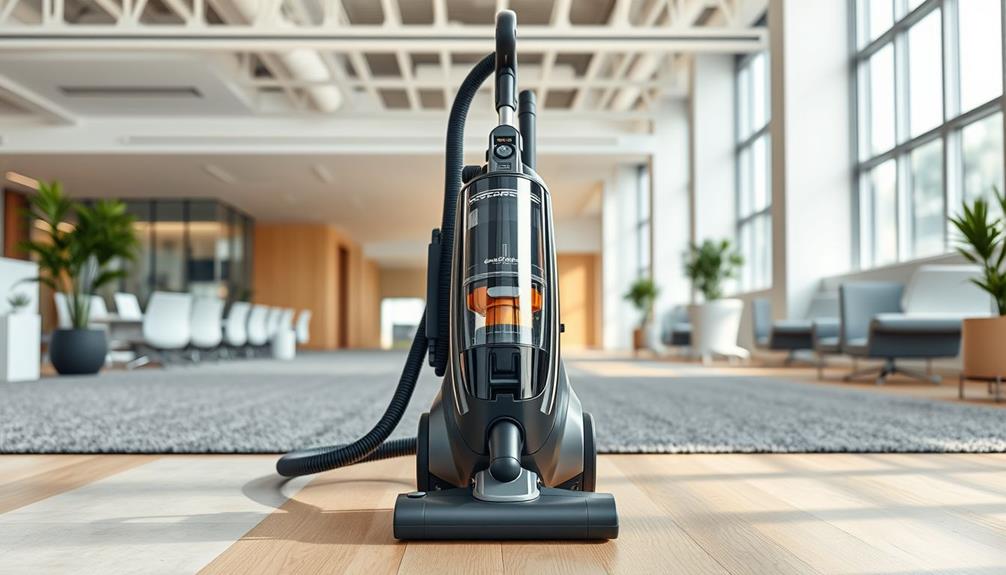
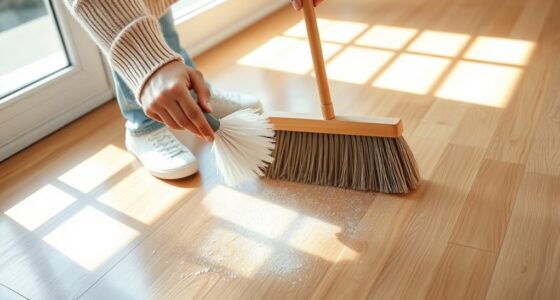
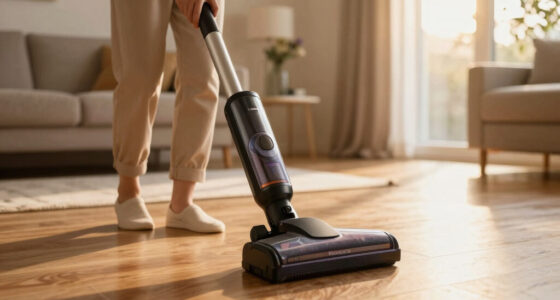
Keeping your floor finishes looking their best requires more than just regular cleaning; it’s crucial to protect them during the process. High-traffic areas are especially vulnerable to wear and tear, so using the right cleaning equipment and applying protective coatings can make a significant difference. When selecting cleaning equipment, opt for tools that are gentle yet effective. Microfiber mops and soft-bristled brushes can clean thoroughly without scratching or dulling the surface. Avoid harsh scrubbers or abrasive pads, which can damage delicate finishes over time. Additionally, using equipment that minimizes dirt redistribution, like vacuum cleaners with soft brushes, helps prevent unnecessary abrasion caused by grit or debris. The goal is to clean efficiently while preserving the integrity of your flooring. Incorporating protective coatings as part of your maintenance routine creates an extra layer of defense against daily wear. Regularly choosing cleaning methods that are compatible with your floor’s specific finish also helps prevent deterioration. Using appropriate cleaning tools designed for your floor type ensures you don’t inadvertently cause damage during routine maintenance.
Protective coatings are a crucial line of defense in maintaining the appearance and longevity of your floors. These coatings create a barrier that shields the finish from scratches, stains, and daily wear. Before cleaning, confirm the protective layer is intact; if it’s worn or damaged, consider reapplying the coating to restore its protective properties. When cleaning, avoid using overly aggressive chemicals that can erode or weaken these coatings. Instead, choose pH-neutral cleaners designed for your specific floor type. Applying the right protective coatings initially and maintaining them regularly reduces the need for intensive cleaning and helps your floors resist damage from foot traffic. Regular inspections and touch-ups of the protective layer help sustain its effectiveness over time. Utilizing proper cleaning techniques can also extend the lifespan of your protective coatings and enhance overall floor durability. Moreover, understanding the specific floor finish on your surface can guide you in selecting the most appropriate cleaning methods to prevent deterioration. In addition, educating household members on proper cleaning habits can greatly contribute to preserving the protective layer over years of use.
As an affiliate, we earn on qualifying purchases.
Frequently Asked Questions
Can Certain Cleaning Products Permanently Damage Floor Finishes?
Yes, certain cleaning products can permanently damage floor finishes. Harsh chemicals can cause chemical reactions that lead to discoloration or surface etching, weakening the protective coating. You should always check labels for compatibility with your floor type and avoid using abrasive or acidic cleaners. Using appropriate, pH-neutral products helps preserve your floor’s finish, preventing long-term damage caused by surface etching or chemical reactions.
How Often Should High-Traffic Areas Be Re-Sealed?
You should re-seal high-traffic areas every 1 to 3 years, depending on foot traffic and wear. Think of it as giving your floors their yearly check-up—staying ahead prevents bigger issues down the line. Maintain a consistent maintenance schedule, and you’ll keep your floors looking fresh and protected. Regular re-sealing helps preserve the finish, ensuring it withstands daily wear and tear, saving you time and money in the long run.
Are There Eco-Friendly Options for Floor Protection?
Yes, you can choose eco-friendly sealants that are non-toxic and biodegradable, providing excellent protection without harming the environment. Additionally, implementing sustainable cleaning methods like using natural cleaners and microfiber mops helps preserve your floor’s finish while reducing chemical waste. By combining eco-friendly sealants with sustainable cleaning practices, you effectively safeguard your floors in high-traffic areas, ensuring durability and environmental responsibility simultaneously.
What Are the Best Tools for Minimizing Floor Damage During Cleaning?
You should use a soft floor pad to gently scrub and protect the finish during cleaning, preventing scratches and wear. Pair this with a sturdy mop bucket to keep your cleaning solution at the right level, avoiding over-wetting that can damage floors. These tools help minimize damage by ensuring gentle, controlled cleaning, which preserves your floor’s integrity and shine, especially in high-traffic areas.
How to Identify Early Signs of Floor Finish Deterioration?
Think of your floor finish as a delicate tapestry; early signs of wear are tiny frays and fading threads. To spot them, do a finish assessment regularly, checking for dullness, scratches, or discoloration. Look for areas that feel rougher or are losing shine, especially in high-traffic zones. Catching these signs early lets you address issues before damage worsens, keeping your floors looking vibrant and well-maintained.
Conclusion
By safeguarding your floor finishes, you guarantee their longevity, amidst the constant hustle of high-traffic areas. It’s a delicate balance—embracing the busy rhythm while preserving the surface’s beauty. Think of it as shielding a fragile treasure in a bustling marketplace; your careful attention turns everyday cleaning into an act of preservation. Ultimately, protecting your floors isn’t just about maintenance, but about honoring their resilience in the face of relentless wear.