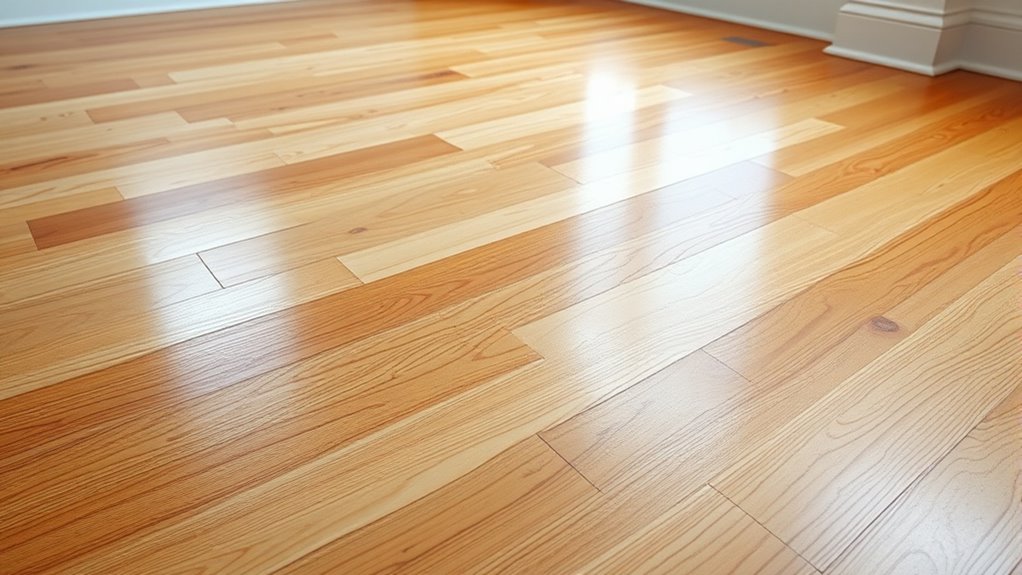

If your hardwood floors look dull, scratched, or worn from heavy use, it’s time to contemplate refinishing. The process involves sanding off the damaged surface, applying a stain if you want to change or deepen the color, and finishing with a protective topcoat like polyurethane. It takes a few days but results in a smooth, glossy surface that boosts your home’s beauty and value. Keep exploring to learn how to do it right at home or find professional help.
Key Takeaways
- Signs like dullness, scratches, and surface damage indicate it’s time to refinish your hardwood floors.
- The process involves sanding to remove surface imperfections, followed by staining and sealing for a fresh look.
- Professional equipment ensures even sanding and proper stain application, preventing uneven patches or blotches.
- Refinishing typically takes several days, including drying time for stain and topcoat layers.
- Hiring experienced professionals guarantees a smooth, durable finish and enhances your home’s aesthetic and value.
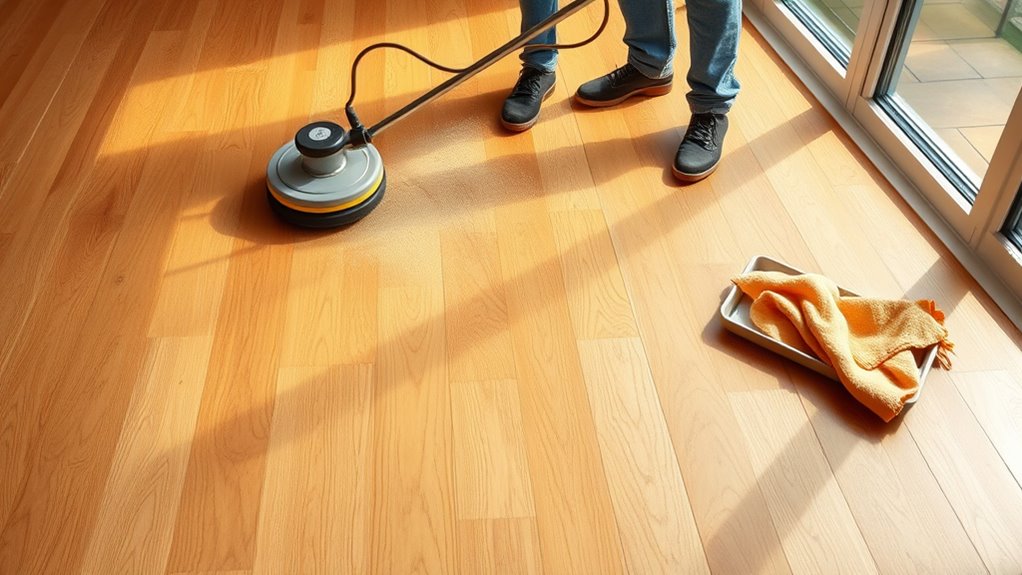
Are your hardwood floors looking worn or scratched? If so, it’s probably time to consider refinishing. Over the years, foot traffic, furniture, and everyday use can leave your floors dull, scuffed, and lacking their original shine. Refinishing restores their beauty and extends their lifespan, but knowing when and how to do it is key. One of the first steps in the process is floor sanding. This step removes the top layer of damaged finish and any surface imperfections, revealing a smooth, clean surface ready for a fresh look. You’ll want to rent or hire a professional with a drum or orbital sander to guarantee even sanding across the entire floor. Proper sanding is essential; it not only prepares the surface for stain application but also prevents scratches or uneven patches that can ruin the final result. Once the surface is evenly sanded, you can move on to stain application if you want to change or deepen the color of your floors. Applying stain is an art—careful, even coats are necessary to avoid blotches or streaks. Using a high-quality stain and a brush or rag, work in manageable sections, making sure to wipe off excess to prevent uneven coloring. Allow sufficient drying time before moving on to the next stage. After staining, you’ll need to choose a topcoat finish—either polyurethane, varnish, or lacquer—that provides durability and enhances the stain’s richness. Applying the finish involves multiple coats, each requiring proper drying time, light sanding between coats, and careful attention to detail. This final step seals in the stain, protects against future scratches and moisture, and gives your floors a beautiful, glossy or matte finish depending on your preference. Keep in mind that timing is important; if your floors have significant wear, it might be best to start with a thorough cleaning and assess whether a complete refinishing is necessary or if spot repairs will do. If you decide to go ahead with refinishing, plan for a few days to complete the process, including drying times. Hiring professionals can guarantee that each step—from floor sanding to stain application and finishing—is done correctly, yielding a smooth, flawless result. Proper color accuracy during the staining and finishing process can also influence the final appearance, ensuring your floors look vibrant and true to your desired shade. Ultimately, refinishing your hardwood floors enhances your home’s appearance and value, making it worth the effort. Whether you’re restoring original charm or updating your look, proper execution of each stage guarantees a stunning transformation that lasts for years to come.

8" x 19" Sanding Belts Assorted Grits 40/60/80/100/120 Sandpaper – 10 Pack Aluminum Oxide for EZ-8 Drum Sander, Ideal for Commercial and Residential Floor Sanding
【EZ-8 Drum Sander Sandpaper Compatibility】– Precisely sized belt sander belts for Clarke EZ-8 machines; secure mounting and even…
As an affiliate, we earn on qualifying purchases.
As an affiliate, we earn on qualifying purchases.
Frequently Asked Questions
How Long Does Hardwood Floor Refinishing Typically Take?
Refinishing your hardwood floors typically takes 2 to 5 days, depending on the room size and condition. You’ll start with floor sanding to remove old finish and smooth the surface. After that, you’ll apply stain for color, letting it dry thoroughly. Finally, a protective coat is added. Remember, proper drying time between steps guarantees a durable finish, so don’t rush the process.
Can I Refinish Hardwood Floors Myself or Should I Hire a Professional?
You can definitely try refinishing your hardwood floors yourself with some DIY tips, but hiring professional services often yields better results, especially for large or intricate jobs. If you’re comfortable with tools and sanding, give it a go; otherwise, professionals guarantee a smooth, durable finish. Consider your skill level, time, and the floor’s condition before deciding—sometimes a pro’s expertise saves you time and guarantees a high-quality finish.
What Are the Signs That My Hardwood Floors Need Refinishing?
Imagine your hardwood floors as a well-worn book, revealing its story through signs of age. If you notice deep wood floor damage, persistent surface scratches, or dull, faded finish, it’s time to contemplate refinishing. These telltale signs indicate the finish has worn thin, and your floors need a fresh start. Addressing these issues promptly restores beauty and durability, ensuring your floors continue to tell their story for years to come.
How Often Should I Refinish My Hardwood Floors?
You should refinish your hardwood floors every 7 to 10 years or when you notice significant scratches, dullness, or wear. During floor sanding, you’ll remove the old finish, revealing a fresh surface ready for stain color options to match your decor. Regular refinishing keeps your floors looking vibrant and protects them from future damage. Keep an eye on the condition, and don’t wait too long to give your floors a fresh start.
What Type of Finish Is Best for High-Traffic Areas?
Think of your floors as a busy highway; you need a finish that can handle the traffic. For high-traffic areas, you should choose a polyurethane finish, especially an oil-based or water-based one, for durability. It offers excellent wear resistance and comes in various aesthetic options to match your style. This finish protects your floors from scratches and scuffs, keeping them looking great longer despite constant use.

Varathane Triple Thick Polyurethane Clear Wood Finish | Self-Leveling Formula | Scratch And Stain Resistance | Durability In One Coat | Gloss | Quart
Ideal for use on all interior wood surfaces including furniture, doors, trim and more
As an affiliate, we earn on qualifying purchases.
As an affiliate, we earn on qualifying purchases.
Conclusion
Refinishing your hardwood floors is a gentle reminder that even the most enduring surfaces benefit from a fresh touch. With patience and care, you can restore their natural beauty and extend their lifespan. Remember, sometimes a little renewal is just what’s needed to allow your home’s warmth to shine through once again. Trust the process, and let your efforts quietly whisper that every detail matters—because true beauty often lies beneath the surface.

SEISSO Wood Repair Kit Touch up Paint Restore Any Wooden Furniture Stain, 12 Colors Cover Surface Scratch for Wooden Floor Table, Filler Furniture Paint Oak, Cabinet, Door, Veneer, Walnut
RICH INCLUSIONS: This wooden filler set comprises 12 unique colors of resin repair fillers, offering a hassle-free solution…
As an affiliate, we earn on qualifying purchases.
As an affiliate, we earn on qualifying purchases.

Oreck Commercial Orbiter Hard Floor Cleaner Machine, Multi-Purpose Floor Cleaning, Random Orbital Drive, Wide Cleaning Path, 50-Foot Long Cord, ORB550MC, Gray/Red
MULTI-PURPOSE CLEANING: Commercial grade cleaner and effective on all types of flooring surfaces. Sand, refinish, strip, scrub, wax,…
As an affiliate, we earn on qualifying purchases.
As an affiliate, we earn on qualifying purchases.