To remove gum, freeze it with ice cubes and lift it carefully with a spoon. For oil stains, sprinkle baking soda or cornstarch to absorb the grease before cleaning with a mild dish soap solution. Wax spills can be softened with a warm iron placed over paper towels, then gently lifted. Nail polish needs a cotton ball soaked in acetone-based remover—test first, then blot gently. Want detailed steps? Keep exploring for full tips.
Key Takeaways
- Freeze gum with ice cubes in a plastic bag, then gently lift it with a spoon or dull knife.
- Absorb oil stains with baking soda or cornstarch, then vacuum and clean with a mild detergent solution.
- Soften wax with a warm iron or warm paper, then lift it using absorbent paper without scraping.
- Use acetone-based nail polish remover on a cotton ball to gently blot and dissolve nail polish, testing first on a hidden area.
- Always test cleaning methods on a small hidden spot first and blot stains gently to prevent damage.
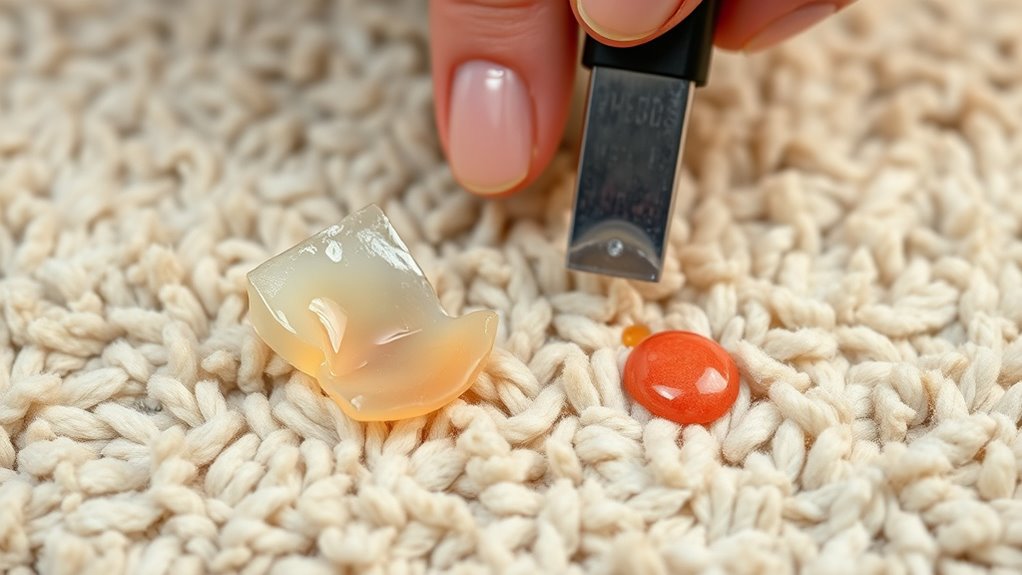
Accidents happen, and stains like gum, oil, wax, or nail polish can seem intimidating to remove from carpets. The good news is, with the right stain removal techniques, you can restore your carpet’s appearance without much hassle. The first step is understanding how to approach each stain safely, especially when it comes to cleaning product safety. You want to avoid causing further damage or discoloration, so always test any cleaning method on a small, hidden area first. Knowing which substances to use and how to apply them ensures you remove stains effectively while keeping your carpet intact.
For gum, the best technique involves freezing it solid. Grab some ice cubes and place them in a plastic bag, then press it against the gum for several minutes. Once the gum hardens, use a spoon or a dull knife to gently lift it away. Be patient and avoid pulling, which could tear the fibers. If any residue remains, a mixture of warm water and a mild detergent can help loosen it. Just make sure to blot rather than rub, to prevent spreading the stain or damaging the carpet fibers. Additionally, understanding the material composition of your carpet can help determine the safest cleaning methods.
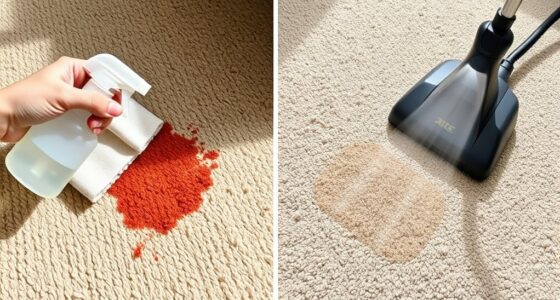
Oil stains are more challenging, but they’re manageable with the right approach. First, blot up as much oil as possible using paper towels or a clean cloth—don’t rub, which can push the oil deeper. Sprinkle baking soda or cornstarch onto the stain to absorb remaining oil, and let it sit for 15-20 minutes. Then, vacuum the powder thoroughly. Follow this with a solution of warm water and a small amount of dish soap, carefully applied with a sponge or cloth. Blot gently and rinse with clean water, again avoiding excessive scrubbing. Remember, always prioritize stain removal techniques that promote cleaning product safety, so you don’t introduce harsh chemicals that could harm your carpet or health.
Wax spills can be tackled by softening the wax with heat. Use an iron on a low, no-steam setting, or place a brown paper bag over the wax and run a warm iron over it. The heat melts the wax, which is then absorbed by the paper. Once the wax is removed, clean any remaining residue with a mixture of warm water and a mild detergent, applying it carefully to avoid spreading the stain. Nail polish, on the other hand, requires a different approach altogether. Dabbing nail polish remover containing acetone onto the stain with a cotton ball can break down the polish. Be cautious—test the remover on a hidden area first to ensure it doesn’t discolor your carpet. After soaking, blot the area with a clean cloth and rinse with water to remove any residual chemicals. Always read the labels and follow safety instructions to maintain cleaning product safety.
In all cases, patience and gentle techniques are your allies. Rushing or using abrasive tools can worsen stains or damage fibers. By understanding stain removal techniques and prioritizing cleaning product safety, you’ll be able to handle these common carpet mishaps confidently and effectively.
Frequently Asked Questions
Can I Use Home Remedies for All Types of Carpets?
Yes, you can use DIY solutions with natural ingredients on most carpets, but be cautious. Test any home remedies first in a small, hidden area to make sure they won’t damage or discolor your carpet. For many stains, simple DIY solutions like vinegar, baking soda, or mild soap work well. However, always check your carpet’s care instructions and avoid harsh chemicals to keep your carpet safe and clean.
What Should I Do if Stain Remover Damages the Carpet?
If stain remover damages your carpet, stop using it immediately. You should try DIY solutions like blotting with a mixture of mild dish soap and water to prevent further harm. Consider professional cleaning to safeguard your carpet’s durability. Remember, using the right stain removal techniques ensures your carpet stays in good shape longer, maintaining its look and longevity. Always test any DIY solution on a small, hidden area first.
Are There Eco-Friendly Options for Stain Removal?
You might worry eco-friendly options won’t work, but biodegradable solutions and natural stain removers are effective for carpet stains. You can use ingredients like baking soda, vinegar, or eco-friendly commercial products. These options are safe for your family and the environment, and they often cost less. So, next time a stain strikes, try natural solutions first—they’re powerful, sustainable, and gentle on your carpets.
How Long Should I Wait Before Cleaning After a Spill?
You should wait about 5 to 10 minutes after a spill to let it absorb. This waiting period helps loosen the stain and prevents it from spreading further. During this time, avoid rubbing or spreading the spill, which can make things worse. Instead, gently blot the area with a clean cloth or paper towel. Being patient guarantees easier cleaning later and minimizes damage to your carpet.
Is Professional Cleaning Necessary for Stubborn Stains?
Is it worth risking a permanent stain or damage? For stubborn stains, professional cleaning might be necessary because DIY methods and chemical cleaners often don’t suffice. While you can try home remedies, some stains require specialized equipment and expertise. If DIY efforts fail, hiring pros ensures deep cleaning and avoids worsening the issue, saving you time and money in the long run. Don’t hesitate to call in the experts when needed.
Conclusion
Removing stubborn substances like gum, oil, wax, and nail polish from your carpets doesn’t have to be formidable. With the right techniques, you can restore your carpet’s appearance quickly and effectively. Did you know that carpets can trap up to 4 times their weight in dirt and stains? Regular cleaning and prompt stain removal help maintain a fresh, clean home. So, keep these tips handy—you’ll be surprised how easy it is to keep your carpets looking brand new.