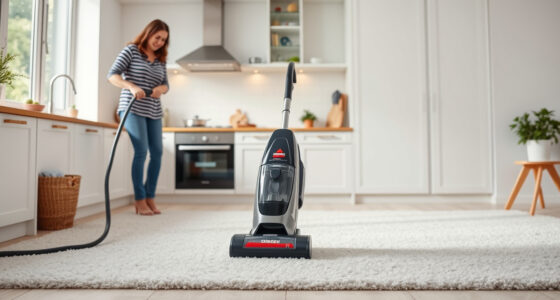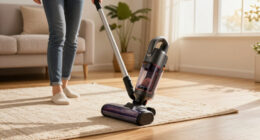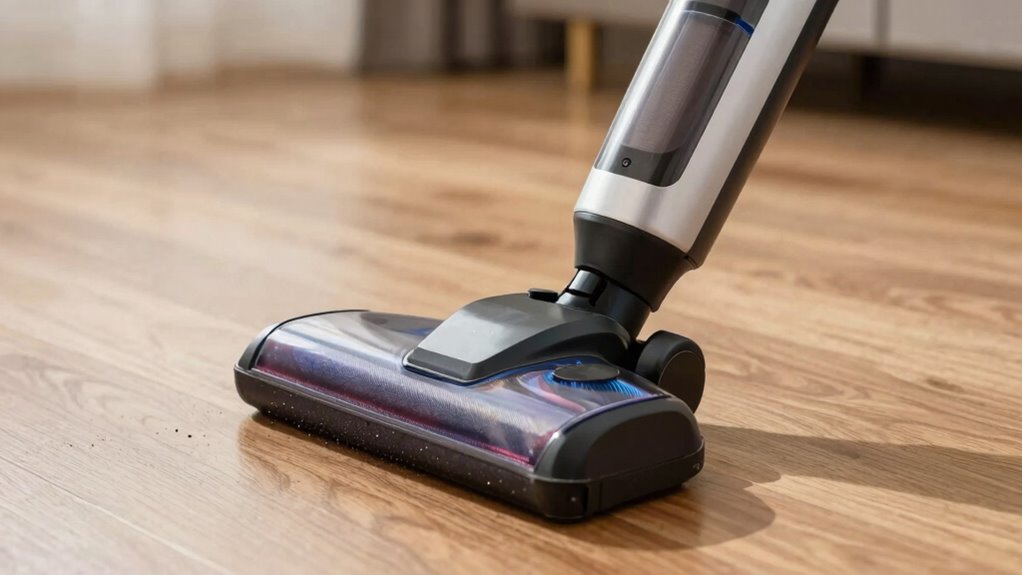

To vacuum hard floors without scattering debris, use a vacuum with adjustable suction and a hard floor attachment. Clear the area of loose objects and furniture first to create an unobstructed surface. Vacuum slowly with overlapping strokes, paying attention to corners and tight spots using crevice tools. Lift the vacuum away gently after each pass and avoid pressing down hard. Regularly clean filters and empty the canister to keep suction strong. Keep these tips in mind to achieve cleaner floors every time, and you’ll discover more ways to perfect your technique.

Get cleaning gear delivered free with Prime
- Fast, free delivery on millions of items
- Prime Video, Amazon Music and more included
- Member-only deals all year
Key Takeaways
- Use a vacuum with adjustable suction and a hard floor attachment to prevent debris scatter.
- Clear furniture and loose objects to create an unobstructed, clean path for efficient vacuuming.
- Vacuum slowly with overlapping strokes, especially in corners and under furniture, to avoid pushing debris around.
- Focus on thorough, multi-directional passes over stubborn areas for effective pet hair and dirt removal.
- Regularly maintain and clean filters and canisters to ensure optimal suction and minimize debris dispersion.
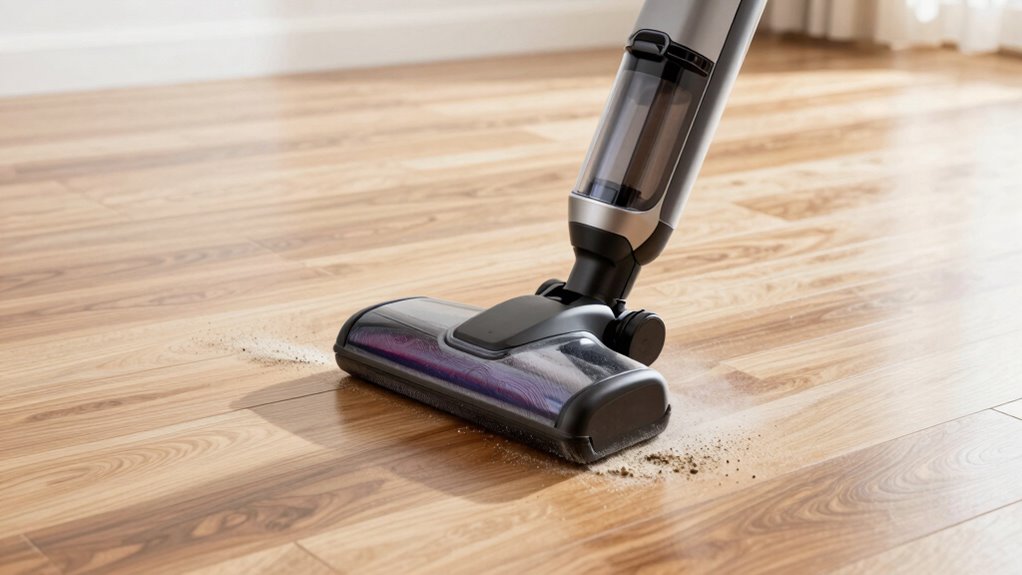
Ever wonder how to keep your hard floors spotless and shiny? The key is mastering the art of vacuuming without scattering debris everywhere. When you’re dealing with hard surfaces, it’s tempting to use a quick, aggressive pass that kicks up dust, pet hair, and dirt, but that only worsens the mess. Instead, you want a methodical approach that captures everything in one pass, keeping your space clean and allergen-free.
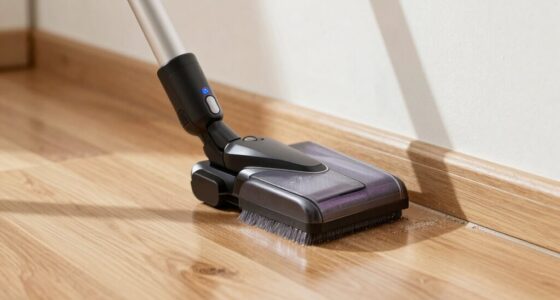
Start with the right tools. A vacuum with adjustable suction settings and a hard floor attachment works best. Avoid using a beater bar or rotating brush, which can scatter debris, especially pet hair, into the air. Pet hair can be stubborn and tends to cling to surfaces, so a vacuum equipped with a powerful, specialized pet hair attachment makes a noteworthy difference. It pulls hair out of cracks and corners without pushing it around or into the air, helping with allergy prevention. The goal is to remove allergens like pet dander and dust mites, which can trigger allergy symptoms, so efficiency and thoroughness matter.
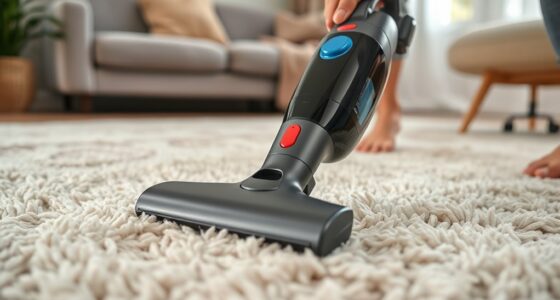
Use a vacuum with adjustable suction and a pet hair attachment to efficiently remove allergens and prevent debris scatter.
Before you begin, clear loose objects and furniture that may block your path. This allows you to vacuum in long, continuous strokes, reducing the chances of debris scattering. When you start, hold the vacuum close to the floor and vacuum slowly, using a steady, overlapping motion. This technique helps prevent debris scattering and ensures a more thorough clean. Additionally, using a proper technique like this prevents debris from being pushed around or missed, leading to a more effective cleaning session. This ensures you pick up every speck of pet hair and dirt in one go, rather than pushing debris ahead of the vacuum. Pay special attention to corners, edges, and under furniture, where pet hair and dust tend to accumulate. Using a crevice tool or a brush attachment can help reach these tight spots without disrupting settled debris. Additionally, choosing the right vacuum with adjustable suction settings can prevent scattering and improve cleaning efficiency. Proper maintenance of your vacuum, including regular filter cleaning, also contributes to better performance and healthier indoor air.
As you vacuum, avoid pressing down hard, which can push dirt and pet hair into the surface or cause particles to become airborne. Instead, let the vacuum’s suction do the work. When you reach a particularly stubborn area, go over it multiple times from different angles to lift pet hair and dirt without scattering it. After completing each section, lift the vacuum away slowly, rather than jerking it away. This prevents pushing debris back onto the floor. Keep in mind that consistent, gentle techniques help maintain indoor air quality by reducing the release of allergens and dust into the air.
Finally, empty your vacuum’s canister or replace the bag frequently, especially if you have pets. This maintains ideal suction power and prevents the release of trapped allergens back into the air. Regularly checking and replacing filters also helps in this regard. Consistent, careful vacuuming not only keeps your hard floors shiny but also markedly reduces pet hair buildup and helps prevent allergies. When you stick to these techniques, your floors stay cleaner longer, and your indoor air quality improves, making your home healthier and more comfortable.
vacuum for hard floors with adjustable suction
As an affiliate, we earn on qualifying purchases.
As an affiliate, we earn on qualifying purchases.
Frequently Asked Questions
How Often Should I Vacuum My Hard Floors?
You should vacuum your hard floors at least once a week to keep them clean and free of debris. For high-traffic areas, consider vacuuming more often. Regular vacuum maintenance guarantees your device works effectively, preventing scattering of dust and dirt. Depending on your floor surface, choose the right vacuum attachment to avoid scratches. Staying consistent with your routine helps maintain the cleanliness and appearance of your hard floors.
Can I Use a Robot Vacuum on Hard Floors?
Yes, you can definitely use a robot vacuum for hard floor cleaning. Many models are designed specifically for hard surfaces, providing efficient and thorough cleaning without scattering debris. Just make certain you choose a robot vacuum with appropriate settings or brushes suited for your floor type. Regular use keeps your floors spotless, and you won’t have to worry about manual effort or debris scattering during cleaning.
What Type of Vacuum Attachment Is Best for Hard Floors?
Did you know that using the right attachment can cut pet hair and allergens by up to 60%? The best vacuum attachment for hard floors is a soft-bristle or microfiber brush. These attachments gently lift pet hair and allergens without scattering debris. They’re perfect for hard surfaces because they clean effectively while preventing scratches, ensuring your floors stay spotless and allergen-free with minimal effort.
Should I Vacuum Before or After Mopping?
You should vacuum before mopping to maximize dirt removal and prevent dust displacement during mopping. Vacuuming first lifts loose dirt and debris, making your mopping more effective and reducing the risk of scattering debris across your floor. This sequence guarantees a thorough cleaning, with the vacuum catching particles that could be pushed around or embedded into the floor when you start mopping. Always vacuum thoroughly before wet cleaning.
How Do I Prevent Scratches While Vacuuming?
Think of your floor as a delicate canvas; you want to clean without leaving marks. To prevent scratches, use a vacuum with a soft brush attachment or gentle suction setting. This provides surface protection while effectively lifting dust and debris. Always move the vacuum slowly, especially around edges, to avoid unnecessary contact. Regularly check for any debris that could cause scratches, ensuring dust prevention and surface safety go hand-in-hand.
Conclusion
Now that you know how to vacuum your hard floors without scattering debris, imagine the perfect clean space waiting for you. But wait—there’s one last trick that could make all the difference. Are you ready to discover it? Stay tuned, because what comes next might just transform your cleaning routine forever. Get ready to experience spotless floors like never before—your secret weapon is closer than you think. Don’t miss it.
Halloween Picks
halloween
As an affiliate, we earn on qualifying purchases.