
When cleaning with vinegar, guarantee good ventilation by opening windows, doors, or using exhaust fans to disperse strong fumes and prevent respiratory irritation. Wearing gloves protects your skin from vinegar’s acidity and prevents irritation or allergic reactions. Always work in well-ventilated spaces, and consider using a mask if fumes are intense. Proper precautions make your cleaning safer and more comfortable. Keep exploring these tips to learn how to maximize safety during your cleaning routine.
Key Takeaways
- Always open windows and doors to ensure proper airflow during vinegar cleaning.
- Use exhaust fans or ventilation systems to disperse fumes quickly.
- Wear gloves to protect your skin from vinegar’s acidity and prevent irritation.
- Consider wearing a mask in poorly ventilated areas to reduce inhalation of strong fumes.
- Rinse skin immediately with water if contact causes irritation or allergic reactions.
Cleaning with vinegar is an effective and eco-friendly way to tackle various household chores, but it’s vital to do so safely. While vinegar is a natural cleaner, it’s still a chemical substance that can pose household hazards if not used properly. One of the most common issues people overlook is the potential for allergic reactions or skin irritation, especially if you have sensitive skin or allergies. To minimize these risks, proper ventilation and protective gear are essential.
When you start cleaning with vinegar, make sure the area is well-ventilated. Vinegar has a strong odor that can cause discomfort or respiratory irritation if inhaled in a poorly ventilated space. Open windows and doors to let fresh air circulate, or turn on exhaust fans if available. Good airflow helps disperse the fumes quickly, reducing the chance of respiratory issues and preventing the buildup of household hazards that could lead to allergic reactions. If you’re cleaning a confined space, consider wearing a mask to filter out any strong fumes, especially if you’re sensitive to smells or have asthma or other respiratory conditions.
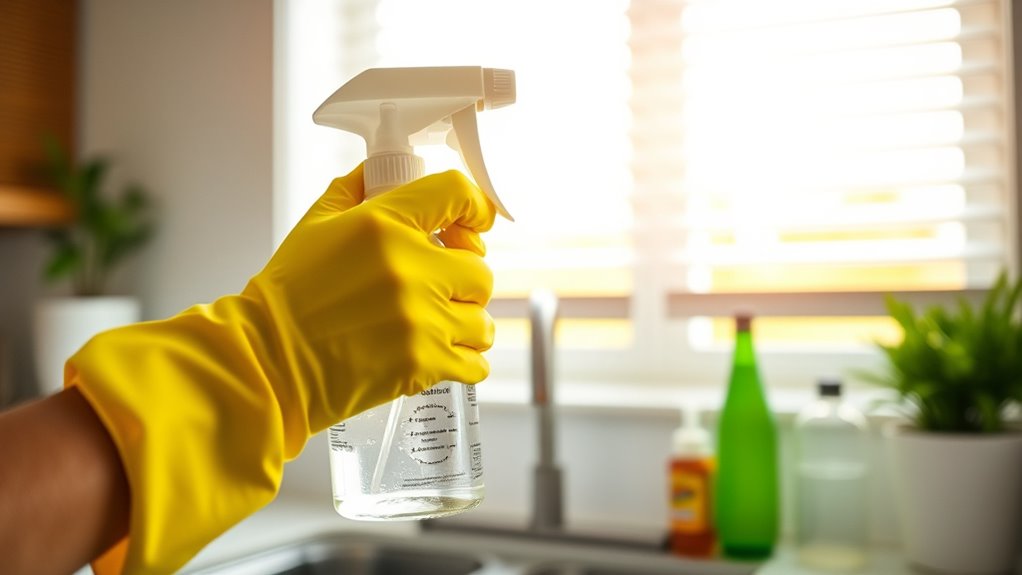
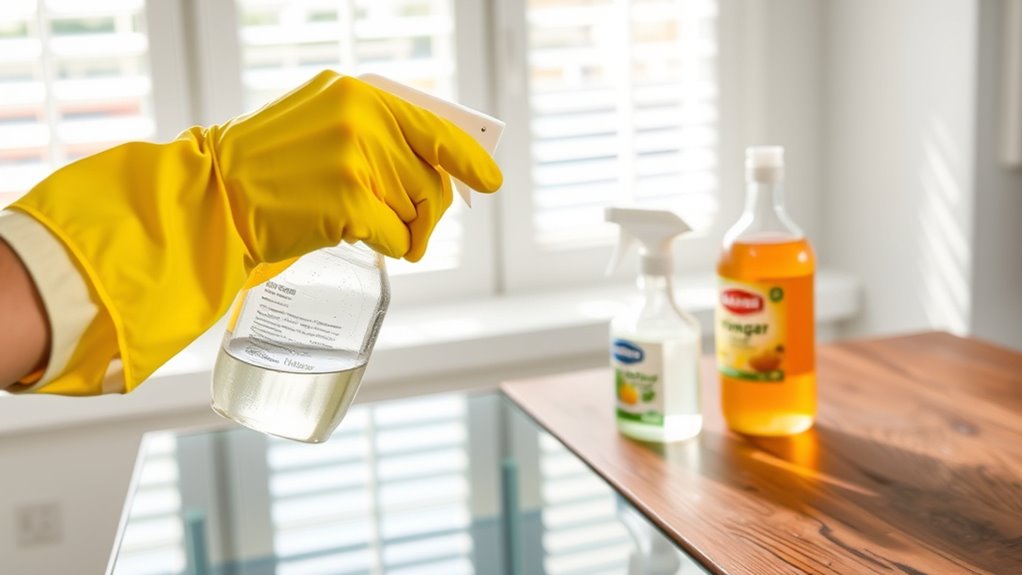
Wearing gloves is another essential safety step. Vinegar’s acidity can cause skin irritation or an allergic reaction upon prolonged contact. By donning rubber or latex gloves, you protect your skin from direct exposure and reduce the risk of developing contact dermatitis. Gloves also prevent any accidental splashes from coming into contact with your eyes or mouth, which can cause irritation or more severe reactions. Remember, even though vinegar is natural, it’s still a potent acid that can harm your skin or exacerbate allergic sensitivities. After cleaning, wash your hands thoroughly and remove the gloves carefully to avoid transferring any residual vinegar onto your skin.
It’s easy to underestimate the significance of these safety measures, but they’re key to avoiding household hazards and allergic reactions. If you notice any redness, itching, or irritation after cleaning with vinegar, rinse the area immediately with plenty of water and avoid future contact until your skin heals. Keep vinegar out of reach of children and pets, especially if they have allergies or sensitive skin, to prevent accidental ingestion or contact. Additionally, staying informed about AI safety concerns can help you understand potential risks associated with household chemicals and ensure safe practices. By maintaining good ventilation and wearing gloves, you create a safer cleaning environment that leverages vinegar’s cleaning power without exposing yourself to unnecessary risks. Taking these simple precautions ensures your cleaning routine remains effective, safe, and environmentally friendly.
Top picks for "safety tips clean"
Open Amazon search results for this keyword.
As an affiliate, we earn on qualifying purchases.
Frequently Asked Questions
Can Vinegar Damage Certain Surfaces or Materials?
Vinegar can damage certain surfaces or materials if you’re not careful. You should always check surface compatibility and material safety before using it. For example, vinegar can erode natural stone like marble or limestone, and damage hardwood finishes or certain plastics. To avoid harm, test a small area first and use vinegar sparingly on delicate surfaces. This way, you safeguard your surfaces and ensure effective cleaning without causing damage.
Is It Safe to Mix Vinegar With Other Cleaning Agents?
Mixing vinegar with other cleaning agents is like playing with fire—dangerous and unpredictable. You should avoid combining vinegar with bleach or ammonia, as chemical reactions can create harmful fumes. Vinegar’s pH is incompatible with certain chemicals, causing dangerous reactions or reducing cleaning effectiveness. Always check labels and use each product separately to keep your cleaning safe and effective, preventing unintended chemical explosions in your home.
How Often Should I Clean With Vinegar Safely?
You should clean with vinegar about once a week to avoid lingering vinegar smell and maintain a fresh environment. Overusing vinegar can cause buildup and damage some surfaces. Pay attention to your cleaning frequency based on your home’s needs, and always guarantee proper ventilation to disperse the smell. Using gloves can protect your skin, especially if you’re cleaning often. Regular, mindful cleaning keeps your space safe, fresh, and free of strong odors.
Are There Health Risks From Vinegar Vapors?
Think of vinegar vapors as whispering secrets, but they can still cause harm. Vinegar inhalation might irritate your respiratory system, especially if you’re exposed for long periods. Skin irritation can also occur if it contacts your skin directly. To stay safe, make certain good ventilation and wear gloves. By respecting vinegar’s mild nature, you prevent potential health risks and keep your cleaning routine both effective and safe.
What Should I Do if I Get Vinegar in My Eyes?
If vinegar gets in your eyes, rinse immediately with plenty of water to reduce eye irritation. Keep your eyelids open and flush for at least 15 minutes, gently holding your eyelids apart. If irritation persists or you experience pain, redness, or blurred vision, seek emergency treatment promptly. Don’t rub your eyes, and avoid using any harsh solutions. Acting quickly minimizes damage and helps protect your eyes.
Conclusion
Remember, using vinegar safely means ventilating your space and wearing gloves. For example, imagine cleaning your kitchen counter with vinegar without gloves—you might end up with skin irritation. By following these tips, you protect yourself and enjoy a clean home safely. So, next time you reach for that bottle of vinegar, just open a window and toss on some gloves. Your health will thank you, and your cleaning will be both effective and safe.