
TL;DR
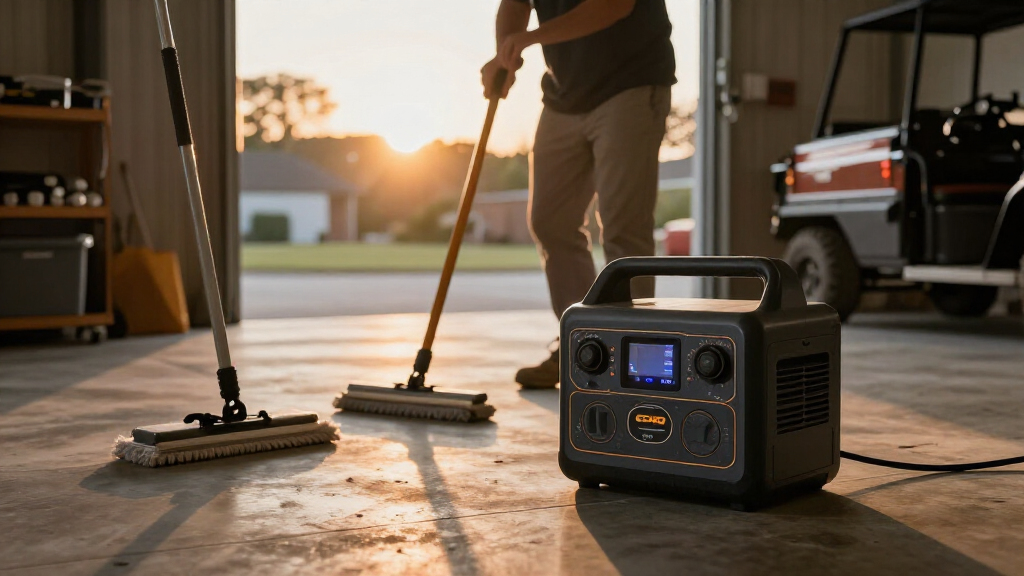
Digital Trends reviewed EcoFlow’s DELTA 3800 and 3000 Gen4 portable power stations, finding the 3800 a lighter-than-expected option with expandable storage and the 3000 a less expensive, lighter alternative. Both provide 3,600W of rated AC output, but neither supports 240V appliances, and only the 3800 can add battery capacity.
Digital Trends has reviewed EcoFlow’s DELTA 3800 and 3000 Gen4 portable power stations, comparing their capacity, weight and home-backup features. The review describes the 3,763Wh DELTA 3800 as a capable option for outage protection that does not require wiring a battery into a home, while noting that the smaller 3,072Wh DELTA 3000 costs less but cannot be expanded.

Get cleaning gear delivered free with Prime
- Fast, free delivery on millions of items
- Prime Video, Amazon Music and more included
- Member-only deals all year
The DELTA 3800 has a 3,600W continuous inverter, with a 7,200W surge rating, and weighs 67.5 pounds. Digital Trends reviewer Ian Bell said it was unusually light for a power station in this capacity range. The model uses lithium iron phosphate (LFP) cells, which EcoFlow rates for 6,000 cycles to 70% capacity. Its storage can be expanded to about 12kWh with two extra batteries, according to the specifications in the review.
In the reviewer’s test, the 3800 ran an outdoor freezer for four days, two hours and 46 minutes on one charge. Bell also reported charging four e-bikes at once while using about 30% of the battery. Those results come from the reviewer’s particular test conditions; the review does not establish that every freezer or set of e-bikes will produce the same runtime.
The DELTA 3000 weighs 57.3 pounds and has 3,072Wh of capacity. It shares the 3800’s rated AC output and outlet types, but has no extra-battery expansion port and supports up to 1,000W of solar input, compared with 2,000W for the 3800. The source lists regular prices of $2,199 for the 3800 and $1,699 for the 3000, with early-bird prices of $1,699 and $1,299, respectively, through Dec. 7, 2026.
Choosing Capacity and Portability
The comparison matters to shoppers weighing outage runtime against cost and portability. The 3800’s larger battery and expandable design give buyers room to add storage later, while the 3000 saves $400 at the listed regular prices and is about 10 pounds lighter. Those differences may shape whether the unit is best treated as a fixed backup in a garage or something a household expects to move more often.
Both models’ 3,600W inverter rating can make them useful for a range of household devices, but the review stresses a key limit: they are 120V-only systems. They cannot directly power 240V loads such as central air-conditioning, electric ranges or many well pumps. Buyers needing backup for those appliances would need a different system and should check compatibility with a qualified installer.
Products Worth Considering

Philips Hue Play Floor Lamp, RGBWWIC LED, 53 Inch, Black

Ring Alarm 8-Piece Home Security System Kit

Shark IY143H Cordless Pet Stick Vacuum
As an affiliate, we earn on qualifying purchases.
How the Two Models Differ
The Gen4 models share several core specifications, including LFP batteries, a 3,600W continuous AC rating, four 120V/20A outlets and one 120V/30A outlet. Both also have USB-C ports rated at 140W and 65W, a 36W USB-A port, and an under-10-millisecond UPS switchover rating. EcoFlow lists the same five-year warranty for both: three years, with two additional years after app registration.
The larger model’s weight is a central part of the review’s assessment. Bell compared it with EcoFlow’s original DELTA Pro, which he said had a similar 3,600W rating, stored slightly less energy and weighed about 99 pounds. The 3800 has no wheels or pull handle, however, and the reviewer described moving it by hand as cumbersome. The 3000 is also heavy at 57.3 pounds, though Bell considered it more manageable to move.
Neither model has a built-in 12V car socket. The specifications list 126W of 12V DC output through an optional USB-C-to-12V adapter. EcoFlow rates both units’ idle draw at 14W with the AC inverter on and no load, or 3W in standby. The review notes that lower idle consumption can leave more stored energy for devices during an extended outage.
“The EcoFlow Gen4 3800 is a step up from the competition.”
— Digital Trends reviewer Ian Bell
Limits of the Review Findings
The source provides a single reviewer’s hands-on results, not independent testing across different homes, appliances or weather conditions. The reported freezer runtime and e-bike battery use should not be treated as guaranteed performance. Actual runtime depends on the connected equipment, its power draw, ambient conditions and how the station is used.
The review’s supplied material does not spell out a full home installation method or establish that either unit can power every household circuit. The stations are 120V-only, and the source does not claim they can run 240V appliances. Buyers should confirm appliance requirements, transfer-switch compatibility and local electrical rules before relying on a portable station for home backup.
Pricing and Buyer Decisions
The review lists early-bird pricing through Dec. 7, 2026, and says EcoFlow was including a folding transport cart with the first 500 early-bird orders. The cart is listed at $109 in the source. Availability, remaining promotional stock and final prices may change, so shoppers should check EcoFlow’s current listing before buying.
For buyers comparing the models, the practical next step is to estimate the devices they need to run and how long they need them powered. Those who expect to add batteries or use more solar input have a reason to consider the DELTA 3800; those prioritizing the lower listed price and lighter weight may prefer the DELTA 3000. Neither is a direct fit for backup needs centered on 240V appliances.
Key Questions
What is the main difference between the DELTA 3800 and DELTA 3000 Gen4?
The 3800 has 3,763Wh of capacity and supports extra batteries, with solar input up to 2,000W. The 3000 has 3,072Wh, cannot be expanded with extra batteries and supports up to 1,000W of solar input.
Can either EcoFlow model run central air-conditioning or an electric range?
The review identifies both as 120V-only systems, so they are not suited to directly powering 240V appliances such as central air-conditioning or electric ranges.
How long did the DELTA 3800 run the reviewer’s freezer?
Digital Trends reviewer Ian Bell reported a runtime of four days, two hours and 46 minutes for an outdoor freezer in his test. Runtime for other freezers may differ with their power use and test conditions.
Do the DELTA 3800 and 3000 have wheels or a 12V car socket?
Neither has built-in wheels or a pull handle, and the review says EcoFlow removed the built-in 12V car socket. The specifications list 126W of 12V output through an optional USB-C-to-12V adapter.
Source: digitaltrends.com