TL;DR

Get cleaning gear delivered free with Prime
- Fast, free delivery on millions of items
- Prime Video, Amazon Music and more included
- Member-only deals all year
House Beautiful reports that designers identified 13 home features they would not choose for their own spaces, including zellige tile, waterfall islands and freestanding tubs. Their reasons include maintenance demands, installation challenges, cost and compromises to storage or daily use; the advice is expert opinion, not a finding that every home or product will have the same drawbacks.
House Beautiful has published a list of 13 home features that interviewed designers said they would not put in their own spaces, citing upkeep, installation difficulty, expense or limited practical value. The list includes decorative materials and fixtures such as zellige tile, cement tile, waterfall islands and freestanding tubs; it reflects the designers’ judgments, not a universal assessment of every project.
Jamie Chappell of Fireclay Tile described zellige tile as difficult to install because handmade pieces vary in size and thickness. Chappell also said the surface can chip, craze and stain, and needs regular sealing. For cement tile, the concern is porosity: Chappell said it can stain or etch easily, requires frequent sealing and is heavy and labor-intensive to install. The report also raises the materials’ water and energy use in production as a sustainability concern.
Designers cited practical trade-offs in kitchen and home systems. Yvonne Harty of Harty Interiors said waterfall islands can add cost, reduce storage and seating, and leave corners vulnerable to chipping. Brieanna Cunningham of C&C Partners added that the design can restrict storage and outlet placement. Cunningham also cautioned that elaborate smart-home packages can be costly and unreliable when Wi-Fi, system components or software updates fail.
Other features on the list include white linen furniture, which Jessica Alpert said is difficult to keep clean, particularly in a busy household; built-in coffee makers, which she said require ongoing cleaning and maintenance; and low-quality “disposable” furniture. Cara Shahbandi of Stanton Home Design advised saving for pieces intended to last longer. Harty said freestanding tubs may be impractical in small bathrooms because cleaning behind them can be difficult; a well-designed alcove or deck-mounted tub may work better for daily use.
Upkeep Can Outlast the Trend
The roundup focuses on a familiar renovation risk: the purchase price is only part of a feature’s cost. Cleaning, sealing, repairs and installation can shape how useful or expensive a choice feels over time. A design that looks striking in a photograph may also reduce storage, seating or access to outlets once it is part of an occupied home.
For readers planning a renovation, the designers’ comments offer questions to raise before committing: How often will the surface need care? Can the space accommodate the fixture? What happens if a connected system goes offline? These are considerations to discuss with qualified contractors and suppliers, rather than proof that the features are unsuitable in every home. Room size, household routines, budget and product specifications can change the trade-offs.
Products Worth Considering

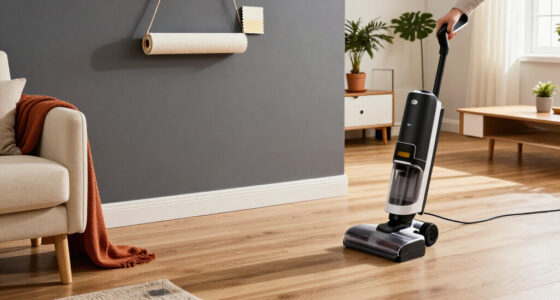
Shark HydroVac MessMaster Corded Wet/Dry Vacuum, Mop & Self-Clean (WD161)

Bose SoundLink Flex (2nd Gen) Portable Bluetooth Speaker

Ring Wired Doorbell Plus (2nd Gen) and Chime (3rd Gen), Nickel Silver and White
As an affiliate, we earn on qualifying purchases.
The Designers’ Practical Trade-Offs
The House Beautiful report frames its recommendations against rapidly changing home-design trends and the expense of renovation decisions. It notes that choices may involve different levels of commitment, from furniture that can be replaced to tile or fixtures that are harder and costlier to change once installed. Its central point is that appearance and convenience should be weighed against durability and maintenance.
The supplied excerpt names seven of the 13 listed features: zellige tile, cement tile, waterfall islands, smart homes, white linen furniture, built-in coffee makers, disposable furniture and freestanding tubs. It begins an entry on limewashing an entire home but provides no accompanying explanation, and the remaining entries are not included in the supplied material. The article’s full list therefore cannot be reconstructed from the excerpt alone.
““Because each piece is handmade, there’s a lot of variation in size and thickness, making installation slow and tricky.””
— Jamie Chappell, Fireclay Tile
What the Excerpt Leaves Out
The supplied source material does not identify the publication date or include the full list of 13 features. It also does not provide independent testing, cost comparisons or data showing how often the cited maintenance problems occur. The assessments are attributed opinions from designers, and outcomes can depend on the product, installation, household use and room layout.
The excerpt starts a section about limewashing an entire home but cuts off before giving the designer’s reasoning. It is also unclear from the supplied material which other features appear in the complete report. Readers should not treat the available excerpts as a complete list or as a substitute for project-specific advice.
Check the Fit Before Renovating
The report does not announce a policy change, product launch or upcoming event; it is a published consumer-design roundup. For homeowners, the next step is to compare maintenance and installation requirements with the way a space will actually be used. Ask suppliers about sealing schedules, cleaning instructions, repair options and warranty terms, and request detailed plans showing how an island or tub affects circulation, seating, storage and access.
Before committing to connected systems, ask installers what functions remain available during an internet outage and how updates and service calls are handled. For substantial renovation work, seek project-specific advice from qualified professionals. The supplied article gives no information on whether House Beautiful plans follow-up reporting or additional designer guidance.
Key Questions
What is the news in this report?
House Beautiful published a roundup of home features that interviewed designers said they would avoid in their own spaces, based on concerns such as maintenance, cost and practicality.
Which features are named in the supplied material?
The excerpt names zellige tile, cement tile, waterfall islands, smart-home packages, white linen furniture, built-in coffee makers, disposable furniture and freestanding tubs. It also starts an entry on whole-home limewashing but does not include its explanation; the excerpt does not show all 13 entries.
Are designers saying these features should never be used?
No. The report presents individual designers’ opinions about trade-offs. A feature may suit a particular budget, room or household even if the designers cited maintenance or practical concerns.
What should homeowners check before choosing one?
Ask about installation, cleaning, repairs and ongoing maintenance, and consider how the feature affects the room’s storage, seating and everyday use. Product details and the home’s layout can affect the result.
Source: housebeautiful.com