
TL;DR

Get cleaning gear delivered free with Prime
- Fast, free delivery on millions of items
- Prime Video, Amazon Music and more included
- Member-only deals all year
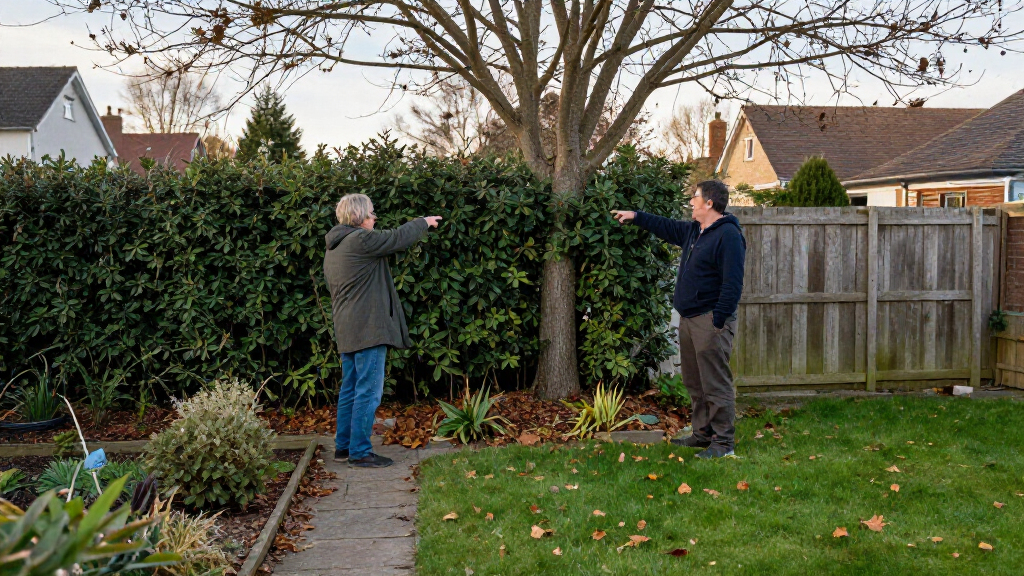
There is no reliable “left-hand rule” for deciding who owns a boundary tree or hedge, according to an Ideal Home report drawing on property and gardening experts. Ownership generally depends on the legal boundary and where the trunk or main stem grows, while deeds, neighbour discussions and local council checks can help clarify responsibility. Pruning may be restricted by tree protections or wildlife law.
Property deeds and the location of a tree’s trunk or hedge stems are the main starting points for working out who owns a boundary planting, according to guidance published by Ideal Home. The report, citing gardening and home-insurance experts, says the popular “left-hand rule” is a property myth and warns that a fence’s position alone may not establish the legal boundary.
Lucie Bradley, gardening and greenhouse expert at Harvst Automatic Watering, advises homeowners to check their property deeds, which can be accessed through HM Land Registry. Deeds may show the general extent of a property with a red boundary line and may include “T” marks indicating responsibility for a boundary feature. Two marks facing each other can form an “H”, which the report says may indicate shared responsibility. These markings are a starting point, not necessarily a precise survey of the boundary.
The report says the tree’s trunk or main stem is central to determining ownership. Kara Gammall, a home-insurance expert at MoneySuperMarket, says a tree whose trunk stands entirely on one property will generally belong to that landowner, even if branches or roots extend into a neighbour’s garden. If the trunk straddles the boundary, ownership and care can be harder to determine; the report recommends discussing any significant work with the neighbour and agreeing before irreversible changes.
For growth crossing onto a neighbour’s land, Gammall says a person generally may prune encroaching branches or roots back to the boundary on their own side. They should not enter a neighbour’s land or cut beyond the boundary without permission. The report also cautions that Tree Preservation Orders (TPOs) and rules protecting nesting birds may limit what can be done. It advises checking with the local council before pruning a potentially protected tree.
Boundary Checks Before Pruning
A disagreement about a tree can involve property rights, neighbour relations and potential legal restrictions. Acting on the assumption that a fence marks the legal boundary, or that a particular side of a garden belongs to one neighbour, could lead to a dispute or damage to a tree on someone else’s land. Checking documents and talking with the neighbour can help establish what is agreed before work begins.
There may also be consequences for pruning protected trees without the required permission. The report quotes Ian Wilson, managing director and home-insurance expert at Tiger.co.uk, as saying fines for unauthorised work on a protected tree can reach £20,000. That figure is attributed to Wilson; the supplied report does not set out the circumstances or legal details behind the maximum. It also warns that disturbing or harming nesting birds is unlawful under the Wildlife and Countryside Act 1981.
As an affiliate, we earn on qualifying purchases.
Deeds, Trunks and T Marks
The Ideal Home report frames its guidance around a common source of neighbour disputes: uncertain boundaries. Its experts distinguish the position of a physical fence from the legal boundary shown in property records. Gammall says fences can move over time, so homeowners should consult deeds or historic documents rather than treating the fence as conclusive evidence.
The report presents the “left-hand rule”—the idea that a homeowner is responsible for the left-hand boundary—as a widespread property myth. Instead, it points to deed markings, the position of the tree’s base or main stems, and discussion between neighbours when a planting crosses the boundary. It does not provide a legal ruling for any specific property or a substitute for resolving contested boundaries.
“The place to start when trying to find out who owns a tree or hedge is to check your house deeds.”
— Lucie Bradley, gardening and greenhouse expert at Harvst Automatic Watering
When Ownership Is Disputed
The supplied report does not identify a particular boundary dispute or provide a court decision; it is general guidance rather than a ruling on any individual property. Who owns a specific tree or hedge may remain unclear if deeds are imprecise, the planting straddles the boundary, or historic fences have shifted. The report does not explain how a formal boundary dispute would be resolved.
It also does not establish whether any particular tree is protected or whether birds are nesting in it. A postcode-based TPO checker may offer an indication, but the report says homeowners should confirm details with their local council. The exact permissions and legal consequences depend on the circumstances and applicable restrictions.
Check Records Before Work
Homeowners concerned about a boundary tree or hedge can begin by reviewing their deeds and any relevant historic documents, then compare the recorded boundary with the planting’s trunk or main stems. If the evidence is unclear, the report recommends speaking with the neighbour and agreeing on care or substantial pruning before work is done.
Before pruning, check with the local council whether a Tree Preservation Order or conservation-area restriction applies, and avoid disturbing nesting birds. If a disagreement persists or the boundary cannot be established from available records, the report does not specify a resolution process; the parties may need further professional advice. No specific council decision or follow-up development is identified in the supplied material.
Key Questions
Does the left-hand rule decide who owns a boundary tree?
No. The Ideal Home report describes the “left-hand rule” as a property myth. It recommends checking deeds and the tree’s position in relation to the legal boundary instead.
What if the tree trunk is on my neighbour’s property but branches hang over mine?
The report says the tree will generally belong to the owner of the land where its trunk stands. Gammall says overhanging growth may generally be pruned back to the boundary on your side, but you should not cross onto the neighbour’s property or cut beyond the boundary without permission.
What if the trunk sits across the boundary?
Ownership can be more complicated when a trunk or main stems straddle the boundary. The report advises discussing responsibility with the neighbour and agreeing before substantial or irreversible work.
How can I check whether a tree is protected?
Contact the local council to check for a Tree Preservation Order or relevant conservation-area controls. The report says an online checker may provide an approximate indication, but council confirmation is recommended.
Can I prune a tree whenever its branches cross the boundary?
Not necessarily. The report warns that tree protections and rules concerning nesting birds can restrict work. Check applicable restrictions before pruning, and speak with the neighbour before substantial work that could affect the tree’s health or stability.
Source: rss
Halloween Picks
halloween
As an affiliate, we earn on qualifying purchases.