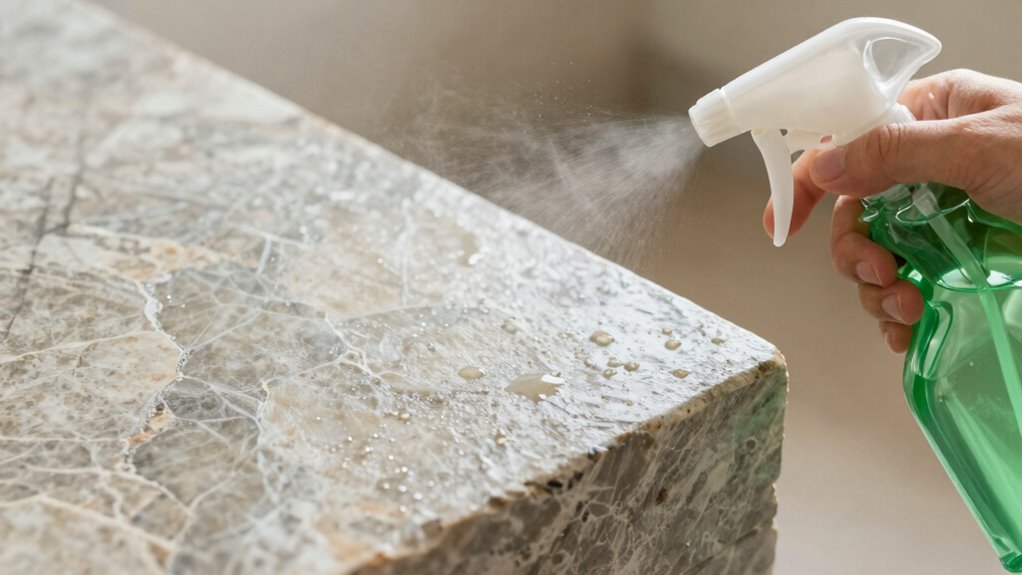

One common green cleaning mistake that can damage stone surfaces is using acidic or reactive natural ingredients like vinegar, lemon juice, or essential oils. These substances are highly acidic and can etch or dull marble, granite, or limestone over time. Many think natural products are always safe, but they aren’t suitable for delicate stone. To avoid costly damage, it’s important to choose proper cleaning solutions and techniques—stay with us to discover how to protect your stone surfaces effectively.
Key Takeaways
- Using acidic or reactive natural substances like vinegar or lemon juice can etch and damage stone surfaces over time.
- Assuming all green or natural products are safe can lead to the use of unsuitable cleaners that harm stone.
- Applying harsh or abrasive cleaning tools can scratch or dull delicate stone finishes.
- Neglecting to read labels and choosing products not formulated for stone can cause long-term damage.
- Relying solely on chemical-free solutions without proper knowledge may result in ineffective cleaning or surface harm.
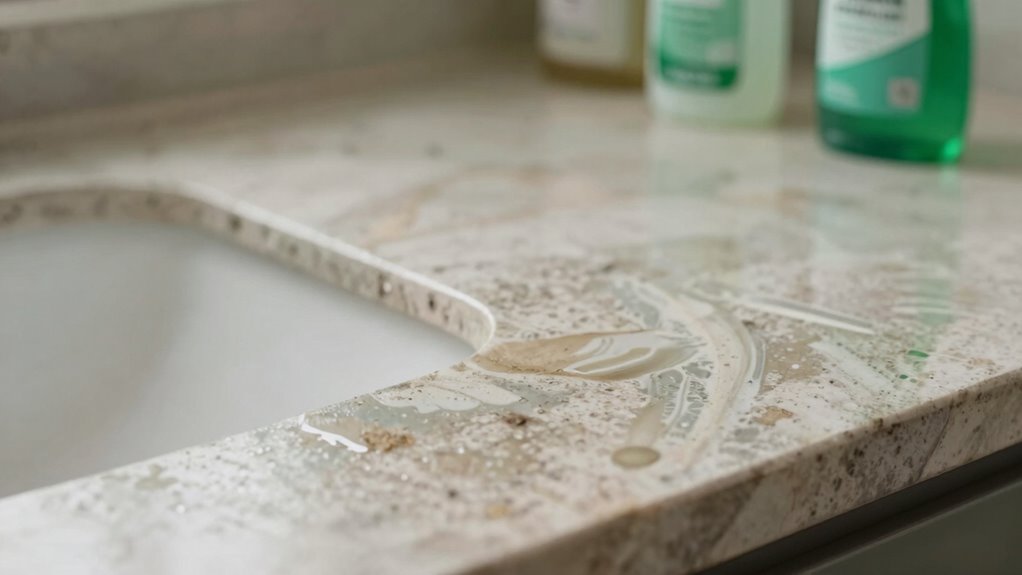
Many people assume that green cleaning products are always safe and environmentally friendly, but making this mistake can undermine your efforts to create a healthier home. When it comes to cleaning stone surfaces, using the wrong products can cause lasting damage. You might think that eco friendly ingredients and chemical free solutions are gentle enough for all surfaces, but that’s not always the case. Stone, like marble, granite, or limestone, requires special care, and what seems like a natural, harmless cleaner can actually harm its finish.
You might be tempted to use vinegar, lemon juice, or essential oils because they’re natural and readily available. However, these substances are acidic or highly reactive, and they can etch or dull the surface of stone over time. Even though they’re eco friendly ingredients, they’re not suitable for cleaning delicate stone surfaces. Instead, you need to choose chemical free solutions specifically formulated for stone care, or better yet, make your own gentle, pH-neutral cleaners that won’t damage the surface. For instance, a simple mix of warm water and a few drops of a mild, eco friendly soap can be effective without risking etching or discoloration.
It’s important to read labels carefully and avoid any cleaner that contains acids, alkalis, or harsh chemicals, even if promoted as natural. Many products marketed as green or eco-friendly still contain ingredients that can harm stone. The key is to opt for cleaners designed for stone surfaces or to use homemade solutions that prioritize pH neutrality. When cleaning, always use a soft cloth or sponge to prevent scratching, and avoid abrasive scrubbers that can chip or dull the stone’s surface. Regularly wiping down your stone surfaces with a damp cloth and drying immediately will help prevent staining and buildup without compromising their integrity. Additionally, understanding chemical reactions that can damage stone surfaces is essential for maintaining their appearance over time. Being aware of green cleaning misconceptions can help you avoid costly mistakes and preserve the natural beauty of your stone surfaces. Recognizing the difference between safe and harmful cleaners is crucial for effective preservation and avoiding unintended damage. Educating yourself about biodiversity and conservation can also inspire you to choose environmentally responsible cleaning practices that support overall ecosystem health.
pH-neutral stone surface cleaner
As an affiliate, we earn on qualifying purchases.
As an affiliate, we earn on qualifying purchases.
Frequently Asked Questions
Can Natural Cleaners Also Harm Stone Surfaces?
Yes, natural cleaners can harm stone surfaces if they’re not properly formulated. Many natural cleaners lack the correct pH balance needed for delicate stones like marble or granite. If a cleaner is too acidic or alkaline, it can etch or dull the surface. Always check the pH level of your natural cleaner and make sure it’s suitable for stone to prevent damage and keep your surfaces looking their best.
How Often Should I Clean Stone Surfaces to Avoid Damage?
You should clean stone surfaces regularly—about once a week—to prevent dirt buildup and stains. Over-cleaning can cause wear, while infrequent cleaning leads to damage. Proper surface maintenance balances cleaning frequency with gentle methods, avoiding harsh chemicals that can harm the stone. Use pH-neutral cleaners and soft cloths, and avoid abrasive scrubbers. This approach keeps your stone looking its best without risking long-term damage.
Are There Specific Brands Recommended for Safe Stone Cleaning?
You should choose eco-friendly alternatives and trusted commercial cleaning brands that specifically state they’re safe for stone surfaces. Look for products labeled as pH-neutral and free from acids or harsh chemicals, which can cause damage. Brands like Method, Seventh Generation, or Ecover often offer safe options. Always read labels carefully and test on a small area first, ensuring your cleaning routine remains gentle and effective for your stone surfaces.
What Signs Indicate a Stone Surface Has Been Damaged?
Did you know that improper cleaning can cause 60% of surface etching on stone? You’ll notice dull patches or tiny scratches, indicating damage. Surface etching appears as dull, discolored spots that don’t polish easily, while stone polishing won’t restore these areas. If you see these signs, it’s time to reassess your cleaning methods to prevent further harm. Proper care preserves both beauty and longevity of your stone surfaces.
Can DIY Cleaning Solutions Effectively Replace Commercial Products?
DIY cleaning solutions can sometimes replace commercial products if you pay attention to pH balance and avoid abrasive agents. Use gentle, pH-balanced cleaners like a mixture of water and mild soap for routine cleaning, but steer clear of vinegar or lemon, which are too acidic. Avoid abrasive scrubbing pads that can scratch stone surfaces. When in doubt, test your DIY solution in a small, hidden area first to prevent damage.
Conclusion
So, here’s the irony: in your quest for a greener, safer home, you might accidentally be doing more harm than good—especially to your beautiful stone surfaces. It’s almost poetic how a simple mistake, like using the wrong cleaner, can undo all that eco-friendly effort. Next time, double-check your products and remember that sometimes, going green requires a little more attention, not less. After all, saving the planet doesn’t have to mean sacrificing your stunning surfaces.