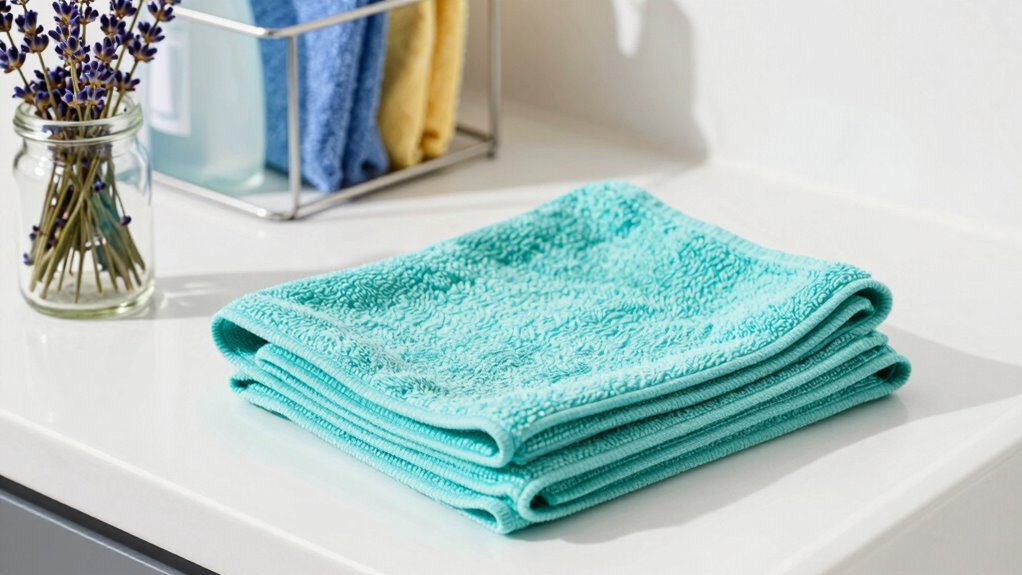

To keep your reusable cleaning cloths from smelling, rinse them thoroughly after each use and wash them regularly with a fragrance-free detergent in warm water. Dry the cloths completely outdoors in sunlight or in a well-ventilated area to prevent moisture buildup. Store them in a dry, breathable container, and add natural disinfectants like vinegar or baking soda during washing. Good ventilation and proper care will help keep your cloths fresh—discover more tips to maintain their freshness.
Key Takeaways
- Rinse cloths thoroughly after each use to remove food particles and grease.
- Wash cloths regularly with fragrance-free detergent in warm water for effective cleaning.
- Ensure cloths are completely dry before storing, using air drying in well-ventilated areas.
- Store dry cloths in breathable containers and avoid plastic bags or humid environments.
- Incorporate natural disinfectants like vinegar or baking soda during washing to eliminate bacteria and odors.
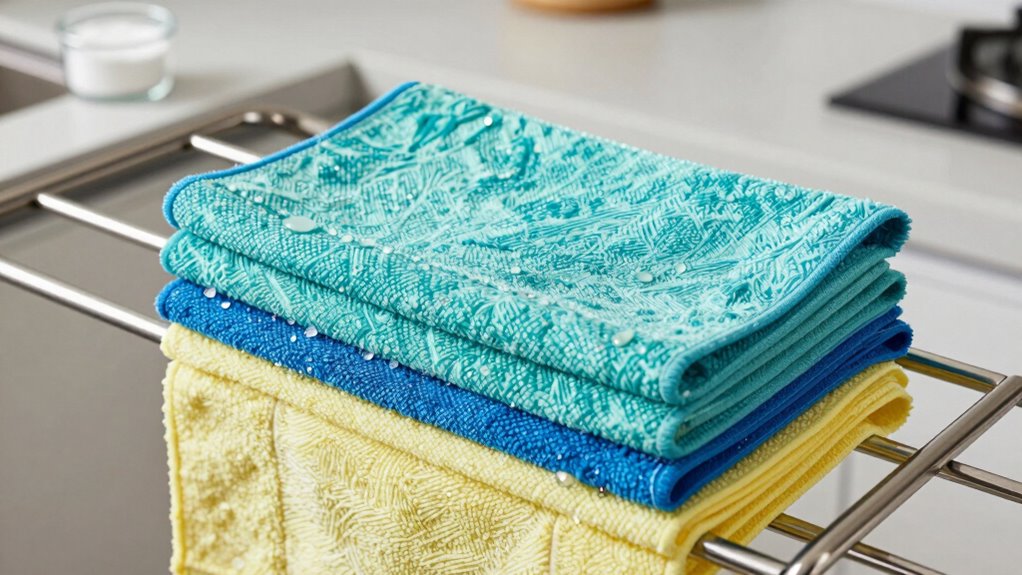
Reusable cleaning cloths are eco-friendly and cost-effective, but if you don’t dry and wash them properly, they can develop a stubborn, unpleasant odor. To prevent this, it’s vital to pay attention to how you clean and dry your cloths. After each use, rinse them thoroughly to remove food particles, grease, or dirt that can contribute to bacteria growth and smell. Once rinsed, it’s important to wash them regularly, ideally after a few uses, rather than letting them sit dirty. When washing, choose the right laundry detergents—preferably those free of fragrances and dyes—that effectively clean without leaving residues that can trap odors. Use warm water settings if the cloths are heavily soiled, but check the care labels to avoid damage. Using the correct amount of detergent is essential; too much can leave residues, while too little might not clean thoroughly. Proper air drying techniques are crucial because they allow the fabric to fully dry out, preventing moisture that bacteria and mold thrive on. Hang your cloths in a well-ventilated area, ideally outdoors in direct sunlight, as sunlight has natural disinfectant properties and helps eliminate odors. If outdoor drying isn’t possible, place them on an indoor drying rack near a fan or in a well-ventilated space. Avoid leaving damp cloths crumpled in a pile or closed container, as this creates a humid environment that promotes smell. Instead, make certain they are spread out and completely dry before storing. Proper storage also plays a significant role in odor prevention, as it helps keep your cloths fresh between uses. Once dry, fold or roll them neatly and keep them in a dry, breathable container. Avoid plastic bags or airtight storage unless the cloths are fully dry, as trapped moisture can cause a musty smell. Regularly inspecting your cleaning cloths for any signs of persistent odor allows you to rewash or replace them before the smell becomes ingrained. Additionally, understanding how bacteria and mold contribute to odors can help you choose more effective cleaning practices. Incorporating these simple steps—using appropriate laundry detergents, employing effective air drying techniques, and storing your cloths properly—keeps them fresh and odor-free. Using natural disinfectants like vinegar or baking soda during washing can help eliminate bacteria that cause odors. To further enhance odor control, consider proper ventilation in your storage area, which can significantly reduce humidity and prevent mold growth. When you follow these practices consistently, your reusable cleaning cloths will stay clean, smell pleasant, and serve you well without becoming a source of unpleasant odors.
reusable cleaning cloths odor eliminator
As an affiliate, we earn on qualifying purchases.
As an affiliate, we earn on qualifying purchases.
Frequently Asked Questions
How Often Should I Replace My Reusable Cleaning Cloths?
You should replace your reusable cleaning cloths every few weeks, depending on cloth material and use. If you notice persistent odors or stains, it’s time for a replacement. For cloths made of microfiber or cotton, frequent washing extends their lifespan, but don’t hesitate to swap them out when they start smelling or look worn. Regular replacement helps prevent bacteria buildup and keeps your cleaning routine hygienic and effective.
Can I Use Fabric Softener on Cleaning Cloths?
Is your cleaning cloths’ scent a lingering cloud? You shouldn’t use fabric softener on them, as it can trap residues and cause odors, acting as a barrier to proper cleaning. Instead, focus on cloth scent prevention by washing with hot water and natural detergents. Fabric softener drawbacks include reduced absorbency and potential irritation. Keep your cloths fresh and effective without softeners, and enjoy a truly clean home.
Are There Specific Materials That Resist Odor Better?
Yes, odor-resistant fabrics like microfiber and polyester tend to resist smells better than natural materials. Natural options such as cotton or linen can absorb odors more easily, making them harder to keep fresh. To prevent smells, opt for odor-resistant fabrics when possible, and wash your cloths regularly. Using a vinegar rinse or baking soda during washing also helps keep your reusable cleaning cloths smelling fresh and odor-free.
What’s the Best Way to Sanitize Cloths Between Uses?
To sanitize your cloths between uses, wash them thoroughly with hot water and a bit of dish soap. The hot water helps kill bacteria, while dish soap effectively removes dirt and grime. For extra sanitation, you can soak the cloths in a mixture of hot water and vinegar or toss them in the dryer on high heat. This combination keeps your cloths fresh and odor-free after each use.
Can I Wash Cleaning Cloths With Other Laundry?
Did you know that washing laundry together can reduce bacteria by up to 99.9%? Yes, you can wash cleaning cloths with other laundry, but pay attention to fabric types. Use good-quality laundry detergents suitable for the cloths’ material—cotton, microfiber, or others. Wash on the hottest safe temperature, and avoid mixing heavily soiled cloths with delicate items to prevent odor transfer and guarantee everything gets thoroughly cleaned.
Conclusion
To keep your reusable cleaning cloths fresh and odor-free, make sure you wash them regularly, dry them thoroughly, and store them in a well-ventilated area. Avoid leaving them damp or crumpled in a hamper like a medieval squire’s pouch. With these simple steps, your cloths will stay as clean as a knight’s armor, ready for any mess. Stay vigilant, and your cloths won’t turn into a foul-smelling dragon’s lair!