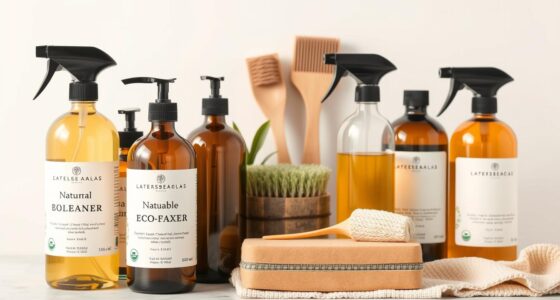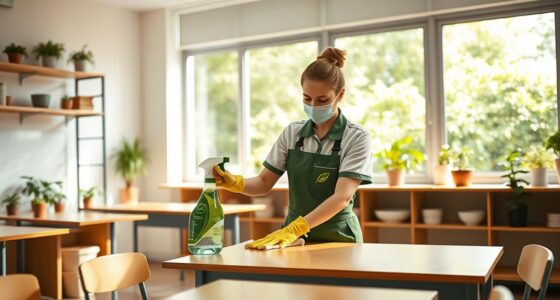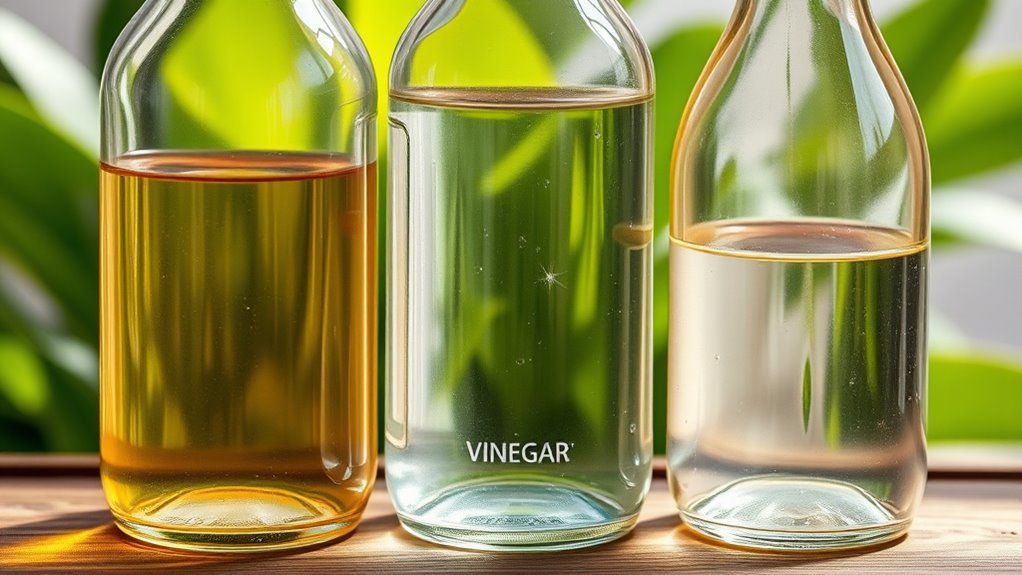
If you’re exploring natural disinfectants, vinegar, hydrogen peroxide, and alcohol are effective options. Vinegar kills bacteria and mold on many surfaces but isn’t recommended for natural stone. Hydrogen peroxide, usually at 3%, disinfects well against viruses and bacteria and is eco-friendly. Alcohol, like 70% isopropyl, quickly sanitizes high-touch areas such as doorknobs and screens. To learn how to maximize their use safely and effectively, keep exploring these versatile disinfectants.

Get cleaning gear delivered free with Prime
- Fast, free delivery on millions of items
- Prime Video, Amazon Music and more included
- Member-only deals all year
Key Takeaways
- Vinegar effectively disinfects surfaces by breaking down bacteria and mold but is not suitable for natural stone surfaces.
- Hydrogen peroxide kills bacteria, viruses, and fungi through oxygen release, making it a potent natural disinfectant.
- Alcohol, especially 70% isopropyl, provides rapid, broad-spectrum antimicrobial action ideal for high-touch surfaces.
- All three disinfectants are natural, affordable, and environmentally friendly alternatives to synthetic chemicals.
- Proper usage, including correct concentration and contact time, is essential to maximize their disinfectant effectiveness.
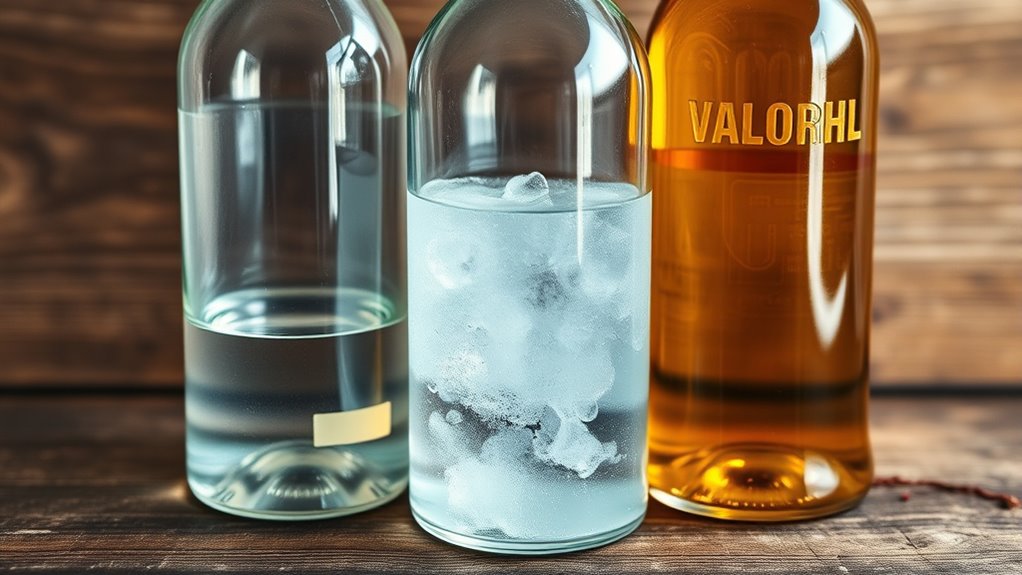
In recent years, many people have started turning to natural disinfectants as safer alternatives to chemical cleaners. This shift is often driven by a desire to reduce exposure to harsh substances and to find eco-friendly options. When you explore DIY cleaning methods, you’ll discover that ingredients like vinegar, hydrogen peroxide, and alcohol are effective chemical alternatives that can disinfect surfaces without relying on synthetic chemicals. These natural agents are easy to incorporate into your cleaning routine and can often be made with pantry staples.
Vinegar is one of the most popular DIY cleaning solutions because of its antimicrobial properties and versatility. It’s naturally acidic, which helps it break down grime, bacteria, and mold. You can use white vinegar to wipe down counters, clean glass, and even disinfect cutting boards. Just mix equal parts vinegar and water in a spray bottle for a quick, effective cleaner. Keep in mind, though, that vinegar isn’t suitable for all surfaces—avoid using it on natural stone like granite or marble, as its acidity can cause damage. Vinegar’s affordability and accessibility make it an attractive chemical alternative, especially for everyday cleaning tasks around your home.
Vinegar is a versatile, affordable cleaner with antimicrobial properties, ideal for various household surfaces.
Hydrogen peroxide is another powerful natural disinfectant that’s often overlooked. It works by releasing oxygen when it comes into contact with organic material, effectively killing bacteria, viruses, and fungi. You can use a 3% hydrogen peroxide solution to disinfect bathroom sinks, toilet seats, and kitchen surfaces. To maximize its effectiveness, apply it directly to the surface and let it sit for a few minutes before wiping. It’s important to store hydrogen peroxide in a dark bottle, as light degrades its potency. Many people prefer hydrogen peroxide because it’s a single-ingredient, biodegradable option that provides a strong disinfectant action without the harsh chemicals found in some commercial cleaners.
Alcohol, particularly isopropyl alcohol at 70%, is a widely used disinfectant for its quick-evaporating and broad-spectrum antimicrobial properties. You can use alcohol to clean electronic devices, glass surfaces, and doorknobs, where quick drying is beneficial. Simply apply it with a cloth or spray bottle and let it sit for a few seconds before wiping. Alcohol’s effectiveness is well-documented, and it’s often recommended by health authorities for disinfecting high-touch areas. It’s a safe chemical alternative when used correctly, and many prefer it for its rapid action and minimal residue. Additionally, understanding disinfectant efficacy can help you choose the best natural options for different cleaning needs.
natural disinfectant spray vinegar hydrogen peroxide alcohol
As an affiliate, we earn on qualifying purchases.
As an affiliate, we earn on qualifying purchases.
Frequently Asked Questions
Are Natural Disinfectants Safe for Pets and Children?
Natural disinfectants can be safe for pets and children if used properly, but you should always exercise caution. Vinegar and hydrogen peroxide are generally safer options, but alcohol-based disinfectants may pose risks if ingested or if residues remain. For pet safety and child safety, guarantee the area is well-ventilated, keep kids and pets away during application, and allow surfaces to dry completely before contact. Always follow usage instructions carefully.
How Should Natural Disinfectants Be Stored for Maximum Effectiveness?
You should store natural disinfectants in dark, opaque containers to prevent light exposure, which can degrade their effectiveness. Use airtight storage containers to avoid contamination and evaporation. Keep them in a cool, dry place away from direct sunlight and heat sources. Proper storage guarantees these disinfectants maintain their potency longer, so your cleaning remains effective. Regularly check containers for leaks or damage to preserve their safety and efficacy.
Can Natural Disinfectants Replace Commercial Disinfectants Completely?
Natural disinfectants can’t fully replace commercial disinfectants because their efficacy comparison shows they may not eliminate all pathogens, especially in high-risk settings. While they’re often cheaper and eco-friendly, you should still consider the cost analysis and specific needs. For routine cleaning, natural options can be effective, but for critical sterilization, commercial disinfectants provide a more reliable and consistent solution. Always prioritize safety and proper application.
How Long Do Natural Disinfectants Take to Kill Germs?
You’ll see some natural disinfectants kill germs in as little as 30 seconds, but ideal germ elimination usually takes about 1 to 5 minutes of contact time. For example, hydrogen peroxide can effectively eliminate germs within 1 minute, while vinegar might need longer. To guarantee thorough disinfecting, allow your natural solutions enough contact time, and remember that adequate contact time is key for safe, effective germ elimination.
Are There Surfaces Where Natural Disinfectants Should Not Be Used?
You should avoid using natural disinfectants on fragile surfaces and electronic devices. Vinegar, hydrogen peroxide, and alcohol can damage delicate materials, cause discoloration, or degrade electronic components. Always test a small area first or opt for disinfectants specifically designed for sensitive surfaces. For electronics, use manufacturer-recommended cleaning products to guarantee safety and avoid costly damage or malfunctions.
Conclusion
In the world of cleanliness, vinegar, hydrogen peroxide, and alcohol are your trusted allies, like a trio of knights guarding your castle. They each wield their unique power to banish germs and keep your space safe. When you choose the right one, you’re arming your home with nature’s own shield. Remember, just like a well-tuned instrument, proper use guarantees these natural disinfectants sing their powerful, germ-fighting tune effectively.
Fall Picks
fall essentials
As an affiliate, we earn on qualifying purchases.